

Michelin Restaurants NYC: Complete Guide to Every Starred Restaurant
New York City has more Michelin-starred restaurants than any other US city. From intimate omakase counters to grand French dining rooms, here's your guide to the city's starred tables.
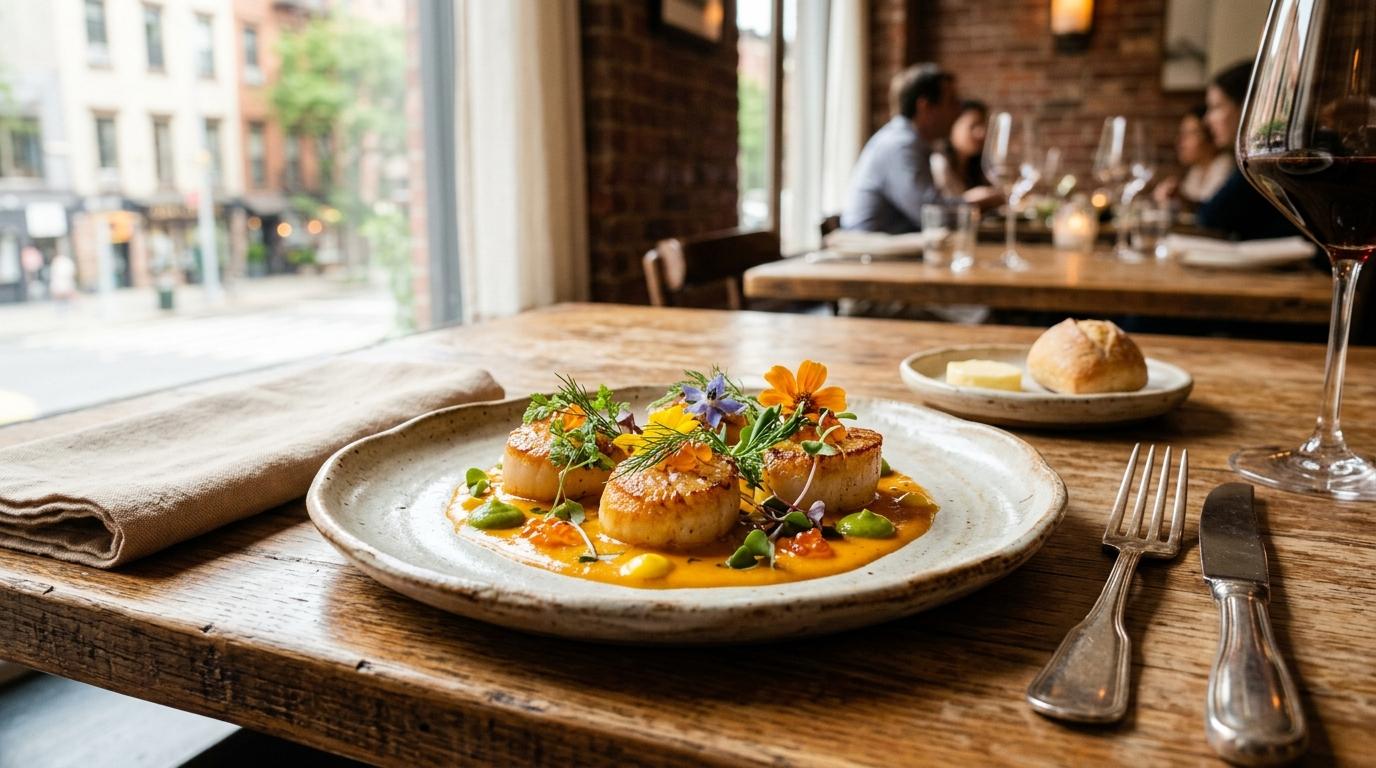
New York City stands as the crown jewel of American fine dining, home to more Michelin-starred restaurants than any other US city. Whether you're planning a special celebration or simply want to understand what makes the city's Michelin star restaurants across the United States so exceptional, NYC offers an unparalleled dining landscape that spans cultures, techniques, and price points.
The Michelin Guide arrived in New York in 2005, and the 2025 New York guide counts around 70 starred restaurants in the city and its environs. These restaurants represent the pinnacle of culinary achievement, from intimate sushi counters in Midtown to sprawling French temples on the Upper East Side.
Let's dive into what makes each category special, and more importantly, which restaurants deserve your attention and your reservation efforts.
The Three-Star Temples: NYC's Culinary Mount Rushmore
Only a handful of restaurants in NYC hold the coveted three-star rating. As of the 2025 New York guide there are five: Le Bernardin, Eleven Madison Park, Per Se, Jungsik and Sushi Sho. Each represents a different philosophy of excellence.
Le Bernardin remains the city's seafood cathedral. Eric Ripert's mastery of fish cookery is legendary — his langoustine barely cooked, his black bass with a crust so thin it shatters at first bite. The dining room feels formal but never stuffy, and the service anticipates your needs without hovering.
Eleven Madison Park redefined American fine dining before temporarily closing and reopening as a fully plant-based restaurant in 2021. The transformation was bold, controversial, and it kept all three stars. In October 2025 the kitchen began offering some meat and seafood again, but the menu stays mostly plant-based, and its vegetable courses still sound ridiculous on paper while tasting like the future of vegetables.
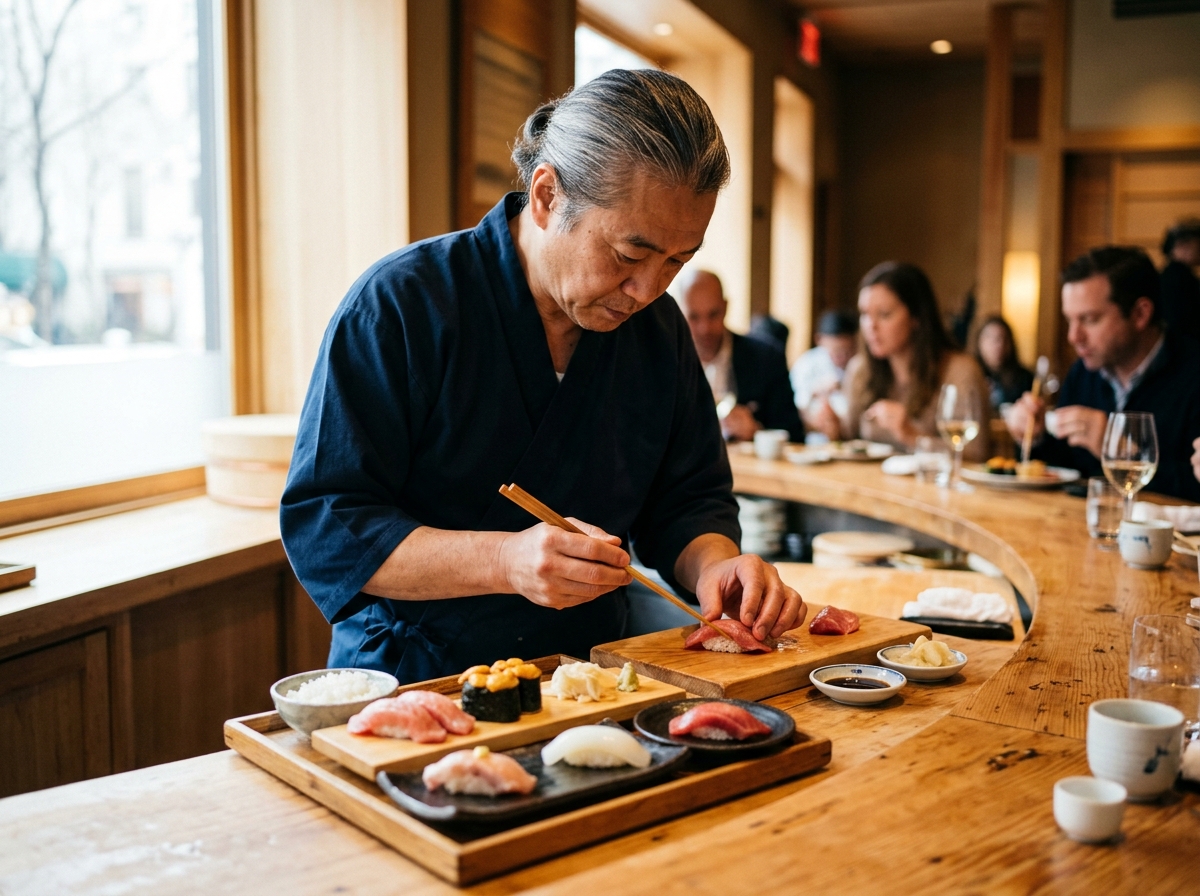
Masa occupies a different universe entirely. It held three stars from 2009 until November 2025, when Michelin cut it to two, but Masa Takayama's omakase at Columbus Circle is still one of America's most expensive meals: $750 per person at the tables and $950 at the hinoki counter before drinks and tax (2025 prices). The sushi rice is body temperature. Much of the fish is flown in from Japan. Everything else becomes irrelevant.
Two-Star Excellence: Where Innovation Meets Tradition
The two-star category showcases NYC's incredible diversity. These restaurants don't just serve great food — they define entire categories.
Atomix brings Korean fine dining to a new level. Junghyun "JP" and Ellia Park's tasting menu unfolds course by course, each dish served in bespoke ceramics and introduced by a card explaining its ingredients and inspiration. In 2025 it topped the first North America's 50 Best Restaurants list.
Atera hides in a basement on Worth Street in Tribeca. Founding chef Matthew Lightner left in 2015; his successor, Danish chef Ronny Emborg, kept its two stars for a decade before stepping down in August 2026, so check who is leading the kitchen before you book. The Nordic-leaning cooking has always emphasized pristine ingredients and minimal intervention. Watching the team plate from the open kitchen feels like witnessing edible art being born.
Chef's Table at Brooklyn Fare was the first restaurant outside Manhattan to earn three Michelin stars, though it moved from Downtown Brooklyn to Hell's Kitchen in 2016 and now holds two. Founding chef César Ramírez left in 2023 and opened César in Hudson Square, which also earned two stars. Both serve seafood-led tasting menus with a strong Japanese accent.
The Japanese contingent is strong at every level. Masa now sits in this two-star tier, and one-star Sushi Nakazawa in the West Village offers an impeccable omakase that feels more approachable than its more formal peers.
One-Star Gems: Accessibility Meets Excellence
This is where NYC's Michelin scene gets interesting. One-star restaurants range from à la carte dining rooms to tasting menus that run well past $200, proving that excellence comes in many forms.
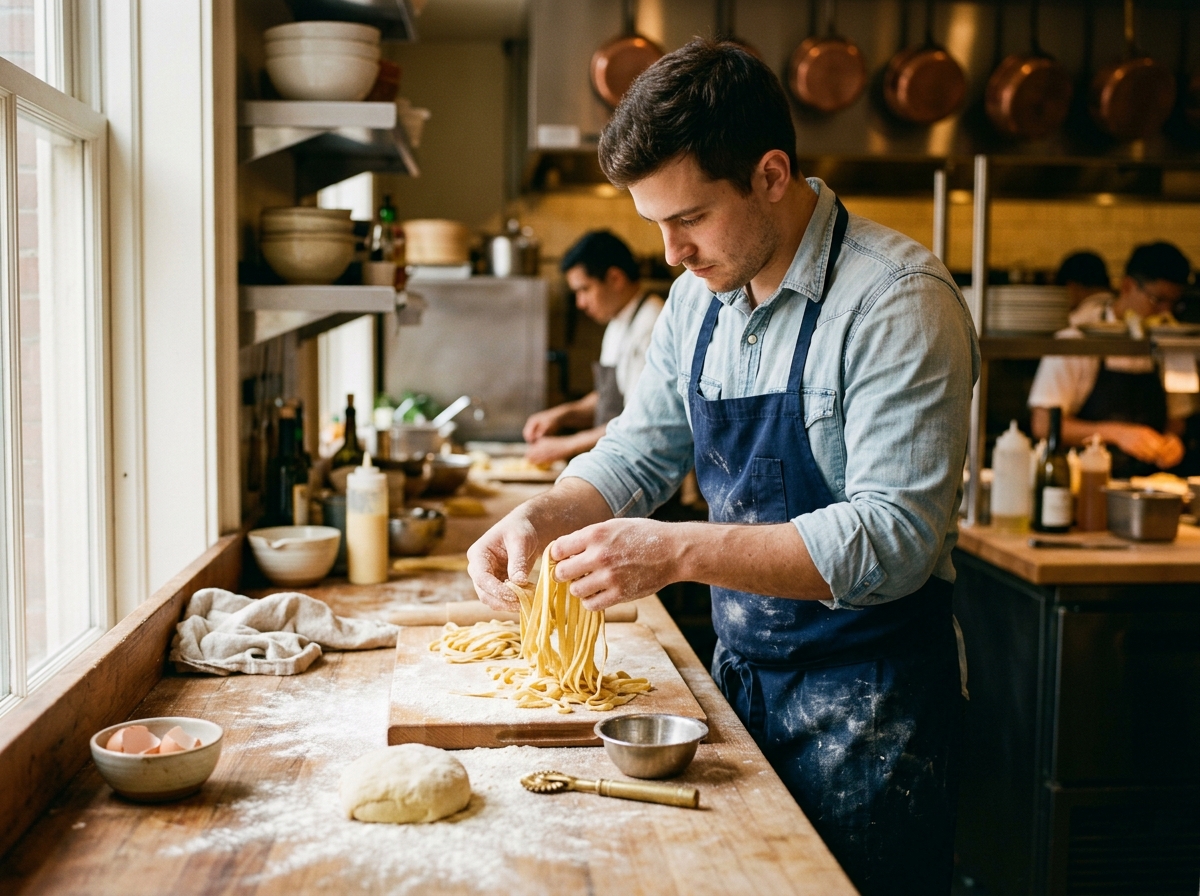
Rezdôra focuses exclusively on the pasta of Emilia-Romagna. Stefano Secchi's menu travels the region one pasta at a time, from tortellini in brodo to tagliatelle with ragù. This is pasta as high art.
Semma brings South Indian flavors to Greenwich Village. Vijay Kumar's menu reads like a love letter to his grandmother's cooking, but the execution is restaurant-level precise. The gunpowder dosa is the dish everyone orders; the Tamil snail curry, nathai pirattal, is the one they talk about afterward.
Key Ingredients for Michelin Success in NYC
What separates Michelin restaurants from the merely excellent? Several factors consistently appear across all starred establishments:
Ingredient sourcing goes beyond organic or local. These restaurants maintain relationships with specific farmers, importers, and producers. Le Bernardin builds its entire menu around seafood. Masa flies much of its fish in from Japan.
Technical precision defines every plate. Temperatures are exact. Seasoning is calibrated. Textures are intentional. A sauce that took six hours to make needs to taste effortless.
Service philosophy varies by restaurant but never feels accidental. Some maintain formal European traditions. Others embrace casual American warmth. The best match their service style to their food philosophy.
Consistency matters most. A Michelin star means the experience remains exceptional whether you visit on Tuesday or Saturday, whether the chef is in the kitchen or traveling.
The Reservation Reality
Getting into these restaurants requires strategy, patience, and sometimes luck. Popular spots like Don Angie and Carbone book solid for months ahead. At the three-star level, tables are released on a fixed schedule, often a month or more ahead, and the best slots go within minutes.
Consider these approaches: Follow restaurants on social media for last-minute releases. Check Resy, Tock and OpenTable multiple times daily for cancellations. Some restaurants hold bar seats or counter spots for walk-ins. Building relationships with concierges at luxury hotels can also provide access.
The lunch strategy works particularly well. Many starred restaurants offer more accessible lunch menus at significantly lower prices. Le Bernardin's lunch prix fixe costs a fraction of its chef's tasting menu.
Beyond Midtown: Brooklyn and the West Village
Stars still cluster in Manhattan (every new star in the 2025 New York guide went to a Manhattan restaurant), but the rest of the map rewards the trip. Oxomoco in Greenpoint serves modern Mexican food that would thrive in any neighborhood. Jeju Noodle Bar in the West Village brings Jeju Island flavors to NYC with remarkable precision.
What's Coming Next
NYC's Michelin scene continues evolving. Younger chefs embrace more casual formats while maintaining starred-level technique. Pop-ups sometimes transition to permanent spots. The definition of fine dining expands beyond white tablecloths and sommeliers.
Sustainability increasingly influences menus. Plant-forward cooking gains respect. Local sourcing becomes more sophisticated. The next generation of starred restaurants might look very different from today's temples.
Making Your Michelin Journey Count
Eating at Michelin restaurants shouldn't feel like checking boxes. Each represents a chef's personal vision executed at the highest level. Come curious. Ask questions. Notice details. The best meals happen when you engage with what the chef is trying to communicate.
Budget accordingly. A three-star tasting menu now starts in the mid-$300s per person before wine, tax and tip. One-star restaurants often offer exceptional value, especially at lunch. Consider the full experience — location, service, ambiance — not just the food.
Most importantly, remember that Michelin stars represent just one measure of excellence. NYC's dining scene includes incredible restaurants that have never pursued stars, choose not to participate, or simply haven't been discovered yet.
The city's Michelin star restaurant scene continues defining American fine dining standards. Whether you're celebrating an anniversary at Le Bernardin or discovering Korean innovation at Atomix, these restaurants offer experiences that linger long after the last bite. In a city where you can eat exceptionally well for $20, spending $200+ at a starred restaurant becomes about more than hunger — it's about witnessing culinary artistry at its peak.
Sources
- List of Michelin-starred restaurants in New York City
- MICHELIN Guide Reveals 2025 Northeast Cities Selection (Michelin press release)
- This NYC restaurant just lost a Michelin star (Time Out New York, Nov 2025)
- The Michelin Star Restaurants in New York City for 2025 (Resy)
- Eleven Madison Park is bringing back the meat (Time Out New York, Aug 2025)
- What It Costs To Eat At Every 3-Star Michelin Restaurant In The US (Tasting Table, 2026)
Last reviewed October 20, 2026. Star counts follow the most recent guide for each region; restaurants change, so check before you book.
MICHELIN, the MICHELIN Guide, the MICHELIN Star and Bib Gourmand are trademarks of Michelin. Meez is independent and is not affiliated with or endorsed by Michelin.
Related Topics
Enjoyed this article? Share it with fellow food lovers!
Import a recipe, start cooking
Paste any recipe URL and we'll turn it into a Cook Mode experience with step-by-step visuals, voice narration, and built-in timers.