

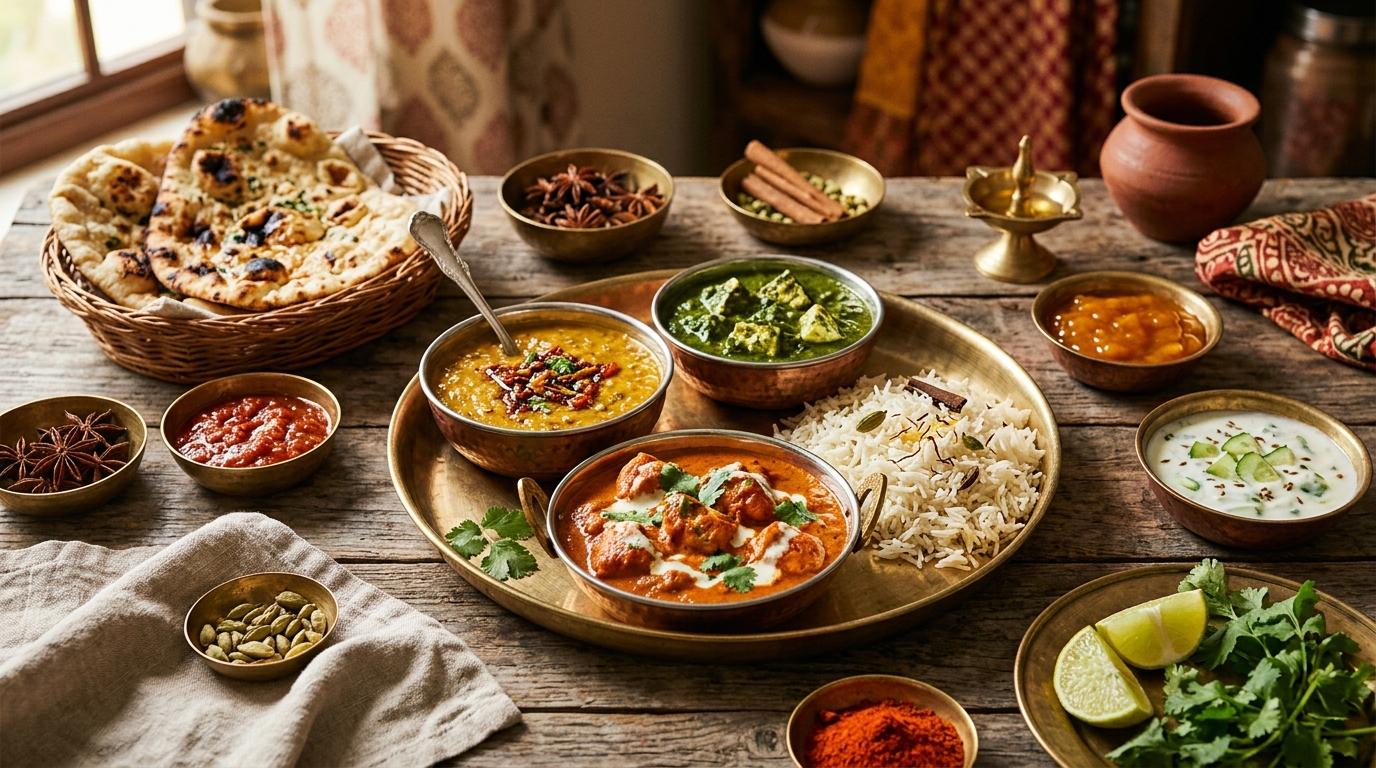
Indian cuisine isn't one thing—it's a thousand regional stories told through spice and flame. From the ghee-rich gravies of Punjab to the coconut-kissed curries of Kerala, each state speaks its own delicious dialect. But here's what most recipe collections miss: the techniques that tie it all together.
You've probably tried making Indian food at home and wondered why it doesn't taste like your favorite restaurant. The secret isn't just the spices—it's understanding how those spices talk to each other, how heat builds flavor, and why timing matters more than you think.
This guide walks you through India's incredible culinary landscape, from weeknight-friendly dishes to the ceremonial foods that mark life's biggest moments. We're talking real techniques, regional differences, and the kind of practical advice that actually gets dinner on the table.
Understanding Indian Cooking Fundamentals
Before diving into recipes, let's talk about what makes Indian cooking work. It's built on a foundation of technique that transforms simple ingredients into complex flavors.
The Spice Foundation
Every great Indian dish starts with understanding spices—not just which ones to use, but how to coax the most flavor from them. Essential Indian Spices and Seasonings Guide explains the science behind blooming spices in oil, but here's the quick version: most Indian recipes begin with tempering (tadka), where whole spices hit hot oil and release their essential oils.
Think of tempering as the flavor base that everything else builds on. Cumin seeds pop and turn golden. Mustard seeds crackle. Dried chilies puff up. This isn't garnish—it's the aromatic foundation of the dish.
The order matters too. Hard spices like cinnamon and cloves go in first. Cumin and coriander seeds follow. Delicate things like curry leaves come last, just long enough to crisp and perfume the oil.
Regional Cooking Techniques
Indian cooking techniques vary dramatically by region, shaped by climate, available ingredients, and cultural traditions. Regional Indian Cuisine Guide (North vs South vs East vs West) covers these differences in detail, but here are the key approaches you'll encounter:
Northern Indian techniques favor rich, dairy-based sauces. Think cream, ghee, and yogurt-marinated meats cooked in tandoor-style high heat. The gravies are thick and luxurious, designed to coat rice and bread.
Southern Indian cooking relies more on coconut, tamarind, and fermentation. The heat is different too—more complex, built from a variety of chilies rather than just intensity. Steaming and fermenting play bigger roles.
Eastern Indian cuisine showcases subtle spicing and fish cookery, with techniques like bhapa (steaming in banana leaves) that preserve delicate flavors.
Western Indian cooking spans from Gujarat's sweet-and-savory vegetarian dishes to Maharashtra's robust, peanut-and-sesame-based preparations.
Essential Indian Recipe Categories
Curry Fundamentals
When most people think "Indian food," they think curry. But curry isn't one thing—it's a cooking method that varies wildly across regions. Popular Indian Curry Recipes Collection explores this diversity, from the tomato-based gravies popular in restaurants to the coconut milk curries of South India.
The key to great curry lies in building layers. Start with your tempering, add aromatics like ginger and garlic, then build your base—whether that's onions cooked to deep golden brown, tomatoes reduced to paste, or coconut ground fresh with spices.
Restaurant favorites like [CLUSTER: Perfect Chicken Tikka Masala Recipe Guide] follow this pattern: marinated meat meets a rich, spiced tomato-cream base. But home cooking opens up so many more possibilities—the everyday dal that simmers while you prep other dishes, or the quick vegetable curries that transform whatever's in your refrigerator.
For busy nights, [CLUSTER: Easy Slow Cooker Butter Chicken Recipe for Busy Weeknights] proves that authentic Indian flavors don't require constant stirring. The slow cooker method lets spices meld gently while you handle the rest of life.
Bread and Rice: The Foundation
Indian meals are built around starches that soak up all those complex sauces. Traditional Indian Bread Recipes (Roti, Naan, Paratha) covers the techniques for making them at home, but here's what matters most: different breads serve different purposes.
Roti (chapati) is the everyday bread—thin, unleavened, cooked on a hot griddle until it puffs with steam. It's the workhorse that pairs with dal and simple vegetable dishes.
Naan requires leavening and traditionally a tandoor's intense heat, but you can adapt the technique for home ovens. The goal is bread that's charred in spots but still soft enough to wrap around chunks of meat.
Paratha takes roti's technique and adds layers through folding and rolling with ghee or oil. Some versions include fillings—potato, cauliflower, or cheese worked into the dough.
Rice varies by region too. Long-grain basmati for biryanis and pulavs, shorter grains for everyday eating, and regional specialties like the red rice of Kerala or the sticky rice preferences of the Northeast.
Vegetarian Excellence
Indian vegetarian cooking isn't about replacing meat—it's a complete culinary philosophy that treats vegetables as the stars they are. Vegetarian Indian Recipes Collection demonstrates techniques that coax incredible depth from plant-based ingredients.
Take dal—probably India's most important protein source. At its simplest, it's lentils cooked with turmeric and salt. But the variations span continents: South Indian sambar with its tamarind tang and vegetable medley, Punjabi dal makhani with its overnight-simmered richness, or Bengali chana dal sweetened with jaggery.
Vegetable dishes follow similar principles. Dry-roasted spices ground fresh. Vegetables cooked just until tender but still holding their shape. Finishing touches like fresh cilantro, a squeeze of lime, or a final tempering of ghee with cumin.
Regional Specialties and Their Stories
India's regional cuisines reflect geography, history, and local ingredients in ways that make each area's food distinctive. Understanding these differences helps you choose recipes that work together and appreciate why certain combinations matter.
North Indian Richness
Punjabi cuisine dominates many Indian restaurants, with good reason—the flavors are bold and the techniques translate well to commercial kitchens. Think cream-based gravies, marinated and grilled meats, and breads cooked in tandoor ovens.
But North Indian cooking extends far beyond restaurant standards. Kashmiri cuisine features warming spices like fennel and dry ginger. Rajasthani food adapts to desert conditions with preserved and dried ingredients. Delhi's street food culture creates entirely different flavor profiles.
South Indian Complexity
Southern Indian cuisine deserves its own deep dive. Tamil Nadu's complex spice blends, Karnataka's ghee-rich preparations, Andhra Pradesh's fiery heat levels, and Kerala's coconut-forward cooking each represent distinct culinary traditions.
The fermentation techniques alone could fill a cookbook—dosa and idli batters that develop over days, pickles that cure for months, and fermented rice preparations that aid digestion.
Eastern and Western Traditions
Bengali cuisine emphasizes fish, rice, and subtle spicing with a distinctive five-spice blend called panch phoron. The cooking techniques often involve steaming and slow-cooking methods that preserve delicate flavors.
Western Indian cuisine includes Gujarat's predominantly vegetarian traditions, Goa's Portuguese-influenced seafood dishes, and Maharashtra's robust flavors built around peanuts, sesame, and coconut.
Quick Weeknight Solutions
Authentic Indian cooking doesn't have to mean hours of prep work. Quick 30-Minute Indian Dinner Recipes focuses on dishes that deliver complex flavors without complex timing.
The secret lies in understanding which shortcuts work and which don't. Pre-made spice pastes can save time if you know how to doctor them with fresh aromatics. Pressure cooking dramatically reduces cooking times for traditionally slow-braised dishes.
One-pot meals work particularly well for weeknight Indian cooking. A simple dal with vegetables becomes a complete meal with rice. Khichdi—rice and lentils cooked together with spices—provides comfort food that's ready in under 30 minutes.
Smart Prep Strategies
Healthy Indian Cooking Techniques and Recipes includes time-saving approaches that don't compromise flavor. Cook big batches of onion-ginger-garlic base and freeze portions. Make spice blends in larger quantities. Prep vegetables when you have time, not when you're hungry.
Think about building flavor in layers even with quick cooking. Start proteins marinating in the morning. Toast and grind spices on weekends. Keep homemade garam masala on hand—it makes everything taste more intentional.
Street Food and Snacks
Indian street food represents some of the most creative and flavorful cooking in the world. Indian Street Food Recipes to Make at Home translates these techniques for home kitchens, but the principles remain the same: bold flavors, interesting textures, and dishes that work as complete meals or shared snacks.
Chaat—savory snacks that combine sweet, sour, salty, and spicy elements—shows Indian flavor balancing at its finest. Samosas provide crispy exteriors for spiced fillings. Pakoras turn vegetables into crispy fritters through seasoned gram flour batters.
The beauty of street food lies in its adaptability. Most recipes work with whatever vegetables you have on hand. The chutneys and sauces that accompany them keep for days and transform simple ingredients into something special.
Festival Foods and Special Occasions
Indian festival cooking involves dishes that mark important moments and bring communities together. Indian Festival and Holiday Recipes explores these traditions, from Diwali's sweet-making marathons to Eid's celebratory biryanis.
These recipes often require more time and technique than everyday cooking, but they reward the effort with flavors and textures you can't achieve any other way. Slow-cooked biryanis where rice and meat steam together in sealed pots. Multi-layered sweets that require timing and temperature control.
Understanding festival foods helps you appreciate why certain techniques matter. The smoking method (dhungar) that perfumes biryani isn't showmanship—it's a flavor layer that completes the dish. The ghee that seems excessive in traditional sweets serves preservation as well as taste.
Desserts and Sweet Traditions
Indian Dessert and Sweet Recipes Guide covers the techniques behind Indian mithai, but here's what matters for home cooks: most Indian sweets rely on milk solids, sugar syrups, and timing.
Kheer (rice pudding) demonstrates the basic technique—milk reduced slowly until it thickens, sweetened, and flavored with cardamom and nuts. Gulab jamun requires understanding sugar syrup consistency. Kulfi uses the reduction method but freezes the result.
Many Indian desserts work well for entertaining because they improve with time. Ras malai tastes better after the dumplings absorb the flavored milk overnight. Carrot halwa keeps for days and reheats beautifully.
Building Your Indian Recipe Collection
Starting an Indian recipe collection can feel overwhelming given the cuisine's diversity, but focus on building techniques rather than just accumulating recipes. Master tempering and you can adapt dozens of dishes. Understand how to balance sweet, sour, and spicy elements and you can improvise chutneys and marinades.
Start with dishes that use similar spice combinations. If you're buying whole cardamom pods for one recipe, find three others that use them too. Build your pantry gradually, focusing on versatile ingredients that appear across multiple dishes.
Keep notes about what works in your kitchen. Your stove might run hotter than the recipe assumes. Your family might prefer less heat or more sweetness. Indian cooking is adaptable—the best recipes become templates you can modify based on what you learn.
Essential Equipment
You don't need specialized equipment for most Indian cooking, but a few tools make the process easier. A heavy-bottomed pot prevents burning during slow cooking. A spice grinder (or dedicated coffee grinder) produces fresher flavors than pre-ground spices. A pressure cooker dramatically reduces cooking times for beans and tough cuts of meat.
Cast iron works beautifully for Indian cooking—it holds heat evenly and develops natural non-stick properties over time. A well-seasoned pan improves the flavor of tempering and helps develop the fond that makes gravies rich.
Adapting Traditional Techniques for Modern Kitchens
Traditional Indian cooking developed around wood fires, clay pots, and techniques that maximized flavor while conserving fuel. Modern kitchens require adaptations, but the principles remain sound.
Slow cooking translates beautifully to modern appliances. Instant Pots can handle traditional pressure cooking techniques while adding programmable convenience. Slow cookers work well for dishes that traditionally simmer for hours.
High-heat cooking requires understanding your equipment. If you don't have a tandoor, a pizza stone in a hot oven approximates some of those effects. Cast iron skillets heated until they smoke can sear meats effectively.
The key is understanding what each traditional technique accomplishes, then finding ways to achieve similar results with your available tools.
Nutritional Wisdom in Traditional Indian Cooking
Indian cuisine includes tremendous nutritional wisdom developed over thousands of years. Spice combinations that aid digestion. Protein complementarity between rice and lentils. Fermentation techniques that improve nutrient availability.
Many traditional practices that seemed purely cultural actually serve health purposes. Turmeric's anti-inflammatory properties. Ginger's digestive benefits. The prebiotic effects of certain spice combinations.
Modern Indian cooking can embrace these principles while adapting to contemporary nutritional understanding. Reducing oil without eliminating flavor. Increasing vegetable content in traditional meat dishes. Using whole grains alongside refined ones.
The Future of Indian Home Cooking
Indian cuisine continues evolving as cooks adapt traditional techniques to modern lifestyles and global ingredients. The fundamentals remain constant—building flavor through proper spicing, understanding heat and timing, balancing sweet, sour, salty, and spicy elements.
What changes is how we apply these principles. Fusion dishes that respect traditional techniques while incorporating new ingredients. Time-saving methods that maintain authentic flavors. Health-conscious adaptations that work within traditional flavor profiles.
The best Indian cooking—whether traditional or adapted—respects the cuisine's diversity while making it accessible to home cooks. Start with techniques that interest you, build your spice collection gradually, and remember that every Indian cook adapts recipes to their family's tastes.
Your version of butter chicken might use different heat levels than your neighbor's. Your dal might include vegetables that never appear in traditional recipes. That's not wrong—it's how cuisine stays alive and relevant across generations and geography.
The goal isn't perfection or absolute authenticity. It's understanding the techniques well enough to make them your own while respecting the culinary traditions they come from. Master the fundamentals, then cook with confidence and creativity.
Sources & further reading
- Indian cuisine | History, Regions, Dishes, & Facts — Encyclopaedia Britannica
- A Comprehensive Guide to Indian Cuisine: List of Popular Indian Dishes by Region and Type — MasterClass
- 46 of Our Favorite Regional Indian Recipes — Saveur
- Global Cuisine Series: Exploring Indian Cuisine — Kendall Reagan Nutrition Center, Colorado State University