

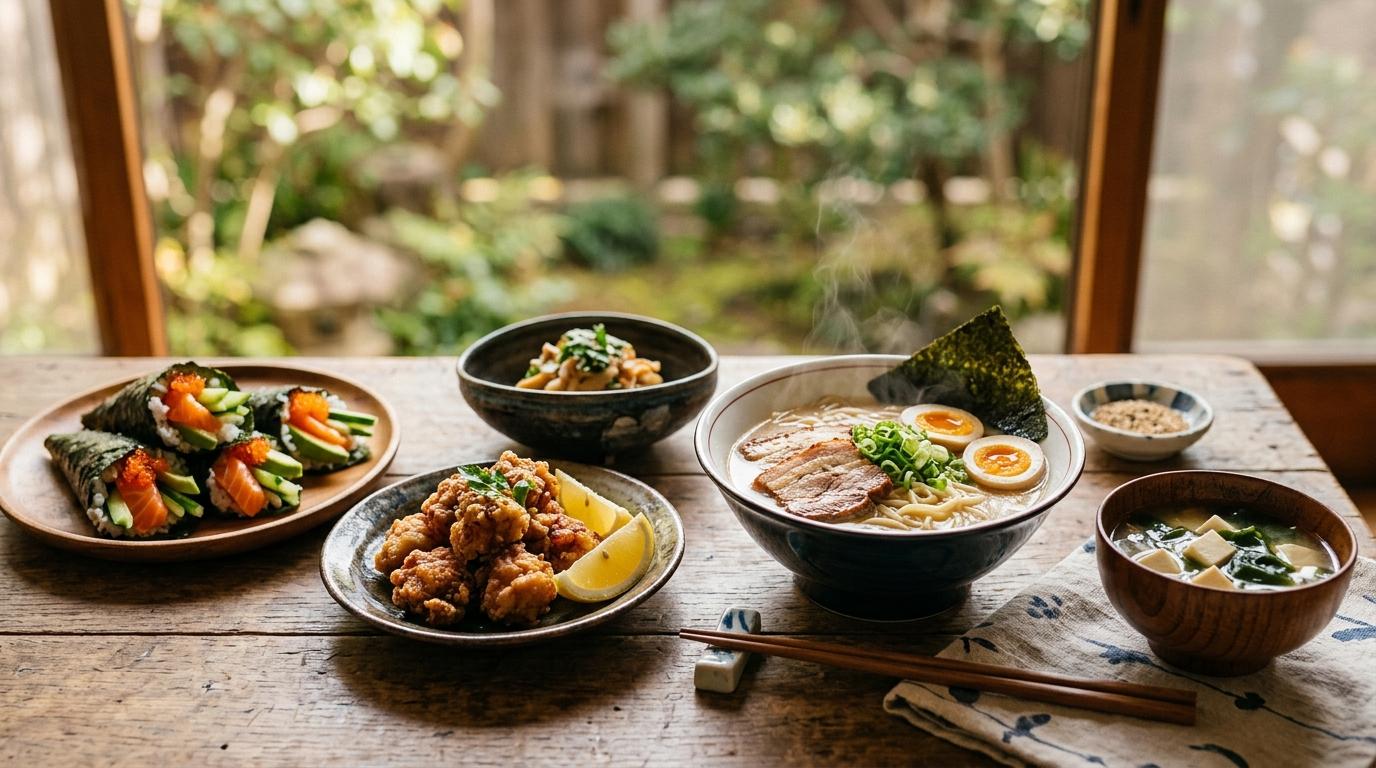
Japanese cooking has this reputation for being impossibly precise, requiring years of training and ingredients you can only find in some hidden Tokyo market. But here's the thing—that's mostly restaurant mystique. Real Japanese home cooking? It's built on simplicity, seasonality, and techniques you can absolutely master in your own kitchen.
The beauty of Japanese cuisine lies not in complexity but in balance. Sweet meets salty, umami deepens every bite, and textures play against each other in ways that make even simple ingredients sing. Once you understand the foundation—the pantry staples, the basic techniques, the way flavors build on each other—you'll find that Japanese recipes become less about following rigid rules and more about developing an intuitive feel for what tastes right.
We're going to walk through Japanese cooking the way it actually works: starting with the essentials that every home cook needs, then building up through techniques and recipes that'll have you cooking with confidence. Whether you're looking for [CLUSTER: Quick 20-Minute Japanese Weeknight Dinners] or ready to tackle more traditional preparations, the key is understanding how Japanese flavors work together.
Building Your Japanese Foundation: Pantry Essentials That Matter
Before you start cooking, let's talk about what actually needs to live in your kitchen. Japanese cooking relies heavily on a few key ingredients that show up again and again, building layers of flavor that make even the simplest dishes incredibly satisfying.
The [CLUSTER: Essential Japanese Pantry Ingredients and Substitutions] conversation starts with soy sauce, but not just any soy sauce. You want a good-quality shoyu—look for one that lists only soybeans, wheat, salt, and water. Kikkoman works perfectly for most home cooking, though if you want to splurge, find a small-batch artisanal brand. The difference in depth and complexity is remarkable.
Miso paste transforms everything it touches. White miso (shiro miso) is mellow and slightly sweet, perfect for beginners and everyday cooking. Red miso (aka miso) brings more intensity and fermented funk—use it when you want bold, earthy flavors. Keep both in your fridge and they'll last for months.
Rice vinegar adds brightness without the harsh bite of white vinegar. Mirin—sweet rice wine—balances savory elements and helps proteins caramelize beautifully. Sake isn't just for drinking; it tenderizes meat and adds complexity to marinades and sauces.
Dashi forms the backbone of Japanese cooking. You can make it from scratch with kombu seaweed and bonito flakes, or use instant dashi powder for weeknight convenience. Either way, this subtle fish-and-sea-vegetable broth is what gives Japanese dishes their distinctive umami depth.
Don't stress about finding every specialty ingredient immediately. Start with soy sauce, miso, rice vinegar, and mirin. Add others as you cook more and develop preferences for specific flavors and techniques.
Essential Techniques: The Methods That Make It Japanese
Japanese cooking techniques center around preserving and enhancing natural flavors rather than masking them. Understanding these methods helps you cook intuitively rather than just following recipes.
Simmering (nimono) creates tender, flavor-infused dishes where ingredients cook gently in seasoned broths. The liquid reduces and concentrates, creating glossy, flavorful sauces that coat each ingredient. Think of it as the Japanese equivalent of braising, but lighter and more delicate.
Grilling (yakimono) over high heat creates the slight char and caramelization that makes teriyaki chicken irresistible or gives yakitori its smoky appeal. You don't need a special grill—a cast-iron pan or regular grill pan works beautifully for most Japanese grilled dishes.
Steaming preserves the pure flavors of ingredients while keeping them tender and moist. Japanese steaming often incorporates aromatics—sake, ginger, or herbs—that perfume the ingredient as it cooks.
Deep-frying (agemono) in Japanese cooking is all about the batter and oil temperature. [CLUSTER: Japanese Tempura Techniques and Recipes] teaches you how to create that impossibly light, crispy coating that shatters at first bite while keeping whatever's inside perfectly cooked and hot.
Starting Simple: Rice Bowls and Everyday Comfort
The best place to start your Japanese cooking journey is with rice bowls—donburi. These one-bowl meals combine perfectly seasoned rice with proteins, vegetables, and sauces in ways that feel both comforting and complete.
[CLUSTER: Easy Japanese Rice Bowl Recipes (Donburi)] represent everything that makes Japanese home cooking so appealing: they're quick to prepare, endlessly customizable, and use techniques that teach you fundamental skills while creating incredibly satisfying meals.
Take oyakodon—literally "parent and child bowl"—made with chicken and eggs simmered in a sweet-savory sauce over rice. The technique is simple: simmer chicken pieces in a mixture of dashi, soy sauce, mirin, and a touch of sugar until tender, then pour beaten eggs over the top and let them just set. The eggs create this silky, custardy layer that binds everything together.
Gyudon follows similar principles but uses thinly sliced beef and onions. The key is slicing the beef thin enough that it cooks quickly and stays tender, and building the sauce gradually so the flavors meld without becoming muddy.
Katsudon takes the concept further by topping rice with crispy panko-crusted pork cutlet, then binding it all with that same egg technique. The contrast between the crispy exterior and silky egg creates textural magic in every bite.
Noodles: Beyond Ramen (Though We Love Ramen Too)
Japanese noodle dishes offer some of the most approachable entry points into the cuisine, and they showcase how Japanese cooking balances flavors, textures, and temperatures.
[CLUSTER: Japanese Noodle Recipes: Udon, Soba & Yakisoba] encompass everything from simple hot broths to complex stir-fries. Udon noodles—thick, chewy wheat noodles—work beautifully in both hot and cold preparations. They have enough body to stand up to rich broths while maintaining their satisfying bite.
Soba noodles, made from buckwheat, bring an earthy, nutty flavor that pairs beautifully with simple preparations. Cold soba with a dipping sauce (tsuyu) made from dashi, soy sauce, and mirin showcases the noodle's flavor while teaching you about the interplay between hot and cold elements.
Yakisoba—literally "grilled noodles"—demonstrates Japanese stir-frying techniques. The noodles get slightly charred edges while vegetables stay crisp-tender, and everything gets coated in a sweet-savory sauce that clings without being heavy.
[CLUSTER: Authentic Japanese Ramen Recipes at Home] deserves special attention because ramen represents some of the most complex and rewarding cooking in Japanese cuisine. But don't let that intimidate you—you can make incredibly satisfying ramen at home by understanding how broths, noodles, and toppings work together.
The secret to great ramen isn't necessarily making everything from scratch (though you can). It's understanding how to build layers of flavor in the broth, how to prepare toppings that complement rather than compete, and how to bring everything together in the bowl so each element enhances the others.
For weeknight ramen, focus on building a flavorful base with miso or soy sauce, enriching it with a touch of sesame oil or tahini, and topping with simple proteins like soft-boiled eggs, leftover roasted chicken, or quickly sautéed vegetables.
Quick Weeknight Solutions That Don't Compromise on Flavor
Japanese cooking excels at creating deeply satisfying meals in minimal time, partly because many techniques focus on enhancing rather than transforming ingredients.
[CLUSTER: Quick 20-Minute Japanese Weeknight Dinners] rely on smart preparation and understanding how Japanese flavors work together. A simple teriyaki chicken becomes weeknight magic when you understand that teriyaki is really just soy sauce, mirin, sugar, and sake reduced until glossy and slightly thickened.
Ginger-scallion fish takes advantage of Japanese steaming techniques—wrap fish fillets with ginger slices and scallions in parchment, add a splash of sake and soy sauce, and steam for 8-10 minutes. The fish stays incredibly moist while absorbing all those aromatic flavors.
Japanese curry offers another quick weeknight solution. [CLUSTER: Japanese Curry: From Blocks to Scratch] can be as simple as using curry roux blocks—widely available and completely legitimate—or as complex as building your own spice blends. The key is understanding that Japanese curry is different from Indian or Thai curries: it's milder, slightly sweet, and designed to complement rather than overwhelm.
[CLUSTER: Easy Curry Chicken with Udon Noodles in 40 Minutes] represents the kind of fusion that happens naturally in home kitchens—taking traditional curry flavors and pairing them with satisfying udon noodles for a complete, warming meal that works perfectly for busy weeknights.
Mastering Japanese Chicken: Beyond Basic Teriyaki
Chicken appears frequently in Japanese cooking, but the preparations go far beyond the sweet teriyaki most Americans associate with Japanese cuisine.
[CLUSTER: Japanese Chicken Recipes: Teriyaki, Karaage & More] showcases the range of techniques that make chicken incredibly versatile in Japanese kitchens. Karaage—Japanese fried chicken—uses a light coating of potato starch or cornstarch instead of heavy breading, creating incredibly crispy exterior that stays crunchy even as the chicken stays juicy inside.
The secret to great karaage lies in the marinade: soy sauce, sake, ginger, and garlic penetrate the meat while tenderizing it. The light dusting of starch creates maximum surface area for crisping without creating a thick, bready coating that competes with the chicken's flavor.
Yakitori takes a different approach, using small pieces of chicken grilled over high heat and basted with tare—a mixture of soy sauce, mirin, and sugar that caramelizes beautifully. You can achieve similar results in a cast-iron pan or under the broiler, focusing on getting good caramelization while keeping the meat tender.
Oyako donburi—parent and child bowl—demonstrates how Japanese cooks think about eggs and chicken together, creating silky, custard-like textures that bind rice, protein, and sauce into something greater than the sum of its parts.
Soups and Broths: The Soul of Japanese Cooking
Japanese soups go far beyond miso soup, though miso soup itself deserves more respect than it typically gets in American Japanese restaurants.
[CLUSTER: Traditional Japanese Soup Recipes (Miso, Dashi & More)] form the foundation of Japanese meal structure. These soups aren't appetizers—they're integral parts of balanced meals that provide warmth, umami, and often additional vegetables or proteins.
Proper miso soup starts with good dashi and treats the miso paste gently. Never boil miso—it becomes bitter and loses its complex fermented flavors. Instead, whisk miso with a little warm dashi until smooth, then stir it into the hot (not boiling) soup just before serving.
Tonjiru—pork and vegetable soup—showcases how Japanese soups can be hearty and satisfying while maintaining clean, clear flavors. Thin slices of pork belly provide richness, while vegetables like daikon, carrot, and burdock root add sweetness and texture.
Clear soups (suimono) demonstrate the Japanese aesthetic of restraint and purity. A few perfectly cut vegetables, perhaps a small dumpling or piece of fish, floating in crystal-clear dashi seasoned with just a touch of salt and soy sauce. These soups teach you to appreciate subtle flavors and the importance of pristine ingredients.
Japanese Breakfast: Starting the Day Right
Japanese breakfast represents everything beautiful about Japanese food philosophy: seasonal ingredients, balanced nutrition, and preparations that enhance rather than mask natural flavors.
[CLUSTER: Authentic Japanese Breakfast Recipes] center around rice, miso soup, and a variety of small dishes that provide different flavors, textures, and nutrients. This isn't about quantity—it's about variety and balance.
Tamagoyaki—sweet rolled omelet—showcases Japanese egg technique at its finest. Layer thin omelets, rolling each one into the previous layer, creating a sweet, custardy block that slices into beautiful spirals. It takes practice, but the technique teaches you incredible control over heat and timing.
Grilled fish—typically something oily and flavorful like mackerel or salmon—provides protein and richness that balances the rice and vegetables. The key is high heat and not overcooking, allowing the skin to crisp while the flesh stays moist and flaky.
Pickled vegetables (tsukemono) add acidity and crunch that wake up your palate. Quick pickles made by salting vegetables briefly, then dressing with rice vinegar, provide the same function as more complex fermented pickles but can be ready in hours rather than weeks.
Building Your Skills: From Basic to Bold
Japanese cooking rewards progression. Start with simple techniques—making good rice, understanding how soy sauce and mirin work together, learning to control heat for proper searing and simmering.
As you get comfortable with basics, move toward techniques that require more timing and finesse. Tempura teaches you about batter consistency and oil temperature. Perfect ramen broths teach you about building layers of flavor over time. Traditional breakfast preparations teach you about balancing multiple elements into cohesive meals.
The beauty of Japanese cooking lies in how techniques build on each other. Learn to make good dashi, and you can make better soups, sauces, and simmered dishes. Master the sweet-savory balance of teriyaki, and you understand the foundation for dozens of other preparations.
Don't feel pressured to master everything at once. Japanese cooking is built on repetition and gradual improvement. Make the same dish multiple times, paying attention to small variations in timing, seasoning, and technique. You'll develop the intuitive understanding that makes cooking feel natural rather than stressful.
Seasonal Cooking and Menu Planning
Japanese cooking follows seasonal rhythms more consciously than most cuisines. This isn't just about availability—it's about understanding how different ingredients and preparations work better at different times of year.
Spring calls for lighter preparations that showcase delicate vegetables and the first tender proteins. Summer focuses on cold preparations—chilled noodles, fresh vegetables, light broths that refresh rather than warm.
Fall and winter embrace heartier preparations: rich stews, warming curries, hot noodle soups that comfort and satisfy. Understanding these rhythms helps you plan meals that feel appropriate and satisfying.
Japanese meal structure also differs from Western approaches. Instead of large portions of single dishes, Japanese meals typically include several smaller dishes that provide variety in flavor, texture, and temperature. Rice and soup form the foundation, while several side dishes (okazu) provide different flavors and nutrients.
This approach works beautifully for home cooks because you can prepare different elements ahead of time, then combine them into balanced meals throughout the week. Make a big batch of rice, prepare some pickled vegetables, and you can create different combinations with quickly cooked proteins and vegetables.
Equipment That Actually Matters
Japanese cooking doesn't require special equipment, but a few key tools make everything easier and more enjoyable.
A good rice cooker transforms your relationship with rice, making perfect results effortless and freeing up stovetop space for other preparations. Look for one with fuzzy logic technology—it adjusts cooking time and temperature automatically for consistently perfect results.
A sharp knife makes all the difference in Japanese cooking, where precise cuts affect both presentation and cooking times. You don't need a handmade Japanese blade—a good German or American knife, properly maintained, works beautifully for all Japanese preparations.
A fine-mesh strainer helps you make smooth dashi and clear broths. A bamboo steamer or metal steaming insert opens up all the gentle steaming techniques that make Japanese vegetables so appealing.
Cast-iron pans work beautifully for achieving the high heat needed for proper searing and grilling. They retain heat well and create the kind of caramelization that makes teriyaki and yakitori so appealing.
Making Japanese Cooking Your Own
The goal isn't to replicate restaurant dishes exactly—it's to understand Japanese flavors and techniques well enough that you can cook intuitively, adapting recipes to your preferences and available ingredients.
Start by mastering a few foundational preparations: good rice, basic miso soup, simple teriyaki. Build from there toward more complex dishes as your confidence and understanding grow.
Pay attention to balance—sweet with salty, rich with acidic, soft with crunchy. Japanese cooking excels at creating harmony between contrasting elements, and understanding this principle will improve all your cooking, not just Japanese dishes.
Don't be afraid to adapt. Japanese-American cuisine has evolved for over a century, creating dishes that honor traditional techniques while using available ingredients and appealing to local tastes. Your Japanese cooking can do the same.
Most importantly, approach Japanese cooking with curiosity rather than intimidation. These techniques developed in home kitchens over centuries, refined by everyday cooks making everyday meals. With practice and patience, you can master them too, creating meals that bring the warmth, balance, and deep satisfaction of Japanese cuisine into your own kitchen.
The journey from tentative beginner to confident Japanese home cook happens one dish at a time. Start simple, build gradually, and trust that understanding comes through repetition and attention. Before long, you'll find yourself cooking Japanese meals not because they're exotic or complicated, but because they're exactly what you want to eat.
Sources & further reading
- A Guide to Dashi — MICHELIN Guide
- Japanese Cooking 101: 17 Pantry Essentials for Japanese Cuisine — MasterClass
- 26 Japanese Pantry Ingredients to Add to Your Shopping List — Just One Cookbook
- How to Make Dashi — America's Test Kitchen