

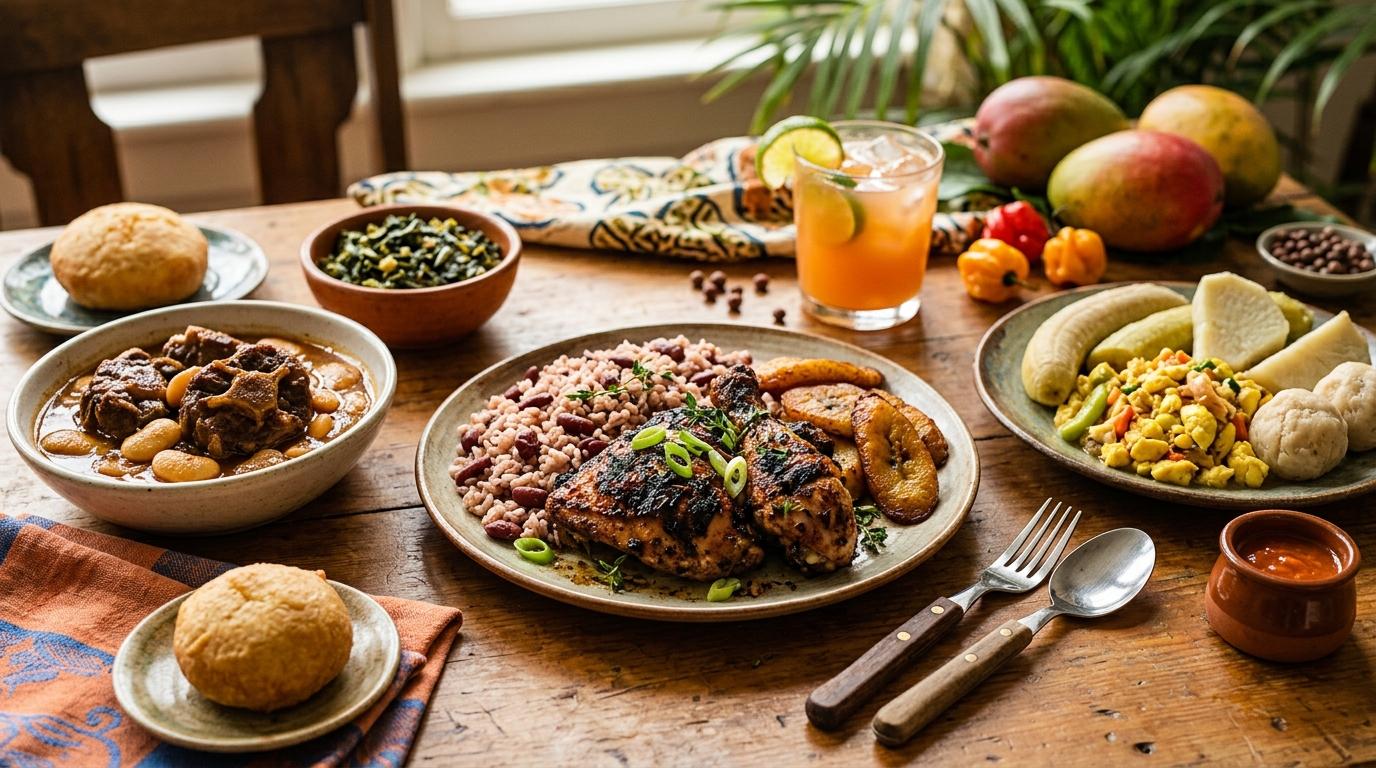
Jamaica's cuisine tells the story of an island where African traditions met indigenous Taíno ingredients, Spanish colonizers, Indian indentured workers, and Chinese immigrants. The result? A food culture that's bold, layered, and absolutely magnetic. We're talking about dishes that make your mouth water from across the room—jerk chicken crackling over pimento wood, curry goat that's been simmering for hours, rice and peas so creamy you want to dive in headfirst.
But here's what most recipe collections miss: Jamaican cooking isn't just about following a list of ingredients. It's about understanding the rhythm of the island's kitchens, the patience required for proper marination, and the confidence to taste and adjust as you go. This isn't precious cooking—it's intuitive, generous, and designed to feed people you care about.
Whether you're completely new to Caribbean flavors or you've been trying to nail that perfect jerk seasoning for years, we're going to walk through everything: the essential techniques, the spice combinations that matter, and the cultural stories that make each dish special. Plus, we'll tackle the practical stuff—like what to do when you can't find scotch bonnet peppers, or how to dial down the heat without losing the flavor.
The Foundation: Understanding Jamaican Flavor Profiles
Before we dive into specific dishes, let's talk about what makes Jamaican food taste like Jamaica. The island's cuisine revolves around a few key flavor principles that show up in dish after dish, creating that unmistakable island taste.
First, there's the holy trinity of Jamaican cooking: onion, garlic, and ginger. But not just any preparation—these aromatics are often blended into a paste or finely minced, then sautéed until they're golden and fragrant. This forms the base for countless stews, curries, and marinades.
Then there's the heat. Scotch bonnet peppers aren't just about fire—they bring a fruity, almost floral complexity that you can't get from other chilies. [CLUSTER: Beginner's Guide to Cooking with Scotch Bonnet Peppers] will help you navigate these powerful little peppers, but the key thing to understand is that Jamaican cooks use them for flavor first, heat second.
Jamaican cuisine also loves its aromatics. We're talking about whole spices like allspice berries (which grow wild on the island), bay leaves, thyme, and cinnamon. These aren't afterthoughts—they're building blocks. In traditional cooking, many dishes start by blooming whole spices in oil, creating a fragrant foundation that infuses everything that follows.
The island's love affair with marination deserves special mention. Jamaican cooks understand that time is an ingredient. Whether it's jerk chicken sitting overnight in a scotch bonnet marinade or curry goat getting friendly with its spices for hours, patience creates depth. Most recipes will tell you "marinate for 30 minutes," but Jamaican home cooks think in terms of overnight, or even longer.
Essential Jamaican Cooking Techniques
Jamaican cooking techniques reflect the island's history and climate. These aren't fussy French methods—they're practical approaches developed by cooks who needed to make the most of limited resources while creating maximum flavor.
Let's start with "brown down"—a technique you'll see in countless Jamaican stews and braises. It's not just browning meat; it's about creating layers of caramelized flavor. You start by browning your protein (usually with a little sugar to help the process), then you scrape up those fond bits and use them as the flavor base for whatever comes next. [CLUSTER: Jamaican Brown Stew Chicken Step-by-Step] breaks down this technique in detail, but the principle applies to everything from oxtail to curry goat.
Then there's the art of seasoning and marinating. Jamaican marinades aren't thin, watery affairs—they're thick, paste-like mixtures that cling to proteins and penetrate deep. The best jerk marinades look almost like pesto, packed with herbs, spices, and enough oil to carry all those flavors into the meat. [CLUSTER: Homemade Jamaican Jerk Seasoning Blend] shows you how to build these complex flavor pastes from scratch.
Jamaican cooks also understand the power of low, slow cooking. Whether it's curry goat bubbling away for hours or oxtail becoming fall-apart tender, patience is key. But this isn't passive cooking—you're tasting, adjusting, adding a splash of coconut milk here, a pinch more curry powder there. The dish tells you what it needs.
One technique that deserves special attention is the Jamaican approach to rice and peas. This isn't just throwing rice and beans in a pot. The liquid ratios, the coconut milk timing, the way the kidney beans are prepared—it all matters. [CLUSTER: How to Make Authentic Jamaican Rice and Peas] walks through the traditional method, but the key insight is that the coconut milk goes in at two different stages, creating both richness and distinct coconut flavor.
The Spice Cabinet: Your Jamaican Pantry Essentials
Building an authentic Jamaican spice collection doesn't require hunting down obscure ingredients—though a few special items will make a real difference. [CLUSTER: Complete Guide to Jamaican Spices and Seasonings] covers everything in detail, but let's focus on the must-haves and smart substitutions.
Allspice berries (called pimento in Jamaica) are non-negotiable. These little brown orbs taste like a combination of cinnamon, nutmeg, and cloves, but they're actually from a single tree that grows throughout the Caribbean. If you can only buy one authentic Jamaican spice, make it this one. Ground allspice works in a pinch, but whole berries give you more control and better flavor.
Scotch bonnet peppers bring both heat and that distinctive fruity flavor that defines so many Jamaican dishes. If you can't find fresh ones, look for frozen (they work great in marinades) or scotch bonnet hot sauce. Habaneros are the closest substitute, but they lack some of that floral complexity.
Curry powder in Jamaica isn't the same as what you'll find in most American supermarkets. Jamaican curry powder tends to be more yellow (heavy on the turmeric), less complex, and specifically designed for the island's cooking style. You can find authentic Jamaican curry powder online, or make your own blend heavy on turmeric, coriander, and cumin.
Fresh thyme is everywhere in Jamaican cooking—not dried, fresh. The herb grows wild on the island, and that fresh, piney flavor shows up in everything from jerk marinades to brown stew. If you can't find fresh thyme, triple the amount and use dried, but add it early in the cooking process to give the flavor time to develop.
Mastering Jerk: Jamaica's Most Famous Flavor
Jerk seasoning isn't just a spice blend—it's a cooking method, a cultural tradition, and probably Jamaica's most famous culinary export. The technique originated with the Maroons, escaped enslaved Africans who developed this preservation and cooking method in Jamaica's mountains. Understanding jerk means understanding this history.
Traditional jerk involves more than just seasoning. It's about the marinade (thick, complex, and applied generously), the cooking method (slow grilling over pimento wood), and the balance of sweet, sour, salty, and fiery hot. [CLUSTER: Jamaican Jerk Chicken Recipe and Techniques] covers the traditional approach, while [CLUSTER: Easy Jamaican Jerk Chicken Recipe: Island Fire Made Simple] offers a more accessible version for home cooks.
The key to good jerk seasoning is understanding that it's not just about heat—though the scotch bonnets certainly bring fire. It's about layering flavors: the warmth of allspice, the brightness of lime juice, the earthiness of thyme, and the sweetness that comes from brown sugar or molasses. Many authentic jerk marinades also include soy sauce (a legacy of Chinese immigration to Jamaica) and a touch of oil to help everything penetrate the meat.
Here's where most home cooks go wrong: they don't marinate long enough. Real jerk chicken sits in its marinade overnight, sometimes longer. The acids in the lime juice and vinegar start to break down the proteins, while the spices have time to penetrate deep. If you're in a rush, at least give it two hours, but overnight is better.
For the cooking, traditional jerk happens over pimento wood, which adds a distinctive smoky sweetness. You probably can't source pimento wood, but you can approximate the flavor with a mix of hardwoods and maybe some soaked allspice berries thrown on the coals. The goal is medium heat and patience—you want the outside charred and crispy while the inside stays juicy.
Beyond Jerk: Other Essential Jamaican Dishes
While jerk might be Jamaica's most famous export, the island's culinary repertoire runs much deeper. Let's explore some dishes that every serious student of Jamaican cooking should master.
Start with ackee and saltfish, Jamaica's national dish. [CLUSTER: Ackee and Saltfish: Jamaica's National Dish Recipe] walks through the traditional preparation, but here's what you need to know upfront: canned ackee is perfectly acceptable (even preferred by some Jamaican cooks), and the key is in the saltfish preparation. You want to soak it properly to remove excess salt, then sauté it with onions, tomatoes, and scotch bonnets until it's flaky and flavorful.
Curry goat represents another cornerstone of Jamaican cooking. [CLUSTER: Jamaican Curry Goat Traditional Recipe] breaks down this slow-braised masterpiece, but the essence is patience and layering. The goat gets marinated, then browned, then slow-simmered with curry spices until it's fall-apart tender. If you can't find goat, lamb shoulder works beautifully, or even beef chuck roast.
Oxtail might seem intimidating, but it's actually one of the most forgiving cuts you can cook. [CLUSTER: Easy Jamaican Oxtail Stew Recipe] shows you how this tough, collagen-rich cut transforms into something silky and rich through slow braising. The key is browning the oxtail pieces first, then building layers of flavor with onions, garlic, ginger, and just enough liquid to keep everything moist as it cooks low and slow.
Don't overlook the sides and accompaniments. [CLUSTER: Traditional Jamaican Festival (Fried Dumplings) Recipe] covers these slightly sweet, cornmeal-based dumplings that are perfect alongside spicy mains. They're somewhere between a hush puppy and a donut, with a crispy exterior and fluffy interior that soaks up all those delicious stew juices.
Seafood the Jamaican Way
Jamaica's surrounded by water, so naturally, seafood plays a huge role in the island's cuisine. [CLUSTER: Jamaican Escovitch Fish Recipe and Technique] introduces you to this pickling technique that transforms simple fried fish into something tangy, spicy, and absolutely addictive.
Escovitch is essentially a Caribbean take on ceviche—but instead of "cooking" the fish with acid, you fry it first, then marinate it in a spiced vinegar mixture. The result is fish that's crispy on the outside, tender inside, and packed with bright, acidic flavor. It's perfect for hot weather, and it actually improves over time as the flavors meld.
The technique works with almost any firm white fish. Red snapper is traditional, but mahi-mahi, grouper, or even salmon work beautifully. The key is getting a good sear on the fish before it goes into the escovitch sauce, and being generous with the scotch bonnet peppers in the marinade.
Navigating Heat Levels and Ingredient Substitutions
One of the biggest barriers to cooking Jamaican food at home is the assumption that everything has to be mouth-scorchingly hot. While Jamaicans do love their heat, the cuisine is really about balance. Here's how to navigate spice levels and make substitutions that work for your palate.
For scotch bonnet peppers, start small. One pepper can feed a family of four in most dishes—you're looking for that distinctive flavor, not just heat. If you're heat-sensitive, remove the seeds and membrane, or start with just a tiny piece. You can always add more, but you can't take it back.
When you can't find scotch bonnets, habaneros are your best substitute, followed by serranos for heat level (though you'll miss some of that fruity complexity). For a very mild version, use just a tiny bit of cayenne pepper and add some bell pepper for that fruity note.
Allspice berries can be replaced with ground allspice, but use about half the amount—ground spices are more concentrated. If you don't have allspice at all, try a combination of cinnamon, nutmeg, and cloves in equal parts.
For coconut milk in rice and peas, full-fat canned coconut milk works perfectly—often better than fresh. If you need a lighter version, use light coconut milk or dilute regular coconut milk with some vegetable broth.
Jamaican curry powder has its own flavor profile, but if you can't find it, make your own with heavy turmeric, plus coriander, cumin, fenugreek, and a touch of cinnamon. It should be more yellow than brown.
Timing and Meal Planning for Jamaican Cooking
Jamaican cooking rewards planning ahead. Many of the island's best dishes improve with time, and understanding the timing can make your cooking more relaxed and enjoyable.
For jerk anything, plan to marinate overnight. The marinade needs time to penetrate, and the flavors need time to meld. You can prep jerk chicken on Sunday and cook it throughout the week—it actually gets better as it sits.
Curry goat and oxtail are weekend projects. Both need several hours of slow cooking, but they're largely hands-off once they get going. Start them early in the day, and by evening you'll have something spectacular. Both dishes reheat beautifully and taste even better the next day.
[CLUSTER: Jamaican Beef Patty Recipe and Dough Techniques] shows you another make-ahead option. The pastry dough can be made days in advance, and the filling actually improves overnight. You can assemble patties and freeze them, then bake directly from frozen when you want them.
For a typical Jamaican Sunday dinner, start your main dish (curry goat, oxtail, or brown stew chicken) early in the afternoon. About an hour before serving, start your rice and peas—it needs time for the flavors to develop and the coconut milk to reduce properly. Festival can be mixed and fried just before serving.
Building Your Jamaican Cooking Confidence
The secret to good Jamaican cooking isn't following recipes to the letter—it's developing your palate and learning to taste as you go. Jamaican home cooks taste constantly, adjusting seasoning, adding a pinch more curry powder, or letting something cook a little longer until it feels right.
Start with dishes that are hard to mess up. Rice and peas is forgiving—if it's too dry, add more coconut milk; if it's too wet, cook it a little longer. Brown stew chicken gives you plenty of opportunities to taste and adjust throughout the cooking process.
Don't be afraid to make dishes your own. Jamaican cuisine itself is a fusion, born from the meeting of different cultures on the island. If you need to dial down the heat, add some sweetness, or substitute ingredients based on what you can find, you're participating in that same tradition of adaptation.
The most important thing is to cook with generosity—generous amounts of seasoning, generous marinating time, and generous portions for the people you're feeding. Jamaican food is meant to be shared, and it's meant to bring joy. If you're having fun in the kitchen and your family is excited about dinner, you're doing it right.
Where to Go From Here
Jamaican cuisine offers endless opportunities for exploration. Once you've mastered the basics—a good jerk marinade, proper rice and peas, and maybe a curry or two—the world opens up. There are regional variations to explore, seasonal ingredients to incorporate, and your own family preferences to accommodate.
Consider this your invitation to dive deeper into the culture behind the food. Read about Jamaica's history, listen to reggae while you cook, and remember that every dish you make connects you to generations of cooks who developed these techniques through necessity, creativity, and love.
The island's cuisine teaches us that the best food comes from patience, from understanding your ingredients, and from cooking with your heart. Whether you're making a simple rice and peas or attempting a complex curry goat, approach it with curiosity and confidence. The flavors of Jamaica are waiting for you.
Sources & further reading
- Jamaican Food | Explore Our Cuisine & Rich Culinary Traditions — Jamaica Information Service (Government of Jamaica)