

Turkish Pilaf Recipes: Traditional Methods for Perfect Rice
Turkish pilaf transforms simple grains into aromatic, fluffy perfection through time-honored techniques. Master the art of toasting, seasoning, and steaming for restaurant-quality results at home.
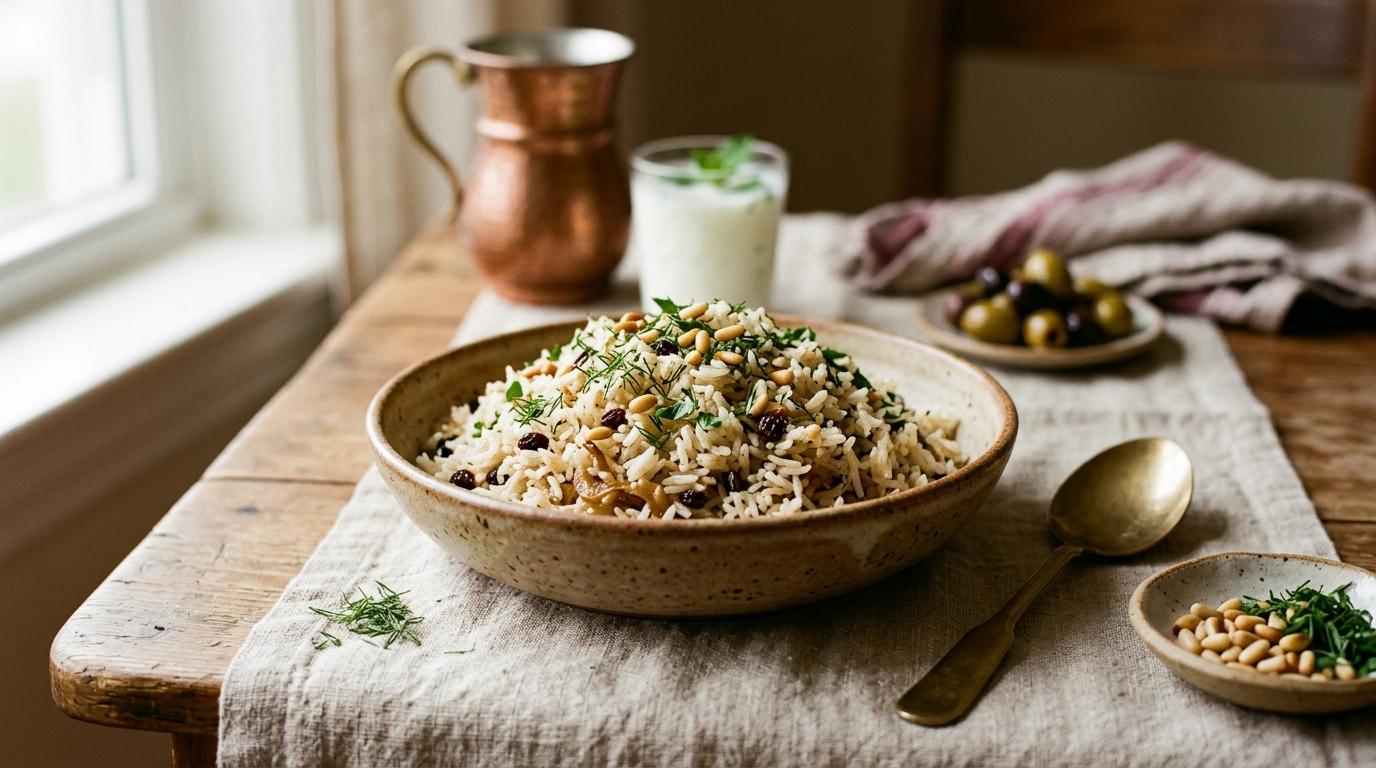
Turkish pilaf isn't just rice cooked in broth—it's a meditation on patience, technique, and the alchemy of grains. While exploring Turkish recipes, you'll discover that pilaf sits at the heart of Turkish cuisine, transforming everyday meals into something memorable. The word "pilav" itself carries centuries of culinary wisdom, representing a cooking method that turns humble grains into golden, separate pearls of flavor.
The magic happens in the toasting. Turkish cooks know that proper pilaf begins with dry grains meeting hot fat, creating that essential nutty foundation. This isn't about throwing rice into boiling water and hoping for the best. It's about understanding how heat, fat, and grain interact to create texture and taste.
Turkish pilaf encompasses more than just rice. Bulgur pilaf holds equal importance in Turkish kitchens, especially in southeastern regions where wheat cultivation runs deep. Both grains follow similar principles but demand different timing and attention.
Understanding Turkish Pilaf Fundamentals
Turkish pilaf technique revolves around three critical stages: toasting, liquid absorption, and steaming. Each stage serves a specific purpose in achieving the characteristic separate grains that define perfect pilaf.
The toasting phase develops flavor complexity. Turkish cooks heat butter or oil in a heavy-bottomed pot, then add the grains. You'll hear gentle sizzling as moisture evaporates and starches begin to transform. The grains should turn lightly golden and smell nutty—usually 2-3 minutes for rice, slightly longer for bulgur.
Liquid temperature matters enormously. Adding cold broth to hot grains shocks them, potentially creating uneven cooking. Turkish home cooks keep their broth or stock simmering in a separate pot, adding it hot to the toasted grains. This maintains cooking momentum and prevents temperature drops that lead to sticky results.
The absorption phase requires restraint. Once you add the hot liquid, resist stirring. Turkish pilaf cooks covered over low heat, allowing steam to work its magic. Stirring breaks the delicate grain structure and releases excess starch, creating the gumminess that separates amateur pilaf from the real thing.
Classic Turkish Rice Pilaf (Pirinç Pilavı)
Turkish rice pilaf forms the foundation of countless meals. The technique seems simple but rewards attention to detail. Start with good long-grain rice—basmati works beautifully, though Turkish cooks often prefer local varieties when available.
Heat two tablespoons of butter in a heavy-bottomed saucepan. Add one cup of rice, stirring gently until each grain glistens with fat. Listen for the subtle crackling that signals moisture leaving the rice. This takes about three minutes over medium heat.
Pour in two cups of hot chicken or vegetable stock. The liquid should sizzle vigorously when it hits the hot rice. Add a generous pinch of salt, bring to a boil, then immediately reduce heat to the lowest setting. Cover tightly and cook for 18 minutes without lifting the lid.
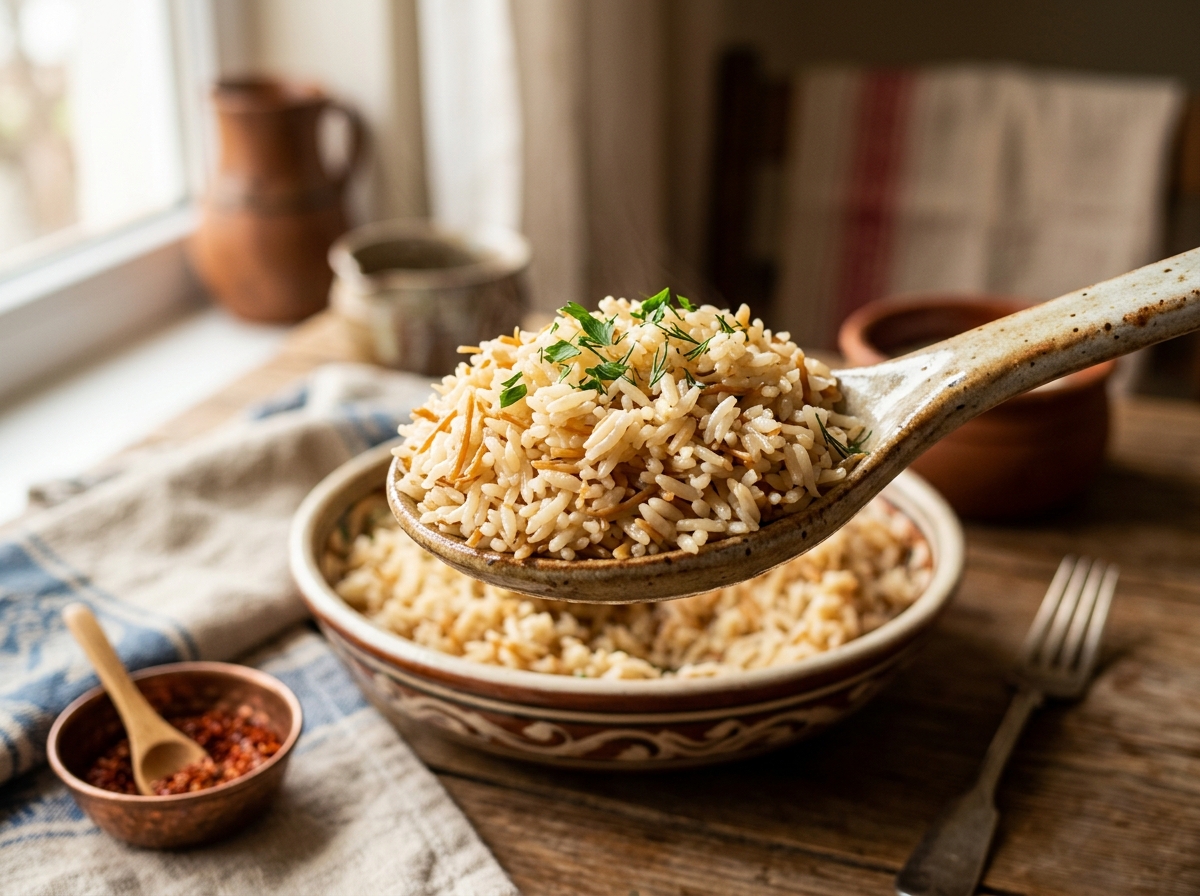
After 18 minutes, remove from heat but keep covered. Let the pilaf rest for 10 minutes—this final steaming ensures perfectly tender grains. Fluff gently with a fork, working from the edges toward the center.
Traditional Vermicelli Rice Pilaf (Şehriyeli Pilav)
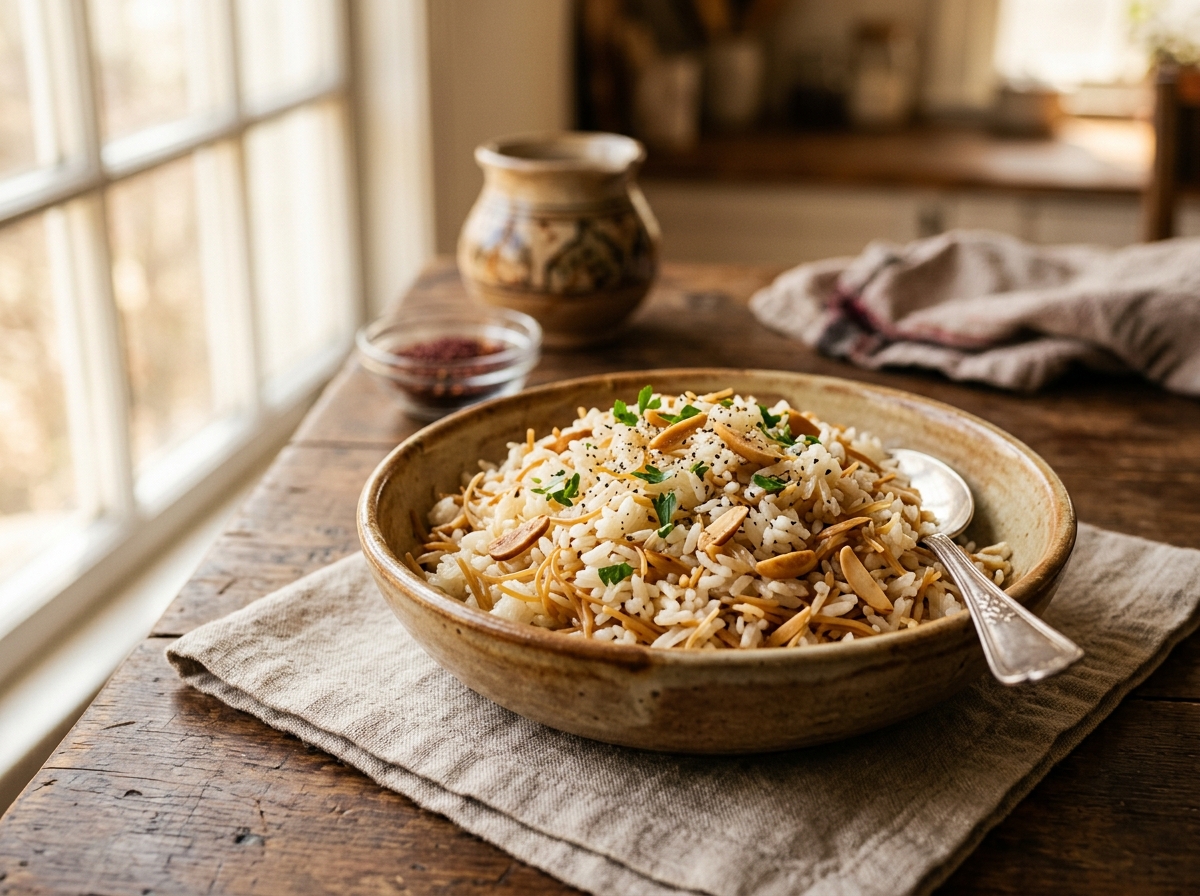
Adding broken vermicelli creates textural contrast and deeper flavor. This variation appears frequently at Turkish dinner tables, especially alongside grilled meats and stews.
Break thin vermicelli noodles into small pieces—roughly half-inch segments work well. Toast them in butter until golden brown before adding the rice. The vermicelli should reach a deep amber color, contributing nutty sweetness to the finished dish.
Add one cup of rice to the toasted vermicelli, stirring until the grains are coated. The rice doesn't need as much toasting when vermicelli provides the foundational flavor. Pour in hot stock and proceed as with basic pilaf, maintaining the same timing and temperature control.
Turkish Bulgur Pilaf (Bulgur Pilavı)
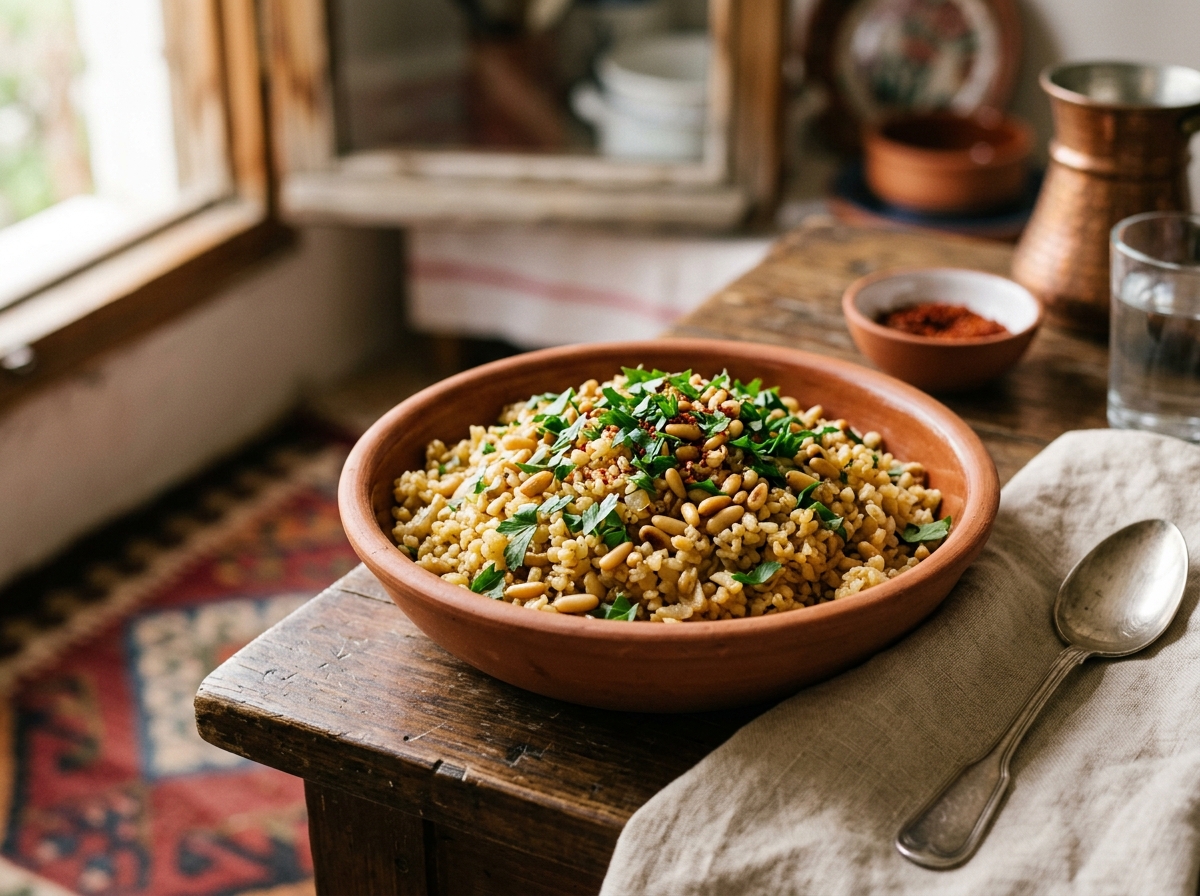
Bulgur pilaf represents Turkish cuisine's wheat-centric traditions, particularly strong in southeastern regions around Gaziantep and Şanlıurfa. The grain's nutty character and slightly chewy texture provide satisfying substance that pairs beautifully with yogurt-based dishes and grilled vegetables.
Medium-grind bulgur works best for pilaf—fine bulgur becomes mushy, while coarse requires extended cooking that can dry out other ingredients. Toast one cup of bulgur in oil or butter until fragrant, about 4-5 minutes. Bulgur toasts more quickly than rice, so watch carefully to prevent burning.
Add one and three-quarter cups of hot stock to the toasted bulgur. Bulgur absorbs liquid faster than rice and requires slightly less moisture. Cover and cook over low heat for 15 minutes, then rest off heat for 10 minutes. The final texture should be tender but still have pleasant bite.
Regional Variations and Traditional Additions
Turkish pilaf varies significantly across regions, reflecting local ingredients and cultural influences. Southeastern Turkish pilaf often includes pine nuts, almonds, or pistachios, toasted until fragrant before folding into the finished grain.
In coastal areas, pilaf might include currants or small raisins, adding subtle sweetness that complements seafood dishes. These additions go in during the final resting period, allowing residual heat to plump the fruit without overcooking.
Spice additions vary by region and family tradition. A small piece of cinnamon stick or a few whole allspice berries can transform basic pilaf into something aromatic and complex. Add whole spices during the toasting phase, removing them before serving.
Fresh herbs appear frequently in Turkish pilaf, but timing matters. Sturdy herbs like thyme or oregano can withstand the cooking process, while delicate parsley or dill should be folded in just before serving to preserve their bright flavor.
Key Ingredients for Authentic Turkish Pilaf
Quality ingredients make the difference between acceptable pilaf and memorable pilaf. Turkish cooks prioritize good stock—homemade when possible, though high-quality commercial versions work well. Chicken stock provides richness, while vegetable stock allows grain flavors to shine.
Fat choice affects both flavor and texture. Butter creates richness and helps achieve proper browning, while olive oil provides cleaner taste that works especially well with bulgur. Some Turkish cooks combine both, using olive oil for toasting and finishing with butter for richness.
Salt timing proves crucial. Add salt with the liquid rather than during toasting—salt can interfere with proper browning and grain separation. Taste the stock and adjust seasoning accordingly, remembering that reduction will concentrate flavors.
Pine nuts, almonds, and pistachios appear frequently in Turkish pilaf. Toast them separately until golden, then fold into the finished pilaf. This prevents burning while ensuring maximum nutty flavor and satisfying crunch.
Mastering the Technique
Successful Turkish pilaf requires understanding heat management and timing. Use a heavy-bottomed pot that distributes heat evenly—thin pans create hot spots that can burn grains while leaving others undercooked.
Control your heat carefully. High heat serves only for the initial toasting and bringing liquid to a boil. Once you cover the pot, reduce heat to the lowest possible setting. If your burner doesn't go low enough, use a heat diffuser or move the pot partially off the burner.
Resist the urge to check on your pilaf during cooking. Each time you lift the lid, steam escapes and cooking becomes uneven. Trust the timing and keep that lid firmly in place until the resting period begins.
The fork test reveals properly cooked pilaf. Grains should be tender but still hold their shape, with no hard centers or mushy exteriors. If grains seem undercooked after the resting period, add a splash of hot stock and steam briefly with the lid on.
Serving and Pairing Turkish Pilaf
Turkish pilaf serves as both side dish and foundation for complete meals. Plain rice pilaf accompanies grilled meats, stews, and vegetable dishes, absorbing flavors while providing satisfying substance. Bulgur pilaf pairs especially well with yogurt-based sauces and fresh vegetable salads.
Temperature matters for serving. Turkish pilaf should arrive at the table hot but not steaming—excessive heat can continue cooking and potentially create mushiness. Let pilaf rest briefly after fluffing if it seems too hot.
Garnish options include toasted nuts, fresh herbs, or a drizzle of good olive oil. Keep garnishes simple to highlight the pilaf's inherent flavor and texture. A sprinkle of sumac adds pleasant tartness that complements the grains' nuttiness.
Troubleshooting Common Pilaf Problems
Sticky pilaf usually results from too much stirring or insufficient toasting. The initial fat-coating phase creates a protective barrier around each grain. Skipping this step or stirring during cooking breaks down that protection, releasing starch that creates gumminess.
Dry pilaf often indicates too much heat during the steaming phase or insufficient liquid. If your pilaf seems dry before the resting period ends, add a few tablespoons of hot stock and continue steaming. The grains should absorb the additional moisture without becoming soggy.
Unevenly cooked grains point to temperature problems or inadequate resting time. Make sure your heat stays consistently low during cooking, and always allow the full resting period. This final steaming ensures uniform texture throughout.
Beyond Basic Pilaf
Once you master basic techniques, Turkish pilaf becomes a canvas for creativity. Saffron transforms rice pilaf into an elegant side worthy of special occasions. Steep a pinch of saffron threads in hot stock before adding to the toasted rice.
Dried fruit additions work beautifully with both rice and bulgur. Chopped apricots, dates, or figs add natural sweetness and chewy texture contrast. Add dried fruit during the resting period to prevent overcooking.
Vegetable additions expand pilaf into complete meals. Diced onions, carrots, or peppers can be sautéed before adding grains, creating foundation flavors that permeate the finished dish. Keep vegetable pieces small to ensure even cooking.
Turkish pilaf represents more than just a cooking technique—it embodies the Turkish approach to transforming simple ingredients through patience and understanding. Whether you're preparing rice pilaf for a weeknight dinner or bulgur pilaf for a special gathering, these traditional methods connect you to generations of Turkish home cooks who understood that great food requires attention, respect, and time.
Master these fundamentals, and you'll find pilaf becoming a reliable foundation for countless meals. The techniques translate beyond Turkish cuisine, providing skills that improve any grain-based dish in your repertoire. From here, explore other elements of Turkish recipes that pair beautifully with perfectly prepared pilaf—the combination creates meals that satisfy both body and soul.
Sources & further reading
- How To Make Turkish Rice — Turkey's For Life
- Turkish Rice - Sehriyeli Pilav — End of the Fork
- How to make Turkish rice — A Kitchen in Istanbul (Vidar Bergum)
Related Topics
Enjoyed this article? Share it with fellow food lovers!
Import a recipe, start cooking
Paste any recipe URL and we'll turn it into a Cook Mode experience with step-by-step visuals, voice narration, and built-in timers.