

Turkish Dessert Recipes: Baklava, Turkish Delight & More
Turkish desserts are the crown jewels of Ottoman cuisine, from honey-soaked baklava to rose-scented Turkish delight. These recipes bring centuries of tradition to your kitchen with detailed techniques for perfect results.
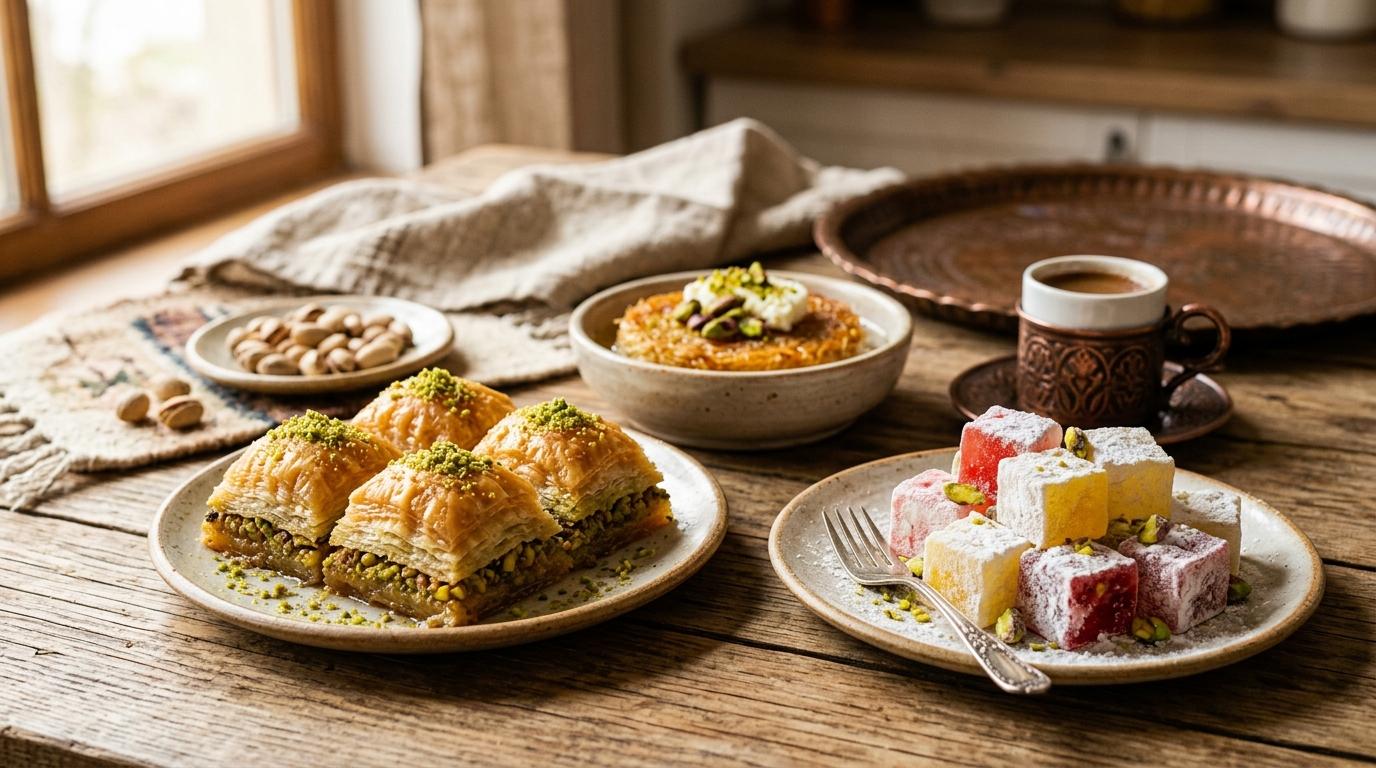
Turkish desserts represent the pinnacle of Ottoman culinary artistry, where Byzantine, Persian, and Arab influences created something entirely magnificent. While our collection of Turkish recipes spans everything from hearty kebabs to delicate meze, the dessert tradition stands apart—each sweet telling stories of palace kitchens and ancient trade routes.
These aren't just recipes. They're edible history, techniques perfected over centuries by generations of Turkish cooks who understood that the perfect balance of sweetness, texture, and aroma could transport you directly to the spice-scented streets of Istanbul.
The Art of Turkish Dessert Making
Turkish desserts fall into distinct categories, each requiring its own mastery. There are the syrup-soaked pastries like baklava and şöbiyet, the milk-based puddings such as sütlaç and muhallebi, and the unique confections like Turkish delight that showcase the Ottoman sweet-making genius.
The key to authentic Turkish desserts lies in understanding restraint. Unlike many Western sweets that rely on overwhelming sweetness, Turkish desserts achieve balance. The sugar never masks the primary flavors—it enhances them. Rose water doesn't dominate; it whispers. Nuts aren't buried under cream; they shine.
Mastering Baklava: The Sultan of Sweets
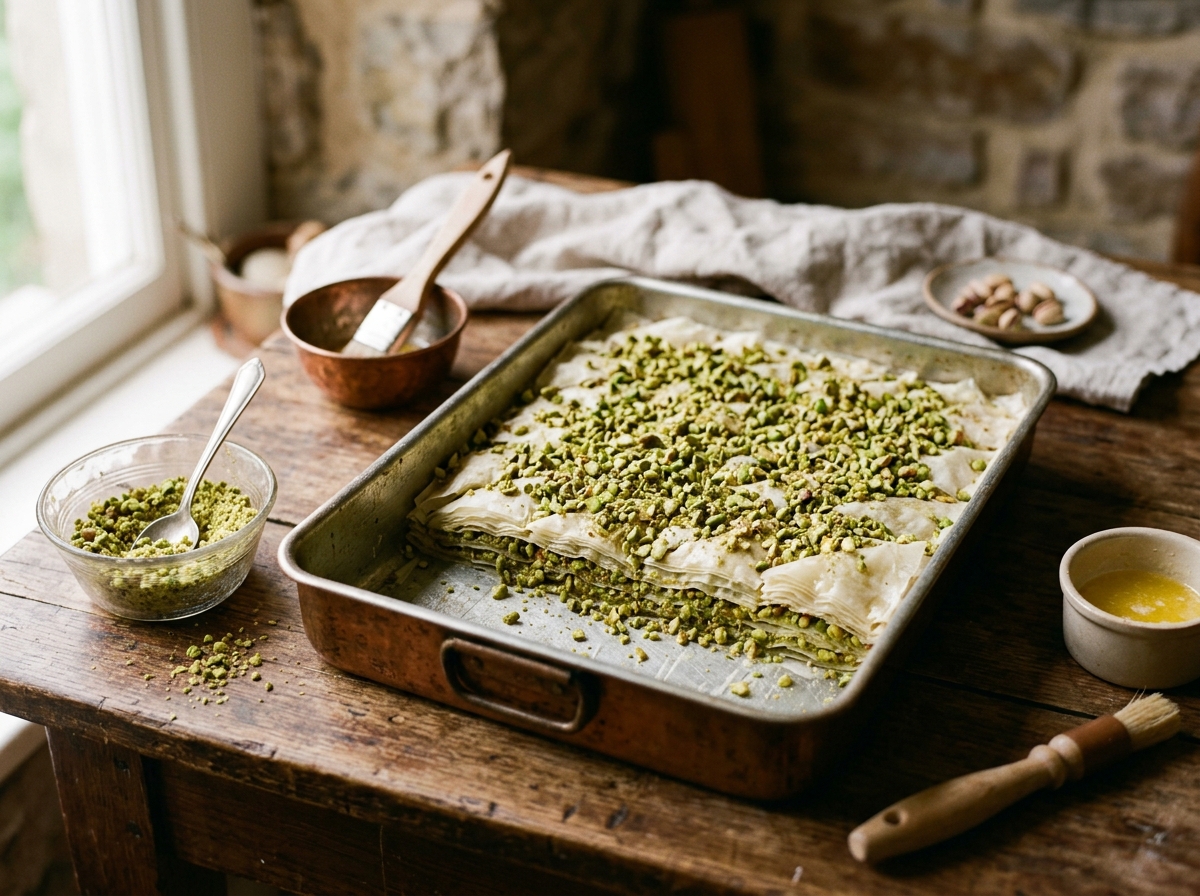
Baklava isn't just Turkey's most famous dessert—it's arguably one of the world's greatest pastries. The secret lies in the phyllo work and the syrup timing.
The Perfect Phyllo Technique
Working with phyllo requires confidence, not fear. Keep unused sheets under a damp towel, but don't overthink it. Phyllo is more forgiving than most bakers realize.
Brush each layer with melted butter—not soaking, not skimping, but with purpose. The butter creates the flaky separation between layers that makes baklava sing. Use a wide pastry brush and work quickly but deliberately.
For the filling, crush your nuts coarsely. Too fine and they'll create a paste; too chunky and they'll tear the phyllo. Pistachios are traditional, but walnuts and almonds work beautifully. Mix in just enough sugar and cinnamon to bind—about two tablespoons of sugar per cup of nuts.
The Syrup Science
This is where most home cooks stumble. The syrup must be cool when it hits the hot baklava, or vice versa. Hot syrup on hot pastry creates soggy disappointment. Hot pastry on cool syrup creates magic.
Make your syrup with equal parts sugar and water, plus a strip of lemon peel and a cinnamon stick. Simmer until it coats a spoon lightly—about 10 minutes. Let it cool completely while your baklava bakes.
Pour the cooled syrup slowly over the hot baklava, listening for the satisfying sizzle as it penetrates the layers. The pastry will drink it up, creating that perfect balance of crispy exterior and tender, sweet interior.
Turkish Delight: The Confectioner's Crown
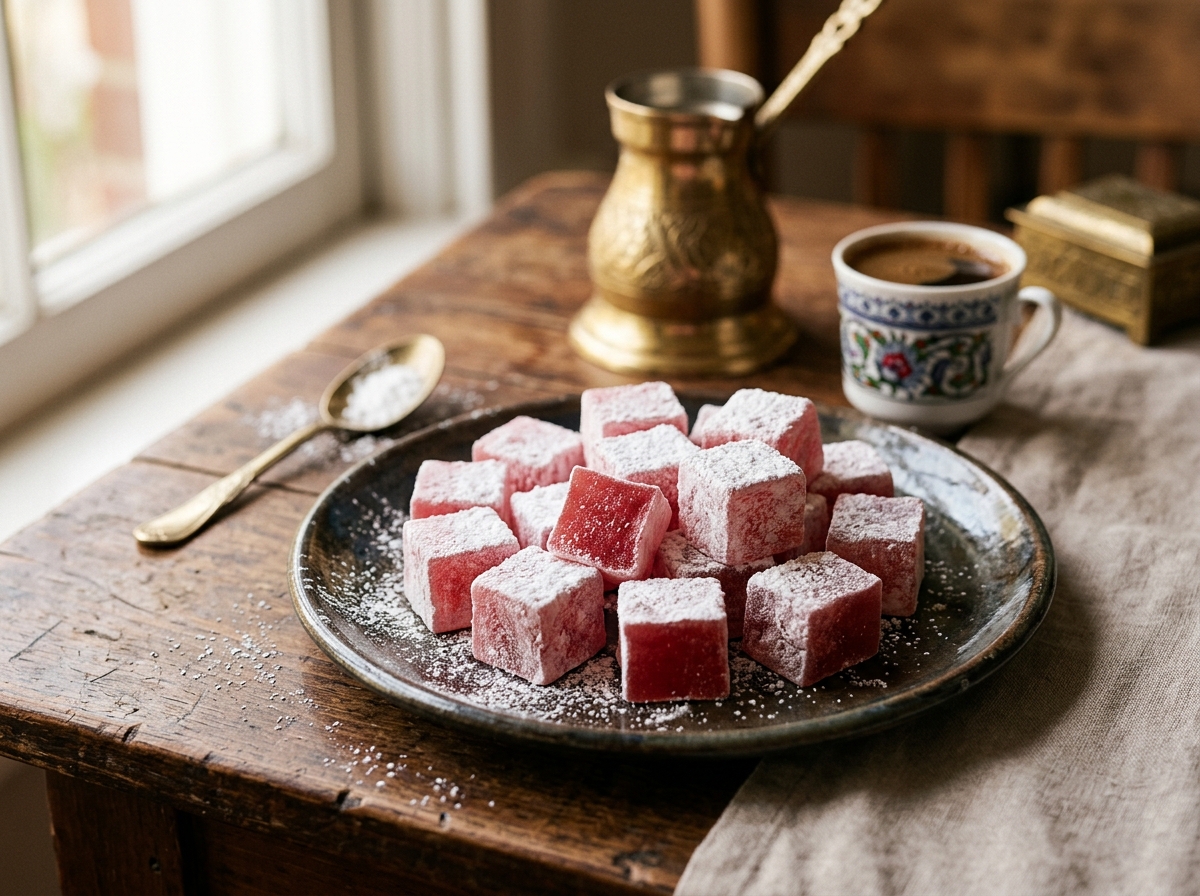
Lokum, or Turkish delight, seems simple but demands precision. It's essentially a fruit-flavored gel, but the texture separates the masterful from the mediocre.
Start with a heavy-bottomed pan—this isn't optional. Turkish delight burns easily, and uneven heat will ruin hours of work. Combine sugar, water, and lemon juice, bringing the mixture to exactly 240°F (soft ball stage). Don't guess; use a thermometer.
Meanwhile, bloom your gelatin or prepare your starch mixture. Traditional recipes use cornstarch, which creates a firmer, more traditional texture than gelatin. Whisk cornstarch with cold water until completely smooth—any lumps will create an unpleasant texture in the final product.
The cooking process requires patience. Stir constantly as you slowly add the hot sugar syrup to the starch mixture. The mixture will be thin at first, then gradually thicken over 45-60 minutes of gentle cooking. You'll know it's ready when it pulls away from the sides of the pan and coats the spoon heavily.
Rose water and lemon are classic flavors, but pomegranate, orange blossom, and mastic create beautiful variations. Add flavorings gradually—you can always add more, but you can't take them back.
Sütlaç: The Comfort of Rice Pudding
Turkish rice pudding might seem humble compared to baklava's drama, but it represents Turkish dessert philosophy perfectly: simple ingredients transformed through technique into something sublime.
The rice must be cooked until completely tender before adding milk. This takes longer than you think—sometimes 45 minutes of gentle simmering with frequent stirring. Shortcuts here create grainy pudding that no amount of cream can fix.
Once the rice dissolves into silky smoothness, add whole milk gradually. Turkish cooks use full-fat milk exclusively for desserts—the richness isn't optional, it's essential to the final texture.
Sugar goes in last, along with a vanilla bean or mastic if you're feeling traditional. Cook until the mixture coats a spoon heavily, then pour into individual ramekins for the classic presentation.
The final touch—a brief stint under the broiler to create golden spots on the surface. This caramelization adds a subtle bitter note that balances the sweetness perfectly.
Key Ingredients for Turkish Desserts
Turkish desserts rely on specific ingredients that create their distinctive character. Phyllo pastry forms the backbone of many sweets—buy it frozen from Greek or Middle Eastern markets for the best quality.
Nuts play starring roles throughout Turkish desserts. Pistachios from Gaziantep are legendary, but California pistachios work well too. Remove every bit of skin from pistachios for the most beautiful green color in baklava.
Mastic, a resin from Greek islands, appears in many traditional recipes. It adds a unique pine-like flavor that's subtle but distinctive. A little goes a long way—start with 1/4 teaspoon and adjust to taste.
Rose water and orange blossom water require careful handling. These floral waters can overpower quickly, so add them gradually and taste as you go. Lebanese and Turkish brands tend to be more concentrated than Persian varieties.
For milk-based desserts, use whole milk exclusively. The fat content isn't negotiable—it creates the creamy texture that defines these desserts.
Advanced Techniques and Variations
Once you've mastered the basics, Turkish desserts offer endless possibilities for creativity while respecting tradition.
Şöbiyet, sometimes called "cream baklava," layers phyllo with kaymak (Turkish clotted cream) or thick pastry cream. The technique mirrors baklava but requires perfect temperature control to prevent the cream from curdling.
Künefe deserves special mention—shredded phyllo layered with cheese, then soaked in syrup. It sounds odd but creates one of the most beloved desserts in Turkish cuisine. The cheese melts slightly, creating pockets of salty richness against the sweet, crispy pastry.
For Turkish delight variations, experiment with natural fruit purees. Pomegranate creates beautiful ruby-colored squares, while fig puree adds earthiness that pairs wonderfully with chopped pistachios.
Serving and Storage
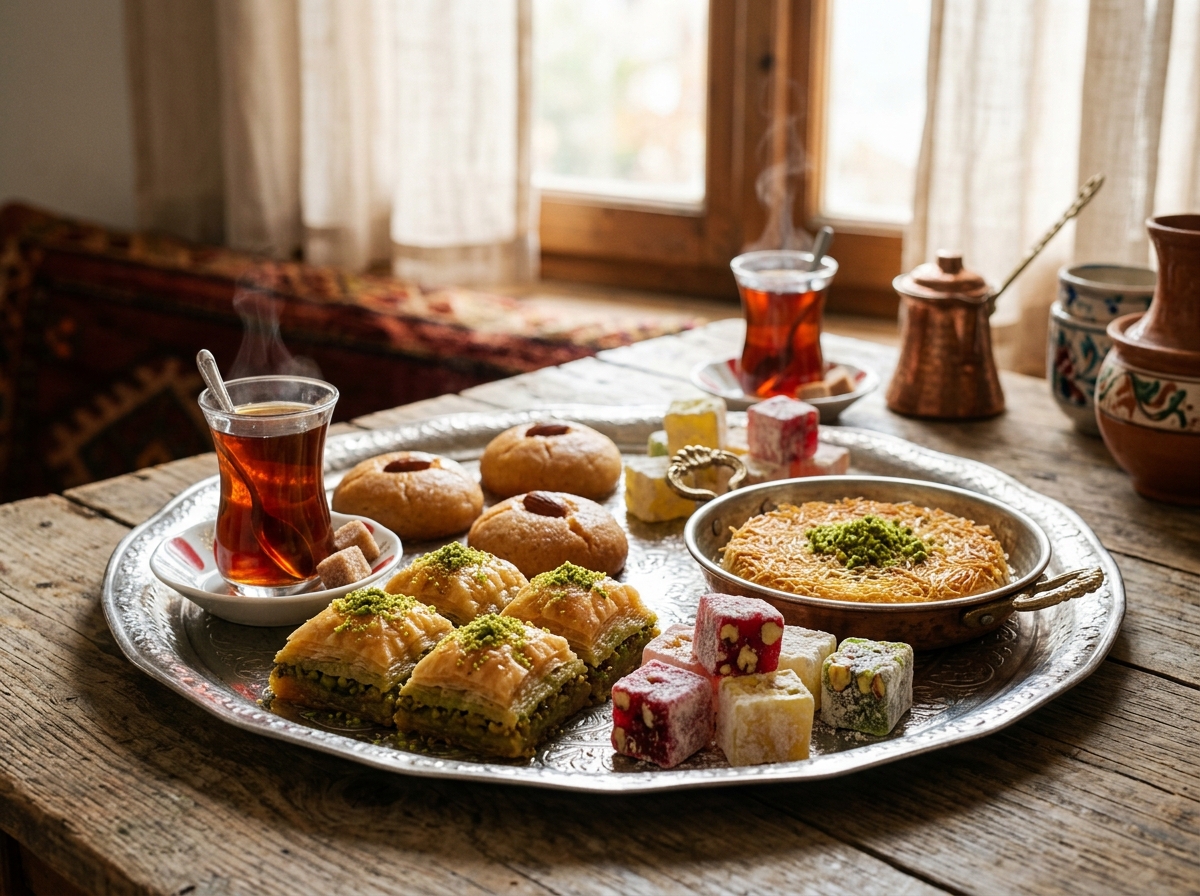
Turkish desserts shine when served properly. Baklava should rest at least four hours after adding syrup—overnight is even better. This allows the flavors to meld and the textures to achieve perfect balance.
Turkish delight keeps for weeks in an airtight container, dusted with powdered sugar or cornstarch to prevent sticking. Traditional wooden boxes aren't just for show—they allow slight air circulation that maintains ideal texture.
Milk-based desserts like sütlaç should be served chilled but not ice-cold. About an hour out of the refrigerator brings them to perfect serving temperature, where their flavors bloom fully.
Turkish tea provides the perfect counterpoint to these rich desserts. The slight astringency cleanses the palate between bites, allowing you to fully appreciate each layer of flavor.
Troubleshooting Common Issues
Soggy baklava usually means hot syrup met hot pastry. Always ensure one component is completely cool before combining them.
Grainy Turkish delight indicates the sugar syrup reached too high a temperature or cooled too quickly. Maintain gentle, consistent heat throughout the cooking process.
Lumpy rice pudding means the rice wasn't fully cooked before adding milk, or the heat was too high during the final cooking stage. Patience prevents both problems.
Cracked phyllo often results from working in too-dry conditions. Cover unused sheets with a damp towel, and don't worry about small tears—they rarely show in the final product.
These Turkish dessert recipes connect you to centuries of culinary tradition, each technique refined by countless Turkish cooks who understood that true sweetness comes from balance, not excess. Master these classics, and you'll have unlocked the secrets of Ottoman palace kitchens. Like all the best Turkish recipes, these desserts reward patience and technique with flavors that transport you directly to the heart of Turkish culinary culture.
Sources & further reading
- Think outside the box: traditional meat desserts in the culture of Turkish cuisine — FAO AGRIS (Food and Agriculture Organization of the United Nations)
- Category: Cakes and Desserts | Ozlem's Turkish Table — Ozlem's Turkish Table
Related Topics
Enjoyed this article? Share it with fellow food lovers!
Import a recipe, start cooking
Paste any recipe URL and we'll turn it into a Cook Mode experience with step-by-step visuals, voice narration, and built-in timers.