

Turkish Börek Recipes: Master These Flaky Savory Pastries
Turkish börek transforms simple ingredients into golden, flaky masterpieces. These savory pastries layer buttery phyllo with cheese, spinach, or meat for irresistible results that'll become your new obsession.
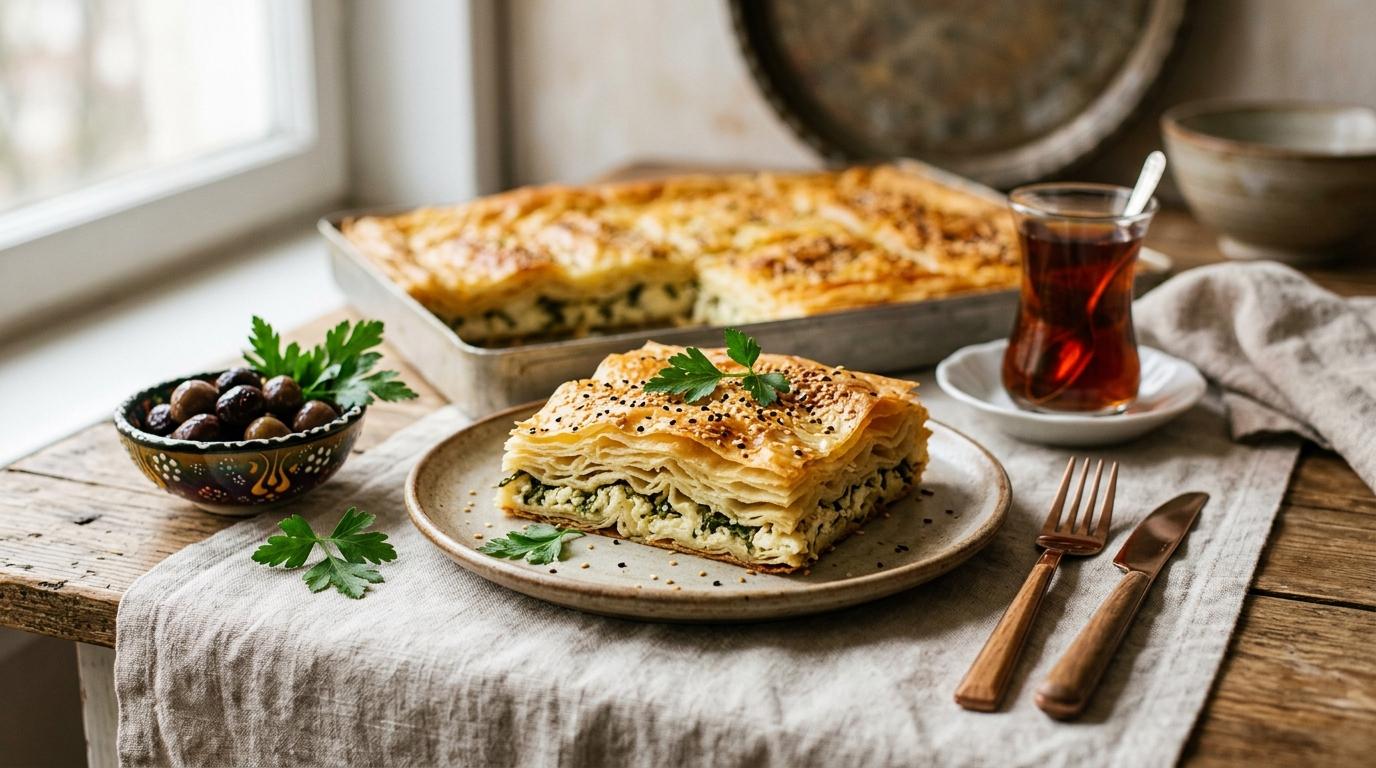
In the vast landscape of Turkish recipes, few dishes capture the soul of Turkish home cooking quite like börek. These flaky, buttery pastries transform humble ingredients—cheese, spinach, herbs—into something that makes you stop mid-bite and wonder how phyllo dough became so magical.
Börek isn't just food; it's edible architecture. Paper-thin sheets of dough layer with creamy fillings, then bake into golden squares that shatter at first touch. The contrast between crispy exterior and molten center creates a textural symphony that explains why Turkish families have perfected these recipes over generations.
The beauty of börek lies in its versatility. Whether you're craving the classic su böreği with its milk-soaked layers or a simple spinach börek packed with herbs, these pastries adapt to whatever's in your refrigerator while maintaining their essential Turkish character.
Understanding Börek: The Foundation
Börek belongs to the family of layered pastries found throughout the former Ottoman Empire, but Turkish versions have their own distinct personality. The word itself comes from the Turkish "burek," and while similar pastries exist across the Balkans and Middle East, Turkish börek has refined the technique into an art form.
The key lies in the phyllo—called "yufka" in Turkish. Store-bought phyllo works beautifully, but understanding how to handle it makes the difference between soggy disappointment and crispy perfection. Each sheet should glisten with butter or olive oil, creating barriers that steam into flaky layers during baking.
Turkish börek traditionally falls into several categories: su böreği (water börek) uses a milk mixture between layers, creating incredibly tender results. Kol böreği rolls the filling into logs before slicing. Tava böreği bakes flat in a pan, perfect for feeding a crowd. Each method produces different textures while honoring the same fundamental principle: thin dough, flavorful filling, generous fat.
Key Ingredients for Authentic Börek
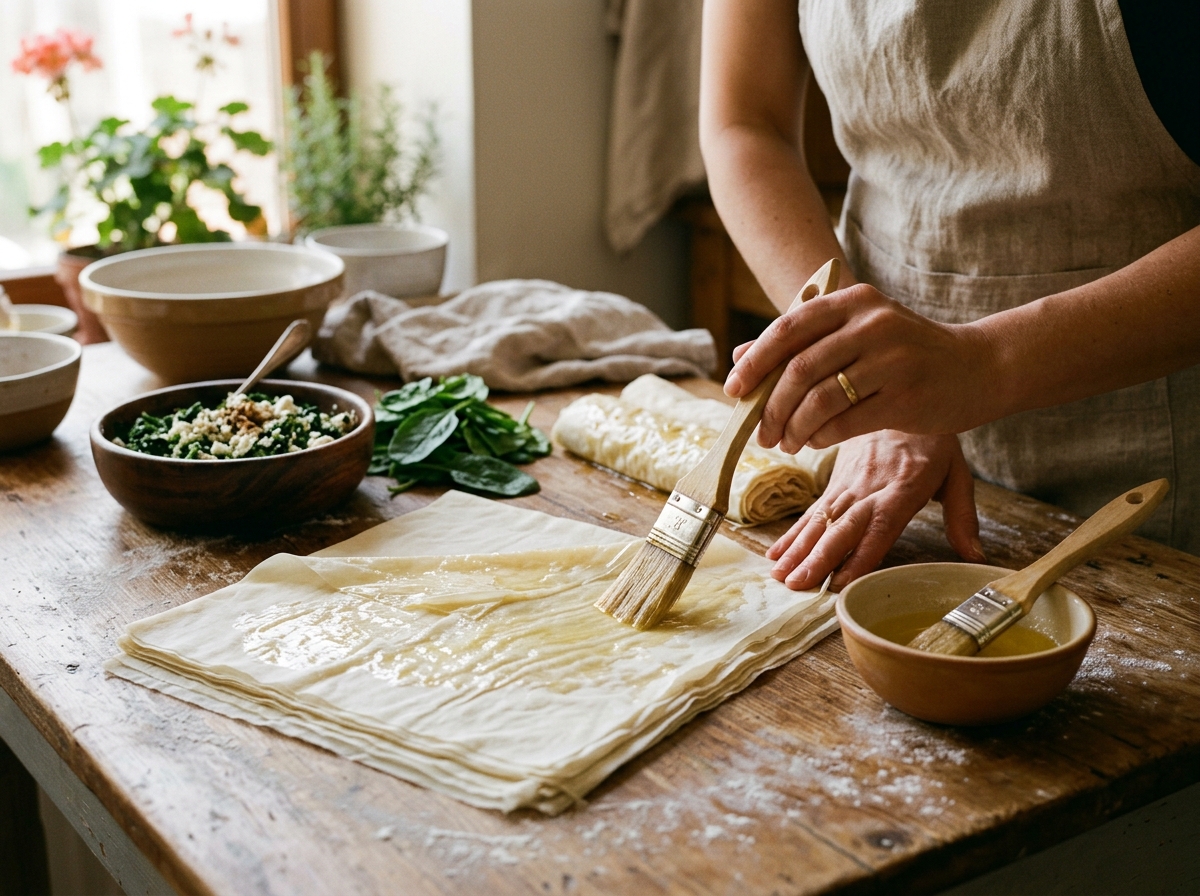
Great börek starts with quality phyllo dough. Look for thin, pliable sheets that don't crack when unfolded. Frozen phyllo works perfectly—just thaw it overnight in the refrigerator and keep it covered with a damp towel while working.
For the fat component, Turkish cooks traditionally use butter, but olive oil creates lighter results. Some recipes combine both: butter for flavor, olive oil for crispness. The fat should be melted and slightly cooled—too hot and it'll cook the phyllo, too cool and it won't spread evenly.
Cheese börek typically uses beyaz peynir, a white Turkish cheese similar to feta. Fresh feta works beautifully, especially when crumbled and mixed with a beaten egg to bind the filling. For spinach börek, fresh spinach wilted and drained produces better texture than frozen, though frozen works in a pinch.
Eggs appear in most börek recipes, sometimes in the filling, sometimes in a custard-like mixture poured over the layers. They provide richness and help create those coveted creamy pockets between the crispy sheets.
Milk or cream often gets mixed with eggs for su böreği, creating a custard that seeps between layers during baking. This technique produces incredibly tender results but requires careful timing—too much liquid and the börek becomes soggy.
Master Recipe: Classic Su Böreği
Su böreği represents börek at its most elegant. The name means "water börek," referring to the milk mixture that transforms ordinary phyllo into silky layers. This version serves as your foundation for understanding börek technique.
Start by preheating your oven to 350°F. Butter a 9x13 inch baking dish generously—this prevents sticking and adds flavor. Remove phyllo from the package and cover with a damp towel to prevent drying.
For the milk mixture, whisk together 2 cups whole milk, 3 eggs, and a pinch of salt. This custard will soak into the phyllo, creating those tender layers that make su böreği special. Set aside while you prepare the layers.
Melt 1 stick of butter in a small saucepan. Some Turkish cooks add a tablespoon of olive oil here for extra crispness, but pure butter creates more traditional flavor. Keep the butter warm but not bubbling.
Now comes the meditative part: layering. Place one sheet of phyllo in your prepared pan, letting it drape up the sides slightly. Brush gently with melted butter, paying attention to the edges. Repeat with 5 more sheets, buttering each one.
For filling, combine 2 cups crumbled feta cheese with 1/4 cup chopped fresh dill and a beaten egg. The egg binds the cheese and prevents it from clumping. Spread this mixture evenly over your phyllo base.
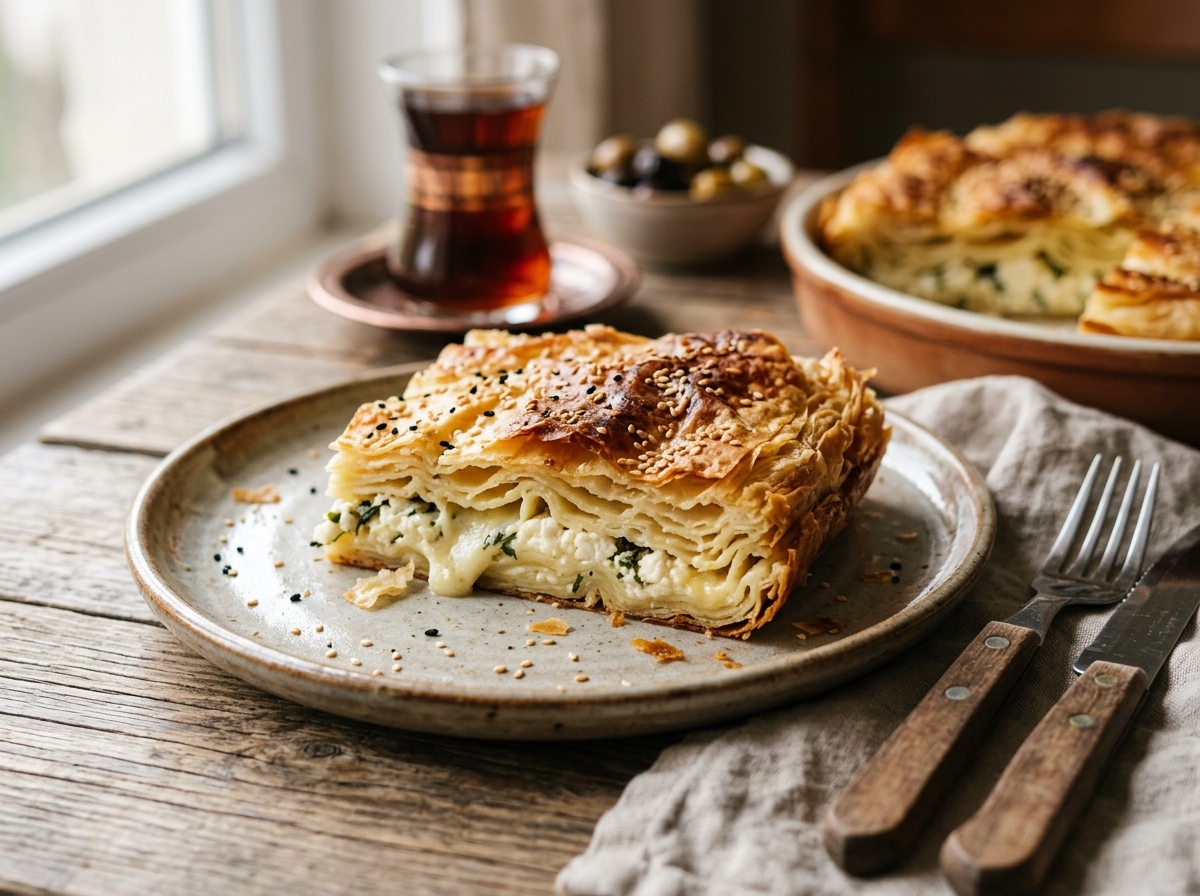
Continue layering 6 more phyllo sheets on top, brushing each with butter. The top layer should be particularly well-buttered to ensure golden browning. Use a sharp knife to score the börek into squares—this prevents cracking during baking and makes serving easier.
Pour the milk mixture evenly over the scored börek. It should soak in gradually; if it pools on top, you may have used too much. The liquid should disappear within a few minutes.
Bake for 45-55 minutes until the top is golden brown and the börek feels set when gently shaken. The aroma will fill your kitchen—nutty butter, tangy cheese, and that distinctive phyllo scent that signals perfection.
Let cool for 15 minutes before cutting. This resting period allows the layers to set properly, preventing the filling from oozing out when you slice.
Spinach Börek: Green Gold
Spinach börek showcases how vegetables become the star in Turkish cooking. This version layers wilted spinach with herbs and cheese, creating a satisfying vegetarian main course that feels indulgent despite being packed with greens.
Start with 2 pounds fresh spinach, washed and roughly chopped. Heat 2 tablespoons olive oil in a large pan and add the spinach in batches, letting it wilt completely. The key here is removing excess moisture—soggy spinach creates soggy börek.
Once wilted, transfer the spinach to a fine-mesh strainer and press out as much liquid as possible. Some Turkish cooks wrap the cooked spinach in clean kitchen towels and squeeze firmly. This extra step prevents watery results.
Mix the drained spinach with 1 cup crumbled feta, 1/2 cup ricotta cheese for creaminess, 2 beaten eggs, and plenty of fresh dill and parsley. Season with black pepper—the cheese provides enough salt.
Layer this filling between phyllo sheets using the same technique as su böreği, but skip the milk mixture. Instead, brush each layer generously with a combination of melted butter and olive oil. The oil helps create extra-crispy results that complement the rich spinach filling.
Bake at 375°F for 35-40 minutes until deeply golden. Spinach börek actually improves after sitting for 30 minutes, allowing the flavors to meld and the layers to set properly.
Advanced Techniques and Variations
Once you've mastered basic börek, variations become endless. Meat börek typically uses ground lamb or beef, cooked with onions and spices like cumin and paprika. The meat must be completely cooled before layering to prevent the phyllo from becoming soggy.
Potato börek layers thinly sliced, pre-cooked potatoes with herbs and cheese. The potatoes should be just tender, not fully cooked, since they'll finish cooking during baking. This version appeals to those who find cheese börek too rich.
For extra-flaky results, some Turkish cooks brush alternate phyllo layers with yogurt thinned with a little milk instead of pure butter. This technique, used in certain regional variations, creates incredibly tender layers with a slight tang.
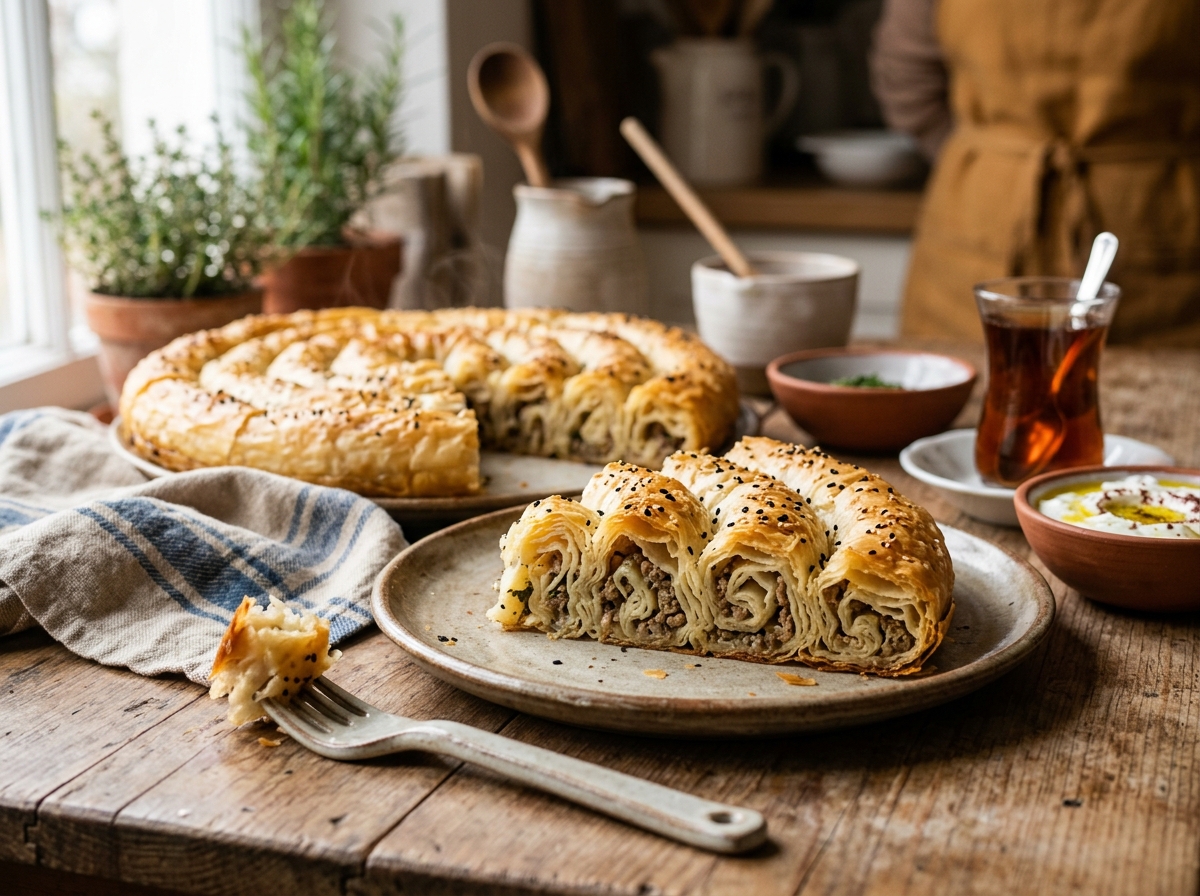
Kol böreği represents a different approach entirely. Instead of layering flat, you spread filling along one edge of buttered phyllo, then roll it into a log. These logs get sliced into spirals before baking, creating individual portions with beautiful swirled patterns.
Troubleshooting Common Issues
Soggy börek usually results from too much moisture in the filling or insufficient draining of vegetables. Always press cooked spinach or other greens firmly to remove excess water. Cheese fillings benefit from adding a beaten egg, which helps absorb excess moisture during baking.
If your phyllo cracks during handling, the sheets may have dried out. Keep unused phyllo covered with a damp towel, and work quickly but gently. Slightly torn sheets can be patched with pieces from another sheet—the butter will help everything adhere.
Uneven browning often occurs when the butter application isn't consistent. Each sheet should glisten with fat, paying special attention to edges and corners. If the top browns too quickly, tent with foil and continue baking until the layers feel set.
For börek that won't hold together when cut, the issue usually lies in insufficient egg binding in the filling or cutting too soon after baking. Always let börek rest at least 15 minutes before slicing, and make sure your filling includes enough egg to act as a binder.
Serving and Storage
Fresh börek needs little accompaniment. Turkish families often serve it with sliced tomatoes, cucumbers, and perhaps some olives. A dollop of thick yogurt alongside provides cooling contrast to the rich pastry.
Börek keeps well in the refrigerator for up to four days, though the texture becomes less crispy. To refresh leftovers, heat individual pieces in a 350°F oven for 8-10 minutes rather than microwaving, which makes the phyllo soggy.
For make-ahead convenience, assemble börek completely but don't bake. Cover tightly and refrigerate for up to 24 hours, then bake as directed, adding 5-10 minutes to account for the cold start.
Börek also freezes beautifully. Wrap baked and cooled börek in plastic wrap, then foil. Freeze for up to 3 months. Thaw overnight in the refrigerator and reheat in a low oven until warmed through and the exterior crisps up again.
Making It Your Own
Turkish börek recipes provide a framework, but the best home cooks adapt them to their tastes and available ingredients. Goat cheese mixed with feta creates more complex flavor. Caramelized onions add sweetness that balances salty cheese perfectly.
Herb combinations can shift with the seasons—spring börek might feature fresh mint and scallions, while winter versions embrace heartier herbs like sage or rosemary. The key lies in maintaining the balance between filling and phyllo, ensuring neither overwhelms the other.
Some modern Turkish cooks incorporate ingredients like sun-dried tomatoes or roasted peppers, creating fusion versions that honor the technique while embracing contemporary flavors. As long as you respect the fundamental principles—thin layers, adequate fat, proper moisture control—börek adapts beautifully to creative interpretation.
These Turkish börek recipes connect you to centuries of culinary tradition while providing endless opportunities for personal expression. Whether you stick to classic cheese and spinach versions or venture into creative territory, you're participating in a living tradition that continues evolving in Turkish kitchens worldwide.
Master these techniques and you'll have unlocked one of Turkish cuisine's most satisfying comfort foods. From simple weeknight dinners to impressive brunch presentations, börek delivers the kind of soul-warming satisfaction that explains why it remains central to Turkish cooking traditions.
Sources & further reading
- Turkish Borek Recipe — The Mediterranean Dish
- Humble Beginnings of Culinary Masterworks: Turkish Börek — Google Arts & Culture (Turkey Tourism Promotion and Development Agency)
- A History of Börek — History Today
- Su böreği — Wikipedia
Related Topics
Enjoyed this article? Share it with fellow food lovers!
Import a recipe, start cooking
Paste any recipe URL and we'll turn it into a Cook Mode experience with step-by-step visuals, voice narration, and built-in timers.