

Traditional Mexican Salsa Recipes: 5 Essential Sauces
Discover the art of making traditional Mexican salsas from scratch. These five essential recipes will transform your understanding of authentic Mexican flavors and elevate every meal.
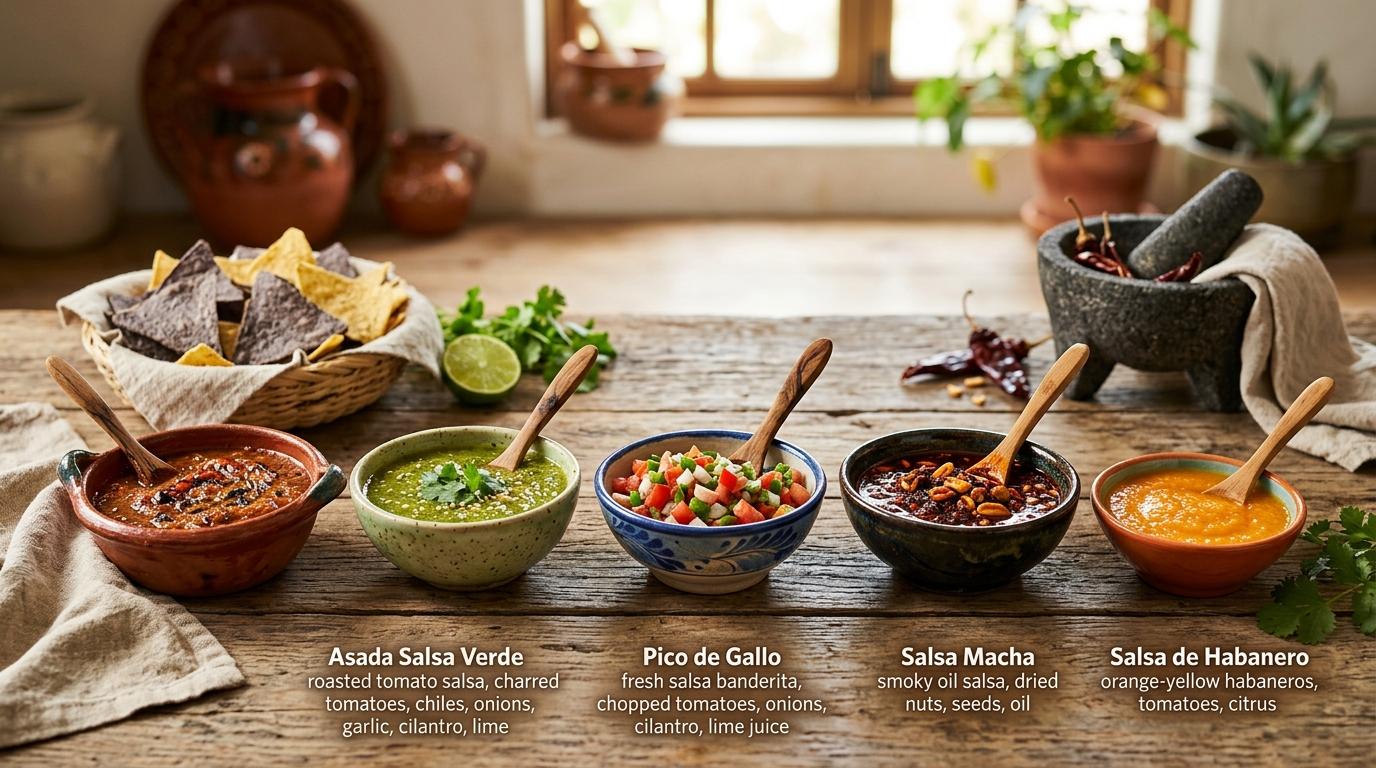
Mexican cuisine without salsa is like a mariachi band without music — technically possible, but missing its soul. While you might know Mexican cooking from our collection of best Mexican recipes, the real magic often comes from the salsas that accompany every dish. These aren't the chunky supermarket versions you're used to. Traditional Mexican salsas are living, breathing condiments that can make or break a meal.
In Mexican kitchens, salsa isn't an afterthought — it's the foundation. From the bright acidity of salsa verde to the smoky heat of salsa roja, these sauces carry centuries of technique and regional pride. Each one tells a story about the peppers, the char, the grind, and the balance that defines authentic Mexican cooking.
Let's dive into five essential Mexican salsa recipes that will completely change how you think about sauce.
Understanding Traditional Mexican Salsas
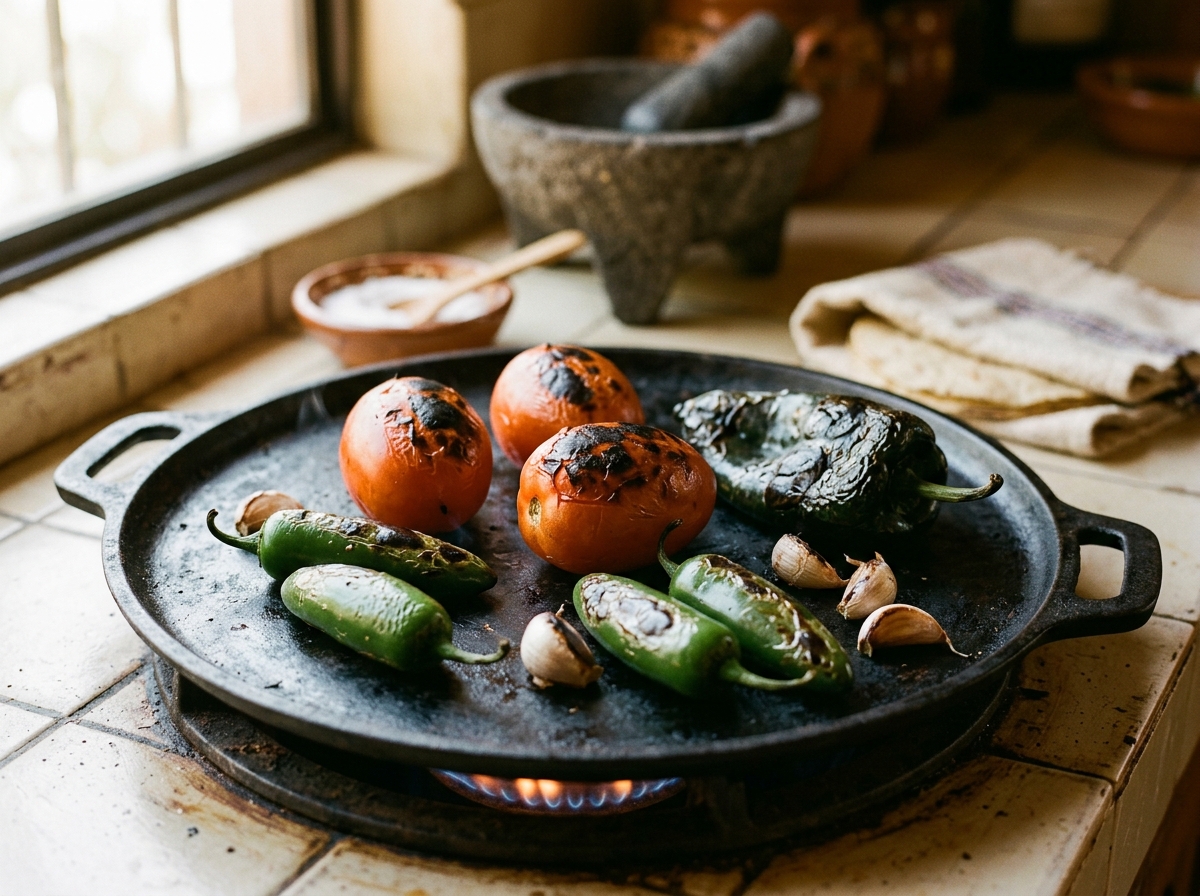
The word "salsa" simply means sauce in Spanish, but in Mexican cuisine, it represents a vast universe of flavors and techniques. Unlike American-style salsas that focus on fresh vegetables, Mexican salsas often rely on fire — literally. Charring peppers, tomatoes, and onions over open flames or on hot comals develops the deep, complex flavors that make these sauces so distinctive.
Traditional Mexican salsas fall into two main categories: salsas crudas (raw salsas) and salsas cocidas (cooked salsas). Raw salsas showcase the bright, clean flavors of fresh ingredients, while cooked salsas develop deeper, more concentrated tastes through heat and time.
The key to authentic Mexican salsas lies in the peppers. Each variety brings its own personality — jalapeños offer vegetal heat, serranos pack serious fire, and poblanos deliver earthy richness. Learning to work with these peppers, respecting their individual characteristics, is the first step toward salsa mastery.
Key Ingredients and Equipment
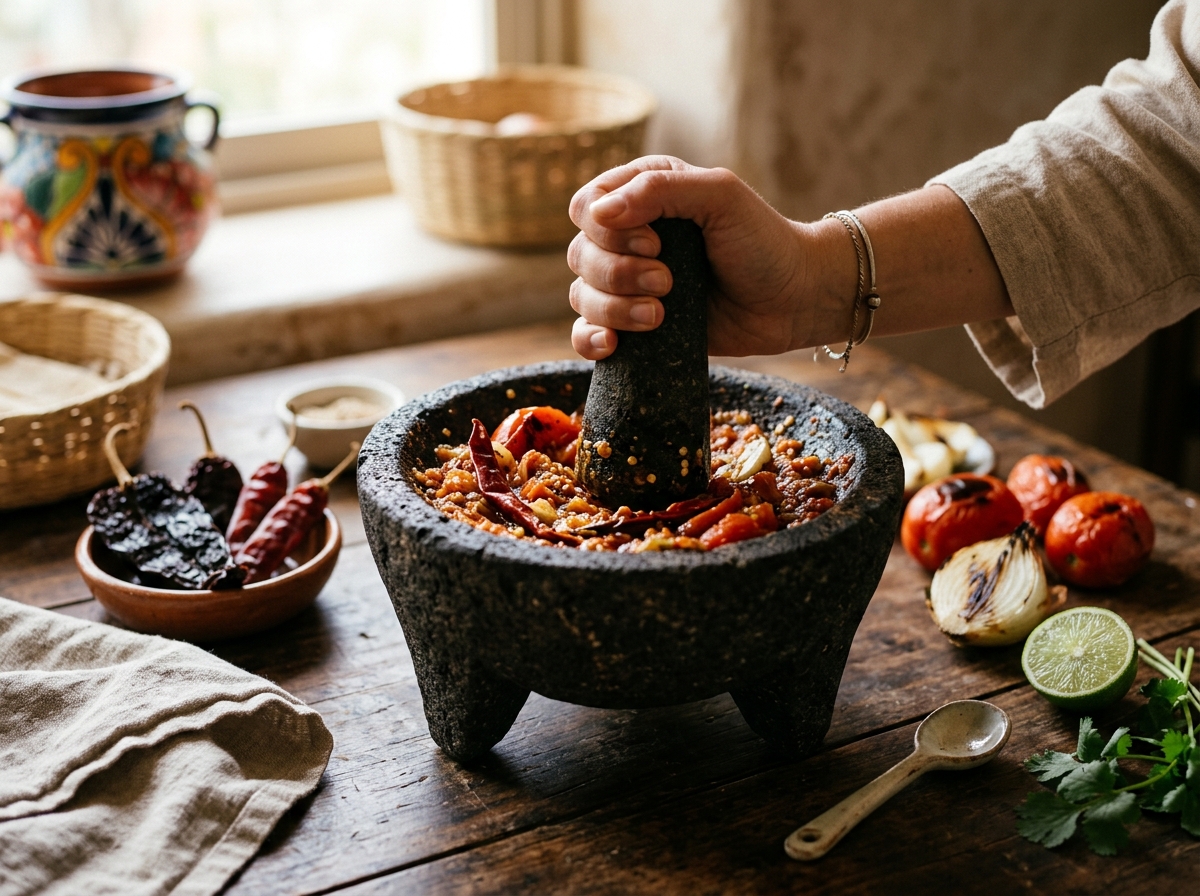
Before we jump into specific recipes, let's talk about the essentials. A traditional molcajete (volcanic stone mortar and pestle) creates the perfect texture for Mexican salsas — slightly chunky with jagged edges that hold onto flavors. If you don't have one, a food processor works, but pulse carefully to avoid over-processing.
For peppers, seek out Mexican varieties when possible. Jalapeños, serranos, poblanos, and chipotles each contribute unique flavors. Fresh peppers should be firm and glossy, while dried peppers should still retain some flexibility.
Roma tomatoes work best for most cooked salsas — they have less water and more flesh than beefsteak varieties. Tomatillos, those little green fruits wrapped in papery husks, are essential for salsa verde. Look for firm ones that fill their husks completely.
White onions provide the right sharp bite for most salsas, while garlic should be fresh and firm. Fresh cilantro is non-negotiable — the stems have just as much flavor as the leaves, so don't discard them.
Sea salt or kosher salt lets you control the seasoning precisely. Lime juice should always be fresh — bottled lime juice will flatten the bright acidity that makes these salsas sing.
Salsa Verde (Green Tomatillo Salsa)
Salsa verde is the workhorse of Mexican salsas — tangy, bright, and versatile enough to pair with everything from eggs to grilled meats. The key is properly cooking the tomatillos until they're soft but not mushy.
Start with two pounds of tomatillos. Remove the husks and rinse off the sticky residue. Place them in a pot with two or three serrano peppers (adjust to your heat tolerance) and cover with water. Bring to a boil, then simmer for 10-15 minutes until the tomatillos are tender and have changed from bright green to a more olive color.
While the tomatillos cook, char a small white onion and three garlic cloves directly over a gas flame or under the broiler until they develop dark spots. The char adds a smoky depth that defines this salsa.
Drain the tomatillos and peppers, reserving some cooking liquid. In your molcajete or food processor, combine the tomatillos, peppers, charred onion, and garlic. Add a handful of fresh cilantro and a teaspoon of salt. Process until you reach your desired consistency — traditional salsa verde has some texture, not a smooth puree.
Taste and adjust. Add reserved cooking liquid if the salsa is too thick, more salt for depth, or lime juice for brightness. The finished salsa should be tangy, moderately spicy, and deeply flavorful.
Pico de Gallo (Fresh Tomato Salsa)
Pico de gallo translates to "rooster's beak," though no one agrees on why. What everyone agrees on is that this fresh, chunky salsa requires perfect knife work and impeccable timing.
Use the ripest tomatoes you can find — they should yield slightly to pressure and smell sweetly fragrant. Remove the seeds and excess juice (save them for another use), then dice the flesh into small, uniform pieces. The key word here is uniform. Uneven chunks create an unbalanced eating experience.
Dice half a white onion to match the tomato size. Finely mince two or three jalapeños, removing seeds for less heat. Roughly chop a generous handful of cilantro.
Combine everything in a bowl with salt and fresh lime juice. Start with less salt and lime than you think you need — you can always add more, but you can't take it back. Let the salsa sit for 15 minutes before tasting and adjusting.
The beauty of pico de gallo is its freshness, which means it's best eaten within a few hours. As it sits, the vegetables release their juices, and while that creates delicious flavor, it also changes the texture from crisp to soggy.
Salsa Roja (Red Chile Salsa)
Salsa roja represents the smoky, complex side of Mexican salsas. This cooked sauce gets its deep flavor from charred tomatoes and the careful handling of dried chiles.
Start by charring six Roma tomatoes directly over a gas flame or under the broiler until the skins are blackened in spots. The char is crucial — it provides the smoky base that defines this salsa. Don't worry about charring every inch; you want spots of black mixed with red.
While the tomatoes char, toast three dried guajillo chiles and two dried ancho chiles in a dry skillet until they smell fragrant, about 30 seconds per side. Be careful not to burn them, which creates bitter flavors. Remove stems and seeds, then soak the chiles in hot water for 15 minutes until soft.
Char a quarter of a white onion and three garlic cloves until they develop dark spots. In your molcajete or blender, combine the charred tomatoes, softened chiles, onion, and garlic. Add salt to taste and blend until smooth or leave some texture, depending on your preference.
The finished salsa should be deeply red, moderately thick, and balanced between smoke, heat, and sweetness. If it's too thick, thin with water or chicken stock. Too thin? Simmer it gently in a saucepan until it reduces to your desired consistency.
Salsa de Chile de Árbol (Fiery Tree Chile Salsa)
This is the salsa for heat lovers — a thin, intensely spicy sauce that adds fire to everything it touches. Chile de árbol peppers pack serious heat, so respect them accordingly.
Toast 15-20 dried chile de árbol peppers in a dry skillet until they darken slightly and smell intensely fragrant. This should take about two minutes — work quickly to avoid burning. Remove stems and most seeds (leave some if you're truly fearless).
Char two Roma tomatoes and three garlic cloves until blackened in spots. Soak the toasted chiles in hot water for 10 minutes until they soften.
Blend the softened chiles with the charred tomatoes, garlic, and a teaspoon of salt. Add soaking liquid as needed to create a thin, pourable consistency. Strain the salsa if you want it completely smooth, or leave it slightly chunky for more texture.
This salsa is all about balance — the heat should be intense but not painful, and the char should provide depth without overwhelming the chiles' natural flavor. Use sparingly at first until you understand its power.
Salsa de Chipotle (Smoky Chipotle Salsa)
Chipotle peppers are smoked jalapeños, and they create one of the most complex and versatile salsas in the Mexican repertoire. The smoke, heat, and subtle sweetness make this sauce perfect for grilled meats and rich dishes.
Start with four chipotle peppers in adobo sauce (canned is fine for this recipe). If you prefer less heat, scrape out some of the seeds. Char four Roma tomatoes and half a white onion until they develop dark spots.
In your molcajete or blender, combine the chipotles with a tablespoon of their adobo sauce, the charred tomatoes and onion, two garlic cloves, and salt to taste. Blend until smooth or leave some texture — both work beautifully with chipotle's rich flavor.
The finished salsa should be deeply smoky with moderate heat and a hint of sweetness from the adobo sauce. It keeps well in the refrigerator for up to a week, and the flavors actually improve as they meld.
Pro Tips for Perfect Mexican Salsas
Temperature matters more than you think. Serve most Mexican salsas at room temperature or slightly warm — cold temperatures mute the complex flavors you've worked to develop. If you've refrigerated your salsa, let it sit out for 20-30 minutes before serving.
Salt is your friend, but timing is everything. Add salt gradually and taste frequently. Different peppers and tomatoes have varying water contents, which affects how much salt you need.
Don't be afraid of char. Those blackened spots on peppers, tomatoes, and onions aren't mistakes — they're flavor bombs that separate authentic Mexican salsas from their mild-mannered cousins.
Texture variations keep things interesting. Some salsas work best completely smooth, while others benefit from a rustic chop. Match the texture to the dish you're serving — smooth salsas for delicate fish, chunky salsas for robust grilled meats.
Serving and Storage
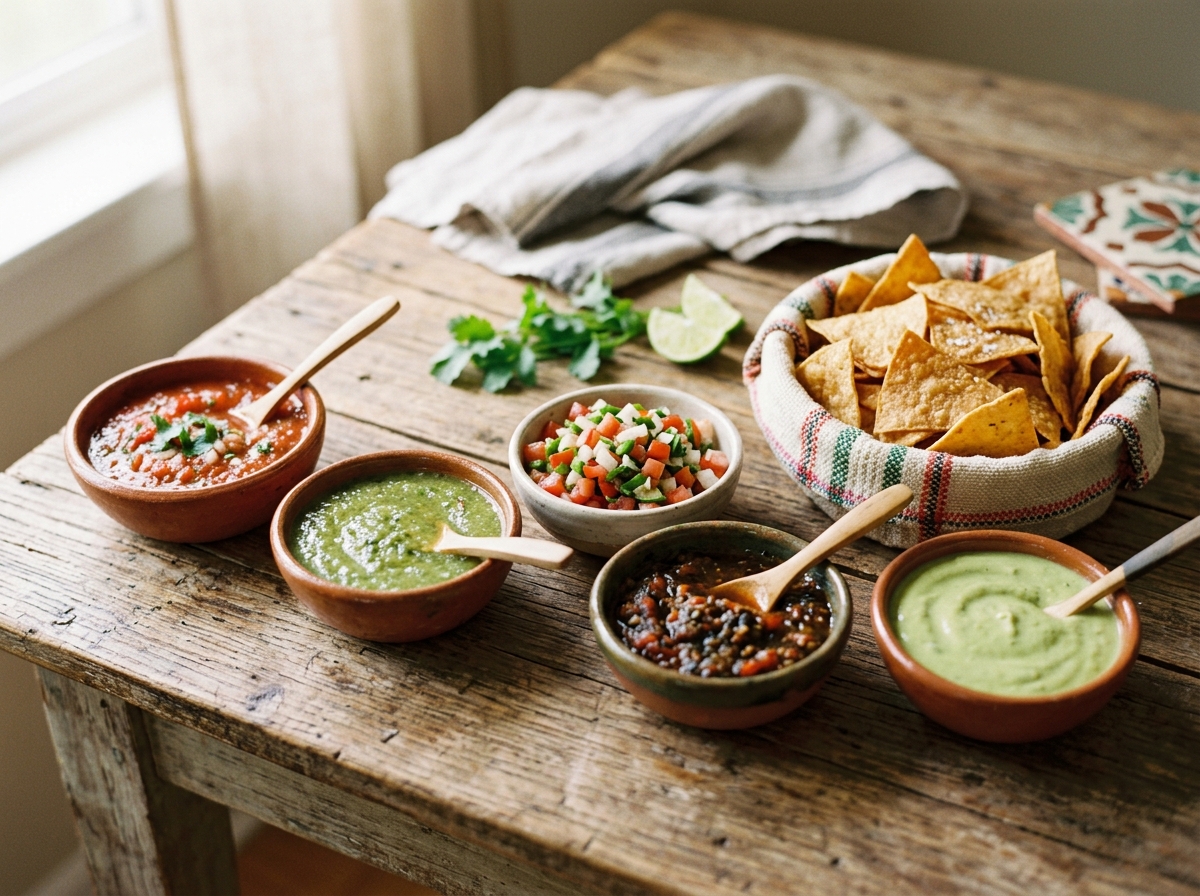
Fresh salsas like pico de gallo should be eaten within 24 hours for the best texture and flavor. Cooked salsas keep well in the refrigerator for up to a week, and many improve as the flavors meld.
These salsas aren't just for chips — they're condiments designed to enhance other foods. Spoon salsa verde over grilled chicken, dollop chipotle salsa on steak fajitas, or mix pico de gallo into scrambled eggs. The possibilities are endless.
Consider the heat level of your main dish when choosing salsas. Mild dishes can handle fiery salsa de chile de árbol, while spicy foods benefit from the cooling effect of fresh pico de gallo.
Conclusion
These five traditional Mexican salsas represent just the beginning of a vast and delicious journey. Each one offers a different perspective on how heat, char, and fresh ingredients can create complex, satisfying flavors. Master these basics, and you'll have the foundation to explore the endless regional variations that make Mexican cuisine so rich and diverse.
The beauty of authentic Mexican salsas lies in their ability to transform simple ingredients into something extraordinary. With practice and respect for traditional techniques, you'll develop an intuitive understanding of how to balance heat, acidity, and smokiness in ways that complement and enhance your favorite Mexican recipes.
Remember, the best salsa is the one that matches your taste and the dish you're serving. Don't be afraid to adjust heat levels, experiment with different peppers, or modify textures to suit your preferences. These recipes are starting points, not rigid rules.
Sources & further reading
- The Ancient Origins Of Salsa — Tasting Table
- 14 Types Of Salsa, Explained — Tasting Table
- Salsa verde — Wikipedia
- Salsa Verde or Salsa Roja Recipe | Mexican Recipes | PBS Food — PBS
Related Topics
Enjoyed this article? Share it with fellow food lovers!
Import a recipe, start cooking
Paste any recipe URL and we'll turn it into a Cook Mode experience with step-by-step visuals, voice narration, and built-in timers.