

Traditional Indian Bread Recipes: Roti, Naan & Paratha Guide
Discover the art of making traditional Indian breads at home. From simple roti to buttery paratha, these time-tested recipes bring authentic flavors and textures to your kitchen.
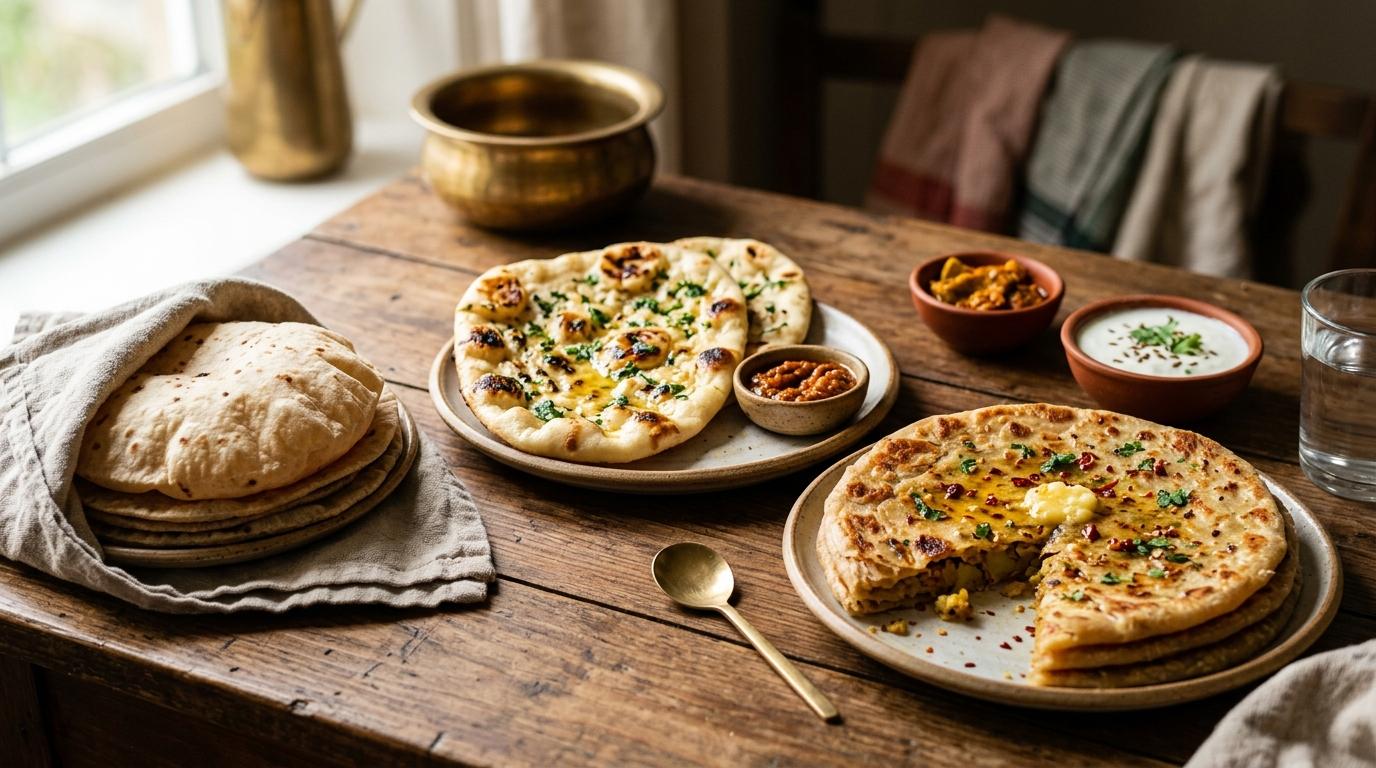
Indian bread is the soul of every meal, the vessel that carries curry from bowl to mouth, the comfort that transforms simple dal into a feast. While our collection of Indian recipes covers curries, spices, and mains, mastering traditional bread recipes opens up a whole new dimension of authentic Indian cooking at home.
The beauty of Indian breads lies in their simplicity—flour, water, salt, and technique. Yet within that simplicity exists remarkable diversity. Soft, pliable roti that tears perfectly for scooping. Pillowy naan with charred bubbles and ghee glistening on top. Flaky, layered paratha that shatters at first bite. Each has its place, its purpose, its moment of glory.
Understanding these breads means understanding how Indian families eat. Bread isn't just an accompaniment—it's the utensil, the comfort, the thing that makes a meal feel complete. Let's explore the techniques that turn simple dough into edible poetry.
The Foundation: Understanding Indian Bread Dough
All Indian breads start with similar ingredients, but the ratios and techniques create dramatically different results. The key lies in gluten development, hydration levels, and fat incorporation.
Most Indian breads use chapati flour (atta) when available—whole wheat flour ground finer than typical Western whole wheat. If you can't find atta, use a blend of half all-purpose and half whole wheat flour. The protein content matters less than the texture; you want flour that creates pliable dough without excessive chewiness.
Water temperature affects everything. Room temperature water creates tender breads, while slightly warm water (not hot) helps with gluten development in enriched doughs like naan. The amount varies with flour type, humidity, even the season.
Roti: The Daily Bread
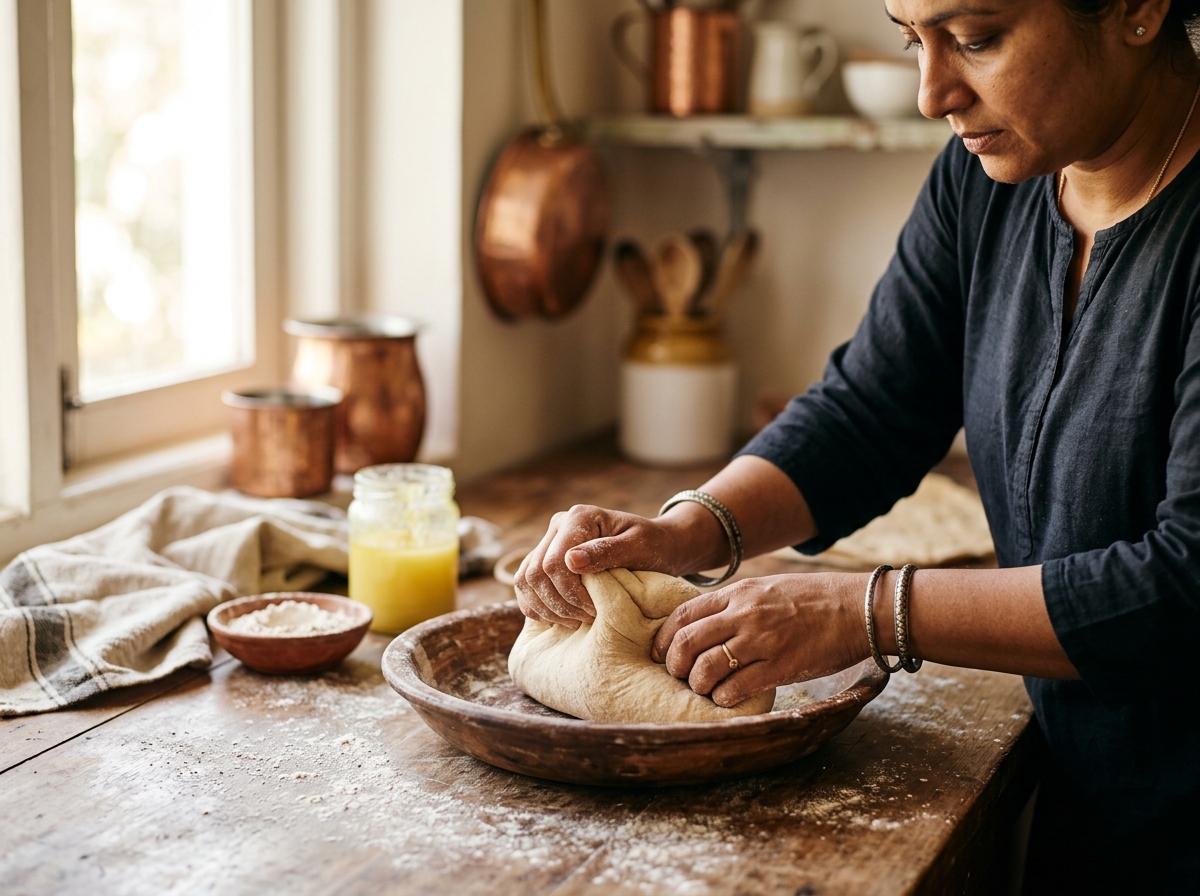
Roti (also called chapati) forms the backbone of Indian meals. Simple, quick, and infinitely useful, it's the bread most Indian home cooks make daily. The technique seems straightforward—mix, knead, roll, cook—but mastering roti means understanding heat, timing, and the gentle persuasion needed to make flatbread puff.
Perfect Roti Technique
For six to eight roti, combine two cups chapati flour (or the flour blend) with three-quarters teaspoon salt. Add water gradually—start with two-thirds cup and add more as needed. The dough should feel soft and slightly sticky, not dry or tight.
Knead for five to eight minutes until the dough becomes smooth and elastic. Cover and rest for twenty to thirty minutes. This rest period allows the gluten to relax, making the dough easier to roll thin without springing back.
Heat a cast iron skillet or heavy-bottomed pan over medium-high heat. While it heats, divide the dough into golf ball-sized portions. Roll each piece into a thin circle, about seven inches across. The thickness should be even throughout—thin enough to see light through, but not so thin it tears.
Place the roti on the hot skillet. Within thirty seconds, you'll see bubbles forming on the surface. Flip when the bottom develops light brown spots. Cook the second side for another thirty to forty seconds, then—here's the magic—use tongs to transfer the roti directly over an open gas flame.
The roti should puff into a balloon within seconds. If using an electric stove, press gently with a clean kitchen towel to encourage puffing. The puffing creates steam pockets that keep the roti soft and pliable.
Naan: Restaurant-Style Luxury
Naan represents Indian bread's more indulgent side. Enriched with yogurt, ghee, and sometimes eggs, naan has a tender crumb and slightly tangy flavor that pairs beautifully with rich curries and grilled meats.
Traditional naan requires a tandoor oven's intense heat, but home cooks can achieve impressive results using a pizza stone, cast iron skillet, or even the broiler.
Homemade Naan Recipe
The key to great naan lies in the preferment and proper gluten development. Start by dissolving half a teaspoon of active dry yeast in one-quarter cup warm water with a pinch of sugar. Let it foam for five minutes.
In a large bowl, whisk together two cups all-purpose flour, one teaspoon salt, and half a teaspoon baking powder. Make a well in the center and add the yeast mixture, half a cup plain yogurt (room temperature), two tablespoons melted ghee, and one beaten egg.
Mix until a shaggy dough forms, then knead on a floured surface for eight to ten minutes. The dough should become smooth, elastic, and slightly tacky. Place in an oiled bowl, cover, and let rise for two to three hours at room temperature.
Divide the risen dough into six portions. Roll each into an oval shape, roughly eight inches long and four inches wide. Naan traditionally has an irregular, teardrop shape rather than perfect circles.
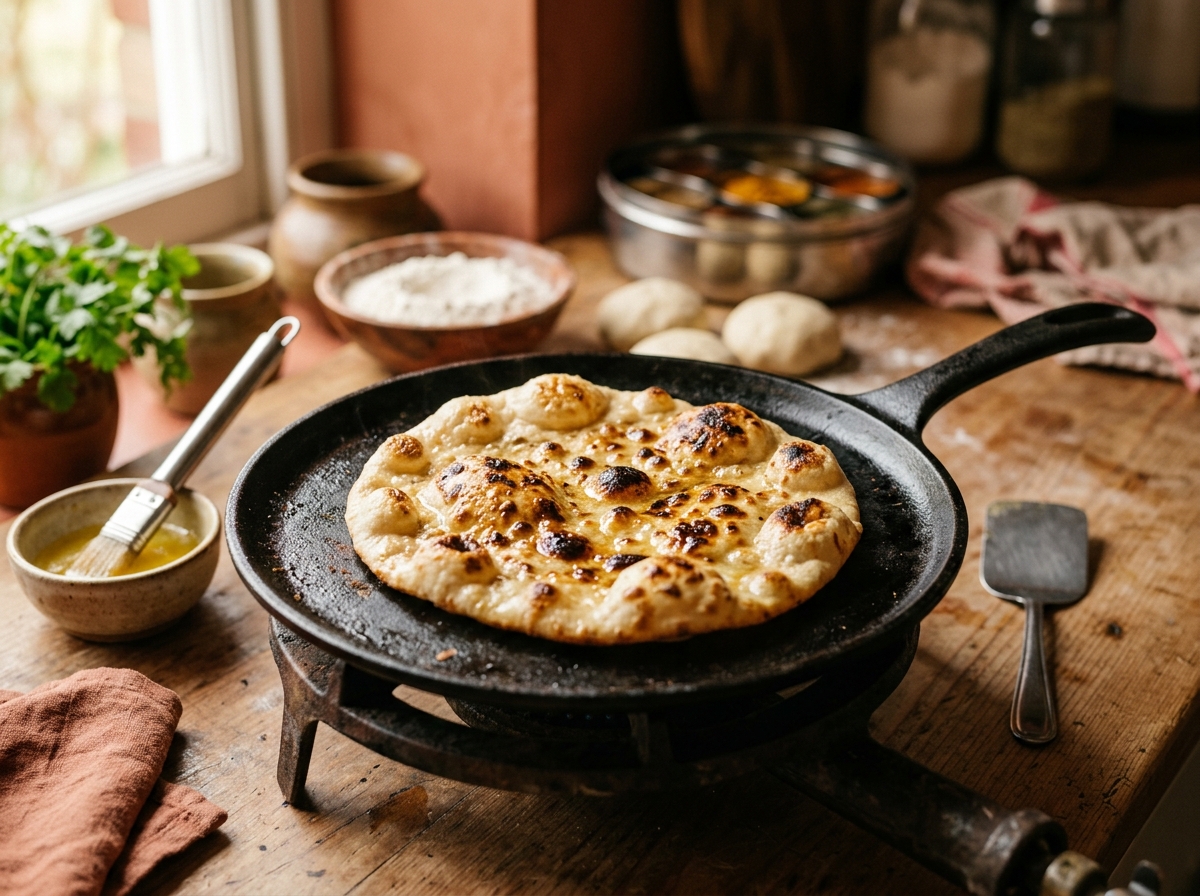
For cooking, a blazing hot cast iron skillet works well. Heat the skillet over medium-high heat, then place one naan in the pan. Cook for sixty to ninety seconds until bubbles form and the bottom browns in spots. Flip and cook another minute.
The broiler method produces even more authentic results. Place rolled naan on a preheated pizza stone or inverted baking sheet under the broiler. Cook for one to two minutes until puffed and spotted with char. Watch carefully—the line between perfect and burnt is thin.
Paratha: Layers of Flavor
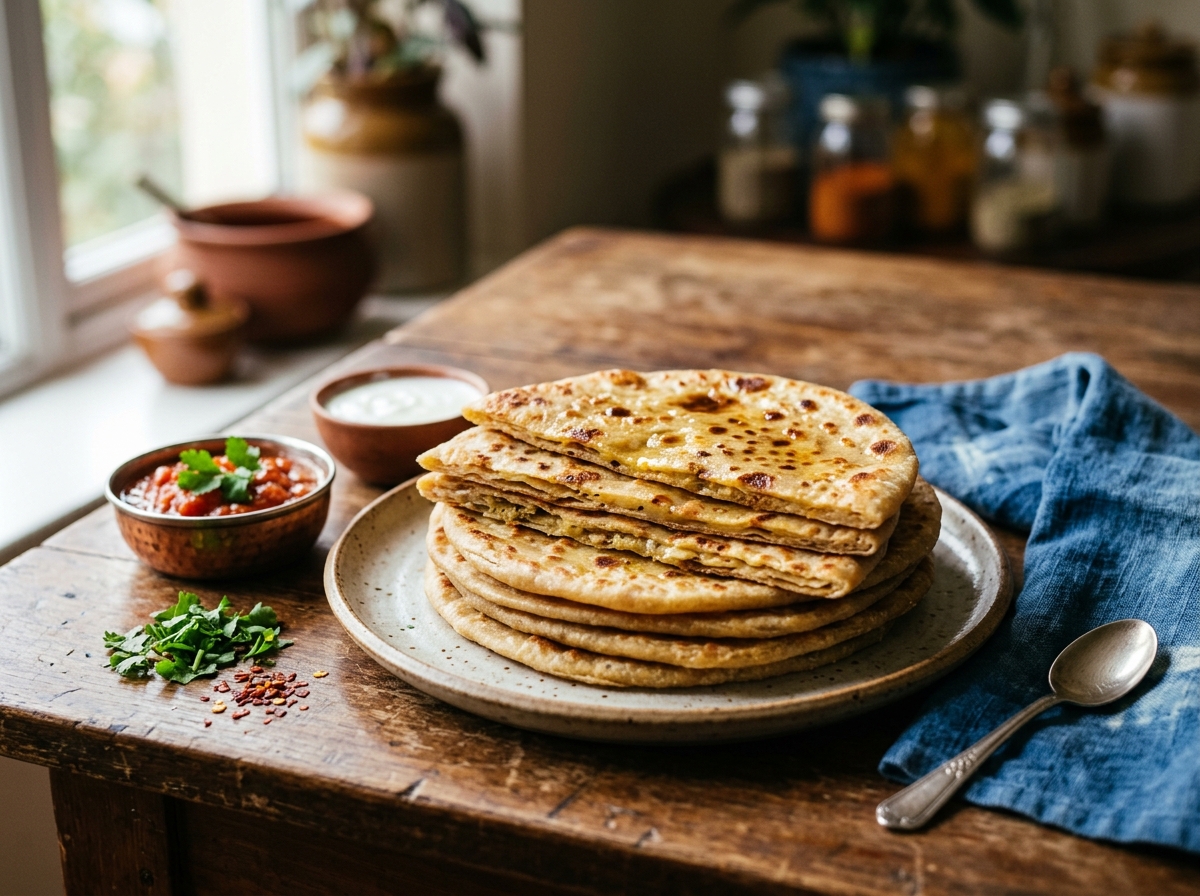
Paratha takes Indian bread into pastry territory. Through a process of rolling, folding, and incorporating fat, paratha develops flaky layers that shatter and separate when you tear it. It's more substantial than roti, richer than naan, and endlessly adaptable.
The technique resembles making puff pastry, but simpler and more forgiving. You can make plain paratha (absolutely delicious on its own) or stuff it with spiced vegetables, herbs, or cheese.
Basic Paratha Method
Start with a slightly richer dough than roti. Combine two cups flour with three-quarters teaspoon salt, then add two tablespoons ghee or oil. Rub the fat into the flour until the mixture resembles coarse breadcrumbs. Add water gradually—about half a cup—to form soft, pliable dough.
Knead briefly, just until smooth. Cover and rest for thirty minutes.
For the layering technique, roll each portion into a six-inch circle. Brush with ghee, then sprinkle lightly with flour. Fold the circle in half to create a semi-circle, brush with more ghee and flour, then fold again to create a triangle or square.
Roll the folded dough carefully, maintaining the layers, until it's about six inches across again. The layers should remain distinct but not separate completely.
Cook on a hot, lightly greased skillet over medium heat. Paratha needs more time than roti—two to three minutes per side. Press gently with a spatula to ensure even cooking, and brush with ghee while cooking for extra richness.
Key Ingredients for Success
Quality ingredients make the difference between good and exceptional Indian bread. Chapati flour (atta) produces the most authentic texture, but the all-purpose and whole wheat blend works well for beginners.
Ghee provides the best flavor, but neutral oil works in a pinch. For naan, use full-fat Greek yogurt—the tang and richness both matter. Fresh yeast creates better flavor than instant, but either works.
Salt should be fine sea salt or table salt. Coarse salt doesn't distribute evenly in the dough.
Pro Tips for Perfect Indian Breads
Temperature control makes or breaks Indian bread. Too hot, and the outside burns before the inside cooks. Too cool, and the bread becomes tough and chewy. Medium-high heat works for most breads, but adjust based on your stove and pan.
Don't overflour when rolling. Excess flour creates tough spots and interferes with proper cooking. A light dusting is sufficient.
Keep cooked breads warm by wrapping in a clean kitchen towel. This prevents them from drying out and keeps the texture perfect.
Practice makes perfect, especially with roti. The hand coordination needed to roll thin, even circles takes time to develop. Start with slightly thicker breads and work toward thinner ones as your technique improves.
Serving and Pairing
Each Indian bread has ideal pairings. Soft roti works beautifully with everyday dal and vegetable curries. Its neutral flavor and perfect tear-ability make it the ideal vehicle for saucy dishes.
Rich naan pairs with heavier curries—think butter chicken, lamb korma, or creamy paneer dishes. The bread's richness can stand up to intense flavors without getting lost.
Flaky paratha shines with drier preparations or as a breakfast bread with yogurt and pickle. Stuffed parathas become meals in themselves.
Temperature matters for serving. All Indian breads taste best warm, straight from the pan. If you must hold them, wrap in towels and serve within an hour for best results.
Beyond the Basics
Once you master these three fundamental breads, endless variations await. Stuffed parathas can hold spiced potatoes, cauliflower, radishes, or paneer. Naan adapts to garlic, herbs, or cheese additions. Even simple roti becomes special with nigella seeds or ajwain worked into the dough.
Regional variations add more complexity. Lachha paratha from Punjab incorporates even more layers. Kulcha from Delhi gets a different treatment entirely. Bhatura puffs like naan but tastes completely different.
The techniques you learn here apply to dozens of other Indian breads. Master the fundamentals—proper dough hydration, heat control, timing—and you can tackle any flatbread recipe with confidence.
Making It Your Own
Indian bread recipes forgive experimentation. Try adding seeds, herbs, or spices to the dough. Experiment with different flours—millet, barley, or chickpea flour all create interesting variations.
Consider the meal when choosing your bread. Light lunches call for simple roti. Dinner parties deserve rich naan. Weekend breakfasts become special with flaky paratha.
Most importantly, don't let perfection become the enemy of good bread. Even imperfect Indian bread—slightly thick roti, unevenly cooked naan, or paratha that didn't layer perfectly—still tastes infinitely better than store-bought alternatives.
These traditional bread recipes connect you to centuries of Indian cooking wisdom. They transform simple ingredients into something magical, something that makes every meal feel like a celebration. Combined with the curries and dishes from our complete Indian recipe collection, you'll have everything needed to create authentic, satisfying Indian meals at home.
Sources & further reading
- Roti — Wikipedia
- Naan — Wikipedia
- Paratha — Wikipedia
- Naan | Description, History, Ingredients, Preparation, & Varieties — Encyclopaedia Britannica
Related Topics
Enjoyed this article? Share it with fellow food lovers!
Import a recipe, start cooking
Paste any recipe URL and we'll turn it into a Cook Mode experience with step-by-step visuals, voice narration, and built-in timers.