

Thai Street Food Recipes: Authentic Flavors for Your Kitchen
Bring the vibrant flavors of Bangkok's street stalls to your kitchen with these authentic Thai street food recipes. From som tam to satay, learn the techniques that make these dishes sing.
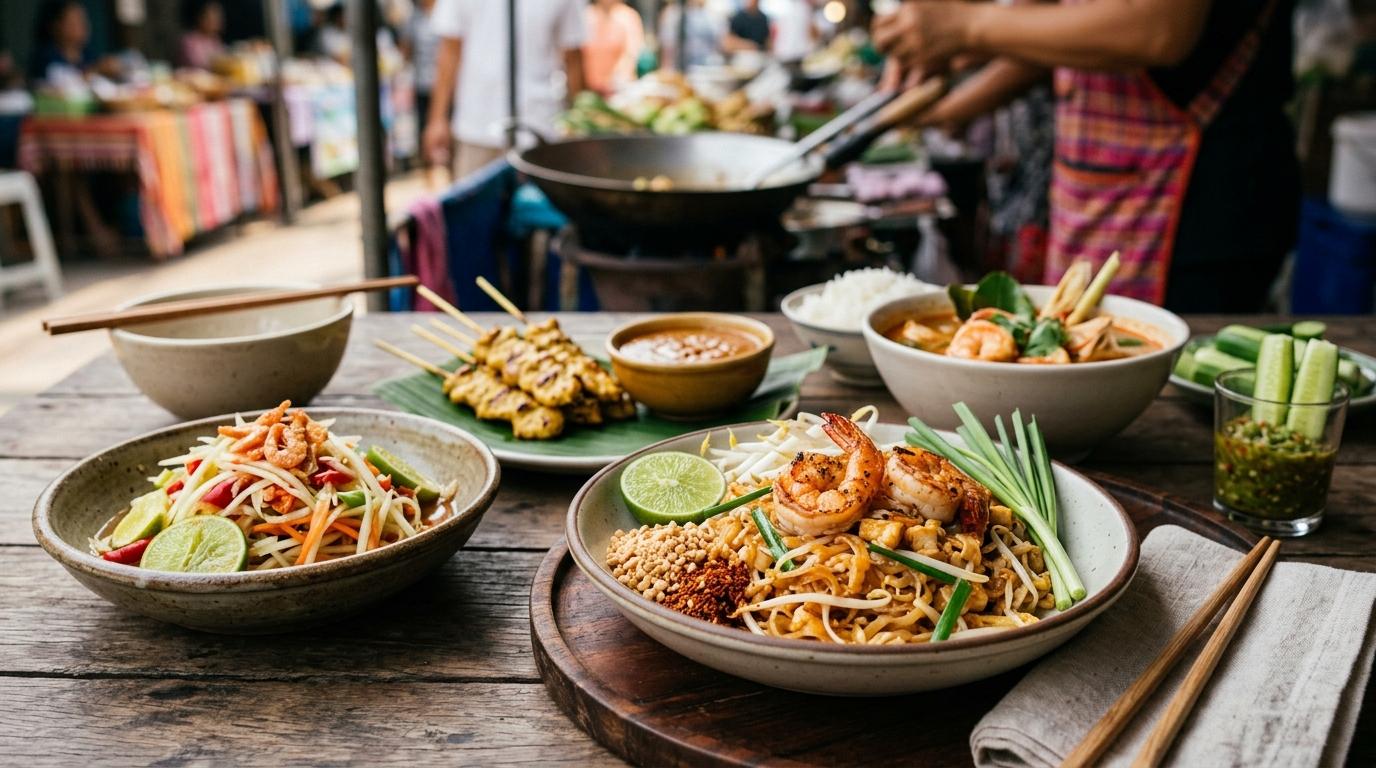
The narrow alleys of Bangkok pulse with the rhythm of mortars pounding, woks hissing, and vendors calling out their specialties. Thai street food isn't just about convenience—it's where some of the country's most beloved flavors live. These dishes, perfected over generations of street-side cooking, represent the soul of Thai cuisine in ways that restaurant food sometimes can't match. If you're looking to explore the full spectrum of Thai recipes, street food offers the perfect entry point into bold, unapologetic flavors.
The beauty of Thai street food lies in its simplicity and precision. Each dish balances sweet, sour, salty, and spicy elements with an almost mathematical accuracy. Vendors master one or two dishes, repeating them hundreds of times daily until every movement becomes muscle memory. The good news? You can capture these same flavors at home with the right techniques and ingredients.
We'll walk through five essential Thai street food recipes that translate beautifully to home kitchens: som tam (green papaya salad), pad kra pao (Thai basil stir-fry), chicken satay, mango sticky rice, and Thai-style grilled corn. Each represents a different category of street food, from refreshing salads to satisfying mains to irresistible sweets.
Understanding Thai Street Food Fundamentals
Thai street food operates on a few core principles that separate it from other cuisines. First, everything happens fast and hot. Vendors work over intense flames, creating the characteristic "wok hei" or breath of the wok that adds smoky depth to stir-fries. Second, seasoning happens continuously throughout cooking, not just at the end. Third, texture contrasts are essential—crunchy elements balanced against soft ones, fresh herbs against cooked proteins.
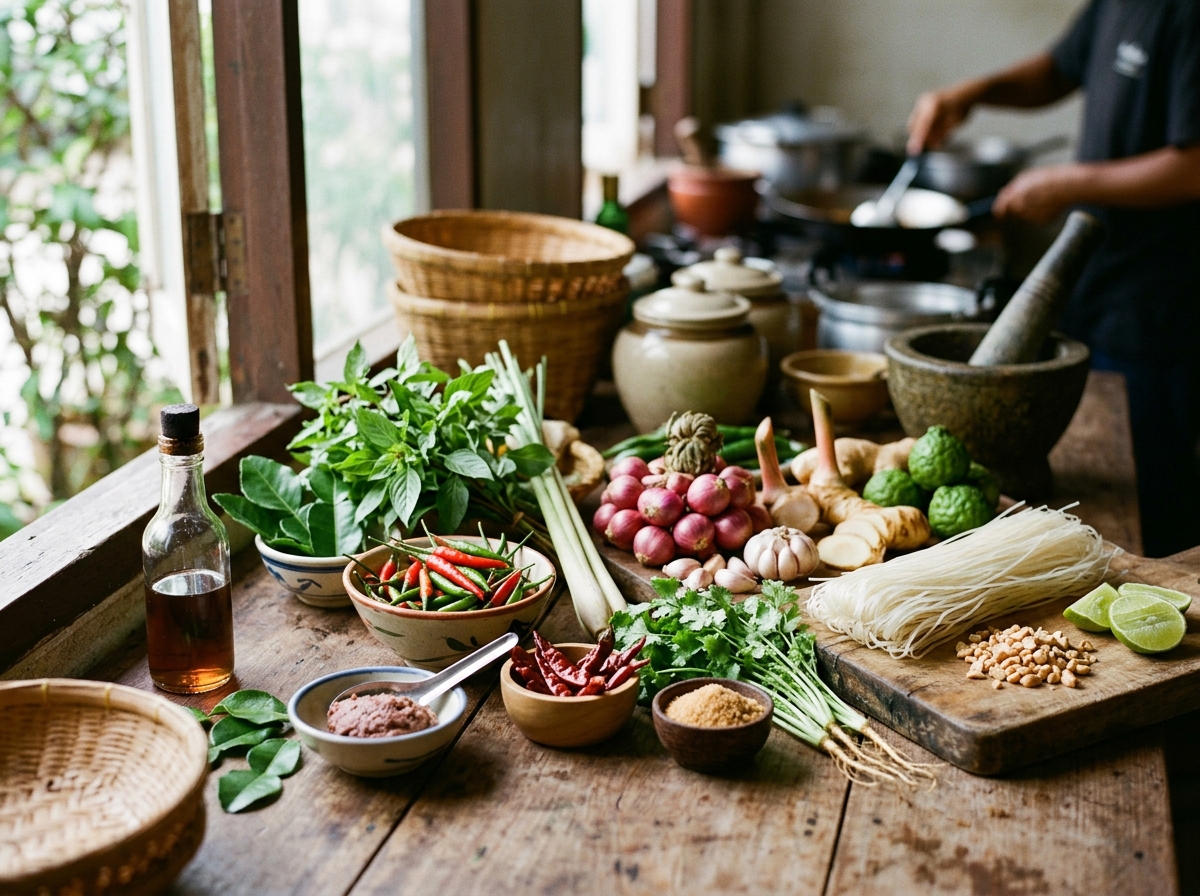
The flavor profile builds in layers. Palm sugar provides complexity beyond regular sugar. Fish sauce adds umami depth that salt alone can't achieve. Fresh chilies bring heat that dried ones can't match. Thai basil offers a peppery, almost licorice-like note that sweet basil simply doesn't deliver. Understanding these ingredients and their roles is crucial for authentic results.
Temperature control matters more than you might expect. Street vendors know exactly when oil reaches the right heat for different proteins, when garlic turns golden without burning, when vegetables retain their snap while absorbing flavors. We'll break down these temperature cues for each recipe.
Key Ingredients for Authentic Thai Street Food
Building a proper Thai pantry starts with understanding which ingredients you can substitute and which demand authenticity. Fish sauce from Thailand tastes different from Vietnamese versions—it's typically more pungent and complex. Palm sugar creates caramel notes that brown sugar can't replicate, though brown sugar works in a pinch.
Fresh ingredients make or break these dishes. Thai chilies (bird's eye chilies) pack more heat and flavor than jalapeños. Thai basil's distinctive taste can't be replaced by sweet basil. Green papaya for som tam needs that specific crisp texture and neutral flavor that won't overwhelm the dressing.
Tamarind paste adds the sour backbone to many dishes. Buy the paste, not powder—it offers better flavor control and dissolves more evenly. Coconut milk varies dramatically between brands; Thai brands like Chaokoh or Aroy-D provide the richness and consistency that street vendors use.
Shrimp paste appears in many recipes as a hidden flavor booster. It's pungent straight from the jar but transforms into savory depth when cooked. Start with small amounts—you can always add more, but you can't take it back.
Som Tam: Green Papaya Salad That Wakes Up Your Palate
Som tam represents everything brilliant about Thai street food—fresh, punchy, and endlessly customizable. The dish starts with shredded green papaya, but the magic happens in the mortar and pestle. This isn't just mixing; it's a controlled bruising that releases flavors and creates the perfect texture.
Start with garlic and chilies, pounding them into a rough paste. Add palm sugar, fish sauce, and lime juice, working the mixture until the sugar dissolves completely. The key moment comes when you add the papaya—pound just enough to bruise the strands and coat them with dressing, but not so much that they lose their crunch.
Traditional som tam includes dried shrimp and crushed peanuts for texture contrast. The dried shrimp adds umami depth, while peanuts provide richness and crunch. Cherry tomatoes go in last, barely bruised to release just a touch of juice without turning mushy.
The balance shifts with each ingredient addition. Too much fish sauce overwhelms; too little leaves the salad flat. The lime juice should make your mouth pucker slightly, the palm sugar should round out the sharp edges, and the chilies should build heat without obliterating other flavors. Taste constantly and adjust—this is Thai cooking at its most intuitive.
Pad Kra Pao: The Thai Basil Stir-Fry That Defines Comfort
Walk through any Thai neighborhood around lunch time and you'll smell pad kra pao before you see it. This stir-fry of meat, Thai basil, and chilies represents comfort food at its most essential. The dish seems simple—ground pork or chicken, garlic, chilies, Thai basil, and a few seasonings—but technique makes all the difference.
Heat is crucial. Your wok or large skillet needs to be screaming hot before the oil goes in. The oil should shimmer and almost smoke. Garlic and chilies hit the hot oil first, sizzling aggressively for maybe 15 seconds before the meat follows. The meat should sear immediately, not steam in its own juices.
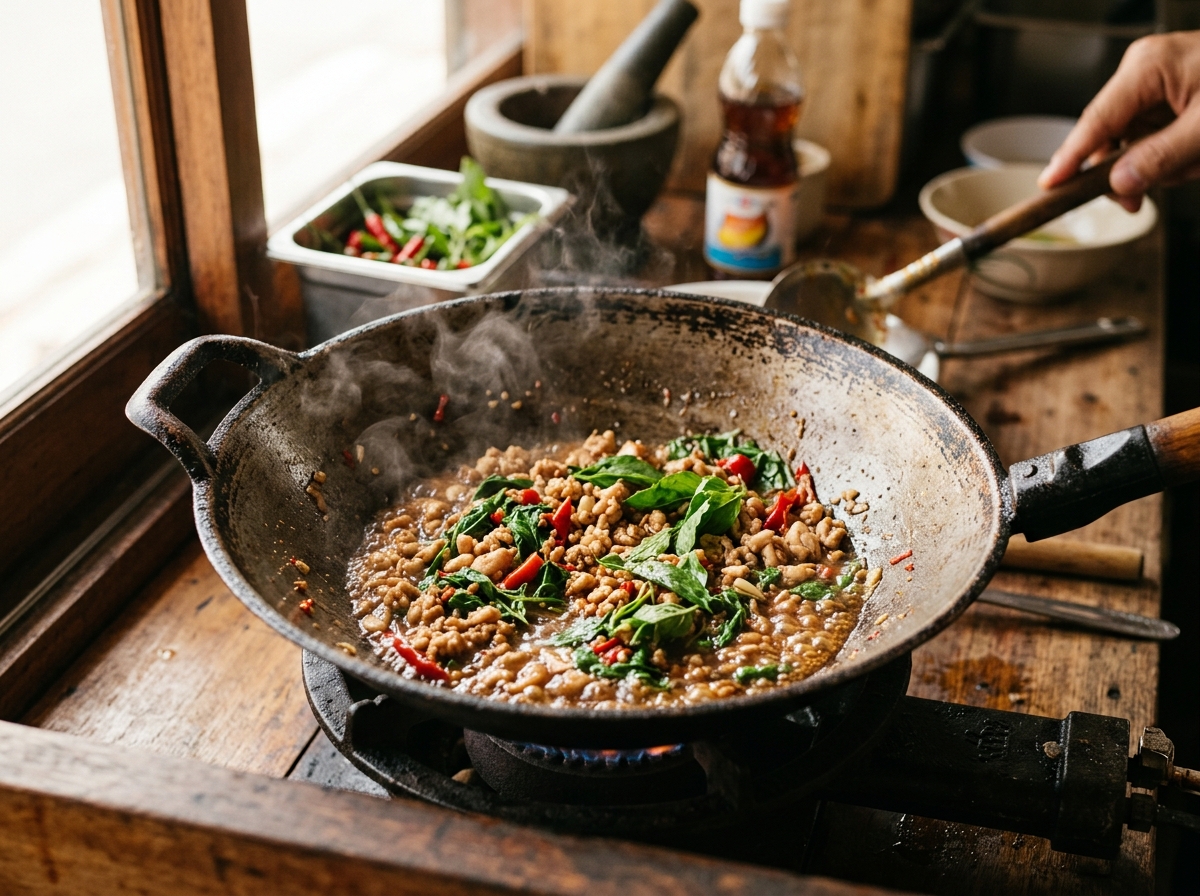
The seasoning blend defines the dish: fish sauce for umami, dark soy sauce for color and mild sweetness, light soy sauce for saltiness, and palm sugar to balance everything out. Some cooks add a splash of stock or water to create steam that helps cook the meat through while keeping it tender.
Thai basil goes in at the very end, wilting just enough to release its oils while maintaining some structure. The leaves should look glossy and vibrant, not completely collapsed. Serve immediately over jasmine rice, ideally topped with a fried egg whose edges are crispy and whose yolk runs golden into the rice below.
Thai Chicken Satay: Grilled Perfection on a Stick
Satay vendors work their grills with practiced precision, constantly adjusting skewer positions to ensure even cooking. The secret starts with the marinade—a complex blend of coconut milk, curry powder, turmeric, palm sugar, and fish sauce that both flavors and tenderizes the chicken.
Chicken thighs work better than breasts for satay. The extra fat keeps the meat moist during grilling, and thighs handle the high heat without drying out. Cut the meat along the grain into strips about half an inch thick. This ensures each piece has the right balance of surface area for flavor absorption and thickness for juicy results.
The marinade needs at least two hours to work, but overnight is better. Coconut milk provides richness and helps the spices penetrate the meat. Turmeric gives the characteristic golden color and earthy flavor. Curry powder adds complexity—use Thai curry powder if you can find it, as it includes ingredients like galangal and lemongrass that Western versions might lack.
Threading the meat onto soaked bamboo skewers requires a gentle touch. Weave the skewer through each strip so the meat lies flat against the grill grates. This maximizes contact with the heat and creates those beautiful char marks that define good satay.
Grill over medium-high heat, turning frequently. The coconut milk in the marinade can cause flare-ups, so stay attentive. The chicken is done when it feels firm but still gives slightly to pressure—about 8-10 minutes total cooking time.
Thai-Style Grilled Corn: Street Snack Perfection
Thai grilled corn elevates this simple vegetable into something crave-worthy. Street vendors brush ears with a mixture of coconut milk, salt, and sometimes a touch of sugar before grilling over charcoal. The coconut milk caramelizes slightly, creating a creamy coating that contrasts beautifully with the char.
Choose corn that feels heavy for its size with bright green husks and moist silk. Pull back the husks without removing them completely—they'll serve as handles and protect parts of the kernels from over-charring. Remove all the silk carefully.
The coating mixture combines coconut milk with salt and a pinch of sugar. Some vendors add a tiny amount of fish sauce for depth, though this isn't universal. Brush the mixture generously over the kernels, getting into all the grooves.
Grill over medium heat, turning regularly and reapplying the coconut mixture as it cooks off. The kernels should develop golden-brown patches while remaining tender and juicy. Total cooking time runs about 15-20 minutes, depending on your grill's heat.
Mango Sticky Rice: The Perfect Sweet Ending
Khao niao mamuang represents Thai dessert perfection—sweet, creamy, and surprisingly complex for something so simple. The dish requires three components: properly cooked glutinous rice, rich coconut sauce, and perfectly ripe mangoes.
Glutinous rice (despite the name, it's gluten-free) needs soaking overnight, then steaming rather than boiling. The steaming method keeps individual grains distinct while creating the characteristic chewy texture. Line your steamer with cheesecloth and steam for about 25 minutes, until the rice is translucent and tender.
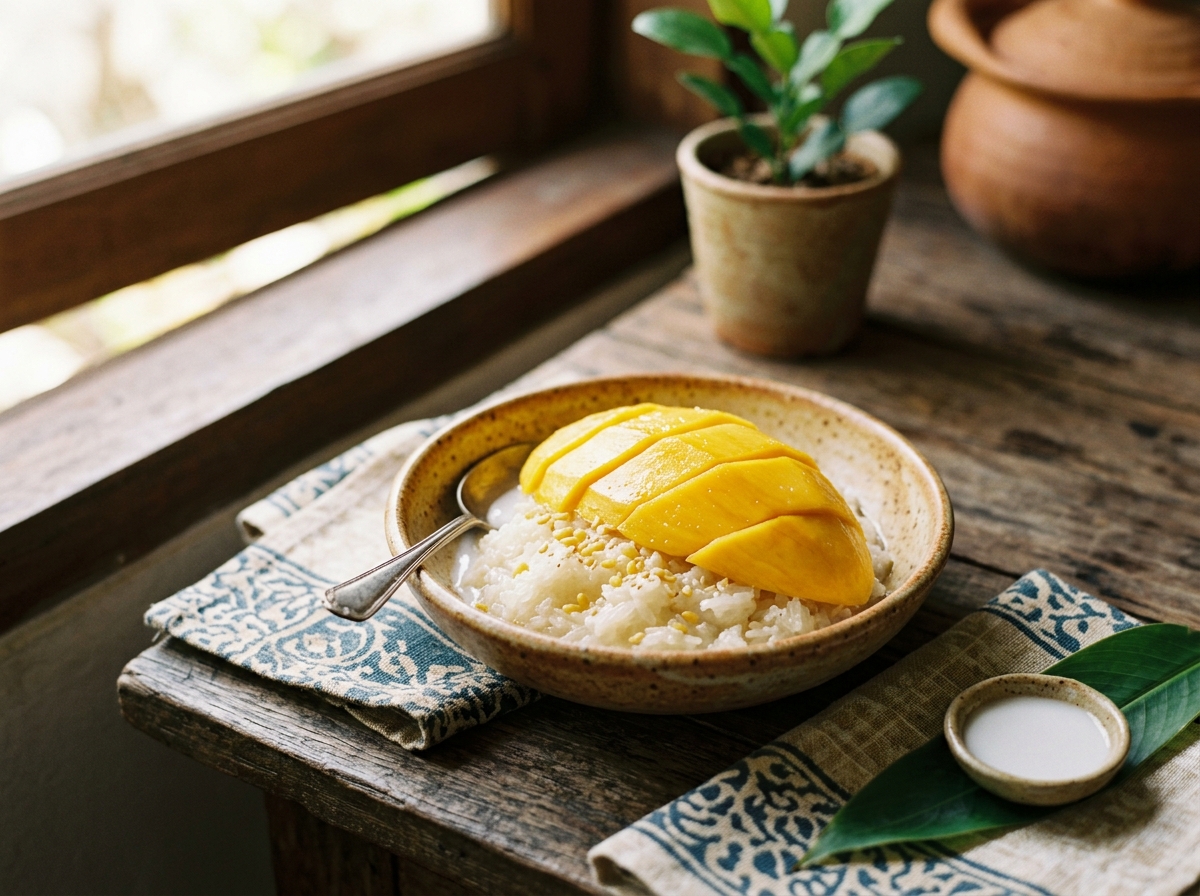
While the rice steams, prepare the coconut sauce by heating coconut milk with palm sugar and a pinch of salt. The mixture should reduce slightly and coat the back of a spoon. This sauce serves double duty—part of it gets mixed into the cooked rice, while the rest becomes a drizzle for serving.
Mango selection makes or breaks this dessert. You want fruit that's sweet and creamy but not mushy. Ataulfo mangoes work beautifully, as do Manila varieties. The fruit should yield slightly to pressure but still hold its shape when sliced.
Assembly happens at serving time. Warm rice gets molded into portions, sliced mango fans out alongside, and the remaining coconut sauce drizzles over everything. Some vendors sprinkle toasted coconut flakes or crushed peanuts on top, but the classic version keeps things simple.
Bringing Street Food Techniques to Your Kitchen
Adapting street food techniques for home cooking requires understanding what made them work on the street in the first place. High heat, fresh ingredients, and quick cooking times create the flavors we associate with great Thai street food.
Your home burners might not match the BTU output of a street vendor's gas flame, but you can compensate with technique. Preheat your wok or skillet longer than you think necessary. Work in smaller batches to maintain temperature. Keep ingredients prepped and within arm's reach—street food moves fast, and hesitation kills heat.
Invest in a proper mortar and pestle if you plan to make som tam regularly. The granite models work best, providing the weight and rough surface needed to properly bruise ingredients. A food processor won't give you the same texture control.
Season throughout the cooking process, not just at the end. Thai street food builds flavors in layers, with seasonings added at different stages to create depth and complexity. Taste constantly and adjust—this style of cooking rewards intuitive seasoning over strict recipe following.
Making Thai Street Food Part of Your Regular Rotation
These recipes work beautifully for casual entertaining and weeknight dinners alike. Som tam makes an excellent starter or side dish, especially with grilled meats. Pad kra pao delivers satisfying comfort food that comes together in under 15 minutes once your ingredients are prepped.
Satay works perfectly for parties—guests love food on sticks, and the skewers can be prepared hours ahead and grilled to order. The peanut sauce that traditionally accompanies satay deserves its own mention—a rich blend of ground peanuts, coconut milk, palm sugar, and tamarind that doubles as a dipping sauce for vegetables.
Consider building entire Thai-themed meals around these street food dishes. Start with som tam, move to pad kra pao or satay as the main course, and finish with mango sticky rice. The progression of flavors—fresh and acidic to rich and savory to sweet and creamy—follows the natural rhythm of Thai dining.
Thai street food represents some of the world's most satisfying casual cooking. These dishes prove that complex flavors don't require complicated techniques—just good ingredients, proper heat control, and attention to balance. As you explore more Thai recipes, let these street food fundamentals guide your understanding of how this cuisine builds flavor and creates the kind of food that keeps people coming back for more.
Sources & further reading
- Authentic Thai Papaya Salad (Som Tum Thai) — Hot Thai Kitchen
- Thai Green Papaya Salad Recipe (ส้มตำ) - Thai Street Food Style! — Eating Thai Food
- Thai Papaya Salad | Authentic Som Tam Recipe — Rosa's Thai
Related Topics
Enjoyed this article? Share it with fellow food lovers!
Import a recipe, start cooking
Paste any recipe URL and we'll turn it into a Cook Mode experience with step-by-step visuals, voice narration, and built-in timers.