

Thai Soup Recipes: Tom Yum, Tom Kha and Beyond
Discover the art of Thai soup-making with our guide to tom yum, tom kha, and other essential recipes. Learn the techniques that create perfect balance in every spoonful.
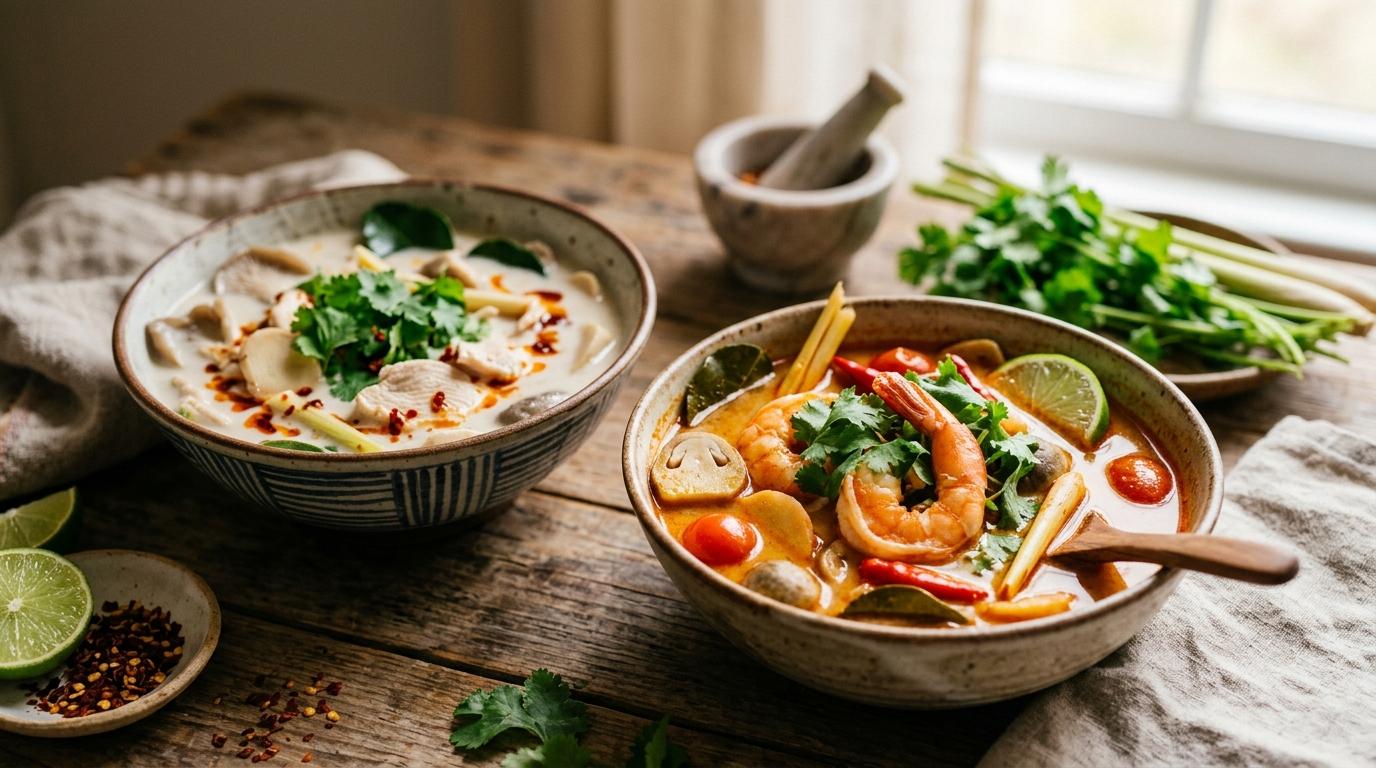
Thai soups occupy a special place in the country's culinary landscape—they're comfort food, medicine, and celebration all simmered into one fragrant bowl. From the electric heat of tom yum to the silky embrace of tom kha, these soups showcase Thailand's mastery of balancing sweet, sour, salty, and spicy in liquid form. Whether you're exploring our complete collection of thai recipes or diving deep into soup-specific techniques, understanding these foundational broths opens up an entire world of Thai cooking.
The beauty of Thai soups lies in their complexity built from simple ingredients. A handful of herbs, some stock, the right balance of fish sauce and lime juice—suddenly you have a soup that's both nourishing and thrilling. But achieving that perfect balance takes understanding, not just following recipes blindly.
The Foundation: Understanding Thai Soup Philosophy
Thai soups aren't just about throwing ingredients into hot water. They're built on principles that govern all Thai cooking: the interplay of flavors, the importance of fresh aromatics, and the art of timing. Every Thai soup starts with creating a flavor base—whether that's pounding curry paste, blooming spices in oil, or building an aromatic broth from scratch.
The key difference between Thai soups and Western versions is how heat functions. In Western soups, heat often mellows flavors. In Thai soups, heat amplifies them. That's why you add lime juice at the end, why fresh herbs go in right before serving, and why the balance can shift dramatically with just one extra spoonful of fish sauce.
Temperature matters too. Thai soups are served piping hot, often still bubbling when they reach your table. This isn't just presentation—the continued gentle cooking helps marry flavors while keeping delicate ingredients from overcooking.
Tom Yum: The Soul of Thai Soups
Tom yum represents everything brilliant about Thai soup-making. The name literally means "boiled mixed," but that humble translation doesn't capture the symphony happening in your bowl. At its core, tom yum is about creating perfect sour-spicy harmony using just a few key ingredients.
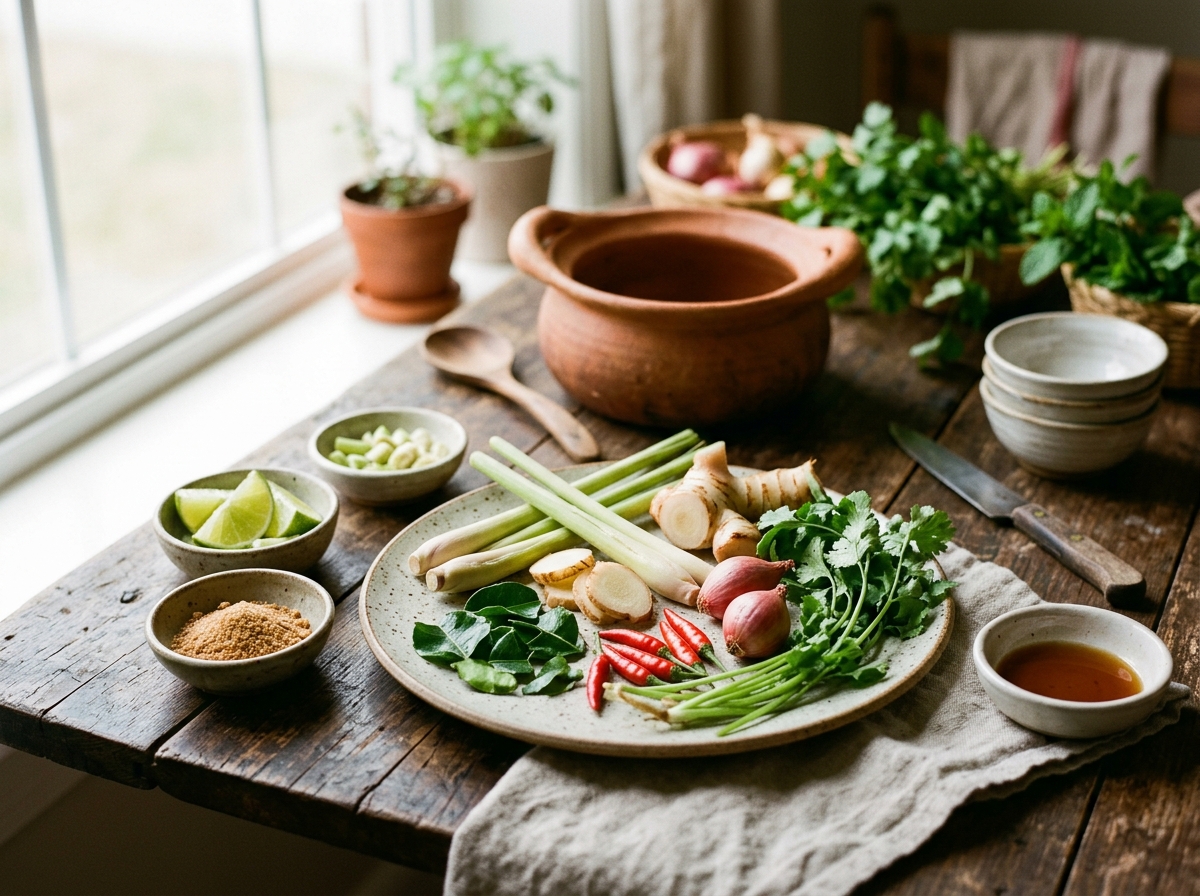
The foundation starts with tom yum paste or individual aromatics: lemongrass, galangal, makrut lime leaves, Thai chilies, and shallots. These get muddled or pounded to release their oils, then simmered in stock until the broth becomes deeply fragrant.
Fish sauce provides the salty backbone, while lime juice adds the essential sour note that makes tom yum sing. Palm sugar rounds out harsh edges, though many cooks skip it entirely, preferring the sharp clarity of unsweetened broth.
The protein—shrimp, chicken, fish, or mushrooms for vegetarian versions—gets added based on cooking time needed. Shrimp cooks in under two minutes. Chicken needs longer. The goal is having everything finish simultaneously so nothing overcooks while something else catches up.
Two main styles dominate: tom yum goong (clear broth with shrimp) and tom yum goong nam khon (the same but enriched with evaporated milk or coconut cream). The creamy version became popular in restaurants but purists argue it masks the bright, clean flavors that make tom yum special.
Tom Kha: Coconut's Elegant Expression
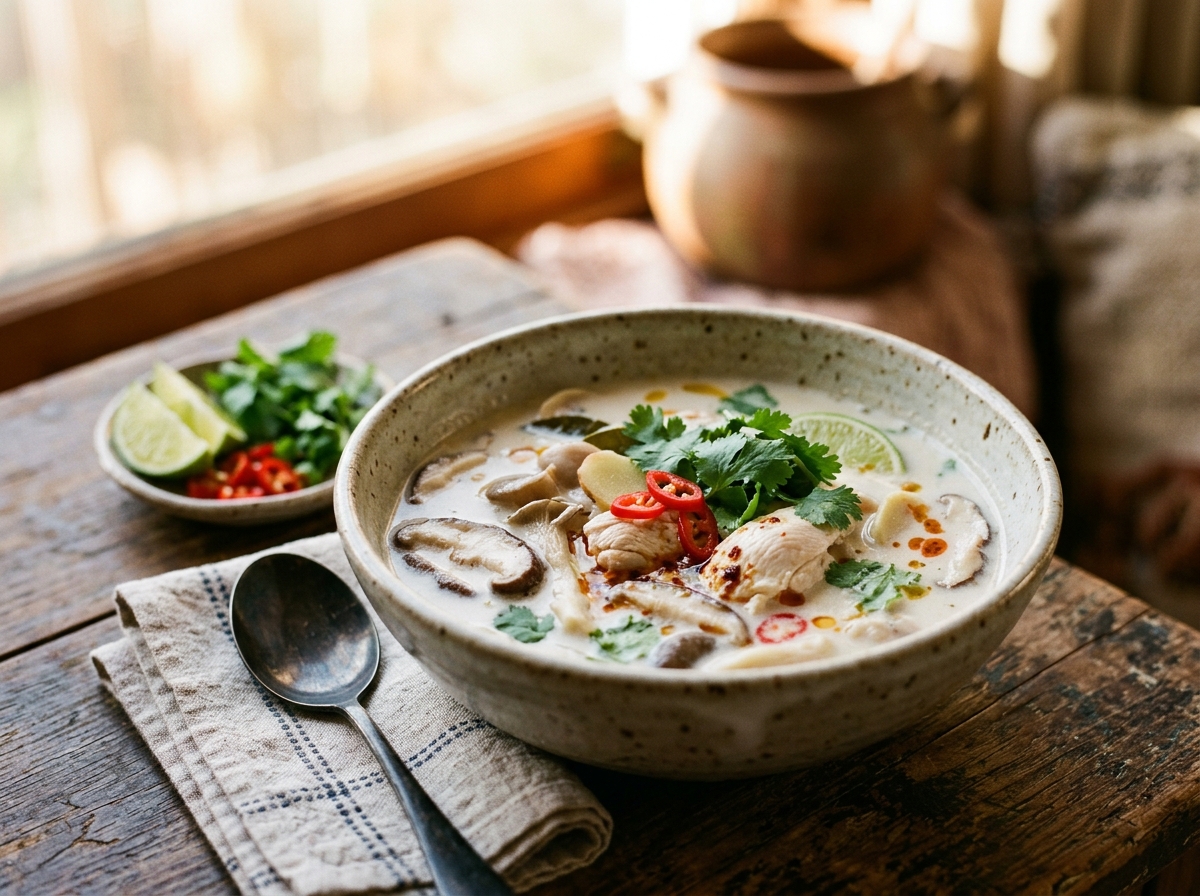
Where tom yum is electric and bright, tom kha gai (coconut chicken soup) is rich and soothing. The coconut milk base creates an entirely different canvas for Thai flavors, mellowing the heat while amplifying aromatic herbs.
Galangal is tom kha's star ingredient. More citrusy and piney than regular ginger, galangal gets sliced thick and simmered in coconut milk until it infuses the entire pot. Lemongrass and lime leaves join the party, but galangal dominates.
The technique differs significantly from tom yum. Instead of building intensity through reduction, tom kha develops through gentle simmering. The coconut milk should barely bubble—hard boiling breaks the emulsion and creates an oily, separated mess.
Chicken thighs work better than breasts here. Their higher fat content stays tender during the extended gentle cooking, and they add richness to complement the coconut base. Cut them into bite-sized pieces so they cook evenly.
Mushrooms—oyster, straw, or even button mushrooms—add earthiness and texture. They go in early enough to soften but not so early they become mushy. Thai eggplant, when you can find it, adds a subtle bitterness that plays beautifully against the rich coconut.
Beyond the Classics: Expanding Your Thai Soup Repertoire
Tom yum and tom kha get most of the attention, but Thailand's soup repertoire extends far beyond these two stars. Gaeng som (sour curry soup) brings fermented flavors through tamarind and dried chilies. Gaeng lueang (yellow curry soup) from southern Thailand combines turmeric with fish and vegetables for something entirely different.
Tom saep, a northeastern specialty, features grilled pork or beef in an intensely aromatic broth scented with charred chilies and herbs. It's rustically delicious and showcases how Thai soups adapt to regional ingredients and preferences.
Kanom jeen nam ya, though technically a noodle dish, demonstrates how Thai curry-soups work with starchy bases. The fish-based curry soup gets ladled over fermented rice noodles, creating something between soup and sauce.
Gaeng pa (jungle curry) skips coconut milk entirely, relying on intense curry paste, stock, and vegetables for a lighter but powerfully flavored soup. It's what Thai cooks make when they want curry flavors without the richness.
Key Ingredients and Where to Find Them
Authentic Thai soup flavors depend on specific ingredients that regular supermarkets often don't carry. Asian grocery stores are your best bet, but online ordering has made many items accessible nationwide.
Galangal looks like ginger but tastes completely different—more floral and citrusy. Fresh is ideal, but frozen works well. Dried galangal exists but lacks the bright flavor you want in soups.
Makrut lime leaves (often called kaffir lime leaves) provide an unmistakable citrus aroma. Fresh leaves keep in the freezer for months. Dried leaves work in a pinch but lose much of their potency.
Lemongrass should feel firm and heavy, with tight outer layers. The tender inner core is what you want for soup—pound it lightly to release oils before adding to the pot.
Thai chilies (prik kee noo) bring serious heat. Bird's eye chilies or even serrano peppers make reasonable substitutes. Start with less than you think you need—you can always add more.
Fish sauce quality varies dramatically between brands. Three Crabs, Red Boat, and Megachef represent reliable options. Look for ingredient lists with just fish and salt—avoid anything with added sugar or preservatives.
Essential Techniques for Perfect Thai Soups
Getting Thai soup flavors right requires understanding a few key techniques that don't always translate well from traditional recipes written for Thai cooks using Thai ingredients.
Aromatics need proper treatment to release their oils. Lemongrass gets smashed with the side of a knife before slicing. Galangal and chilies benefit from light pounding in a mortar. These steps aren't optional—they're what makes the difference between bland soup and intensely flavored broth.
Timing the acid addition is crucial. Lime juice and tamarind paste go in at the very end, just before serving. Added too early, the acid cooks off and you lose that bright, mouth-watering quality that makes Thai soups so appealing.
Stock quality matters more than you might think. Chicken stock works for most Thai soups, but making your own with ginger, lemongrass, and onion creates a more compatible base than store-bought Western-style stocks.
Taste and adjust constantly. Thai soups achieve balance through constant tweaking—more fish sauce for saltiness, more lime for sourness, more palm sugar to round harsh edges. Don't be afraid to keep adjusting until it tastes right.
Serving and Pairing Thai Soups
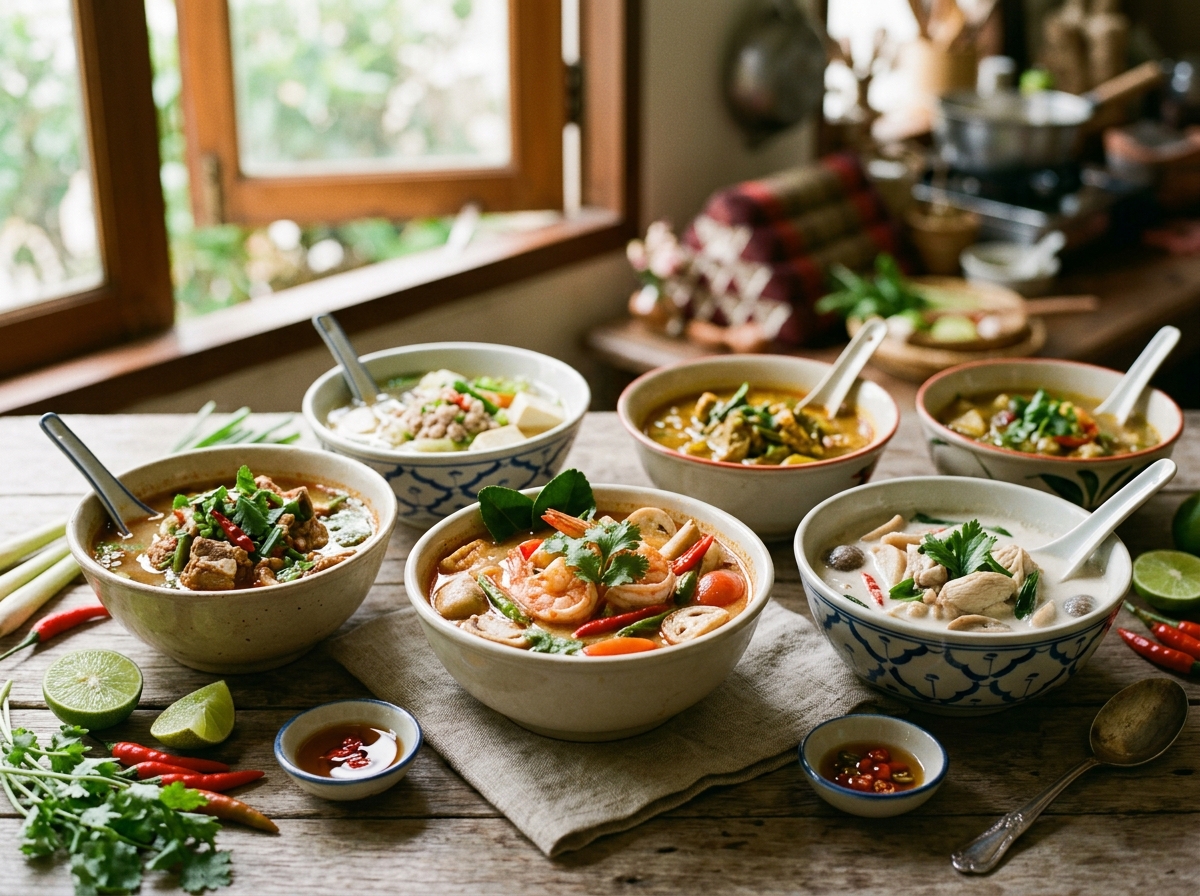
Thai soups aren't typically served as standalone courses like in Western meals. They're part of a larger spread, meant to be shared alongside rice, stir-fries, salads, and curries. The soup provides liquid and helps cool the palate between bites of spicier dishes.
Jasmine rice is the traditional accompaniment, its subtle fragrance and slight stickiness complementing soup broths perfectly. For a more substantial meal, rice noodles work well, especially with brothier soups like tom yum.
Fresh herbs served on the side let diners customize their bowls. Thai basil, cilantro, mint, and sliced chilies are common additions. Lime wedges are essential—many diners add extra lime juice just before eating.
Temperature is critical. Thai soups should arrive at the table still bubbling hot. If making ahead, reheat gently and add fresh lime juice and herbs just before serving. The bright flavors that make these soups special don't survive well when held at temperature.
Conclusion
Mastering Thai soups opens up one of the most satisfying and versatile categories of home cooking. Whether you're craving the bright intensity of tom yum or the comforting richness of tom kha, these soups deliver complex flavors from relatively simple ingredient lists. The key lies in understanding the techniques—proper aromatics preparation, careful timing of acid additions, and constant taste adjustments.
Start with quality ingredients, respect the traditional techniques, and don't be afraid to adjust flavors to your taste. Thai cooking is about balance, not rigid adherence to measurements. As you explore these soup recipes and expand into other areas of thai recipes, you'll develop the intuitive understanding that makes Thai cooking so rewarding.
The beauty of these soups lies in their ability to transform simple weeknight dinners into something special. With a few key ingredients and proper technique, you can create restaurant-quality Thai flavors in your own kitchen. So grab your mortar and pestle, stock up on galangal and lime leaves, and start exploring the wonderful world of Thai soup-making.
Sources & further reading
- Tom kha kai — Wikipedia
- Tom yum — Wikipedia
- Authentic Tom Kha Gai (Thai coconut chicken soup) — Hot Thai Kitchen (Pailin Chongchitnant)
- Tom Yum Soup (Tom Yum Goong) Recipe — Hot Thai Kitchen (Pailin Chongchitnant)
- How to Balance the 5 Flavours of Thai Cuisine — Asian Inspirations
Related Topics
Enjoyed this article? Share it with fellow food lovers!
Import a recipe, start cooking
Paste any recipe URL and we'll turn it into a Cook Mode experience with step-by-step visuals, voice narration, and built-in timers.