
Thai Salad Recipes: Som Tam, Larb and Fresh Flavors
Thai salads bring together fresh herbs, bold dressings, and contrasting textures in dishes that wake up your palate. From the iconic som tam to northern larb, these recipes showcase Thailand's mastery of balancing sweet, sour, salty, and spicy.
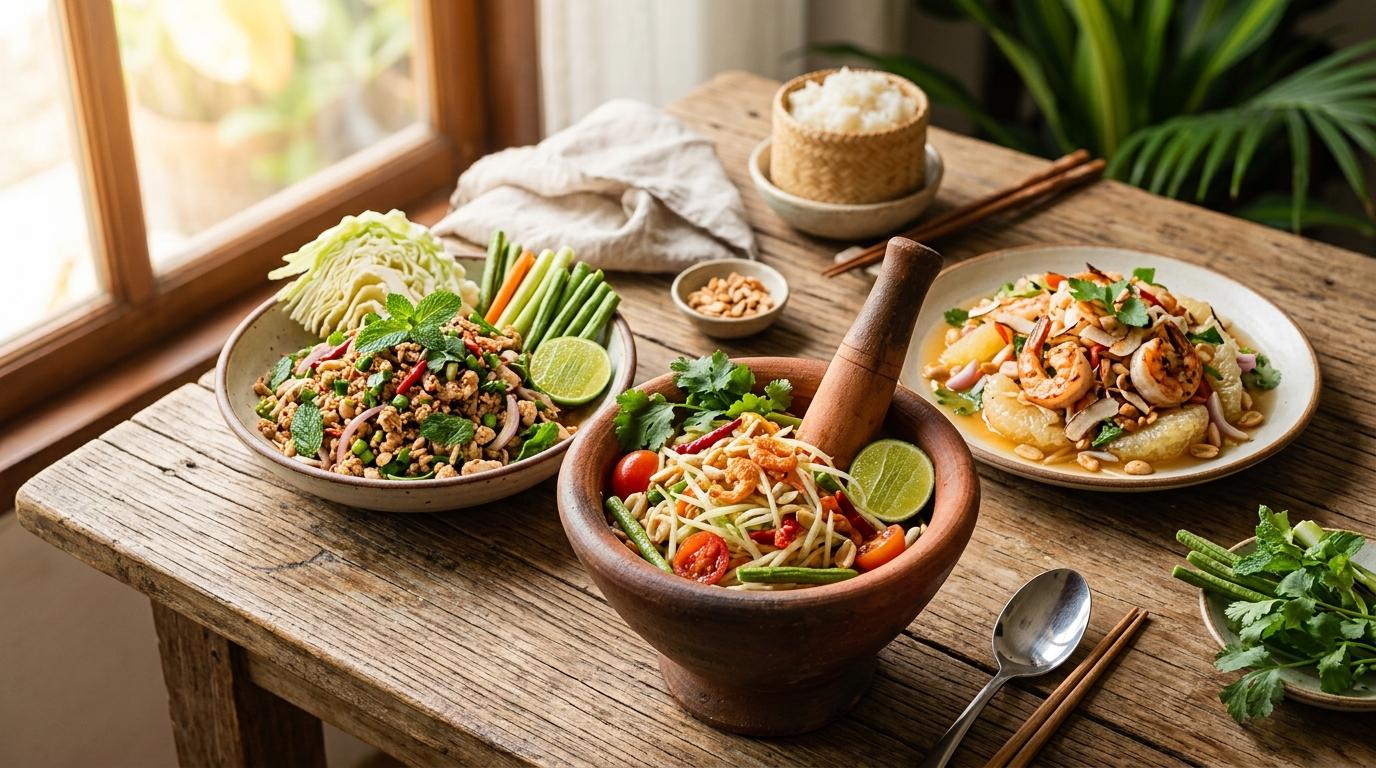
Thai salads don't mess around. They hit you with everything at once—lime's sharp tang, chilies that make you sweat, fish sauce that adds mysterious depth, and palm sugar that rounds it all out. These aren't delicate greens with vinaigrette. They're bold, textural experiences that showcase Thailand's genius for balancing flavors. From the iconic som tam to the herbaceous larb of the north, Thai recipes demonstrate a mastery of fresh ingredients that keeps you coming back for more.
The beauty of Thai salads lies in their contrast. Crunchy meets tender. Sweet meets sour. Cool herbs calm fiery chilies. Each bite delivers multiple sensations, creating complexity that Western salads rarely achieve. The secret isn't just in the ingredients—it's in the technique of building layers of flavor that complement rather than compete.
The Foundation: Understanding Thai Salad Principles
Thai salads operate on a different philosophy than their Western counterparts. Instead of coating ingredients with dressing, Thai cooks build flavor from the ground up. The mortar and pestle isn't just a tool—it's the foundation of proper technique. Pounding releases essential oils from aromatics, breaks down cell walls in vegetables to absorb flavors, and creates the perfect texture.
The flavor profile follows Thailand's sacred balance: sweet (wan), sour (priao), salty (kem), and spicy (phet). But it's not equal parts. Each salad tips toward certain flavors while keeping others in support. Som tam leans heavily sour and spicy. Larb favors salty and herbaceous notes. The art is knowing which direction to push.
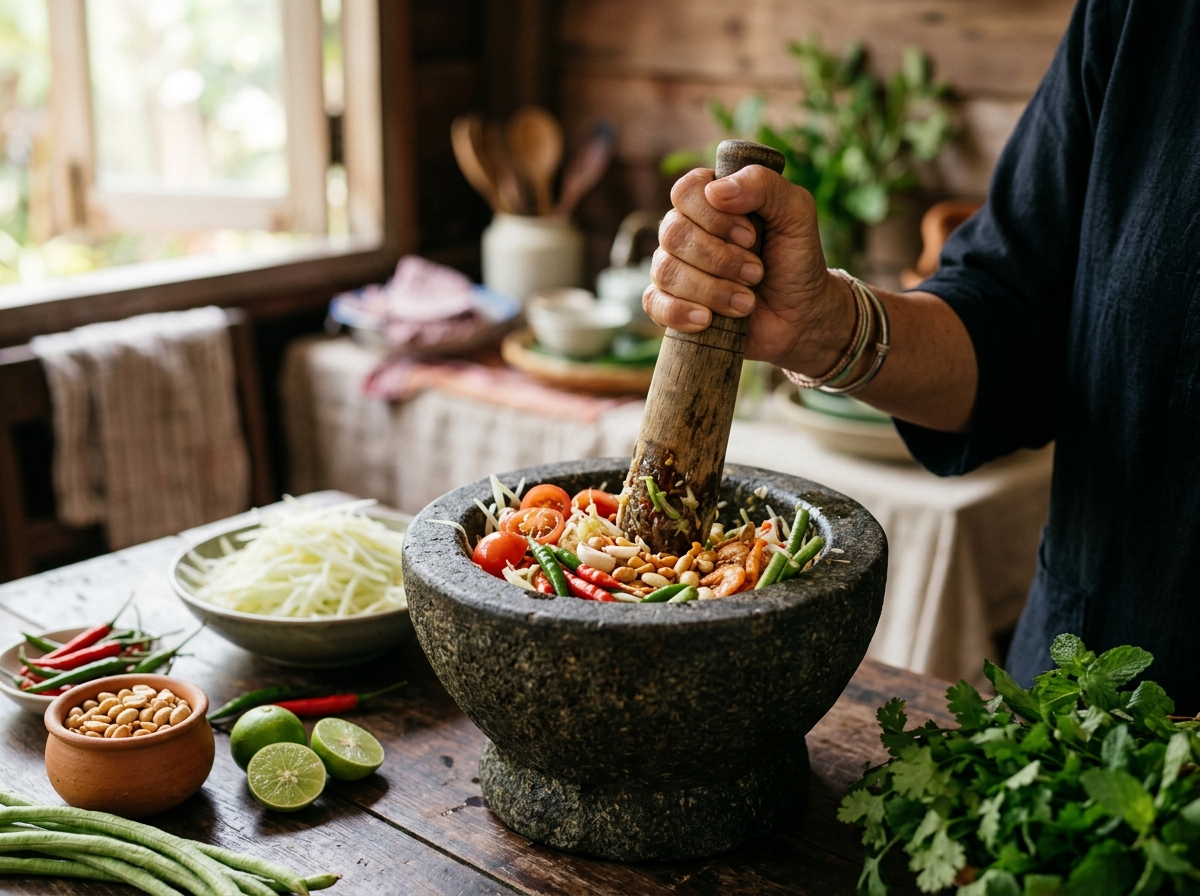
Texture matters just as much as flavor. Thai salads celebrate contrast—the snap of green beans against yielding tomatoes, the crunch of roasted peanuts with tender herbs. This isn't accidental. Each ingredient serves a textural purpose alongside its flavor contribution.
Som Tam: The King of Thai Salads
Green papaya salad, or som tam, represents everything Thai cuisine does best. It takes an unripe fruit that's basically flavorless and transforms it into something electric. The papaya provides crunch and absorbs the dressing like a sponge. Without it, you'd have a small bowl of very intense sauce.
Traditional som tam starts with long, thin strips of green papaya. You can use a julienne peeler, but a sharp knife works fine—just aim for matchstick thickness. The papaya should feel firm and sound hollow when tapped. Too ripe and it'll turn mushy under the mortar's assault.
The dressing builds in the mortar. Start with chilies—bird's eye if you can find them, Thai chilies as backup, or even serrano in a pinch. Add a pinch of salt and pound until you have a rough paste. Palm sugar goes in next, followed by fish sauce, then lime juice. Taste constantly. The balance should be assertively sour with enough salt to make your mouth water and heat that builds gradually.
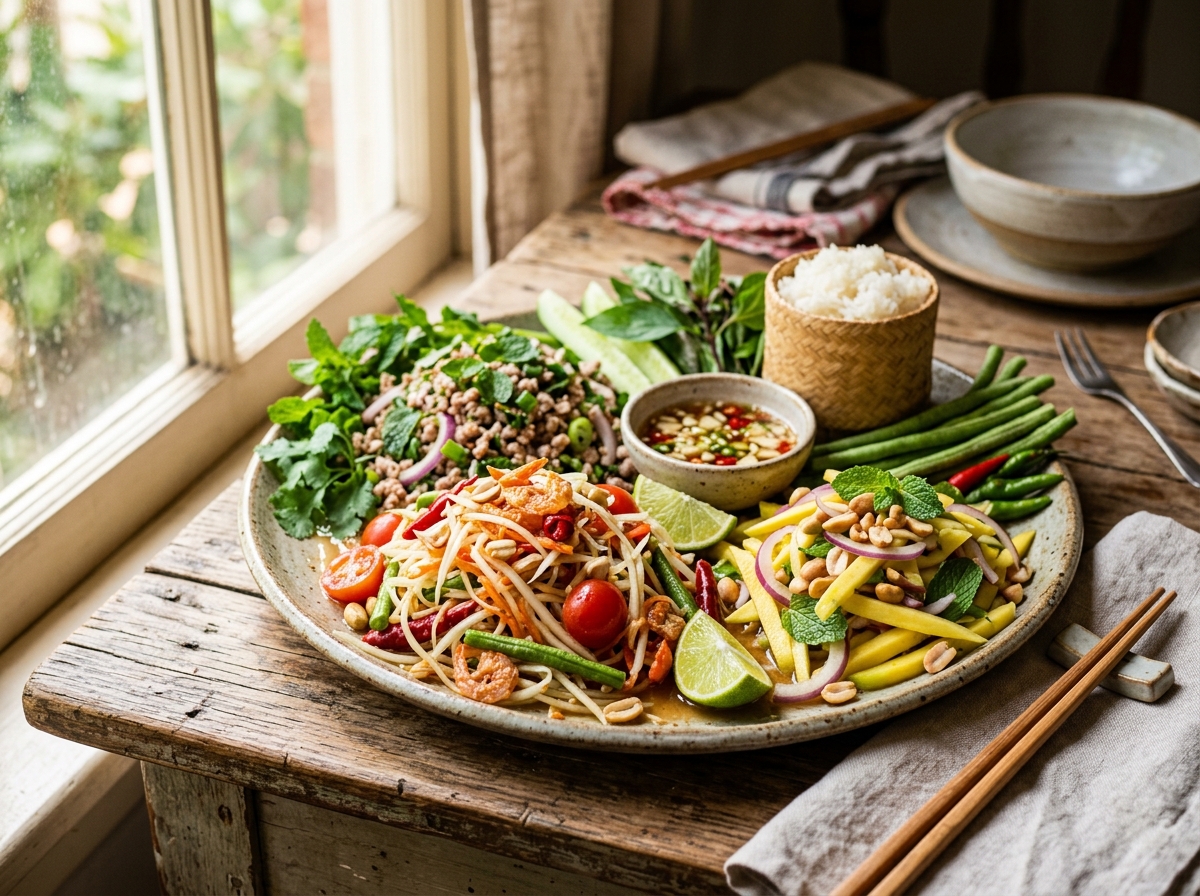
Add the papaya strips and pound gently—you want to bruise them enough to absorb flavor without turning them to mush. Tomato wedges and green beans go in next, along with dried shrimp if you're using them. A final handful of roasted peanuts provides richness and crunch.
Regional Variations Worth Trying
Som tam changes across Thailand's regions. In the northeast (Isaan), they add fermented fish sauce (pla ra) for funkier depth. The south incorporates dried shrimp and sometimes crab. Northern versions might include fermented tea leaves or different vegetables entirely.
Som tam Thai, the Bangkok version, tends to be milder and sweeter than its countryside cousins. It often includes dried shrimp and focuses more on the sweet-sour balance. Som tam Isaan pushes the funk with pla ra and cranks up the heat.
Larb: The Herb-Forward Marvel
Larb comes from northern Thailand and Laos, where fresh herbs aren't garnish—they're the point. This isn't a meat salad with some herbs sprinkled on top. It's an herb salad with meat for substance. The ratio matters. You want roughly equal parts protein and herbs by volume.
Traditional larb uses raw meat, but cooked versions work perfectly for home kitchens. Duck, pork, chicken, or even mushrooms for vegetarians all work. The key is cooking the protein just until done, then letting it cool slightly before mixing with herbs.
The herb mix varies by region and season, but mint, cilantro, and scallions form the base. Thai basil adds anise notes. Sawtooth coriander (culantro) brings a sharper, more intense cilantro flavor. Fresh dill might seem weird, but it's traditional in northern larb and adds an unexpected brightness.
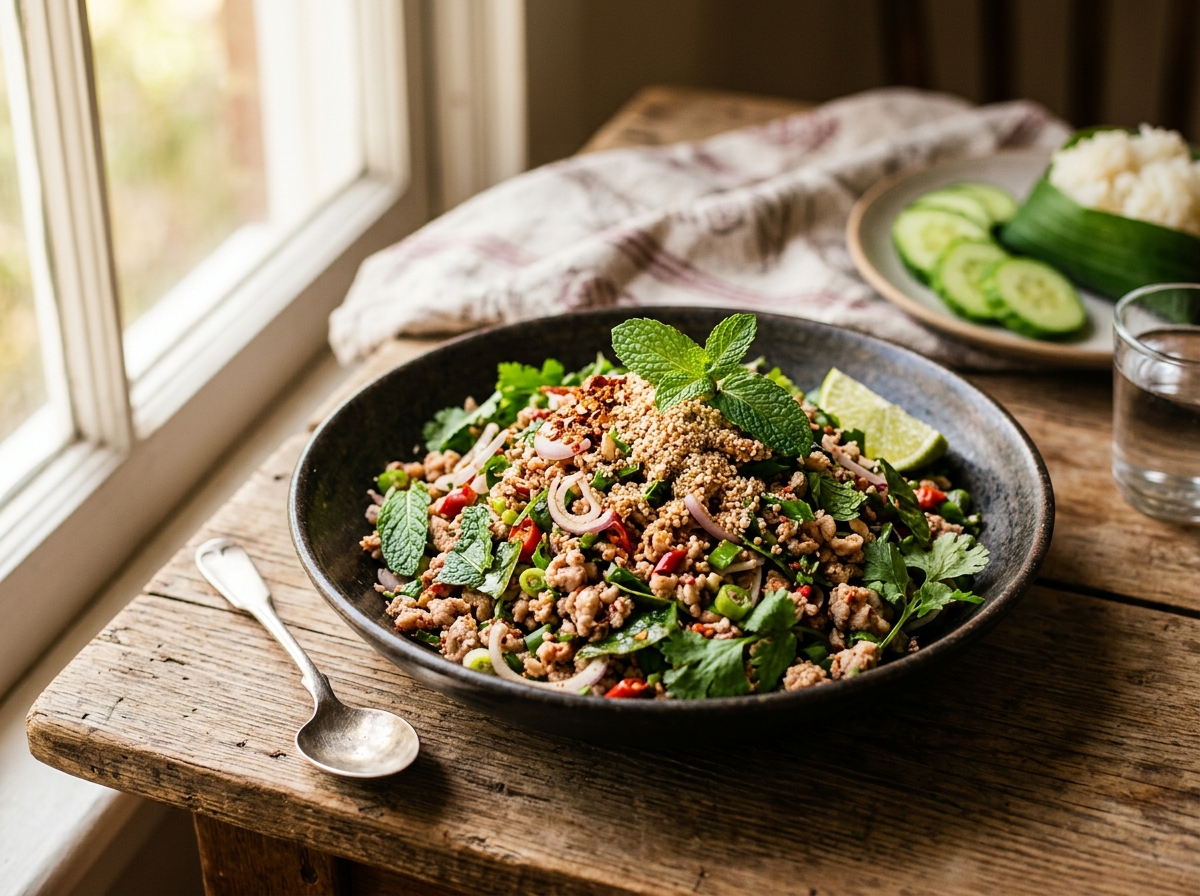
Toasted rice powder (khao kua) gives larb its signature texture and nutty flavor. Make it by dry-toasting jasmine rice in a pan until golden, then grinding it coarsely in a spice grinder. It should have the texture of coarse breadcrumbs, not powder. This adds body to the dressing and creates little pops of crunch throughout the salad.
The dressing for larb is simpler than som tam but requires more finesse. Fish sauce provides the salt base. Lime juice adds acidity. Chili flakes bring heat without overwhelming the herbs. The balance leans heavily toward fresh and bright rather than complex.
Key Ingredients for Authentic Thai Salads
Great Thai salads start with proper ingredients. Fish sauce isn't optional—it provides the deep umami foundation that salt alone can't match. Three Crabs and Red Boat are reliable brands, but any Vietnamese or Thai fish sauce works better than attempting substitutions.
Palm sugar brings complexity that white sugar lacks. It has caramel notes and dissolves differently than granulated sugar. Light brown sugar makes an acceptable substitute, but palm sugar is worth seeking out. Asian markets carry it in solid blocks or paste form.
Thai chilies pack more heat than jalapeños and have a cleaner, brighter flavor. Bird's eye chilies work perfectly. If you can't find them, serranos provide similar heat levels, though with slightly different flavor profiles. Avoid bell peppers—they're too mild and have the wrong texture.
Lime juice must be fresh. Bottled lime juice tastes flat and won't provide the bright acidity these salads need. Southeast Asian limes tend to be more sour than sweet, so don't be afraid to use generous amounts.
Fresh herbs make or break Thai salads. Wilted cilantro and dried-up mint kill the entire dish. Buy herbs the day you plan to cook, or store them properly with stems in water like flowers. Thai basil has a different flavor than Italian basil—more anise-forward and less sweet. It's worth finding, but regular basil works in emergencies.
Advanced Techniques for Better Thai Salads
Temperature matters more than most recipes mention. Serve Thai salads at room temperature, not chilled. Cold ingredients mute flavors and make the dressing taste flat. If you prep components ahead, bring them to room temperature before assembling.
The mortar and pestle technique takes practice. Start gentle and increase pressure gradually. You're not trying to pulverize everything—you want to release oils and break down tough fibers while maintaining some texture. Wood mortars work better than stone for delicate herbs.
Timing the assembly prevents soggy salads. Mix delicate herbs and vegetables with dressing just before serving. Heartier ingredients like green papaya can marinate longer and actually improve with time.
Adjust flavors in stages. Thai salads should taste aggressive when you first mix them—the intensity mellows slightly as ingredients absorb the dressing. Start with less lime juice and fish sauce than you think you need, then build up gradually.
Creative Variations and Modern Twists
Once you understand the principles, Thai salad techniques apply to almost any vegetables. Shredded cabbage makes an excellent som tam base. Raw Brussels sprouts work surprisingly well. Even julienned jicama or kohlrabi can stand in for green papaya.
Protein additions expand the possibilities. Grilled shrimp, sliced beef, or even tofu transform these salads into complete meals. The key is matching the protein's intensity to the dressing's boldness.
Vegetarian and vegan adaptations work perfectly. Replace fish sauce with soy sauce mixed with a small amount of kelp or mushroom powder. The umami depth won't be identical, but it captures the essence. Fermented bean paste adds funk similar to fish sauce's complexity.
Serving and Presentation
Thai salads shine as part of larger meals rather than standalone dishes. They cut through rich curries and balance fried foods. Serve them alongside sticky rice, which provides a neutral base for the intense flavors.
Traditional presentation uses banana leaves or simple white plates. The focus should be on the fresh, vibrant colors of the ingredients rather than fancy plating. Garnish with extra herbs, lime wedges, and maybe a few whole chilies for those who want extra heat.
These salads don't keep well—the herbs wilt and the vegetables release water that dilutes the dressing. Make only what you'll eat within a few hours. The bright, fresh flavors are the whole point.
Mastering the Balance
Thai salad mastery comes from understanding that balance doesn't mean equal. Som tam should make you pucker slightly from the lime. Larb should taste herbaceous first, with other flavors supporting. The goal isn't neutral—it's harmony with a clear point of view.
Practice with small batches until you develop intuition for the ratios. Every lime has different acidity. Fish sauce brands vary in saltiness. Fresh chilies have unpredictable heat levels. Taste constantly and adjust fearlessly.
These recipes represent just the beginning of Thai salad possibilities. Once you master som tam and larb, the techniques apply to countless variations. The mortar and pestle becomes your compass, and fresh ingredients become your palette. Thai recipes reward those who embrace their bold, unapologetic flavors with dishes that wake up your palate and keep you coming back for more.
Sources & further reading
- Authentic Thai Laab (Larb) Recipe with Pork — Hot Thai Kitchen
- Decoding Som Tam, Thailand's Delicious Papaya Salad — MICHELIN Guide
- How to Balance the 5 Flavours of Thai Cuisine — Asian Inspirations
Related Topics
Enjoyed this article? Share it with fellow food lovers!
Import a recipe, start cooking
Paste any recipe URL and we'll turn it into a Cook Mode experience with step-by-step visuals, voice narration, and built-in timers.