
Thai Noodle Recipes: Pad Thai, Pad See Ew & More
Thai noodle dishes bring together sweet, sour, salty, and spicy flavors in perfect harmony. From the beloved Pad Thai to rich Pad See Ew, these recipes capture the essence of Thailand's street food culture.
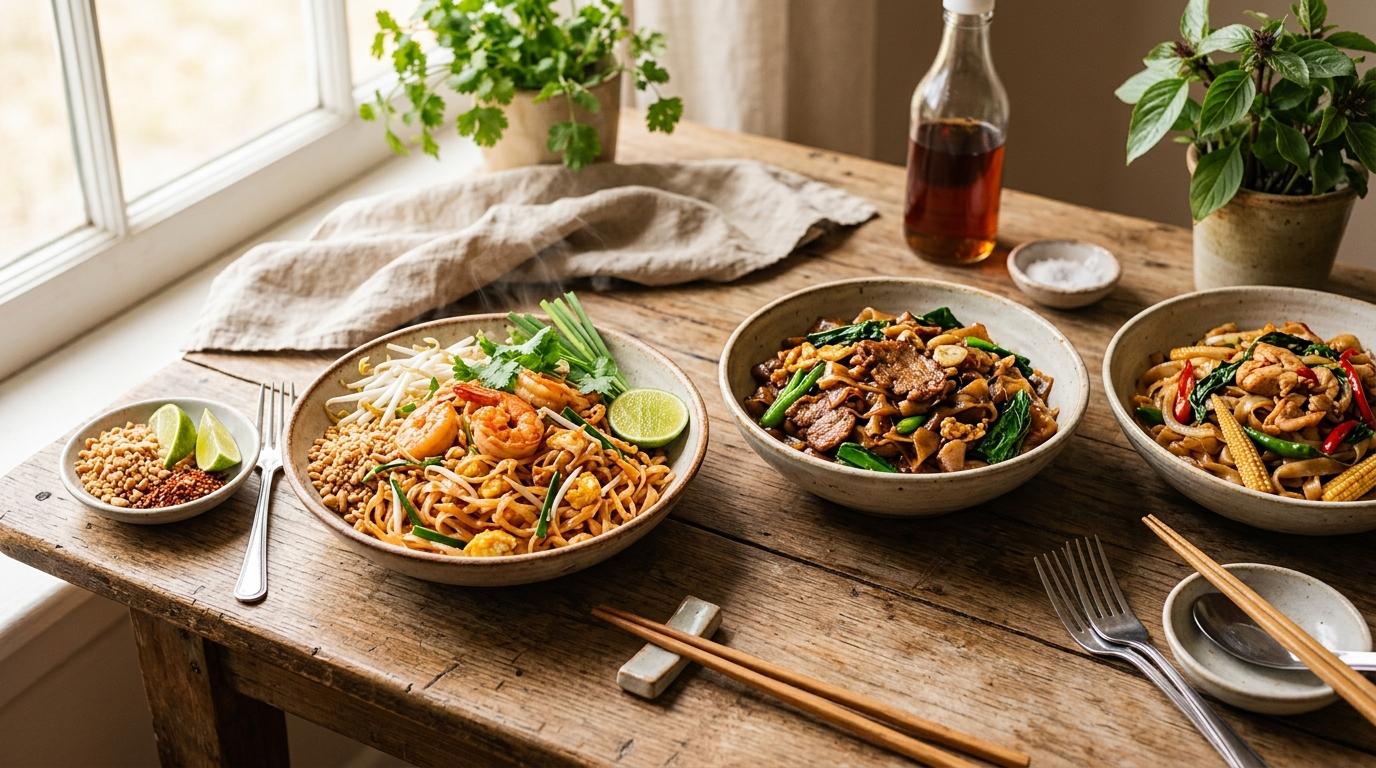
Walk down any street in Bangkok, and the air fills with the sizzle of noodles hitting hot woks and the sweet-sharp scent of tamarind and fish sauce. Thai noodle dishes represent some of the most beloved comfort foods in Southeast Asia, and they're the heart of what makes Thai recipes so irresistible to home cooks worldwide.
These aren't just recipes — they're windows into Thai culture, where balance reigns supreme. Sweet meets sour, salty dances with spicy, and every bite tells the story of Chinese immigrants who brought noodle-making techniques to Thailand centuries ago, only to have them transformed into something uniquely Thai.
The beauty of Thai noodle dishes lies in their flexibility. Most can be made with ingredients you'll find in well-stocked grocery stores, and once you understand the fundamental techniques, you can adapt them to your taste and what's in your pantry.
The Foundation: Understanding Thai Noodle Types
Thai cooking uses several distinct noodle varieties, each bringing its own texture and tradition to the dish.
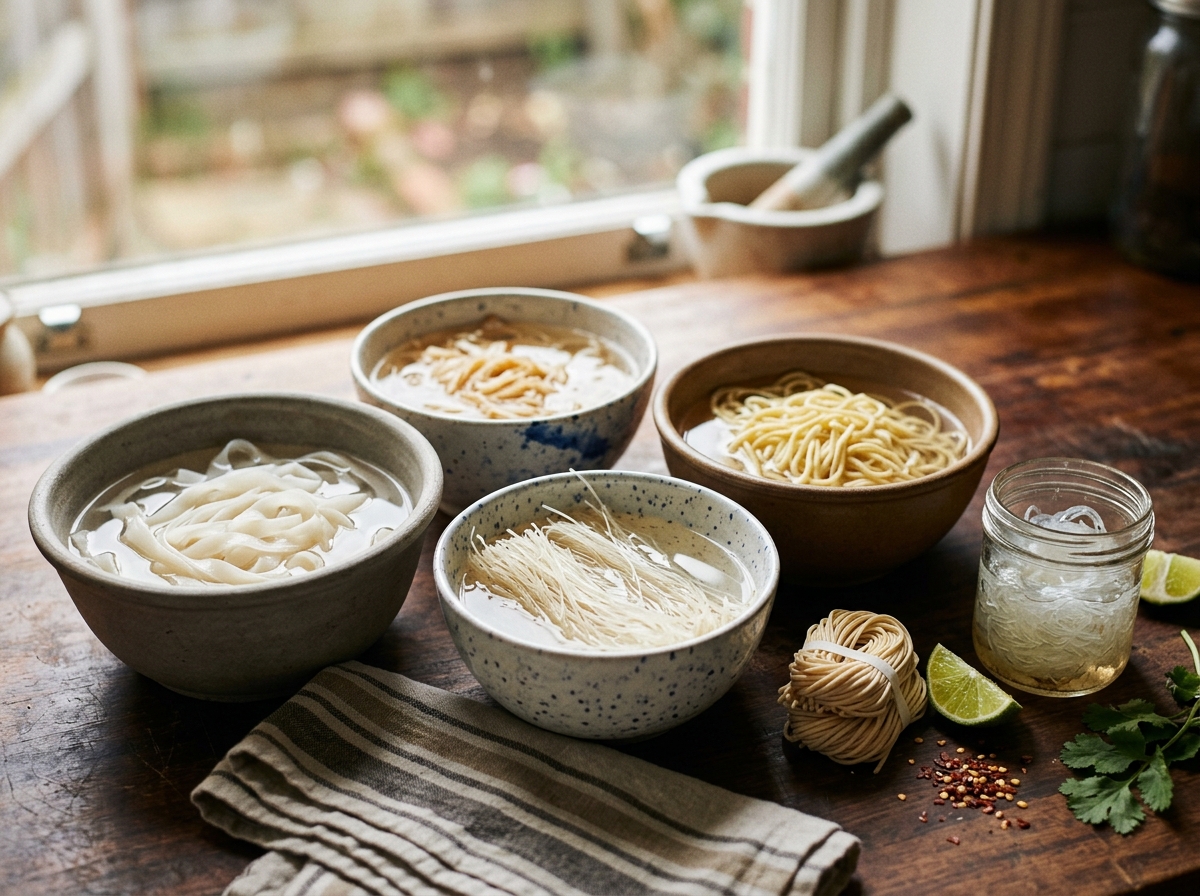
Rice noodles dominate Thai cuisine. Fresh rice noodles (guay teow) come in various widths — thin sen lek for Pad Thai, wide sen yai for Pad See Ew. If you can't find fresh, dried rice noodles work perfectly. Just soak them in warm water until pliable, not fully cooked. They'll finish in the wok.
Glass noodles (wun sen), made from mung bean starch, turn translucent when cooked and have a delightfully chewy texture. They're essential for dishes like Yum Wun Sen, a refreshing noodle salad.
Wheat noodles appear in dishes influenced by Chinese cuisine, like Ba Mee, often served in brothy soups rather than stir-fried.
Key Ingredients That Define Thai Noodle Dishes
Thai noodle cooking relies on a handful of essential ingredients that create the signature flavor profiles you're craving.
Fish sauce provides the salty, umami backbone. Don't skip it — there's no substitute that delivers the same depth. Look for brands like Red Boat or Squid Brand.
Tamarind paste brings the crucial sour note. You can buy prepared tamarind paste or make it fresh by soaking tamarind pulp in hot water and straining out the seeds and fibers. The fresh version tastes brighter, but prepared works in a pinch.
Palm sugar adds sweetness with complex molasses notes that white sugar can't match. Brown sugar makes an acceptable substitute.
Thai chilies (prik kee noo) pack serious heat. Bird's eye chilies work as substitutes, or use less of whatever hot chilies you can find.
Garlic and shallots form the aromatic base for most stir-fries. Mince them fine so they cook quickly without burning.
Pad Thai: The Gateway Drug
Pad Thai might be Thailand's most famous noodle export, but many Western versions miss the mark entirely. Real Pad Thai achieves a delicate balance of sweet, sour, and salty, with a hint of smokiness from high-heat cooking.
Start with sen lek rice noodles, soaked until flexible. The sauce combines fish sauce, tamarind paste, and palm sugar in roughly equal proportions — taste and adjust as you go.
Heat your wok until it's smoking. Add oil, then aromatics: minced garlic and shallots first, followed by dried shrimp (if using) and preserved radish. These ingredients build layers of umami that separate restaurant-quality Pad Thai from the overly sweet versions many people know.
Push everything to one side of the wok, crack in an egg, and scramble it lightly. Add the drained noodles and your sauce mixture. Toss everything together with tongs, working quickly to prevent sticking.
Bean sprouts and Chinese chives go in at the last minute — they should retain some crunch. Serve immediately with lime wedges, crushed peanuts, and additional fish sauce on the side.
Pad See Ew: Dark, Rich, and Satisfying
If Pad Thai is Thailand's crowd-pleaser, Pad See Ew is its soulful cousin. This dish gets its name and character from dark soy sauce — "see ew" literally means soy sauce in Thai.
Use wide rice noodles (sen yai) for authentic texture. Fresh noodles work best here, but if you're using dried, make sure they're wide and flat.
The sauce is simpler than Pad Thai's: dark soy sauce for color and depth, light soy sauce for saltiness, and a touch of sugar for balance. Some recipes include oyster sauce, which adds richness but isn't traditional.
Chinese broccoli (gai lan) is the classic vegetable here. Its slightly bitter stems and leaves contrast beautifully with the rich noodles. If you can't find it, regular broccoli works, though it lacks that distinctive bite.
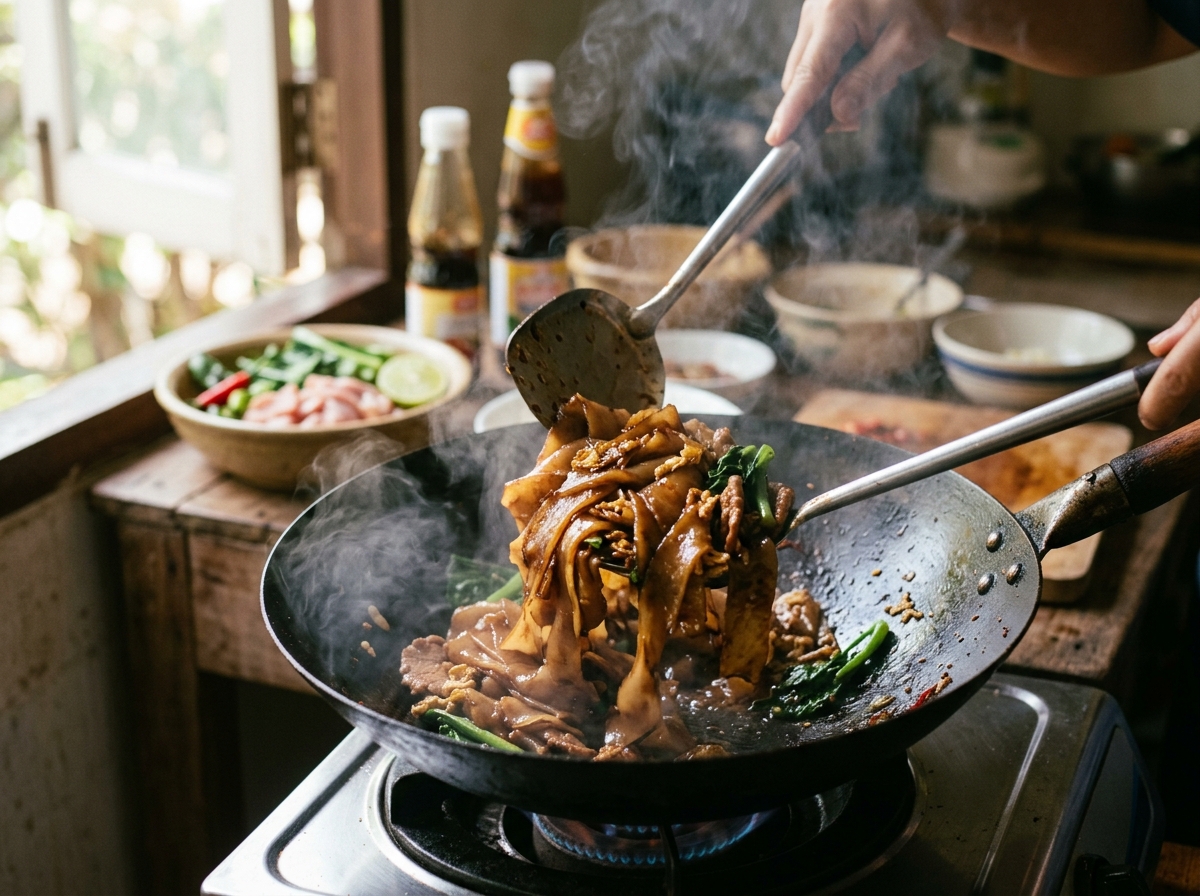
Cook this dish even hotter than Pad Thai. You want some charred edges on the noodles — that's the "wok hei" or breath of the wok that separates great stir-fries from mediocre ones.
Pad Kee Mao: Drunken Noodles That Wake You Up
Despite the name, drunken noodles contain no alcohol. The "drunken" refers either to their spicy, wake-you-up heat or to their reputation as excellent hangover food.
This dish uses the same wide noodles as Pad See Ew but takes a completely different direction. Thai basil is essential here — its anise-like fragrance defines the dish. Don't substitute Italian basil; the flavor profile is entirely different.
Build heat with fresh Thai chilies, pounded in a mortar with garlic. The amount of chili is up to you, but this dish should have some fire. Bell peppers and onions add sweetness and crunch.
The sauce combination includes fish sauce, dark soy sauce, light soy sauce, and sugar, but the proportions shift toward the salty side compared to Pad See Ew.
Add the Thai basil leaves only at the very end. They should wilt from residual heat but retain their bright green color and aromatic punch.
Beyond the Big Three: Exploring Other Thai Noodle Dishes
While Pad Thai, Pad See Ew, and Pad Kee Mao dominate Thai restaurant menus, Thailand's noodle repertoire runs much deeper.
Guay Teow — Thai boat noodles — traditionally come in a rich, dark broth spiked with pig's blood for color and iron flavor. Home cooks can achieve similar depth using dark soy sauce and a splash of vinegar.
Pad Wun Sen uses those translucent glass noodles in a lighter stir-fry typically loaded with vegetables and often seafood. The noodles absorb flavors beautifully while maintaining their unique texture.
Khao Soi, from Northern Thailand, features egg noodles in a coconut curry broth, topped with crispy fried noodles for texture contrast. It's more soup than stir-fry, but absolutely worth exploring.
Technique Tips That Make the Difference
Great Thai noodle dishes depend more on technique than exotic ingredients.
Prep everything first. Stir-frying happens fast — have your noodles soaked, sauce mixed, vegetables cut, and aromatics minced before you turn on the heat.
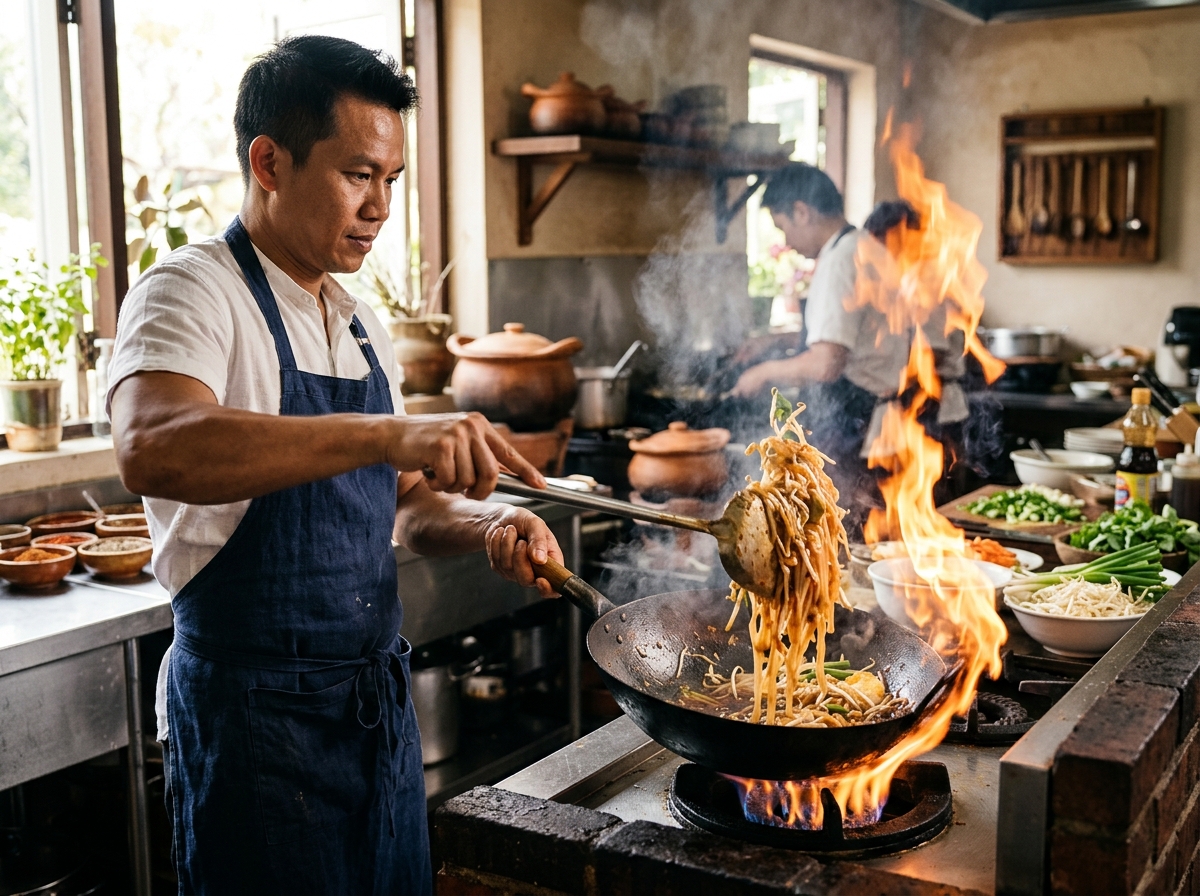
Get your wok smoking hot. If you don't have a wok, use the largest skillet you own and get it as hot as your stove allows. High heat creates the slight char that gives these dishes their distinctive taste.
Don't overcrowd. Cook in batches if necessary. Too many noodles in the pan drops the temperature and creates steam instead of the sear you want.
Taste and adjust. Thai cooking is about balance, not following recipes blindly. Start with suggested amounts, then adjust fish sauce for saltiness, tamarind for sourness, sugar for sweetness.
Serve immediately. Noodles continue cooking from residual heat and can become mushy if they sit too long.
Making It Work in Your Kitchen
You don't need a restaurant-grade wok burner to make excellent Thai noodles at home. A few adjustments help you work with standard home equipment.
If you're using an electric stove, consider cooking proteins and vegetables separately from the noodles, then combining them at the end. This prevents overcrowding and helps maintain high heat.
Cast iron skillets retain heat well and can substitute for woks if you don't own one. Preheat thoroughly and work in smaller batches.
For gas stoves, don't be afraid to let flames lick the sides of your pan — that's where the magic happens.
Regional Variations and Personal Touches
Thai noodle dishes vary significantly across regions and even between neighborhoods. Northern Thai versions might include more vegetables and herbs, while Southern preparations often feature more seafood and heat.
Feel free to adapt these recipes to your preferences and available ingredients. Substitute proteins, add your favorite vegetables, adjust spice levels. The techniques remain the same, and the balance of flavors is more important than rigid adherence to traditional ingredients.
Some Thai-American adaptations work brilliantly — adding broccoli to Pad See Ew, for instance, or using chicken thighs instead of the traditional pork in Pad Kee Mao.
Conclusion
Thai noodle dishes offer home cooks an accessible entry point into one of the world's most balanced and flavorful cuisines. Master these techniques and flavor profiles, and you'll find yourself returning to these recipes again and again, each time discovering new layers of taste and satisfaction.
The beauty lies not just in the final dishes, but in understanding how sweet, sour, salty, and spicy elements work together to create something greater than the sum of its parts. These recipes connect you to centuries of Thai culinary tradition while remaining completely achievable in your own kitchen.
Ready to explore more of Thailand's incredible culinary landscape? Check out our complete guide to Thai recipes for even more authentic flavors and techniques that will transform your home cooking.
Sources & further reading
- Use Your Noodle: A Primer On Thai Noodles — MICHELIN Guide
- How to Make Thai Pad See Ew (Thai Stir Fried Noodles) Like a MICHELIN Restaurant — MICHELIN Guide
- The Surprising History of Pad Thai — Smithsonian Magazine
- How to Balance the 5 Flavours of Thai Cuisine — Asian Inspirations
Related Topics
Enjoyed this article? Share it with fellow food lovers!
Import a recipe, start cooking
Paste any recipe URL and we'll turn it into a Cook Mode experience with step-by-step visuals, voice narration, and built-in timers.