

Thai Dessert Recipes: Mango Sticky Rice & Sweet Treats
Thai desserts offer a perfect balance of sweet, creamy, and aromatic flavors that provide the ideal ending to any meal. From the iconic mango sticky rice to lesser-known gems like tub tim grob, these traditional sweets showcase Thailand's mastery of coconut, rice, and tropical fruits.
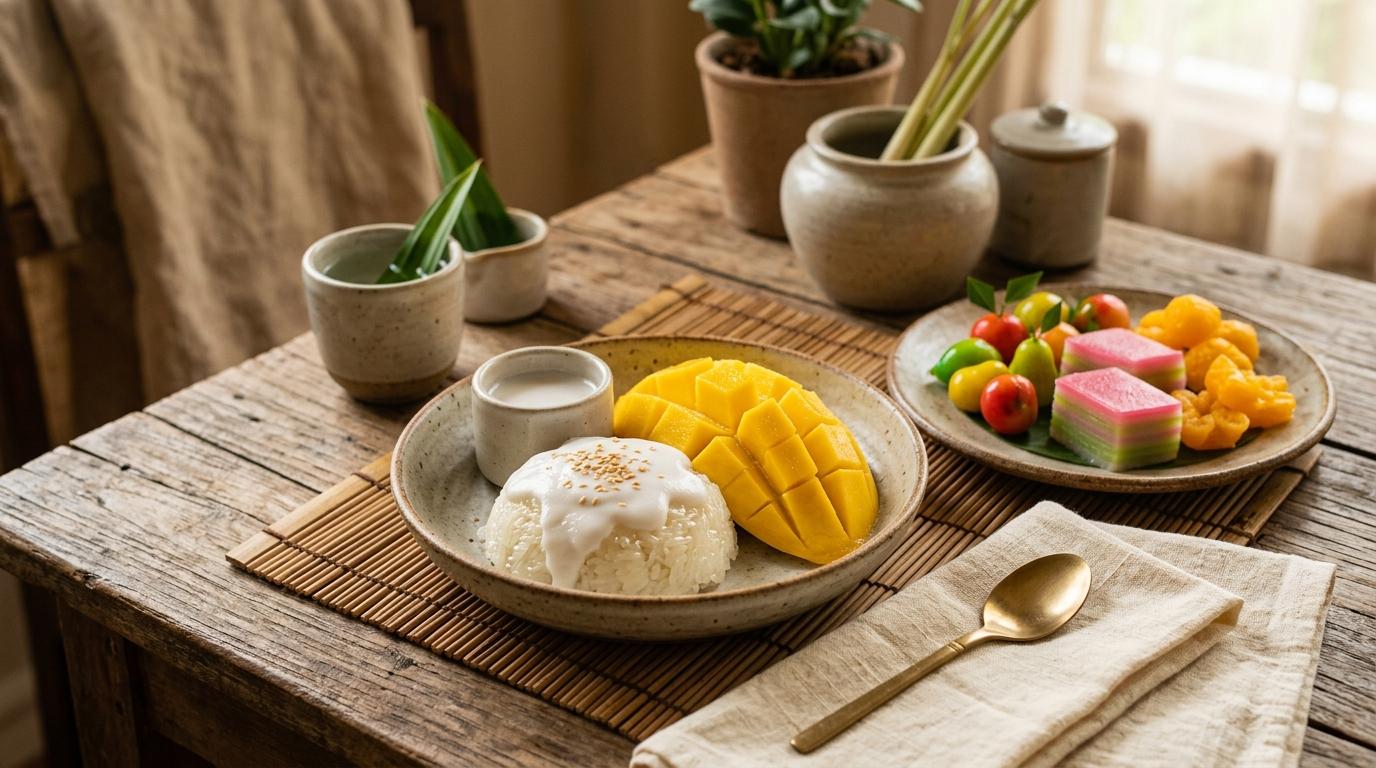
Thai desserts occupy a special place in the country's culinary landscape—they're not just sweet endings but celebrations of texture, aroma, and the interplay between ingredients like coconut milk, palm sugar, and fragrant rice. While you might already be exploring our collection of thai recipes for savory dishes, the dessert repertoire offers an entirely different but equally rewarding adventure in flavor.
Unlike Western desserts that often rely on butter, cream, and refined sugar, Thai sweets draw their richness from coconut milk and their sweetness from palm sugar and tropical fruits. The results are desserts that feel both indulgent and refreshing—perfect for hot climates and heavy meals alike.
The beauty of Thai desserts lies in their simplicity. Most require just a handful of ingredients, but the techniques for handling coconut milk, cooking glutinous rice, and achieving the right textures make all the difference between good and extraordinary results.
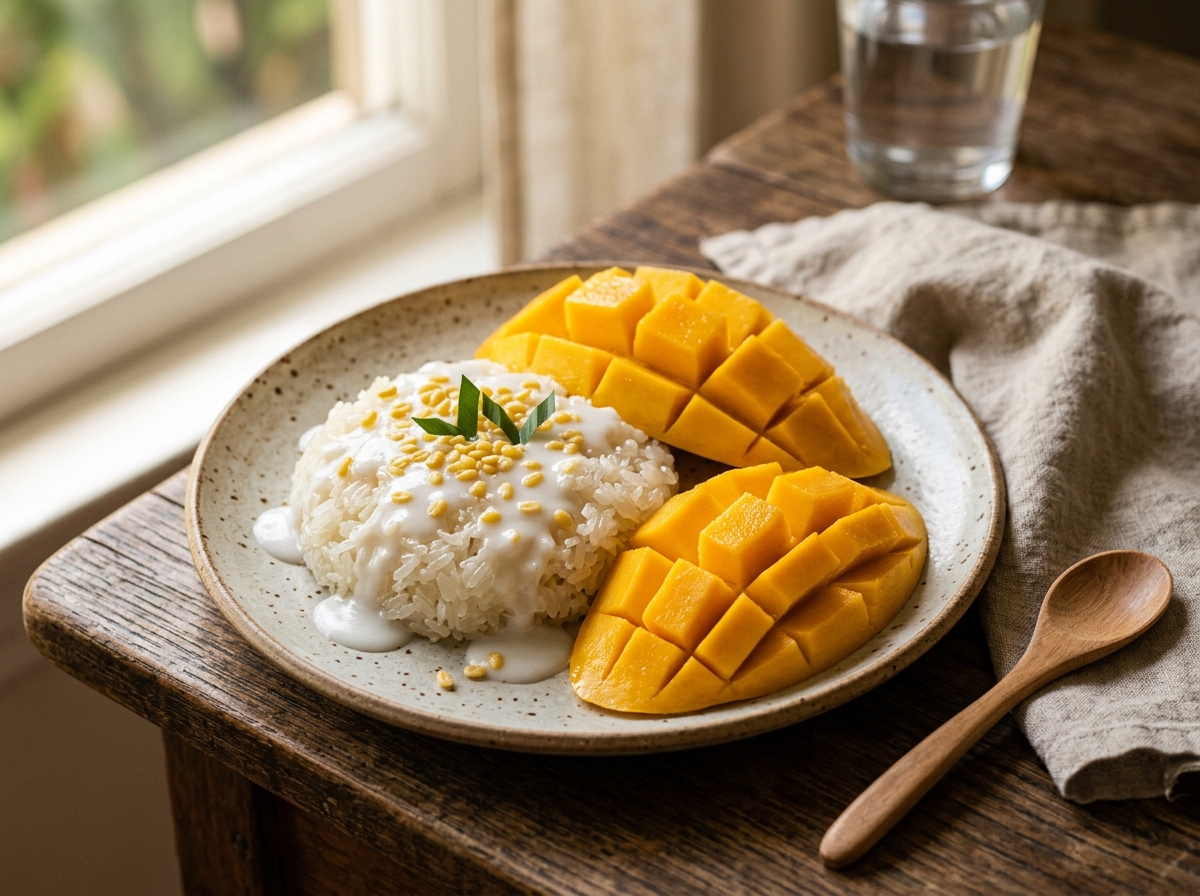
The Crown Jewel: Mango Sticky Rice (Khao Niao Mamuang)
Let's start with the dish that converted countless people to Thai desserts: mango sticky rice. This isn't just Thailand's most famous dessert—it's a masterclass in balancing sweet, creamy, and chewy textures.
The magic happens in three components working together. First, glutinous rice (also called sticky rice or sweet rice) gets steamed until each grain is tender but still has bite. Second, coconut milk transforms into a silky sauce through careful heating with palm sugar and a pinch of salt. Third, ripe mangoes provide bright acidity and tropical sweetness that cuts through the richness.
Start by soaking one cup of glutinous rice in water for at least four hours, though overnight is better. The grains need to fully hydrate to steam evenly. Drain and spread the rice in a steamer lined with cheesecloth. Steam for 25-30 minutes until the grains are translucent and tender.
While the rice steams, make the coconut sauce. Combine one can of coconut milk with three tablespoons of palm sugar (or brown sugar) and half a teaspoon of salt in a small saucepan. Heat gently, stirring until the sugar dissolves. Don't let it boil—you want the coconut milk to stay creamy, not curdle.
Pour half the warm coconut mixture over the hot steamed rice, stirring gently to coat every grain. Let it sit for ten minutes to absorb. The rice should be glossy and slightly wet but not swimming in liquid.
Slice ripe mangoes into thick strips. Champagne mangoes work beautifully here—they're sweet, creamy, and not too fibrous. Arrange the mango slices over portions of the coconut rice, then drizzle with the remaining coconut sauce. Some cooks like to garnish with toasted mung beans or shredded coconut, but the dessert is perfect as is.
Key Ingredients for Thai Dessert Success
Building a Thai dessert pantry doesn't require exotic hunting. Most ingredients are available at Asian markets, and many can be found in well-stocked supermarkets.
Glutinous rice forms the backbone of many Thai sweets. Despite its name, it contains no gluten—the "glutinous" refers to its sticky texture when cooked. Look for short-grain varieties labeled as sweet rice or sticky rice.
Coconut milk provides richness and tropical flavor. Buy full-fat canned coconut milk, not the carton versions meant for drinking. Thai brands like Chaokoh or Aroy-D offer the best consistency and flavor.
Palm sugar brings complex sweetness with caramel notes that regular sugar can't match. It comes in solid blocks that you grate or dissolve, or as a paste. Brown sugar works as a substitute but lacks the depth.
Pandan leaves add a distinctive vanilla-like aroma and natural green color to many Thai desserts. Fresh leaves work best, but frozen ones are acceptable. Pandan extract is available but use it sparingly—it's potent.
Tapioca starch and flour create the bouncy, chewy textures prized in Thai sweets. Tapioca pearls, both small and large, add textural interest to many recipes.
Beyond Mango: Other Essential Thai Desserts
Tub Tim Grob (Red Rubies) might look like a science experiment, but it's actually one of Thailand's most beloved desserts. Water chestnuts get diced, tinted red with food coloring, then rolled in tapioca starch and boiled until they develop a translucent, jelly-like coating. The result resembles rubies floating in coconut milk sweetened with palm sugar.
The contrast is everything here—the creamy coconut milk against the crunchy water chestnuts, the sweet syrup against the neutral starch coating. Serve it over crushed ice for extra refreshment.
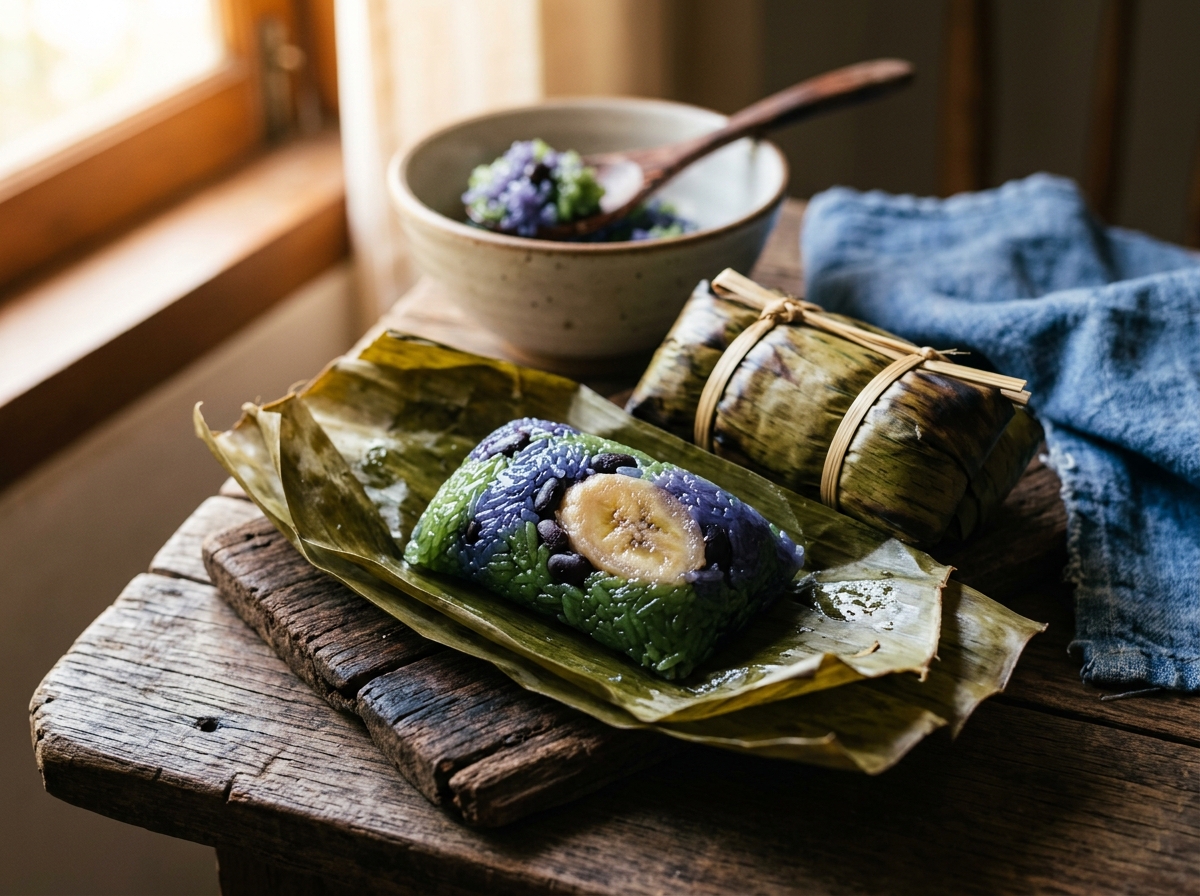
Khao Tom Mad showcases glutinous rice in a different form. The rice gets mixed with coconut milk and palm sugar, then wrapped in banana leaves and steamed until it forms dense, sweet packages. Some versions include mung bean paste or taro for extra richness.
The banana leaves impart a subtle grassy flavor while keeping the rice moist during steaming. If you can't find banana leaves, parchment paper works, though you'll miss that distinctive aroma.
Thai Coconut Ice Cream offers the perfect cool-down after spicy Thai food. Unlike Western ice cream, it relies entirely on coconut milk for richness, creating a lighter but intensely flavored result.
The key is using both the cream and water from canned coconut milk, plus adding a small amount of cornstarch for body. Palm sugar provides the sweetness, while a pinch of salt enhances all the flavors. Some recipes include young coconut meat for texture, others stay smooth and silky.
Kanom Krok are small coconut rice pancakes cooked in special cast-iron pans with round indentations. The batter combines rice flour, coconut milk, and sugar, creating creamy centers with slightly crispy edges. Traditional toppings include corn kernels, scallions, or shredded coconut.
Mastering Thai Dessert Techniques
Success with Thai desserts comes down to understanding how coconut milk behaves and how to achieve the right textures.
Coconut milk management is crucial. Always stir canned coconut milk before using—the cream separates from the water during storage. When heating coconut milk, use gentle heat and stir constantly. High heat causes the proteins to curdle, ruining the smooth texture.
For recipes that call for thick coconut cream, refrigerate the can overnight, then scoop off the solid layer that forms on top. The remaining liquid works perfectly for lighter sauces.
Glutinous rice preparation requires patience. The soaking time isn't optional—inadequately soaked rice will cook unevenly, leaving some grains hard while others turn mushy. When steaming, check doneness by tasting—the grains should be tender throughout with no chalky centers.
Palm sugar dissolution takes time. Grate solid palm sugar or chop it finely to help it dissolve faster. If your palm sugar has hardened completely, microwave it briefly to soften, then grate.
Texture balance defines great Thai desserts. Each component should maintain its integrity while complementing the others. Overcooked tapioca becomes mushy, undercooked rice stays hard, and improperly heated coconut milk curdles. Taste and adjust as you go.
Presentation and Serving
Thai desserts are traditionally served at room temperature or slightly chilled, never hot. This allows all the flavors to meld while maintaining the proper textures.
Many Thai sweets benefit from individual presentation. Small bowls or glasses showcase the colors and textures beautifully. For mango sticky rice, banana leaves make traditional serving vessels, though plates work fine.
Garnishes should enhance, not overwhelm. Toasted coconut flakes, crushed peanuts, or a few drops of coconut cream add visual appeal and textural contrast. Fresh herbs like mint can provide aromatic contrast, especially with fruit-based desserts.
Modern Adaptations and Variations
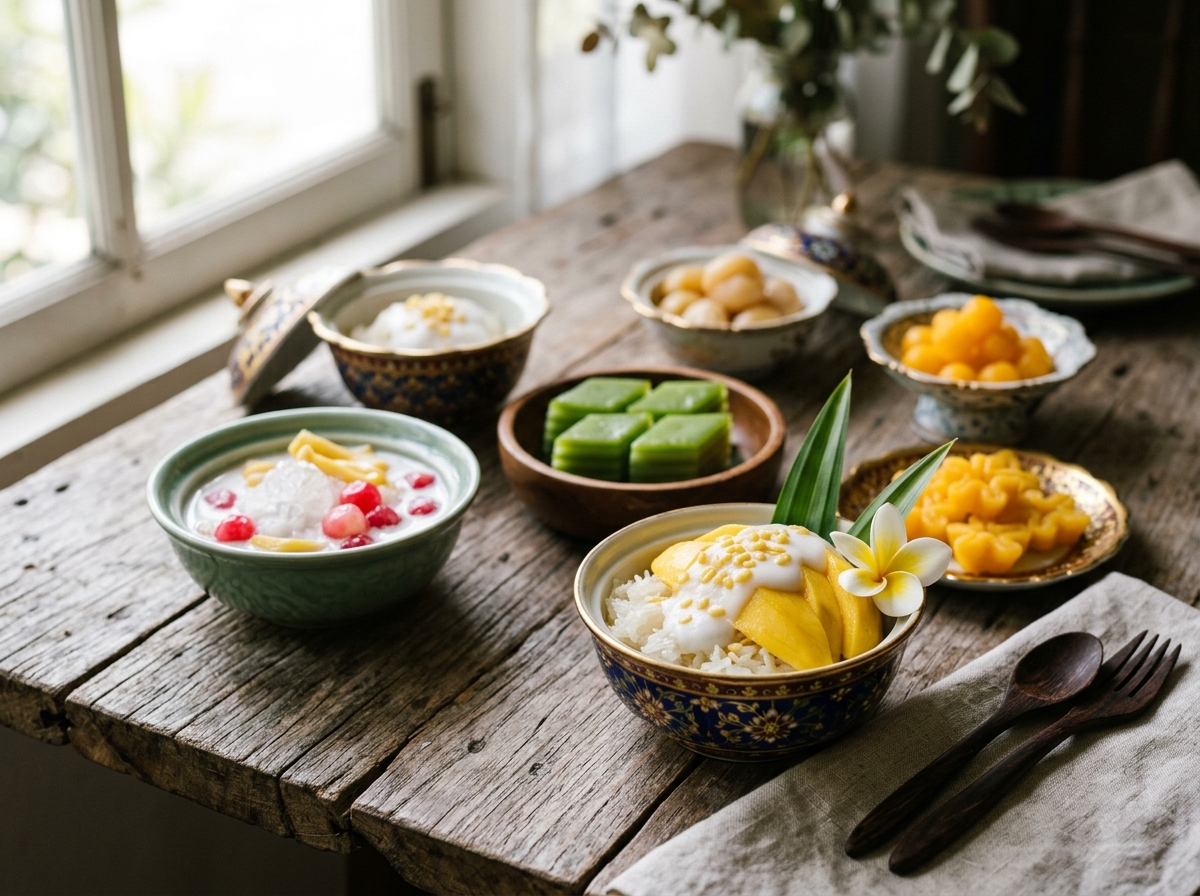
Contemporary Thai desserts often blend traditional techniques with modern presentations. Ice cream versions of classic desserts have become popular, as have deconstructed presentations that separate components for diners to combine themselves.
Mango sticky rice ice cream captures all the flavors in a scoopable form. Coconut panna cotta topped with mango compote offers Italian technique with Thai flavors. These adaptations work because they respect the core flavor profiles while adapting to different contexts.
Health-conscious adaptations can work too, though with care. Reducing palm sugar affects both sweetness and texture, since sugar provides body in many recipes. Light coconut milk creates thinner sauces but can work in some applications. The key is understanding which elements are essential and which can be modified.
Troubleshooting Common Issues
Curdled coconut milk usually results from too much heat or acidic ingredients. Prevention works better than correction—use gentle heat and add acids gradually. If your coconut sauce does curdle, try whisking in a tablespoon of cold coconut milk off the heat.
Sticky rice that won't stick often means inadequate soaking or steaming time. The grains need to be fully hydrated and cooked through. Rice that's too wet usually absorbed too much coconut sauce—use less next time or let the rice drain briefly before serving.
Tapioca that turns gummy was overcooked or stirred too vigorously. Tapioca pearls should be bouncy, not mushy. Cook just until translucent and handle gently.
Thai desserts offer a different kind of sweetness—one that's balanced, refreshing, and deeply satisfying. They showcase ingredients in their purest forms while creating complex harmonies of texture and flavor. Master these basics, and you'll have access to some of the world's most elegant and satisfying sweets.
Ready to explore more Thai flavors? Our complete guide to thai recipes covers everything from appetizers to main courses, giving you the full spectrum of this remarkable cuisine's offerings.
Sources & further reading
- Red Rubies Dessert (Tub Tim Grob) ทับทิมกรอบ — Hot Thai Kitchen (Pailin Chongchitnant)
- Tub Tim Grob (Thai Red Rubies Dessert) — V for Veganista
- Tub Tim Grob (Thai Red Rubies in Coconut Milk) — Foodie Baker
Related Topics
Enjoyed this article? Share it with fellow food lovers!
Import a recipe, start cooking
Paste any recipe URL and we'll turn it into a Cook Mode experience with step-by-step visuals, voice narration, and built-in timers.