

Thai Cooking Equipment: Essential Tools and Techniques
The right Thai cooking equipment makes all the difference between good Thai food and extraordinary Thai food. These essential tools and techniques will transform your kitchen into a Thai flavor powerhouse.
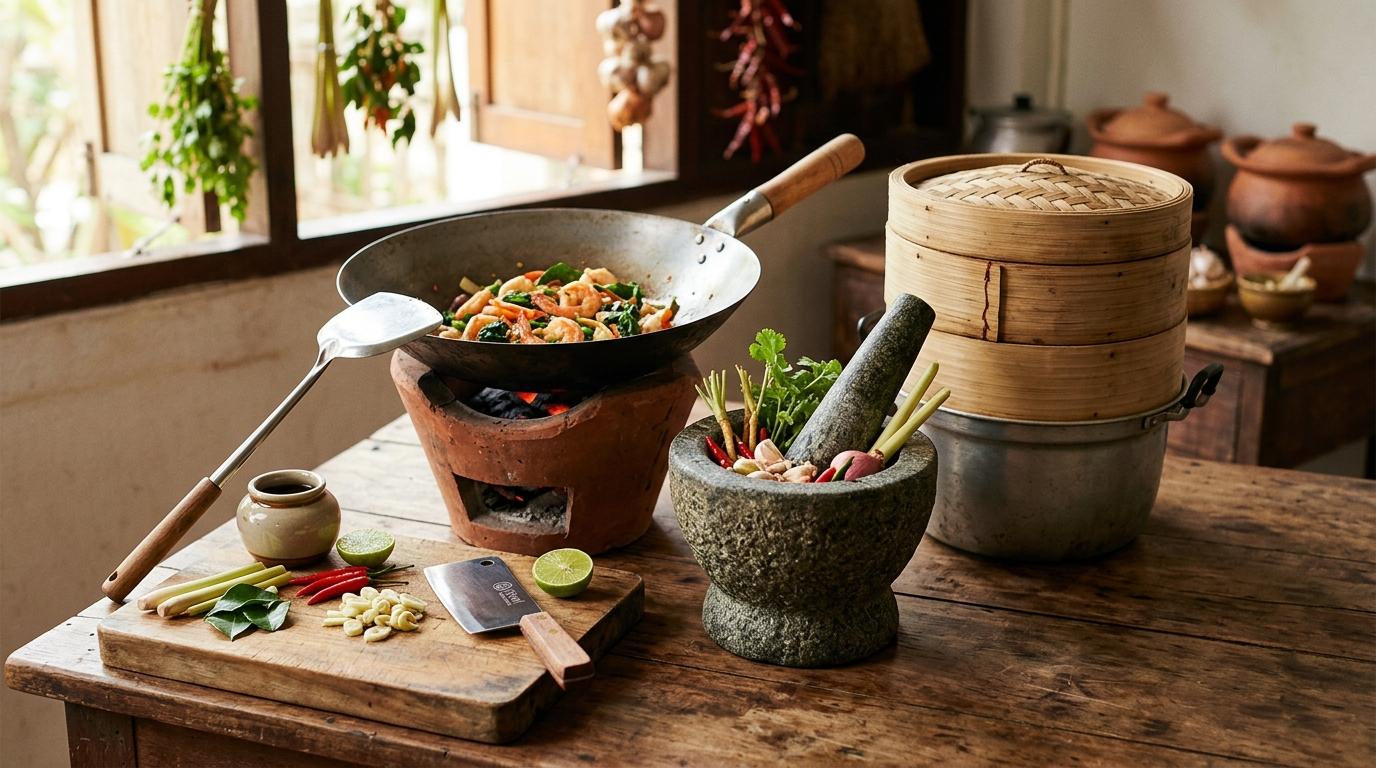
Walk into any Thai kitchen and you'll notice something immediately: the tools are different. Not flashy different, but purposeful different. Every piece of equipment has been shaped by centuries of cooking a cuisine that prizes fresh, bold flavors and lightning-fast technique. Whether you're diving deep into our collection of Thai recipes or just getting started with Thai cooking, the right equipment makes the difference between good Thai food and extraordinary Thai food.
The beauty of Thai cooking equipment lies in its simplicity. You don't need a kitchen full of gadgets. You need a few well-chosen tools that do their jobs exceptionally well. These are the pieces that Thai cooks reach for every day, the ones that have earned their place through generations of use.
The Wok: Your Thai Cooking Foundation
If you buy one piece of Thai cooking equipment, make it a carbon steel wok. Not a nonstick wok, not a stainless steel wok—carbon steel. Thai cooking happens fast and hot, and carbon steel handles that intensity like nothing else.
A proper wok gives you control over heat zones. The bottom blazes hot for searing, while the sloped sides offer cooler spots for gentler cooking. This matters enormously when you're stir-frying pad thai or tossing vegetables in a curry paste. You need that range of temperatures happening simultaneously.
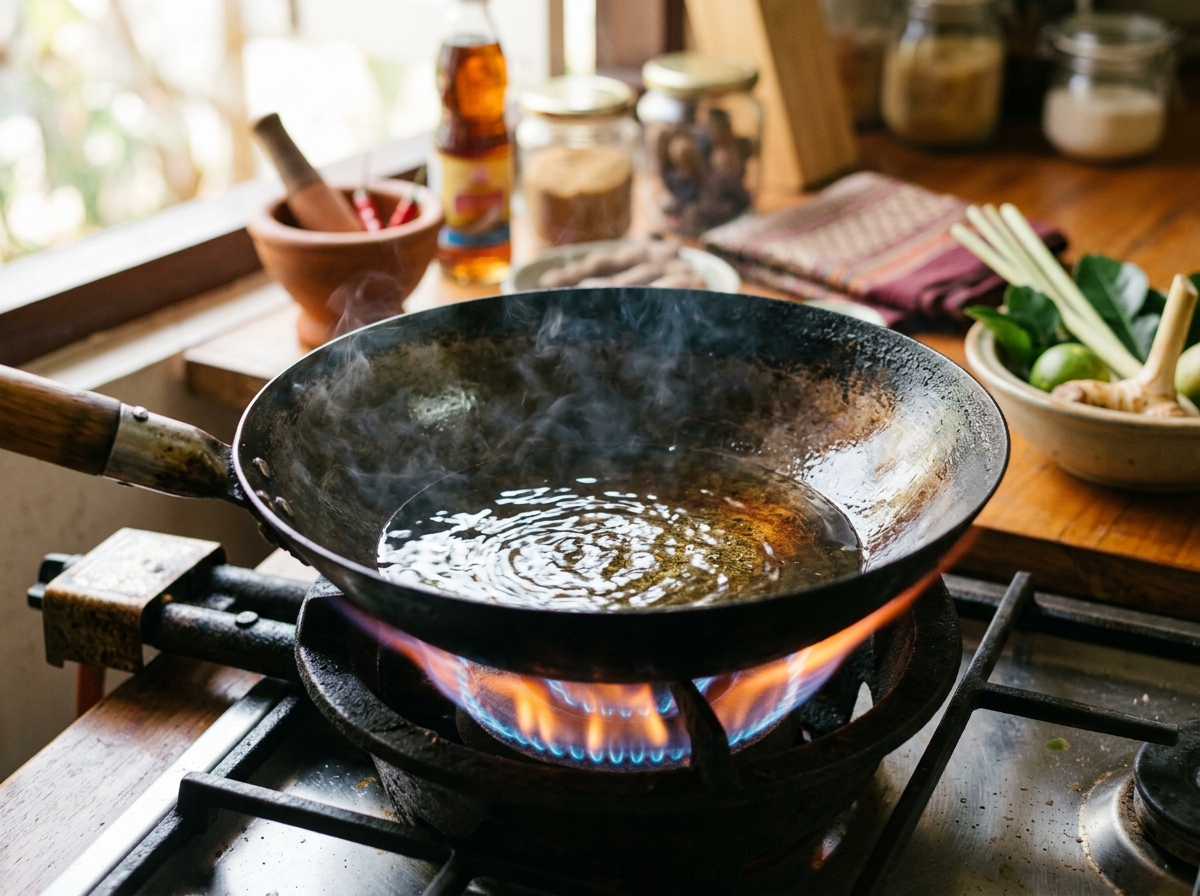
Size matters with woks. Go for 14 inches if your stovetop can handle it. Smaller woks crowd ingredients, which leads to steaming instead of searing. Thai stir-fries need room to move, and ingredients need space to breathe against the hot metal.
Seasoning your wok properly transforms it from a piece of raw steel into a naturally nonstick powerhouse. Heat it until it smokes, add a thin layer of oil, and let it polymerize into the surface. Repeat this process several times. The wok will develop a dark patina that improves with every use.
Mortar and Pestle: The Heart of Thai Flavor
Nothing—and we mean nothing—replaces a good granite mortar and pestle in Thai cooking. Food processors chop and blend, but they don't bruise and crush the way a mortar and pestle does. That bruising action releases essential oils and creates textures that machines simply can't match.
Thai cooks use mortars and pestles for everything from curry pastes to som tam salads. The granite surface grips ingredients and tears them apart at a cellular level, creating deeper, more complex flavors than any blade can achieve.
Look for a mortar with a rough, unpolished interior surface. Smooth mortars look prettier but don't grip ingredients effectively. The pestle should feel substantial in your hand—lightweight pestles don't provide enough crushing power for tough ingredients like galangal or lemongrass.
Size your mortar to your cooking style. A 6-inch mortar handles most home cooking tasks, while an 8-inch version gives you room for larger batches of curry paste. Start with dried spices, pound them to powder, then add fresh aromatics one by one.
Essential Knives and Cutting Tools
Thai kitchens don't overflow with specialty knives. Instead, they rely on a few razor-sharp blades that handle multiple tasks. A good chef's knife does most of the heavy lifting, while a paring knife handles delicate work.
Sharp matters more than expensive. Thai cooking involves lots of fresh herbs and vegetables that bruise easily under dull blades. A properly maintained knife glides through lemongrass stalks and slices paper-thin shallots without crushing their delicate structure.
Consider adding a cleaver to your collection. Thai cleavers aren't just for chopping bones—their wide, thin blades excel at crushing garlic, transferring chopped ingredients, and even scooping up curry pastes from mortars.
Steaming Equipment for Authentic Results
Steaming plays a huge role in Thai cooking, from sticky rice to whole fish wrapped in banana leaves. You need equipment that generates steady, gentle steam without waterlogging your food.
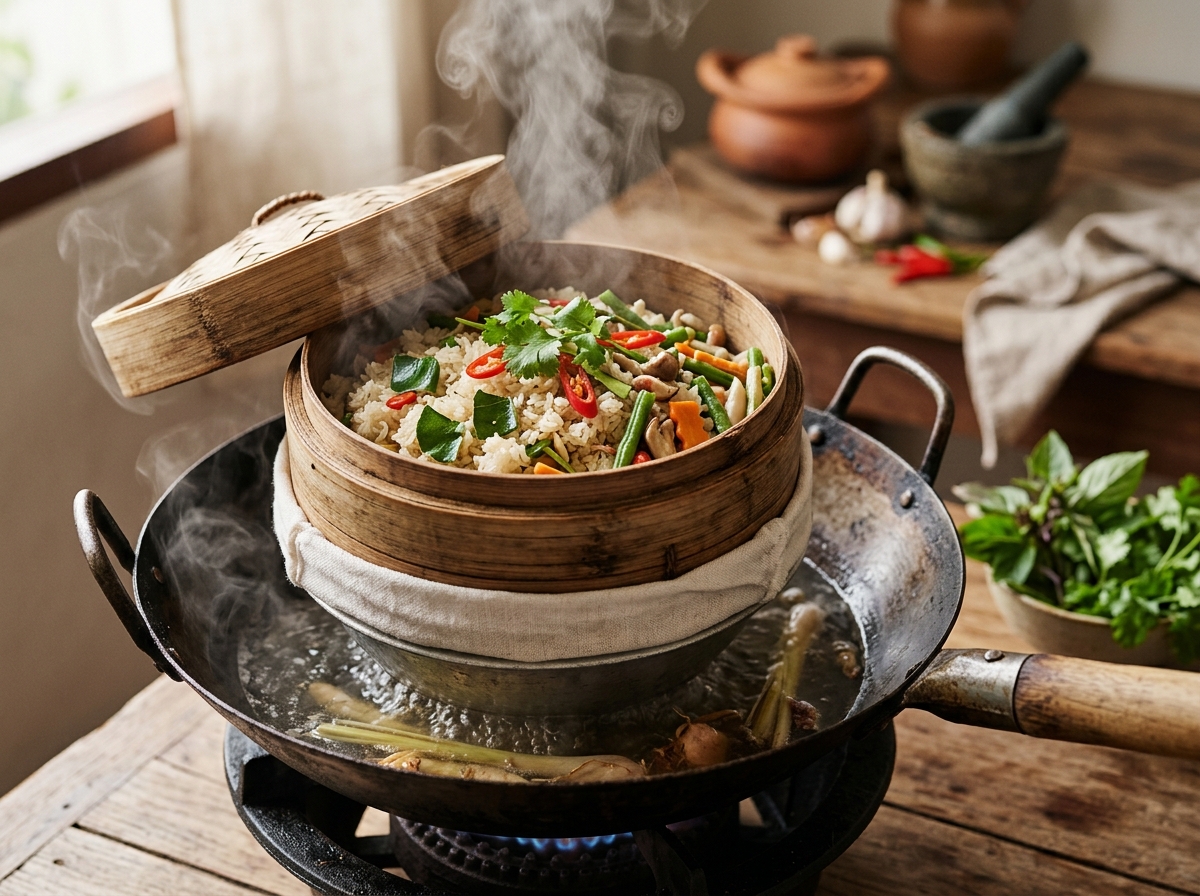
A bamboo steamer set transforms any pot into a steaming powerhouse. The bamboo absorbs excess moisture while allowing steam to circulate freely around food. Stack multiple levels to steam different items simultaneously—sticky rice on top, vegetables in the middle, fish on the bottom.
For larger items or more frequent steaming, invest in a proper steaming rack that fits inside your wok or a large pot. The key is keeping food elevated above rapidly boiling water while allowing steam to circulate completely around it.
Specialized Thai Kitchen Tools
Certain Thai dishes require specific tools that might seem unusual but prove invaluable once you understand their purpose.
A som tam paddle—a long wooden pestle designed for papaya salad—lets you bruise papaya strips while mixing in dressing ingredients. The length gives you leverage for proper pounding motion without crowding the mortar.
Coconut graters seem archaic until you taste freshly grated coconut versus the packaged stuff. Fresh coconut meat has moisture and oils that dried coconut lacks entirely. Traditional Thai coconut graters let you extract maximum meat from coconut shells with minimal waste.
Sticky rice baskets—woven bamboo containers—steam glutinous rice to perfect texture while allowing steam to penetrate evenly. The bamboo adds subtle flavor while preventing the rice from becoming gummy or waterlogged.
Heat Sources and Cooking Techniques
Thai cooking demands serious heat, more than most home stoves can deliver. Understanding how to maximize your equipment's potential makes up for BTU limitations.
Gas burners give you instant heat control that electric simply can't match. If you're stuck with electric, consider a portable gas burner for wok cooking. The ability to instantly adjust flame intensity matters when you're stir-frying ingredients that can go from perfect to burned in seconds.
Preheat your wok until it's smoking before adding oil. This creates the wok hei—breath of wok—that gives properly cooked stir-fries their distinctive smoky flavor. Cold woks create steamed food, not seared food.
Learn to work in batches. Thai restaurants cook individual portions because crowded pans lower temperatures and create uneven cooking. Better to cook two perfect portions than one mediocre one.
Key Ingredients Equipment Helps You Handle
The right Thai cooking equipment makes challenging ingredients manageable and transforms good ingredients into great ones.
Fresh coconut milk requires proper extraction technique. A sharp knife opens coconuts cleanly, while a sturdy grater maximizes meat yield. Cheesecloth or fine mesh strainers separate rich milk from pulp effectively.
Tamarind paste benefits from proper preparation tools. Soak tamarind blocks in warm water, then push the mixture through fine mesh to extract smooth, seedless paste. The mesh catches fibers and shells while letting flavorful paste pass through.
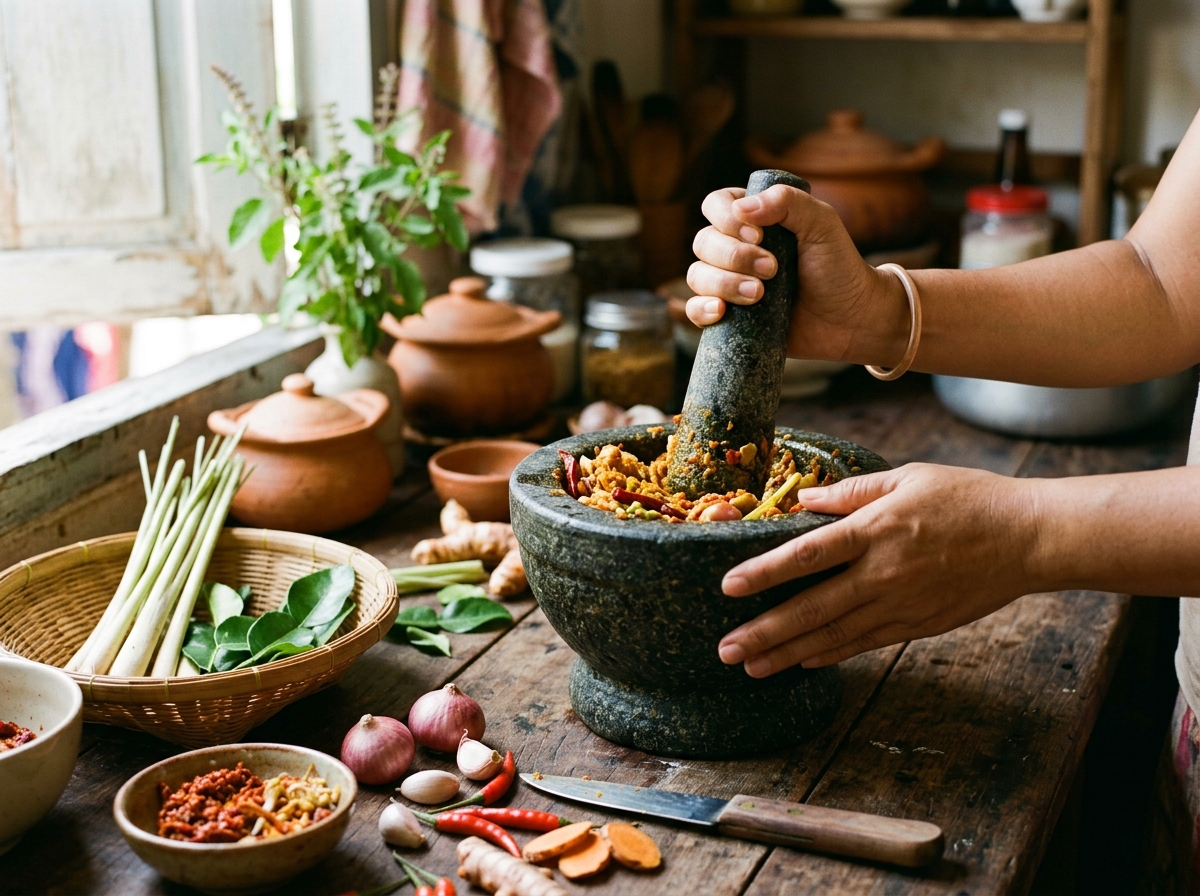
Fresh curry pastes need gradual building in your mortar. Start with hard ingredients like galangal and lemongrass, pound them to rough paste, then add softer items like shallots and garlic. Chilis come last—they release oils that help bind everything together.
Maintaining Your Thai Cooking Equipment
Proper maintenance keeps your Thai cooking equipment performing at its peak for years. These tools improve with age when cared for correctly.
Season your wok after every use while it's still warm. A light coating of oil prevents rust and builds up the nonstick patina that makes woks so effective. Avoid soap—hot water and scrubbing remove food particles without stripping seasoning.
Clean your mortar and pestle with rice and salt, not soap. The abrasive action removes food particles and odors without leaving chemical residues that could affect future batches. Rinse thoroughly and air dry completely.
Keep knives sharp with regular honing and occasional professional sharpening. Dull knives are dangerous knives, and they bruise ingredients instead of cleanly cutting them.
Budget-Friendly Equipment Alternatives
You don't need to spend a fortune to cook excellent Thai food. Smart substitutions can deliver most of the benefits of traditional equipment without breaking the bank.
A large, heavy-bottomed skillet can approximate wok cooking if you preheat it properly and work in small batches. It won't develop wok hei the same way, but it will sear ingredients effectively.
Food processors can handle curry paste duties when you're cooking for crowds, though the texture won't match mortar-and-pestle results. Add ingredients gradually and pulse rather than processing continuously.
Improvised steamers using colanders and large pots work for occasional steaming. Line the colander with cheesecloth to prevent small items from falling through, and make sure water doesn't touch the food.
Putting Your Thai Cooking Equipment to Work
Having the right tools means nothing if you don't understand how to use them effectively. Thai cooking techniques leverage equipment capabilities to create complex flavors quickly.
Master the stir-fry motion: ingredients should constantly move around the wok, touching the hot surface briefly before being tossed to cooler areas. This creates even cooking without burning.
Learn proper steaming timing: different foods require different steaming durations, and oversteaming destroys textures and flavors. Fish cooks quickly, vegetables need medium timing, and sticky rice takes patience.
Practice curry paste technique: build flavors gradually in your mortar, adding one ingredient at a time until the paste becomes smooth and aromatic. Each addition should be fully incorporated before moving to the next.
The right Thai cooking equipment opens up a world of authentic flavors that simply aren't possible with standard Western kitchen tools. From the fierce heat of a properly seasoned wok to the patient grinding of fresh curry paste in a granite mortar, these tools connect you directly to centuries of Thai culinary tradition. Start with the basics—a good wok, a solid mortar and pestle, sharp knives—and build your collection as your skills and interest grow. Each piece of equipment you master brings you closer to the vibrant, complex flavors that make Thai recipes so endlessly compelling.
Sources & further reading
- Ultimate Guide to Thai Mortar and Pestle — Hot Thai Kitchen (Pailin Chongchitnant)
- 8 Tools Essential to Thai Cooking — Food52
- Essential Kitchen Tools and Utensils for Thai Cooking — Simply Suwanee
- Cooking with a Thai Mortar and Pestle — Exotic Food Thailand
Related Topics
Enjoyed this article? Share it with fellow food lovers!
Import a recipe, start cooking
Paste any recipe URL and we'll turn it into a Cook Mode experience with step-by-step visuals, voice narration, and built-in timers.