

Regional Thai Food: Northern, Southern & Isaan Specialties
Thailand's culinary map tells stories through spice levels, ingredients, and centuries-old traditions. From Northern Myanmar influences to Southern Malay roots, each region creates distinct flavors that go far beyond pad thai.
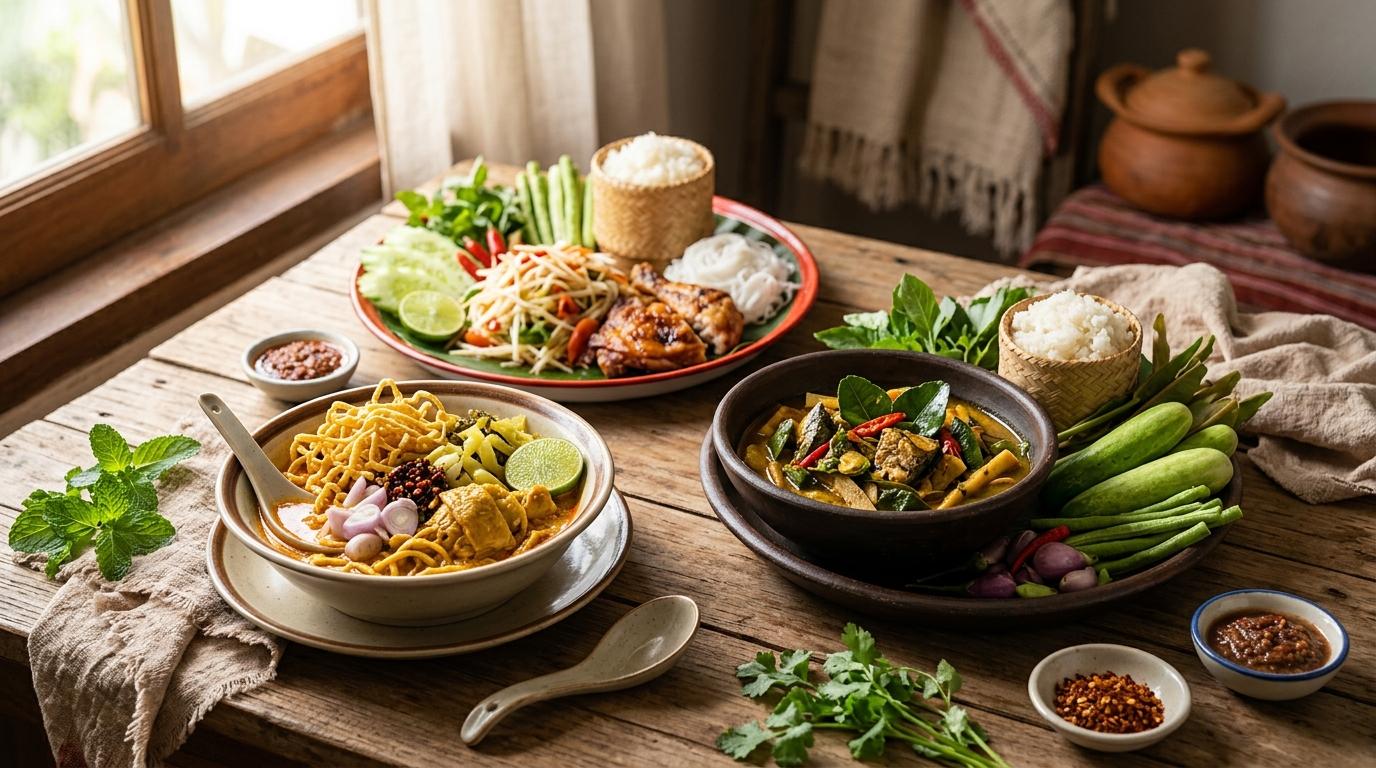
Most people think they know Thai food — pad thai, green curry, maybe some tom yum soup. But Thailand's thai recipes span four distinct regions, each with flavors shaped by geography, climate, and neighboring cultures. The mild coconut curries of central Thailand represent just one voice in a much richer conversation.
Northern Thailand borders Myanmar and Laos, creating a cuisine that whispers rather than shouts. Southern Thailand stretches toward Malaysia, where curries burn bright with chilies and tamarind. Isaan in the northeast shares borders with Laos and Cambodia, birthing a food culture built on fermentation, herbs, and fierce heat.
Understanding regional Thai food means tasting history. Each dish carries stories of trade routes, royal courts, and farmers adapting to what grows in their soil.
Northern Thai Cuisine: The Gentle Giant
Northern Thai food feels like a warm embrace after the sharp intensity of other regions. The mountains and cooler climate create conditions perfect for herbs, sticky rice, and slow-simmered broths that comfort rather than challenge.
Khao soi stands as the region's crown jewel — a coconut curry noodle soup that balances Burmese influence with distinctly Thai flavors. Fresh egg noodles swim in rich coconut broth spiked with curry paste, usually chicken or beef, topped with crispy noodles for texture. The result tastes like liquid silk with a gentle heat that builds slowly.
Sai ua, the region's famous sausage, packs lemongrass, galangal, kaffir lime leaves, and chilies into pork casings. Unlike the aggressive spicing of other Thai sausages, sai ua delivers complex herbal notes that bloom on your tongue.
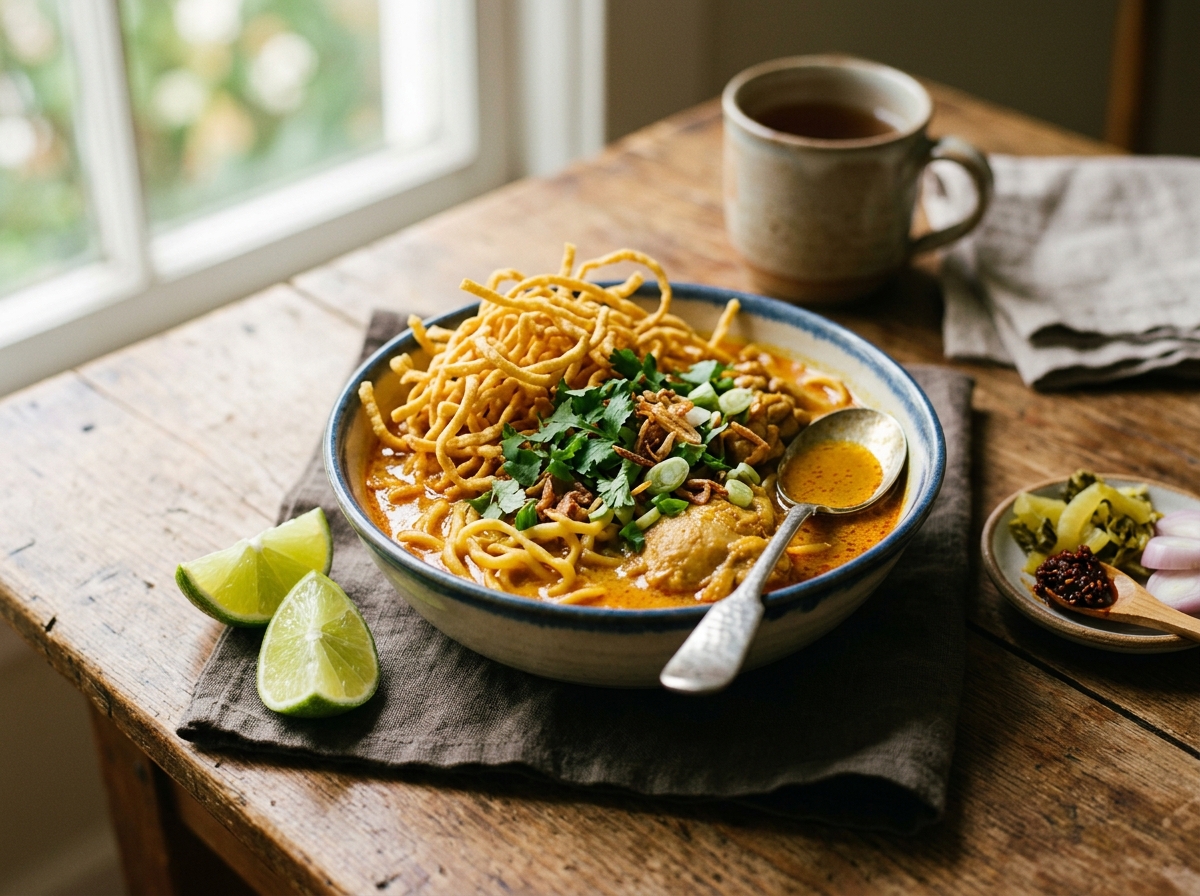
Nam prik noom showcases the north's love affair with young green chilies. This dip combines roasted chilies, shallots, and garlic into a smoky paste that locals eat with sticky rice and raw vegetables. The heat hits clean and bright, without the funky fermented notes common in other regions.
Gaeng hang lay represents the Myanmar influence clearly — a pork belly curry with tamarind, ginger, and palm sugar that tastes more like a braise than a typical Thai curry. The sauce clings thick and glossy, sweet and sour in equal measure.
Key Northern Ingredients
Northern cooks rely heavily on sticky rice (khao niao) as their starch foundation. Where other regions reach for jasmine rice, northerners shape sticky rice into small balls and use them to scoop up curries and dips.
Fresh herbs dominate the flavor profile — dill appears in curries, something rarely seen elsewhere in Thailand. Lemongrass, galangal, and kaffir lime leaves appear in almost every dish, creating the gentle herbal backdrop that defines the region.
Tamarind paste adds the essential sour note, while palm sugar provides sweetness. Northern cooks use less fish sauce than other regions, preferring the cleaner flavors of salt and fresh lime juice.
Southern Thai Cuisine: Fire and Brimstone
Southern Thailand doesn't apologize for its heat. This region produces some of the world's hottest chilies, and local cooks use them with abandon. The peninsula's location between two seas provides abundant seafood, while proximity to Malaysia brings influences of curry leaves, tamarind, and complex spice blends.
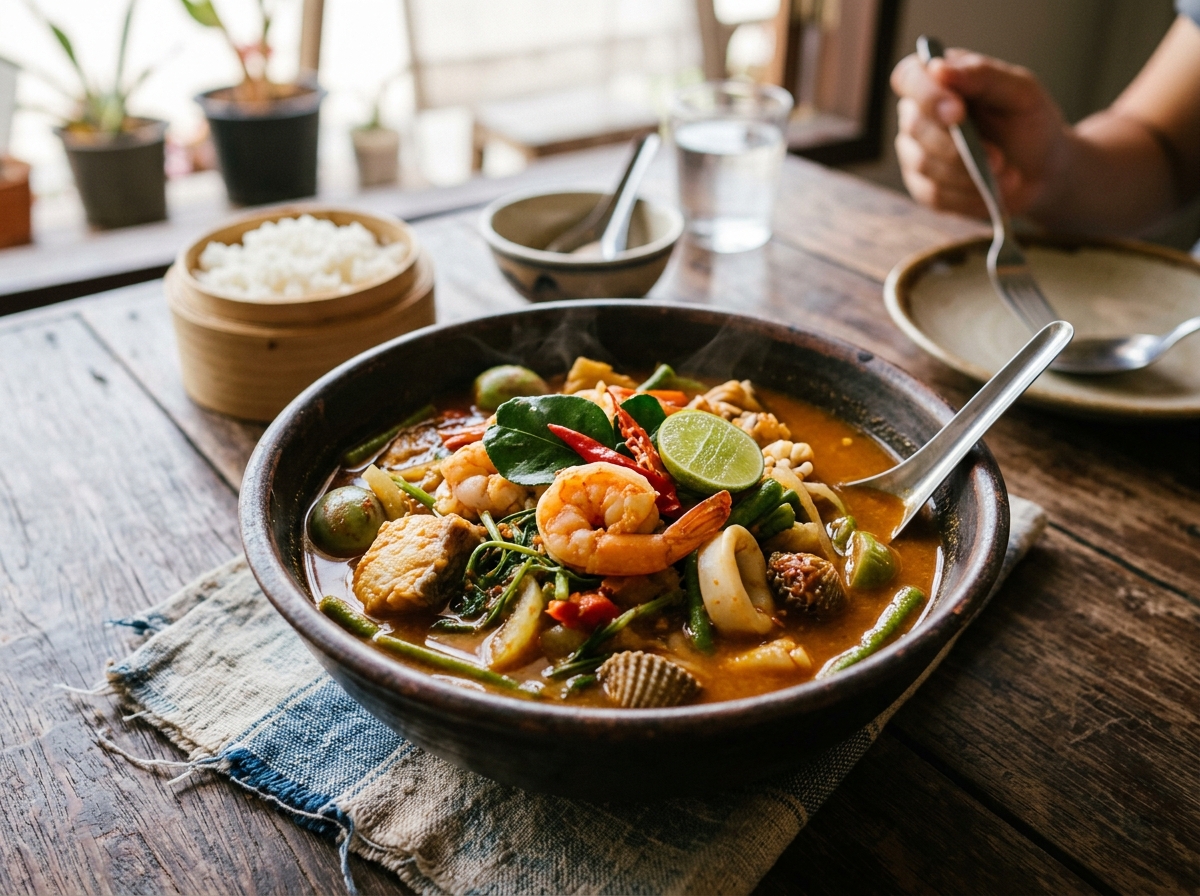
Gaeng som (sour curry) exemplifies southern intensity — a thin, bright orange curry that hits you with sour tamarind and blazing chilies simultaneously. Unlike coconut-rich curries from other regions, gaeng som gets its body from tamarind water and shrimp paste, creating a broth that tastes like liquid lightning.
The region's geography creates distinct east and west coast variations. East coast cooking incorporates more Malay influences, with dishes like gaeng massaman showing clear Indian spice connections. West coast cuisine tends toward simpler preparations that let seafood flavors shine through intense heat.
Kua kling represents southern cooking at its most aggressive — dry-fried beef or pork with curry paste so concentrated it nearly burns your tongue. No coconut milk softens the blow; just pure curry paste, meat, and vegetables locked in fiery combat.
Southern som tam differs dramatically from the Isaan version. Instead of papaya, southern cooks use green beans, carrots, or green mango, dressed with palm sugar, tamarind, fish sauce, and enough chilies to make your eyes water. The result tastes sharper, more aggressive than its northeastern cousin.
Southern Spice Mastery
Southern curry pastes require serious chili commitment. Bird's eye chilies (prik kee noo) appear in quantities that would terrify cooks from other regions. These tiny bombs pack heat levels that can numb your tongue for hours.
Turmeric grows abundantly here, staining curries deep orange and adding earthy bitterness that balances the fire. Fresh turmeric root, not dried powder, provides the most authentic flavor.
Coconut plays supporting roles rather than leading ones. Southern cooks use coconut cream sparingly, preferring the sharp clarity of tamarind water and lime juice to cut through rich seafood flavors.
Isaan Cuisine: The Wild Northeast
Isaan food doesn't care about your comfort zone. This northeastern region, historically the poorest part of Thailand, developed a cuisine based on preservation, fermentation, and making the most of limited ingredients. The results taste funky, sour, salty, and completely addictive.
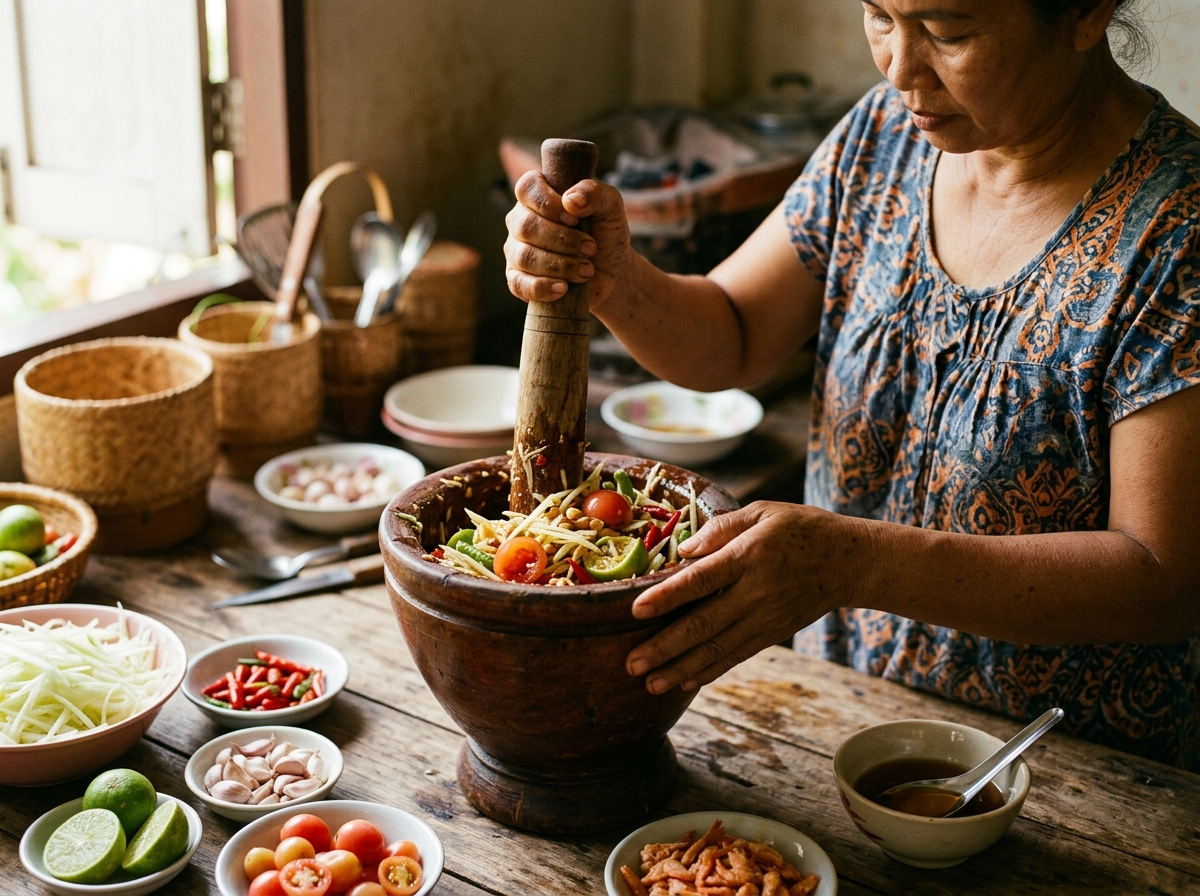
Som tam (papaya salad) originated here, though most restaurant versions pale beside the authentic preparation. Real som tam uses a heavy wooden mortar to pound shredded green papaya with lime juice, fish sauce, palm sugar, and chilies until the papaya releases its juices and absorbs the dressing. Each bite should deliver sweet, sour, salty, and spicy notes in perfect balance.
Larb represents Isaan's approach to meat — raw or cooked beef, pork, or duck mixed with herbs, lime juice, fish sauce, and toasted rice powder that adds texture and nutty flavor. The meat gets chopped fine, almost to a mince, allowing the seasonings to penetrate every bite.
Jeow (also spelled jaew) refers to the region's arsenal of dipping sauces made from fermented fish, chilies, and herbs. Jeow bong, the most famous version, combines dried chilies, galangal, garlic, and fermented fish into a paste that tastes like umami concentrate. You eat it with sticky rice and grilled meats.
Gai yang (grilled chicken) shows Isaan's mastery of fire cooking. Whole chickens get butterflied, marinated in garlic, coriander root, and soy sauce, then grilled over charcoal until the skin crackles and the meat stays juicy. The char adds smoky depth that pairs perfectly with som tam and sticky rice.
Fermentation Nation
Isaan cuisine revolves around fermented ingredients that would challenge uninitiated palates. Pla ra (fermented fish sauce) provides deeper, funkier flavors than regular fish sauce. The smell hits aggressive and barnyard-like, but the taste adds complexity impossible to achieve otherwise.
Sticky rice serves as both staple and utensil. Isaan cooks steam it in woven bamboo baskets, creating grains that stick together perfectly for hand-eating. The rice gets shaped into small balls and used to scoop up salads, grilled meats, and spicy dips.
Fresh herbs appear in quantities that would overwhelm other cuisines — mint, cilantro, dill, and various wild herbs that don't have English names. These provide cooling relief from the intense heat and funky fermented flavors.
Cooking Regional Thai Food at Home
Each region requires different technique approaches. Northern dishes often involve longer, gentler cooking methods — khao soi benefits from simmering coconut broth slowly to develop richness. Southern curries need high heat and quick cooking to maintain their sharp, bright flavors.
Isaan food demands the most technique adaptation for Western kitchens. Without a proper som tam mortar, you can approximate the pounding action with a muddler in a large bowl, though the texture won't match exactly. For larb, hand-chopping meat creates better texture than food processors, which can turn the meat pasty.
Ingredient sourcing varies by region. Northern specialties often use ingredients available at standard Asian markets — galangal, lemongrass, kaffir lime leaves. Southern cooking requires hunting down bird's eye chilies and good tamarind paste. Isaan dishes need fermented fish sauce (pla ra) and sticky rice, both increasingly available online.
Start with one region that appeals to your heat tolerance. Northern food offers the gentlest introduction, while Isaan and Southern cuisines require serious chili commitment. Each region teaches different lessons about balancing flavors and understanding how geography shapes what we eat.
The Regional Experience
Regional Thai food offers more than just different recipes — it provides windows into how culture, climate, and history create distinct food identities. Northern Thailand's gentleness reflects mountain life and Buddhist temple influence. Southern fire mirrors tropical intensity and maritime trade routes. Isaan's funk and fermentation speak to agricultural cycles and preservation necessity.
Understanding these regional differences makes you a better cook and a more informed eater. When you taste som tam, you're experiencing centuries of Lao influence and agricultural adaptation. Khao soi carries Myanmar spice routes in every spoonful. Southern curries tell stories of Malaysian traders and Indian spice merchants.
These regional specialties expand your understanding of what thai recipes can accomplish beyond the central Thai dishes that dominate restaurant menus. Each region offers techniques and flavor combinations that can transform your home cooking, whether you're building a more complex curry paste or learning to balance fermented funk with fresh herbs.
Sources & further reading
- The Truth About Thai Cuisine — Institute of Culinary Education (ICE)
- Thai Food 101: Decoding Thailand's Diverse Regional Cuisine — The Nation Thailand
- Experience the Unique Flavours from Every Region of Thailand — Asian Inspirations
- Culture Compass: Thai Cuisine Explained Part II — Thailand NOW
Related Topics
Enjoyed this article? Share it with fellow food lovers!
Import a recipe, start cooking
Paste any recipe URL and we'll turn it into a Cook Mode experience with step-by-step visuals, voice narration, and built-in timers.