

Regional Indian Cuisine Guide: North vs South vs East vs West
India's culinary landscape is as diverse as its geography, with each region offering distinct flavors, ingredients, and cooking techniques that reflect centuries of culture and tradition.
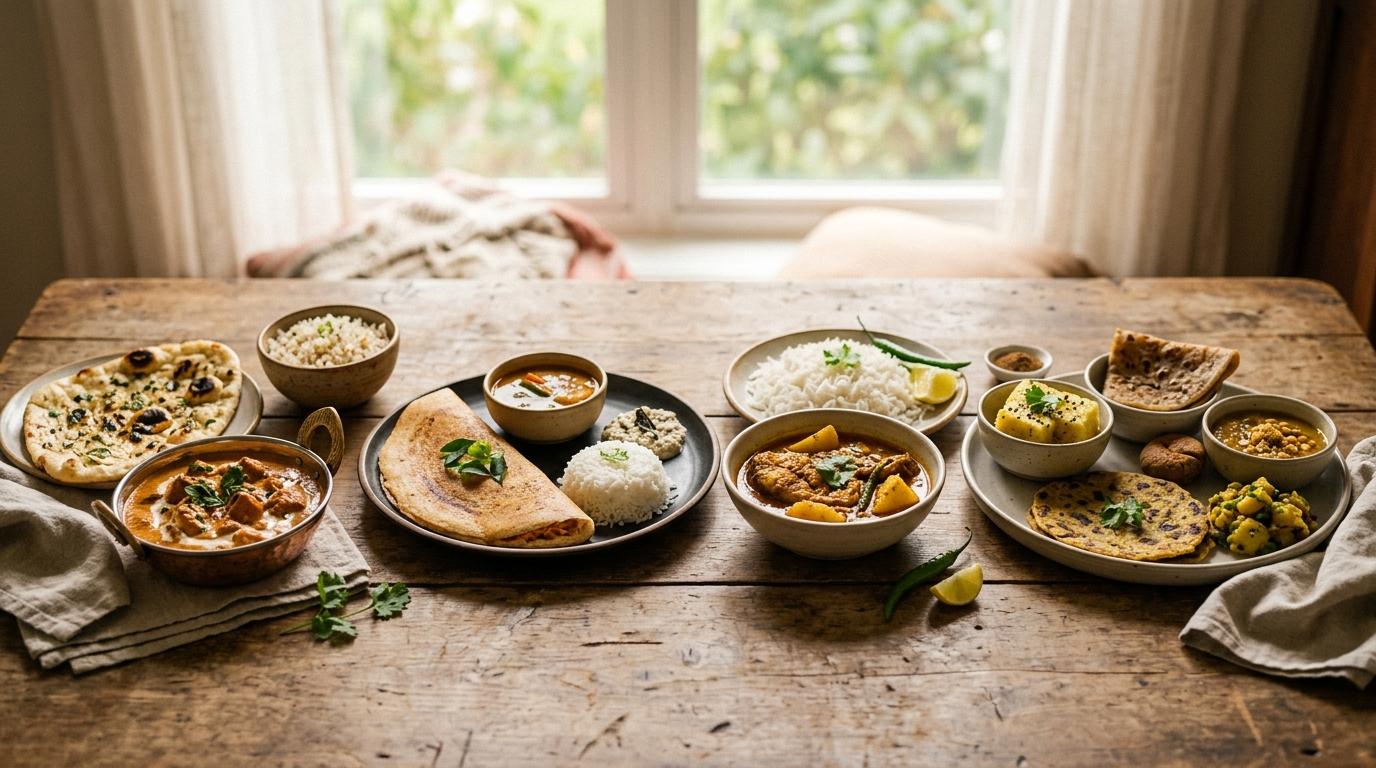
India's culinary map tells a story of geography, history, and tradition that spans thousands of years. From the butter-rich gravies of Punjab to the coconut-scented curries of Kerala, each region has developed its own distinct food identity. Understanding these regional differences is key to appreciating the full spectrum of indian recipes and the techniques that make each dish authentic to its origins.
The diversity isn't just about flavor—it's about climate, agriculture, and the waves of cultural influence that have shaped each region over centuries. What grows well in the fertile Ganges plains creates entirely different cooking traditions than the coastal spice routes of the south or the mountainous terrain of the northeast.
North Indian Cuisine: Rich, Warming, and Cream-Forward
North Indian food is what most people picture when they think of Indian cuisine—thick, creamy curries, fluffy naan, and dishes built around dairy and wheat. This is the cuisine of the Mughal courts, where Persian influences merged with local traditions to create something entirely new.
The foundation of North Indian cooking is the tadka or tempering—whole spices bloomed in hot oil or ghee to release their essential oils. Cumin seeds, cardamom pods, and cinnamon sticks hit the hot fat first, creating an aromatic base that infuses every bite.
Dairy plays a starring role here. Fresh paneer gets tossed into spinach-based saag or simmered in tomato-rich makhani sauces. Yogurt cools down fiery biryanis and adds tang to marinated meats. Heavy cream turns simple tomato gravies into luxurious restaurant-style curries.
The bread culture is unmatched. Tandoor-baked naan with its characteristic char and chew. Buttery parathas stuffed with potatoes or cauliflower. Paper-thin rumali roti that doubles as an edible napkin. Each bread serves a purpose—some soak up gravies, others wrap around kebabs.
Key dishes that define the region: butter chicken with its silky tomato-cream base, dal makhani slow-cooked until the black lentils break down into velvet, and lamb rogan josh with its deep red color from Kashmiri chilies.
The spice palette favors warming spices—garam masala blends heavy on cinnamon and cardamom, generous amounts of fresh ginger and garlic, and the distinctive flavor of kasoori methi (dried fenugreek leaves) that adds an almost maple-like sweetness to finished dishes.
South Indian Cuisine: Coconut, Rice, and Fermentation Masters
Travel south and the food changes completely. Rice replaces wheat as the staple grain. Coconut—fresh, dried, and pressed into oil—becomes the dominant flavor. The cooking is lighter, more acidic, and built around fermentation techniques that create complex flavors from simple ingredients.
The sambhar-rice combination is the soul food of the south. This lentil-based stew, spiked with tamarind for sourness and loaded with vegetables, gets ladled over steamed rice for a complete meal. The curry leaves that float on top aren't just garnish—they're essential aromatics that define South Indian flavor.
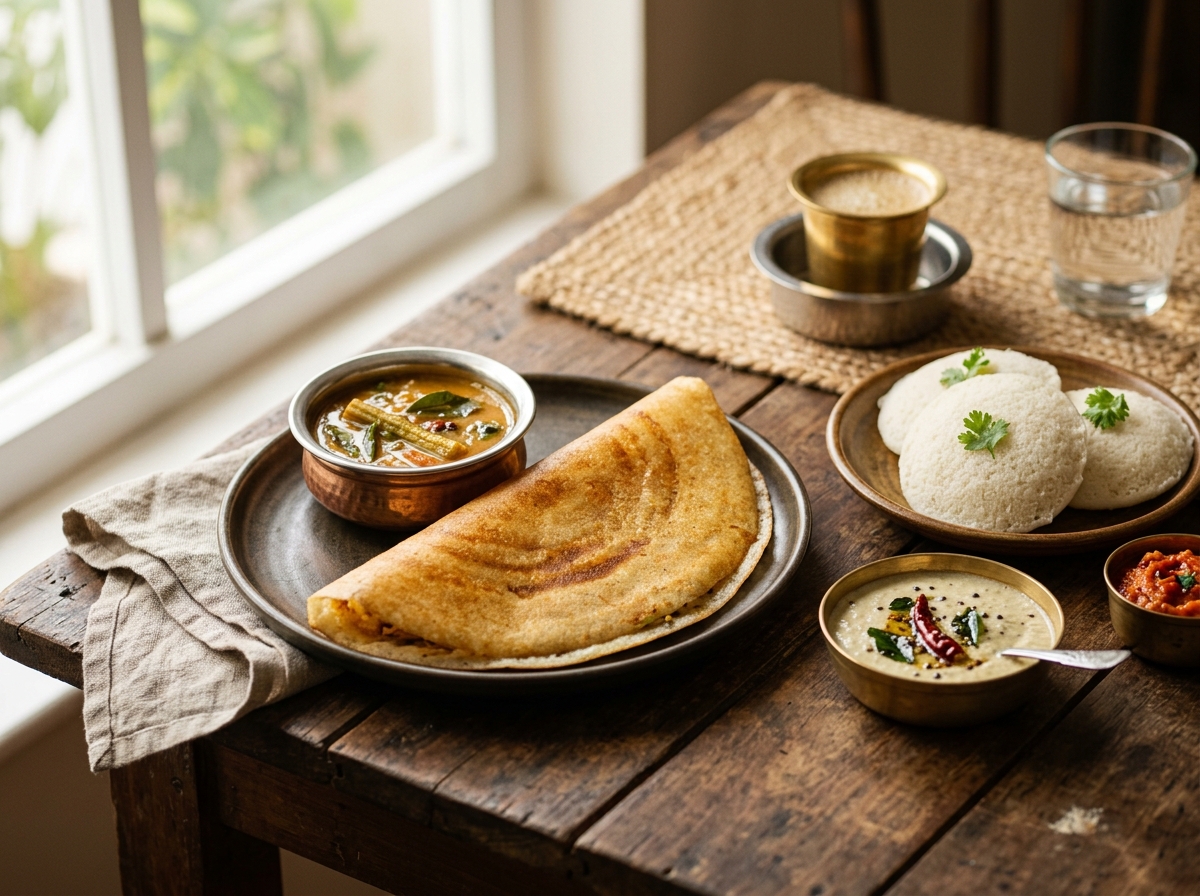
Fermentation is an art form here. Dosa batter made from rice and lentils ferments overnight, developing the tangy flavor and airy texture that makes these crepes so distinctive. Idli are steamed in special molds, creating spongy rice cakes that soak up sambhar and coconut chutney.
The spice work is different too. Instead of heavy garam masalas, South Indian cooks rely on mustard seeds, fenugreek, and especially curry leaves. The tempering happens at the end of cooking—hot oil with popping mustard seeds gets poured over finished dishes, adding a final layer of flavor and aroma.
Coconut appears in every form. Fresh coconut gets ground into smooth chutneys. Coconut milk enriches fish curries and vegetable stews. Dried coconut adds texture to spice powders and rice dishes.
Regional specialties showcase the diversity within the south itself. Kerala's fish moilee swims in coconut milk scented with curry leaves. Tamil Nadu's rasam is a thin, peppery soup that clears sinuses and aids digestion. Andhra Pradesh's gongura pachadi uses sorrel leaves for an intensely sour pickle that wakes up every taste bud.
East Indian Cuisine: Fish, Mustard Oil, and Sweet Traditions
Eastern India, particularly Bengal, has developed a cuisine that's distinct from the rest of the country. Fish is king here, thanks to the rivers and coastal areas that provide fresh catches daily. The cooking medium of choice is mustard oil, which adds a pungent kick that's initially shocking but becomes addictive.
Bengali cuisine balances sweet and savory in ways that can surprise newcomers. A typical meal might include a bitter gourd curry to stimulate appetite, followed by fish in mustard sauce, and ending with rossogolla or mishti doi—sweet yogurt that's almost like crème brûlée.
The fish preparations are sophisticated. Hilsa, the prized river fish, gets cooked in mustard oil with a paste made from mustard seeds and green chilies. The result is intensely flavored but not heavy—the oil is used for flavor, not richness.
Mustard shows up everywhere—as oil, as seeds in tempering, and ground into pastes that form the base of curries. It's paired with poppy seeds in many dishes, creating complex, nutty flavors that can't be replicated with other ingredients.
The vegetarian dishes are equally compelling. Aloo posto combines potatoes with poppy seed paste for a dish that's creamy without any dairy. Begun bhaja—simple fried eggplant—becomes something special when cooked in mustard oil and finished with a sprinkle of kalonji (nigella seeds).
Rice is the staple, but the varieties used are often aromatic—gobindo bhog rice with its delicate fragrance, or the tiny-grained atop rice used specifically for sweets.
West Indian Cuisine: Coastal Flavors and Gujarati Vegetarian Excellence
Western India spans from the deserts of Rajasthan to the beaches of Goa, creating one of the most culinarily diverse regions in the country. The cooking varies dramatically even within states, influenced by geography, community traditions, and historical trade routes.
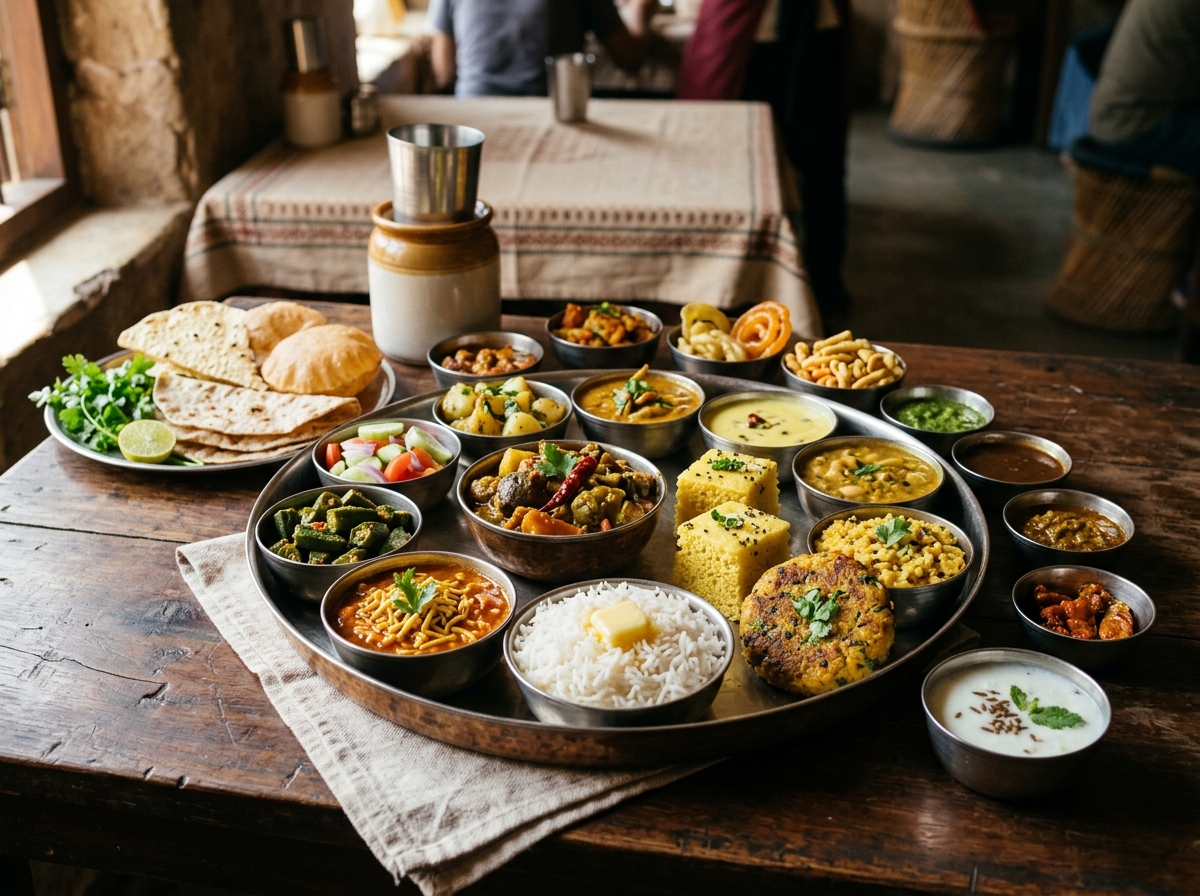
Gujarati cuisine represents one of the world's most sophisticated vegetarian cooking traditions. The thali system—multiple small dishes served together—creates meals with perfect nutritional and flavor balance. Sweet, salty, sour, and spicy elements all appear on the same plate, often in the same dish.
The use of jaggery (unrefined sugar) in savory dishes is characteristic of Gujarati cooking. Dal gets a touch of sweetness that balances the earthiness of lentils. Vegetables like okra and eggplant are cooked with spices and jaggery until they develop deep, caramelized flavors.
Coastal Maharashtra and Goa showcase a different side of western cuisine. Here, coconut and seafood dominate, but the preparations are distinct from South Indian versions. Goan fish curry uses kokum (a souring agent) instead of tamarind, creating a different flavor profile entirely.
The Portuguese influence in Goan cuisine is unmistakable. Vindaloo, contrary to popular belief outside India, is actually a pork dish that gets its distinctive flavor from palm vinegar and a specific blend of spices including cinnamon and cloves.
Rajasthani cuisine developed around water scarcity and preservation needs. Dishes like dal bati churma can last for days without refrigeration. Ker sangri—a preparation using desert beans and berries—turns foraged ingredients into something delicious and nutritious.
Key Ingredients That Define Each Region
Understanding regional Indian cuisine means understanding the ingredients that define each area. These aren't arbitrary choices—they reflect what grows well in each climate and the cultural preferences that developed over generations.
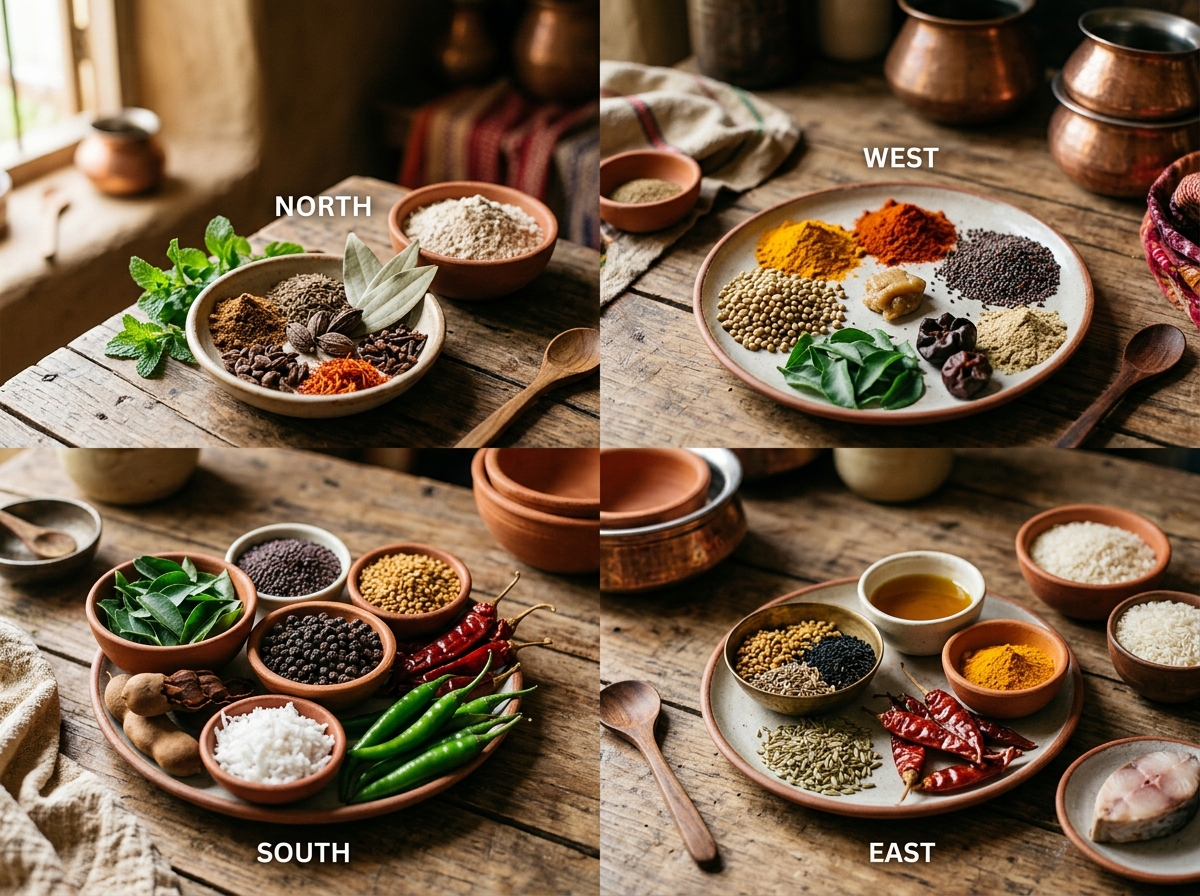
North Indian essentials: Ghee provides richness and flavor. Fresh ginger and garlic form the aromatic base of most dishes. Garam masala—usually containing cinnamon, cardamom, cloves, and bay leaves—adds warming spices perfect for cooler climates. Kasoori methi (dried fenugreek leaves) appears in many restaurant-style dishes.
South Indian staples: Curry leaves are non-negotiable—they provide a citrusy, almost herbal flavor that can't be substituted. Tamarind adds the sourness that balances rich coconut-based dishes. Mustard seeds and urad dal create the tempering that finishes most dishes. Fresh coconut appears in various forms throughout meals.
East Indian characteristics: Mustard oil is the cooking medium of choice, providing a sharp, pungent flavor. Panch phoron—a five-spice blend including fenugreek, mustard, cumin, fennel, and kalonji—appears in many vegetable dishes. Fresh fish, particularly river fish like hilsa, defines much of the cuisine.
West Indian diversity: Kokum provides sourness in coastal dishes, particularly from Maharashtra and Goa. Jaggery sweetens Gujarati dishes in unexpected ways. Dried red chilies from specific regions create the heat levels and flavors characteristic of Rajasthani cuisine. Palm vinegar gives Goan dishes their distinctive tang.
Cooking Techniques That Make the Difference
Regional differences aren't just about ingredients—they're about technique. The way spices are treated, when they're added, and how dishes are finished all contribute to the distinctive character of each region's cuisine.
North Indian cooking often starts with a heavy-bottomed pan and generous amounts of oil or ghee. Whole spices get bloomed until fragrant, then onions are cooked until golden. This forms the base for most curries, creating deep, complex flavors through proper browning.
South Indian technique emphasizes tempering—both at the beginning and end of cooking. The final tempering, where hot oil with spices gets poured over finished dishes, adds a burst of aroma and flavor that's essential to the cuisine's character.
Bengali cooking uses mustard oil at high temperatures, then often finishes dishes at lower heat to preserve the oil's distinctive flavor. The grinding of mustard seeds into paste requires specific techniques to avoid bitterness—usually involving soaking and grinding with minimal water.
Gujarati cuisine relies on perfect timing to balance sweet and savory elements. Jaggery is often added at specific points during cooking to achieve caramelization without overpowering other flavors.
Building Your Regional Indian Pantry
Creating authentic regional flavors at home starts with stocking the right ingredients. You don't need everything at once, but certain items are essential for each regional style.
Start with spices that define each region. For North Indian cooking, invest in good garam masala or the whole spices to make your own. Kasoori methi might seem optional, but it's what makes restaurant-style dishes taste authentic at home.
South Indian cooking requires curry leaves—try to find fresh ones if possible, though dried will work. Tamarind paste or concentrate is essential for the sourness that defines many dishes. A good quality sambar powder saves time and delivers complex flavor.
For Bengali-style dishes, mustard oil is non-negotiable. Buy it from an Indian grocery store where it's labeled for cooking use. Poppy seeds (posto) and mustard seeds for grinding are also essential.
Western regional cooking benefits from having kokum, jaggery, and good quality dried red chilies. Each serves specific purposes that can't easily be substituted.
The beauty of exploring regional Indian cuisine lies in understanding that there's no single "Indian food"—there are dozens of distinct culinary traditions, each with its own logic, history, and flavors. Start with one region that appeals to you, master a few key dishes, then expand your exploration from there.
These regional differences reflect the incredible diversity of India itself—different climates, different ingredients, different cultural influences all creating unique food traditions. Understanding these differences will deepen your appreciation for the complexity and sophistication of indian recipes and help you choose dishes that match your preferences and cooking style.
Sources & further reading
- Indian cuisine | History, Regions, Dishes, & Facts — Encyclopaedia Britannica
- The Differences Between Northern and Southern Indian Cuisines — Food52
- History of Indian cuisine — Wikipedia
- Analysis of Food Pairing in Regional Cuisines of India — PLOS ONE (via PubMed Central/NCBI)
Related Topics
Enjoyed this article? Share it with fellow food lovers!
Import a recipe, start cooking
Paste any recipe URL and we'll turn it into a Cook Mode experience with step-by-step visuals, voice narration, and built-in timers.