

What is porcini ragù? Origins, variations and pairings
Porcini ragù is a vegetarian Italian pasta sauce that gets its deep, savory body from dried porcini mushrooms. Here is where the word ragù comes from, how the sauce varies, and when it fits best.
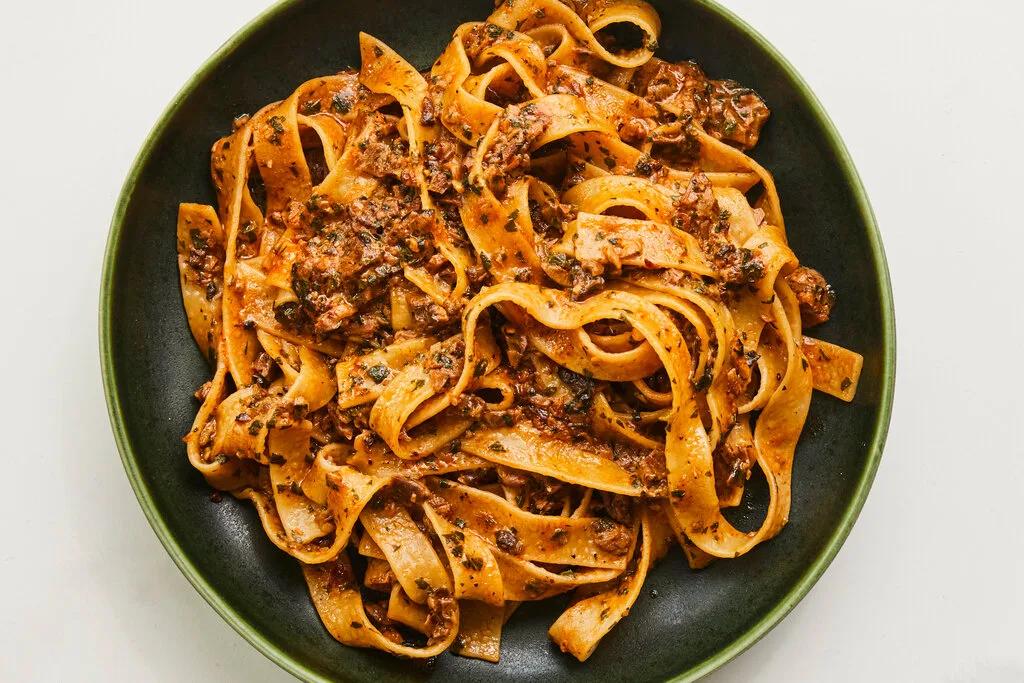
Featured Recipe
Porcini Ragù
Porcini ragù is an Italian pasta sauce made without meat. It is dark, glossy and clings to ribbons of pasta the way a long-simmered sauce should. The dried porcini give it an earthy, almost brothy depth, with a savory richness that most people expect only from beef or pork.
People love it because it delivers that slow-cooked feeling without the long afternoon at the stove. A small handful of dried mushrooms does most of the work, and the soaking liquid becomes part of the sauce. It is a vegetarian dinner that doesn't read as a compromise.
Where porcini ragù comes from
Nobody has documented who first made a ragù out of porcini, so we won't pretend otherwise. It looks like a modern, home-cook adaptation of an older idea. The idea itself, ragù, does have a paper trail.
The word comes from the French ragoût, and Italy is its adopted home. Ragù is usually described as a meat sauce served with pasta. According to one account, Italians had cooked meat stews since the Renaissance but didn't call them ragù, and pasta was mostly eaten in broth. That account says the French brought ragoût to Italy in the Napoleonic era. Another tells the story differently: a meat dish from Renaissance France that travelled to the Bourbon court in Naples and then spread across the country. Most accounts agree on the French roots, even if the route varies.
The earliest written candidates are from the late 18th century. Vincenzo Corrado's Il Cuoco Galante (1773) described what could be the first ragù, though its ingredients are left undefined. The first recorded ragù made for pasta is credited to Alberto Alvisi, cook to the Cardinal of Imola, who wrote a ragù per i maccheroni. Tomato shows up in the written record in 1790, in a Francesco Leonardi dish of maccheroni alla napolitana. A mushroom ragù belongs to that family tree, but its own story is a recent one.
How it varies
The classic ragùs are built on meat: Bolognese, the Neapolitan version and ragù di salsiccia, made with sausage. Mushroom ragùs are one of the many variants cooks have developed from that template. They keep the method (a savory base, a slow-simmered sauce, a final toss with pasta) and swap the meat for fungi.
Within the porcini family of sauces, you will see a few choices:
- Dried only or a mix. Some cooks use dried porcini alone for concentrated flavor. Others add fresh cultivated mushrooms for more texture.
- Tomato or none. Some versions lean on a little tomato for brightness. Others stay dark and mushroom-forward.
- Pasta or polenta. Wide egg noodles are the usual match, but the sauce is equally at home over soft polenta.
Traditional ragù is slow, patient and meaty. This one is a modern shortcut that keeps the spirit and trims the clock. The version we cook on Meez comes from NYT Cooking.
When to make it
This is a cold-weather dinner at heart. Think of a weeknight in October, when the light goes early and you want something that tastes like it took all day. Fresh porcini are a fall forager's prize in the Northern Hemisphere, and the dried ones capture that mood all year. It suits a November Sunday supper just as well, when squash, kale, radicchio, pears and apples are at the market.
It also works when you're feeding a mixed table. A vegetarian guest gets a real centerpiece, and everyone else is happy to eat it. Because the sauce comes together faster than a meat ragù, it is a good choice for a dinner you decide on late in the afternoon.
What to serve with it
- A bitter green salad. Radicchio or arugula with a sharp lemon dressing cuts through the sauce's richness.
- Roasted squash or root vegetables. Their sweetness plays against the mushrooms' earthiness, and autumn is when they're at their best.
- Crusty bread. It's useful for the last of the sauce in the bowl.
- A medium-bodied red wine. Something soft and earthy, like a Sangiovese or Barbera, tends to suit mushrooms well.
- Sautéed greens with garlic. Chard or escarole keeps the plate balanced and a little bitter.
Make it at home
Ready to cook? Get the recipe for the full ingredient list and method, or cook it step by step in Cook Mode so your hands stay free at the stove.
Questions about porcini ragù
What is porcini ragù?
It is a meatless pasta sauce in the style of an Italian ragù, built around porcini mushrooms. The dried mushrooms and their soaking liquid give it a savory depth similar to a slow-cooked meat sauce.
Is porcini ragù a traditional Italian dish?
Ragù itself is traditional, but this mushroom version has no documented origin that we could find. It is best seen as a modern variation on a much older sauce family.
How is porcini ragù different from Bolognese?
Bolognese is a meat ragù, and the Emilia-Romagna tourism board treats it as a specific meat dish with a long history. Porcini ragù borrows the idea of a rich, slow-style sauce but gets its flavor from mushrooms instead of meat.
What pasta goes best with porcini ragù?
Wide, flat ribbons such as tagliatelle or pappardelle are a natural fit because they hold the sauce well. Soft polenta is a good non-pasta alternative.
Sources
Last reviewed October 21, 2026. Written by the Meez editorial team with Meez Magic, from the sources above.
Original Recipe Source
This article is inspired by a recipe from NYT Cooking.
Visit the original source for their version of this recipe and more great content.
Related Topics
Enjoyed this article? Share it with fellow food lovers!
Ready to Cook This Recipe?
Experience our immersive Cook Mode with step-by-step visual guidance, voice narration, and built-in timers.