

Persian Recipes: A Complete Guide to Iranian Cooking
Persian cuisine offers a sophisticated blend of aromatic herbs, saffron, and tender meats that create some of the world's most elegant comfort food. From the crispy-bottomed rice called tahdig to rich herb stews, these recipes connect you to centuries of culinary tradition.
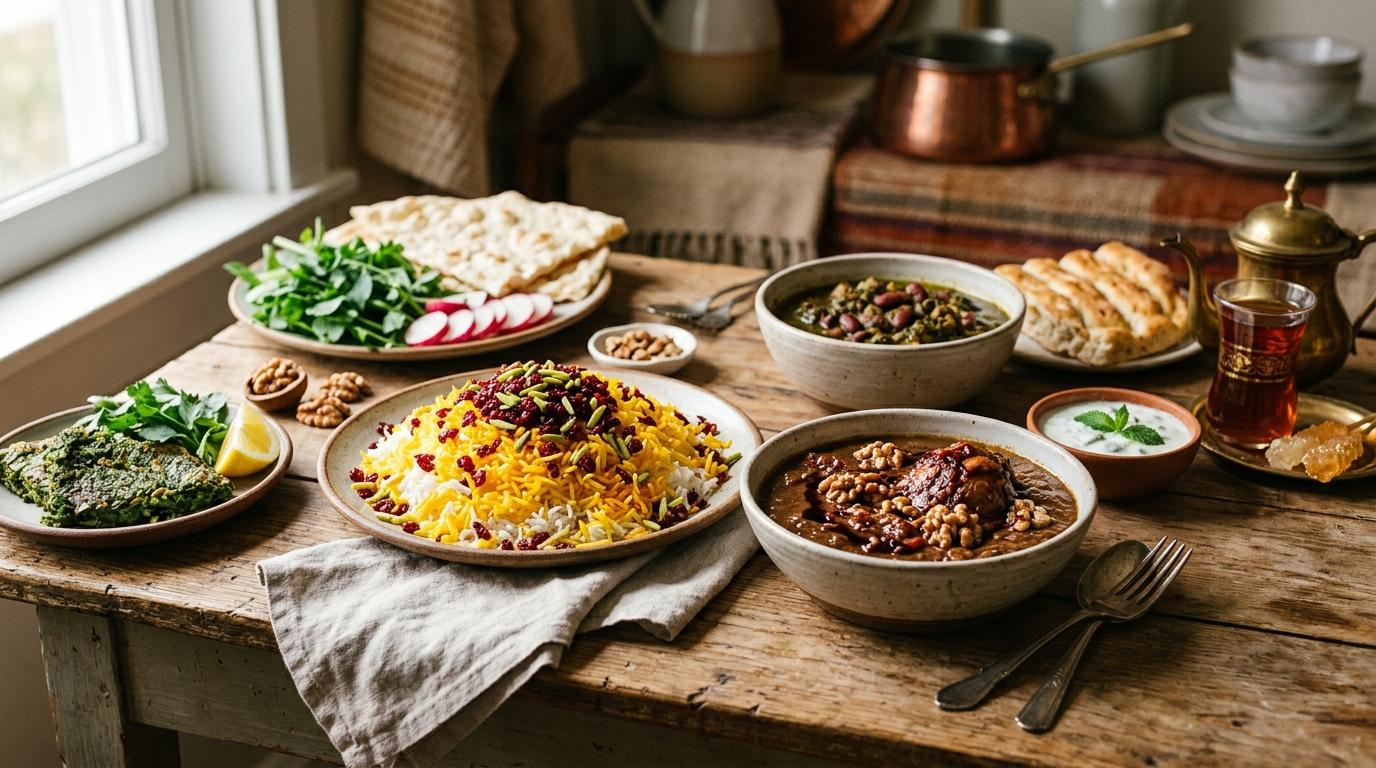
Persian cuisine stands as one of the most sophisticated and aromatic traditions within the broader landscape of middle eastern recipes. What sets Iranian cooking apart isn't just the generous use of saffron or the artful balance of sweet and savory—it's the way each dish tells a story that stretches back thousands of years, from the ancient Silk Road to modern Tehran kitchens.
Unlike many cuisines that rely on heat or bold spices for impact, Persian food achieves complexity through layering. Fresh herbs aren't just garnishes—they're the foundation. Rice isn't just a side—it's an art form with its own crispy, golden bottom called tahdig. Every component serves a purpose in creating harmony on the plate.
The beauty of Persian cooking lies in its restraint. You won't find overwhelming heat or aggressive flavors. Instead, you'll discover how cardamom whispers against lamb, how pomegranate molasses adds just enough tang to balance rich walnuts, and how a pinch of saffron can transform simple rice into something that glows like sunset.
Essential Persian Pantry Ingredients
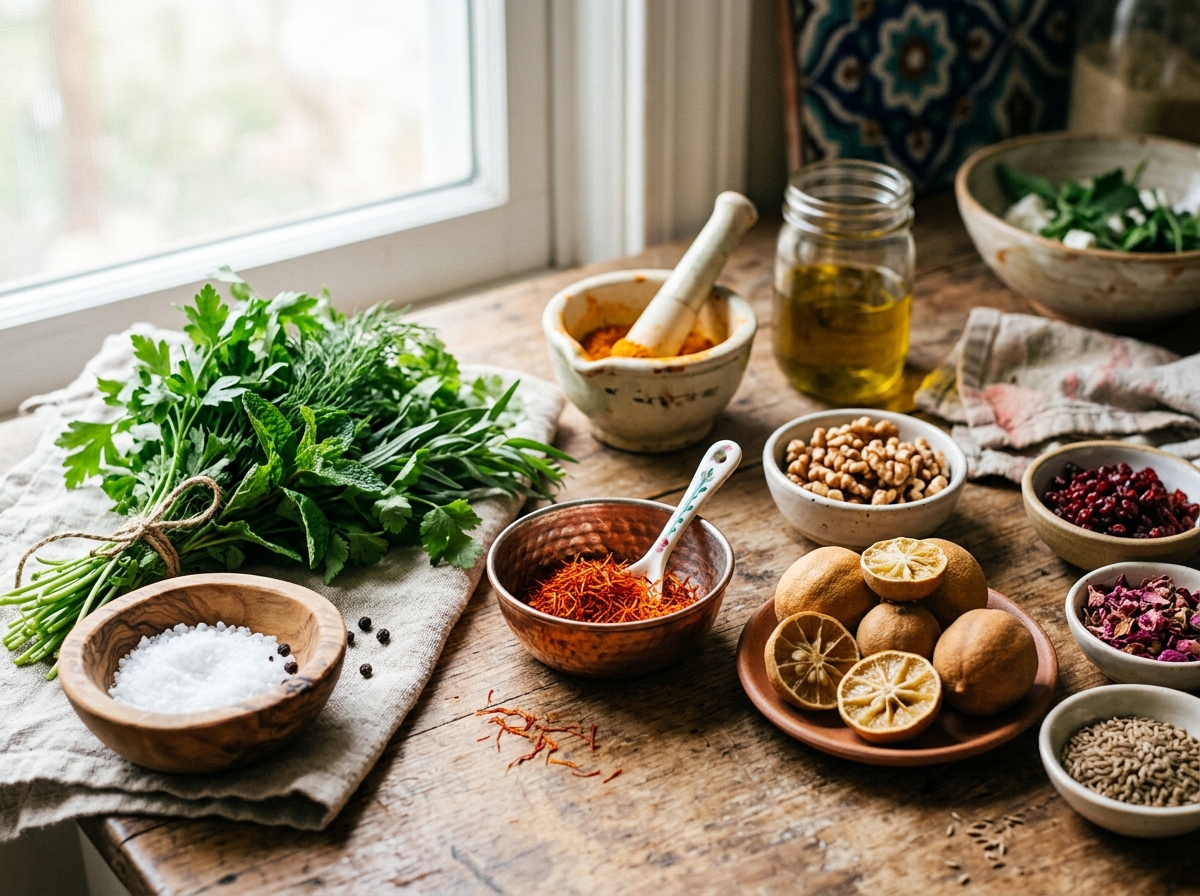
Building a Persian pantry means understanding that every ingredient has earned its place through centuries of refinement. These aren't exotic additions—they're the building blocks that make Persian food taste like itself.
Saffron reigns supreme, but quality matters more than quantity. A few threads of good saffron, bloomed in warm water, will perfume an entire pot of rice. Iranian saffron tends to be more intense than Spanish varieties, so start conservatively.
Fresh herbs dominate Persian cooking in ways that might surprise you. Cilantro, parsley, chives, dill, and fenugreek leaves (shambalileh) appear in massive quantities. We're talking cups, not tablespoons. Many Persian dishes use more herbs than vegetables.
Dried limes (limoo amani) add a distinctive sour-bitter note that defines many stews. These blackened orbs look unpromising, but they develop incredible depth when simmered. Pierce them with a knife before adding to prevent bursting.
Pomegranate molasses (rob-e anar) provides the sweet-tart backbone for dishes like fesenjan. Real pomegranate molasses should taste intensely fruity, not just sour. The best versions come thick and syrupy.
Rose water appears in both savory and sweet dishes, but Persian cooks use it with a lighter hand than many assume. A few drops perfume rice pudding or baklava without overwhelming.
Barberries (zereshk) offer tiny bursts of tartness that complement rich dishes. Soak them briefly to remove excess salt, then sauté lightly in butter until they just plump.
Master Techniques for Persian Cooking
Persian cuisine rewards patience and technique over speed. These core methods appear across dozens of recipes, so mastering them unlocks entire categories of dishes.
Perfect Persian Rice (Polo)
Persian rice isn't just cooked—it's engineered. The goal is fluffy, separate grains crowned by tahdig, the crispy bottom layer that's considered the prize portion.
Start with good basmati rice, rinsed until the water runs clear. Parboil the rice in heavily salted water until just tender—taste a grain; it should still have the slightest bite. Drain immediately.
Heat oil in a heavy-bottomed pot. Add a layer of rice, creating a mound. Poke holes through the rice with a wooden spoon handle to create steam vents. Cover with a clean kitchen towel, then the lid. Cook on medium heat for 3-4 minutes until you hear sizzling, then reduce to low.
The rice steams in its own moisture for 45-60 minutes. You'll know the tahdig is ready when you can smell the toasty, nutty aroma. To unmold, run the bottom of the pot under cold water briefly, then invert onto a platter.
Building Khoresh (Persian Stews)
Khoresh represents Persian cooking at its most sophisticated. These aren't quick weeknight stews—they're slow-simmered compositions where each ingredient builds on the last.
Most khoreshes start with browning meat in batches. Don't crowd the pot; proper browning develops the fond that becomes your flavor base. Remove the meat, then build your aromatics—onions cooked until deep golden, garlic, sometimes ginger.
The herb component comes next. Persian stews often call for enormous amounts of fresh herbs—sometimes 2-3 cups. These get sautéed until they wilt and darken, concentrating their flavors.
Return the meat, add liquid, and settle in for the long simmer. Many khoreshes benefit from cooking a day ahead, allowing the flavors to marry overnight.
Signature Persian Dishes to Master
Ghormeh Sabzi (Herb Stew)
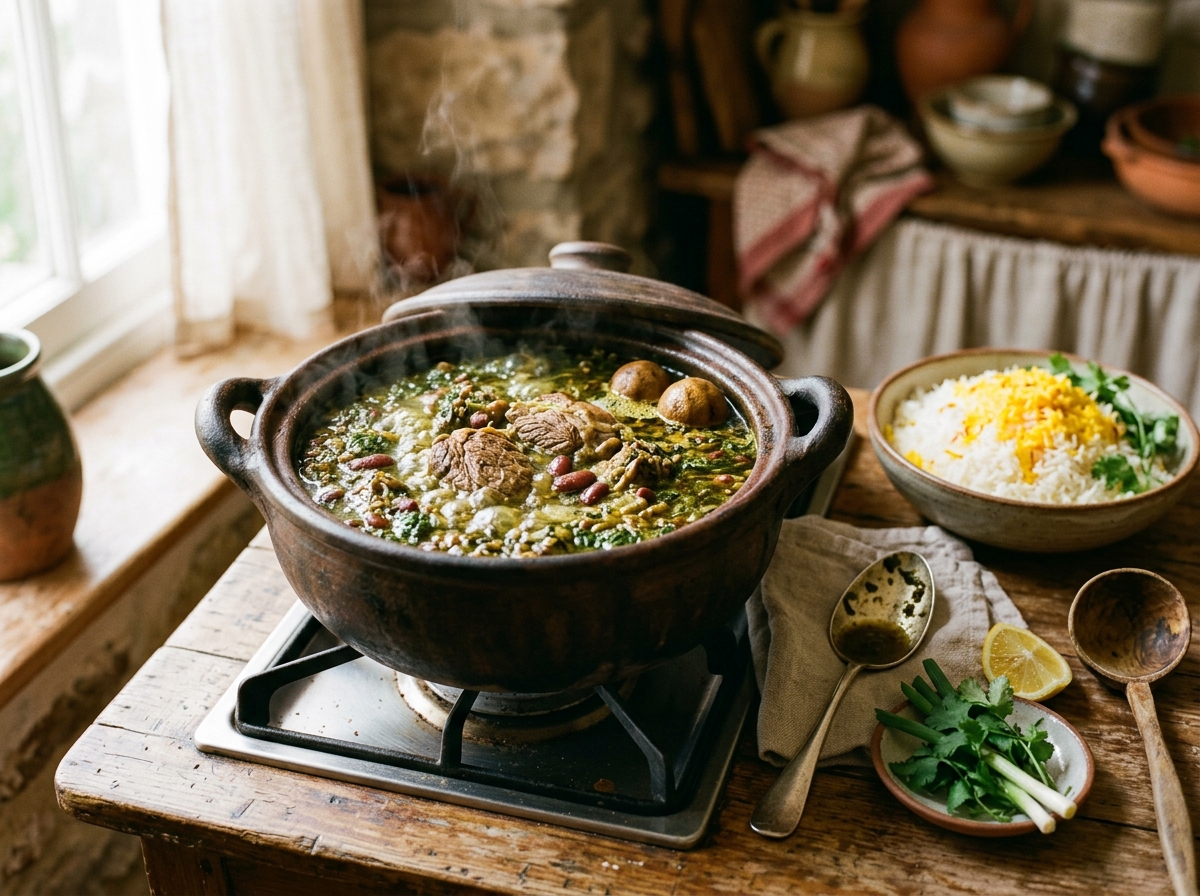
Often called Iran's national dish, ghormeh sabzi showcases the Persian mastery of herbs. This isn't a stew with herbs—it's an herb stew with supporting players.
The herb mixture traditionally includes parsley, cilantro, chives, and fenugreek leaves in roughly equal proportions. Some recipes add spinach or lettuce for bulk. The herbs get sautéed until they darken and concentrate—this step is crucial and can take 15-20 minutes.
Lamb or beef browns separately, then joins the herbs along with soaked kidney beans, dried limes, and just enough broth to barely cover. The long simmer—at least 2 hours—transforms the individual elements into something unified and deeply satisfying.
Fesenjan (Pomegranate Walnut Stew)
Fesenjan represents Persian cooking's sophisticated approach to sweet-and-sour flavors. Ground walnuts provide richness and body, while pomegranate molasses adds the signature tang.
Traditional versions use duck, but chicken works beautifully. The key lies in balancing the pomegranate molasses—start with less than you think you need. The sauce should taste nutty and rich with a gentle tartness that builds as you eat.
Cinnamon adds warmth without overwhelming the delicate balance. Some cooks add a touch of sugar if their pomegranate molasses runs particularly tart.
Tahdig Mastery
Tahdig—literally "bottom of the pot"—is the golden, crispy layer of rice that forms during steaming. It's simultaneously the simplest and most technical aspect of Persian rice cooking.
The secret lies in heat control and timing. Too high, and the bottom burns before the rice finishes cooking. Too low, and you get no crisp at all. The sweet spot produces an even golden crust that releases cleanly when inverted.
Some cooks add a layer of lavash bread or sliced potatoes to the bottom before adding rice, creating variations on the classic tahdig theme.
Persian Kebabs
Persian kebabs go far beyond simple grilled meat. Each style has its own technique and purpose, from the fine-textured koobideh to the marinated chunks of barg.
Koobideh requires the right fat ratio—about 20% fat to meat—and aggressive mixing to develop the proper texture. The mixture should become sticky and cohesive enough to stay on flat metal skewers.
Barg uses tenderloin or sirloin, marinated in yogurt, lemon juice, and saffron. The meat gets pounded thin, then threaded onto wide skewers. High heat and quick cooking preserve the tender texture.
Persian Rice Variations
Beyond plain polo, Persian cooks create jeweled rice dishes that incorporate fruits, nuts, and spices into edible artwork.
Jeweled Rice (Morasa Polo)
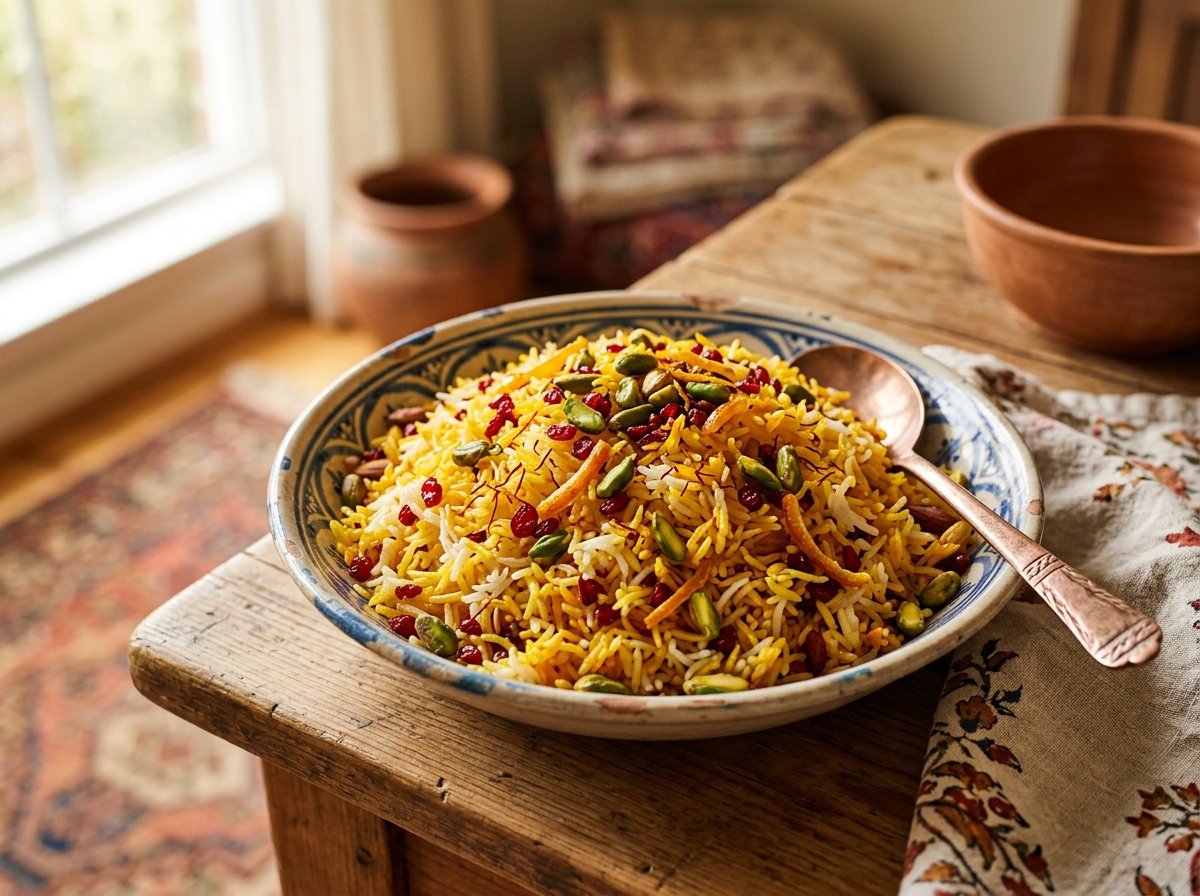
This celebration dish combines rice with barberries, pistachios, almonds, and candied orange peel. The components get cooked separately, then layered with the rice during steaming.
Saffron water tints some of the rice golden, creating visual contrast with the white grains. The final dish resembles scattered gems—hence the name.
Dill Rice (Shevid Polo)
Popular during Persian New Year, this rice combines fresh dill with the rice during steaming. The herb perfumes every grain without overwhelming.
Traditionally served with fish, the combination creates one of spring's most aromatic dishes. The dill should smell grassy and bright, not dried or musty.
Persian Desserts and Sweets
Persian desserts often feature rose water, pistachios, and cardamom in elegant compositions that cleanse rather than overwhelm.
Sholeh Zard (Saffron Rice Pudding)
This golden pudding transforms rice into silk through patient stirring and gentle heat. Saffron provides color and perfume, while rose water adds floral notes.
The texture should coat a spoon without being gluey. Achieving this requires constant stirring and gradual liquid addition—shortcuts lead to lumpy disappointment.
Baklava Persian Style
Persian baklava tends to be less sweet and more delicate than Greek or Turkish versions. Rose water and cardamom perfume the syrup, while pistachios provide the primary nut flavor.
The key lies in paper-thin phyllo and restrained syrup application. The pastry should shatter, not soggen, when cut.
Modern Applications and Adaptations
Contemporary Persian-American cooks adapt traditional techniques to modern kitchens and schedules while preserving essential flavors.
Pressure cookers can reduce khoresh cooking times from hours to minutes, though some argue the flavor development suffers. Rice cookers produce acceptable polo, though achieving proper tahdig requires stovetop finishing.
Herb preparation benefits from modern food processors, which can handle the large quantities Persian cooking demands. Freeze extra herb mixtures for quick weeknight versions of classic stews.
Spice substitutions sometimes become necessary. Sumac can approximate barberry tartness in a pinch. Tamarind paste mixed with a touch of sugar can stand in for pomegranate molasses temporarily.
Regional Variations Within Iran
Persian cuisine varies significantly across Iran's diverse regions, from the Caspian Sea's fish-heavy dishes to the south's date-sweetened specialties.
Northern Iranian cooking incorporates more fish and uses different herb combinations. Mirza ghasemi, the smoky eggplant and egg dish, represents this region's affinity for vegetables and herbs.
Southern Persian food shows Arab influences, with more dates, seafood from the Persian Gulf, and different spice combinations. The cooking tends to be slightly more aggressive in flavor than the refined Tehran style.
Isfahan's cuisine emphasizes sweets and delicate preparations, while Shiraz is known for its sophisticated rice dishes and elegant presentations.
Understanding these regional differences helps explain why "authentic" Persian recipes can vary significantly between sources—each represents a legitimate regional interpretation.
Persian cuisine offers home cooks a sophisticated alternative to the more familiar flavors found in many middle eastern recipes. The techniques require patience and practice, but the rewards—aromatic rice with perfect tahdig, herb-laden stews that taste like ancient gardens, kebabs that showcase rather than mask good meat—justify the effort. Start with one dish, master its techniques, then build your repertoire gradually. Persian cooking isn't about speed; it's about creating food that nourishes both body and soul through the careful layering of time-tested flavors.
Related Topics
Enjoyed this article? Share it with fellow food lovers!
Import a recipe, start cooking
Paste any recipe URL and we'll turn it into a Cook Mode experience with step-by-step visuals, voice narration, and built-in timers.