

Perfect Beef Lo Mein Recipe: Restaurant-Style at Home
Master the art of homemade beef lo mein with this authentic recipe that rivals your favorite Chinese restaurant. Fresh vegetables, perfectly velveted beef, and restaurant-style techniques.
Featured Recipe
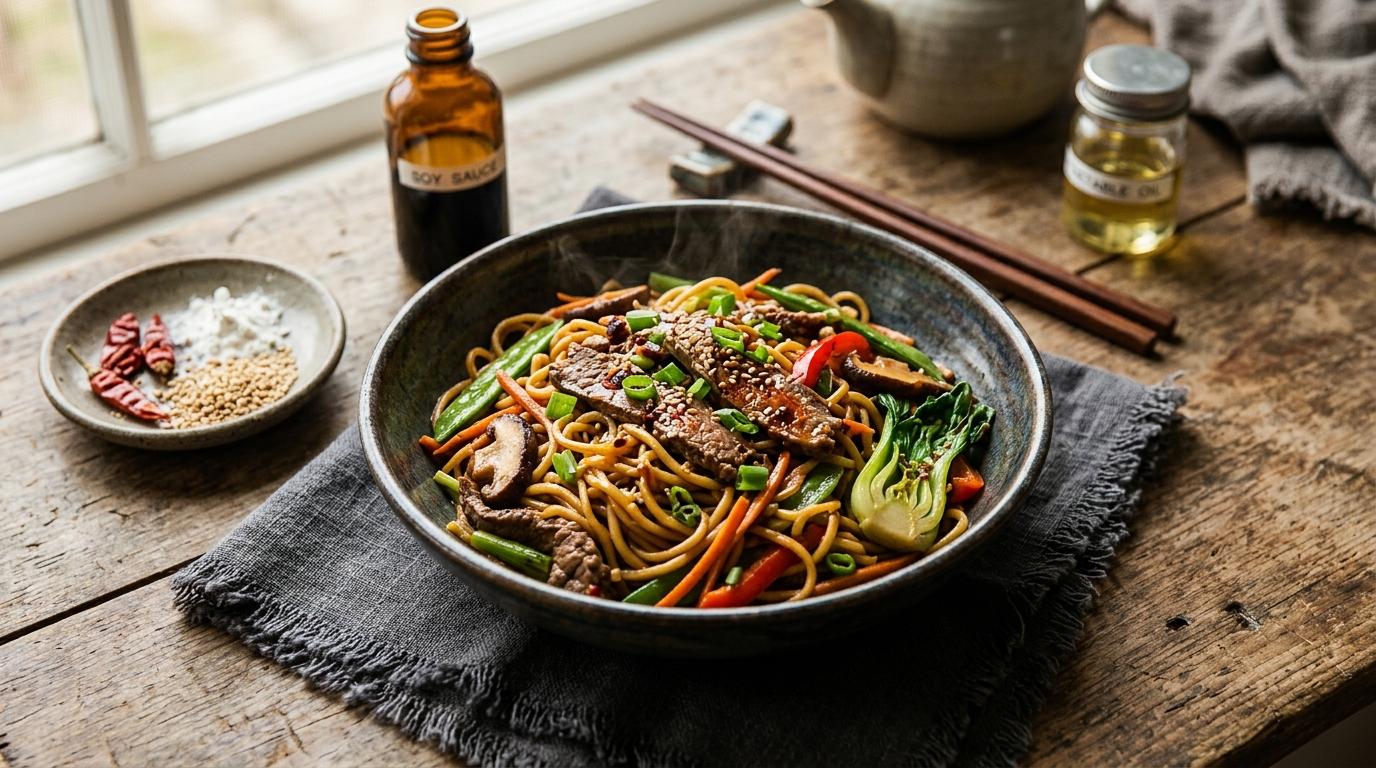
Beef Lo Mein
The sizzle of beef hitting a blazing hot wok, the aromatic dance of garlic and ginger in oil, and the satisfying tangle of silky noodles coming together in perfect harmony – there's something magical about watching beef lo mein come to life in your own kitchen. While ordering from your local Chinese restaurant is convenient, nothing quite matches the satisfaction of creating this beloved dish with your own hands, using the freshest ingredients and techniques passed down through generations of Chinese home cooks.
This recipe comes from Thewoksoflife, and we've transformed it into an immersive cooking experience on Meez. What makes this beef lo mein special isn't just its authentic flavors, but the way it balances tender, velveted beef with a rainbow of crisp vegetables and perfectly seasoned noodles that capture the essence of what makes Chinese stir-fry cooking so extraordinary.
The Story Behind This Dish
Lo mein, literally meaning "tossed noodles" in Cantonese, represents one of the most beloved comfort foods in Chinese-American cuisine. Unlike its crispy cousin chow mein, lo mein celebrates the soft, silky texture of wheat noodles that have been gently tossed with sauce and ingredients rather than fried until crispy. This cooking method originated in Northern China, where wheat noodles were a staple, but it found new life in Cantonese kitchens and eventually in Chinese-American restaurants across the globe.
The beauty of lo mein lies in its versatility and the principle of "wok hei" – the breath of the wok that imparts that distinctive smoky flavor you can only achieve with high heat cooking. Traditional Chinese families would often prepare lo mein as a way to use leftover ingredients, creating a harmonious dish that could feed many people economically. Each region developed its own variations, with some preferring more vegetables, others emphasizing the protein, but all sharing the common thread of perfectly balanced flavors and textures.
Key Ingredients Spotlight
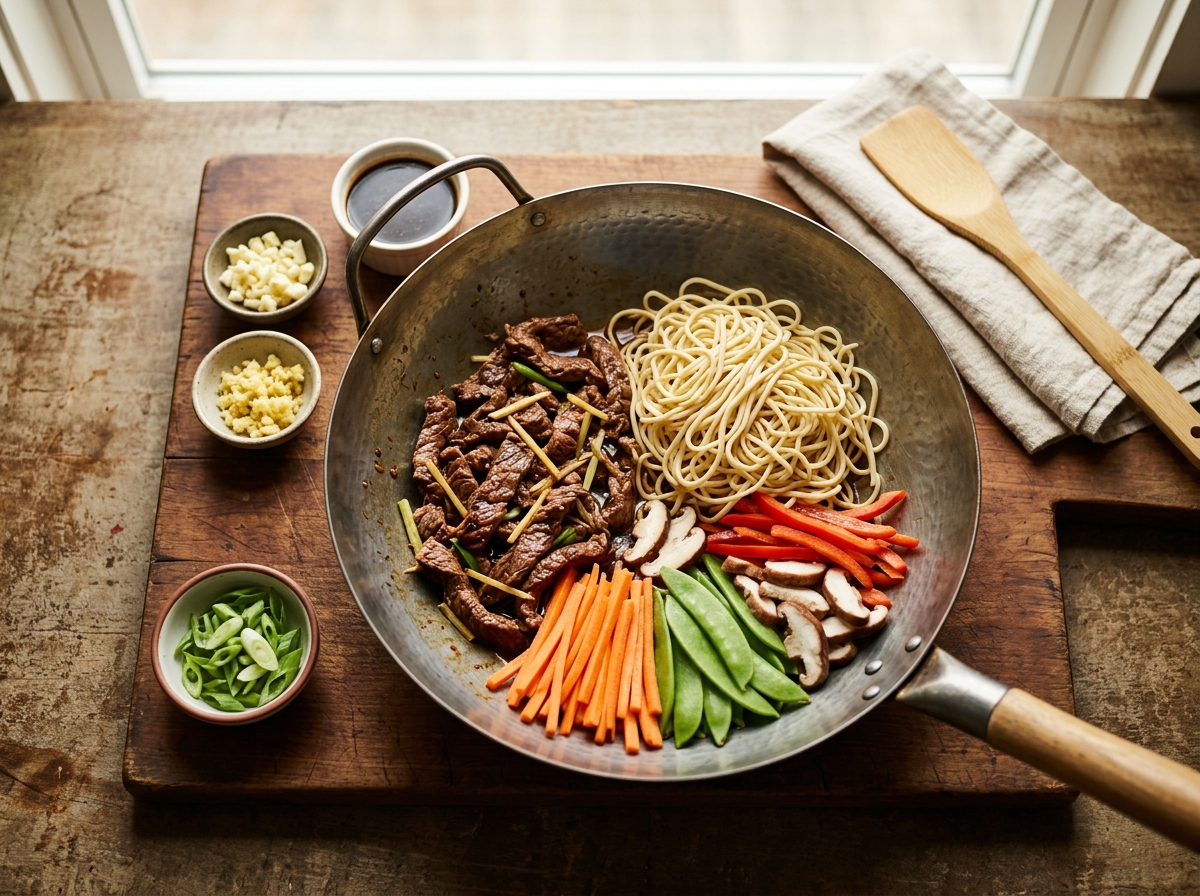
The magic of great beef lo mein starts with selecting the right cut of beef and understanding the ancient Chinese technique of "velveting." Flank steak is the preferred choice here – its pronounced grain and rich beef flavor make it ideal for quick stir-frying, while the velveting process using cornstarch, soy sauce, and a touch of baking soda ensures each strip remains incredibly tender even under high heat. This technique creates a protective coating that seals in juices while preventing the meat from becoming tough.
Fresh lo mein noodles are the soul of this dish, offering a chewy, satisfying texture that dried noodles simply cannot match. These thick, round wheat noodles are designed to hold sauce beautifully while maintaining their springy bite. If fresh noodles aren't available, look for high-quality dried lo mein or even linguine as a substitute. The sauce combination of light and dark soy sauces, oyster sauce, and sesame oil creates the perfect balance of umami depth, subtle sweetness, and aromatic finish that defines authentic Chinese flavors.
Pro Tips for Perfect Results
The secret to restaurant-quality beef lo mein lies in mastering your wok technique and timing. First, ensure your wok is screaming hot before adding any ingredients – you should see wisps of smoke rising from the surface. This high heat is crucial for achieving that coveted "wok hei" flavor and preventing ingredients from steaming rather than searing. When cooking the beef, resist the urge to move it around immediately; let each side sear for a full 30 seconds to develop that beautiful caramelized exterior.
Organization is your best friend when stir-frying. Have all your vegetables prepped and arranged in the order they'll go into the wok, because once you start cooking, there's no time to pause and chop. The vegetables should be cut uniformly to ensure even cooking – julienned carrots and peppers, sliced mushrooms, and shredded cabbage all cook at different rates, which is why the timing sequence matters so much.
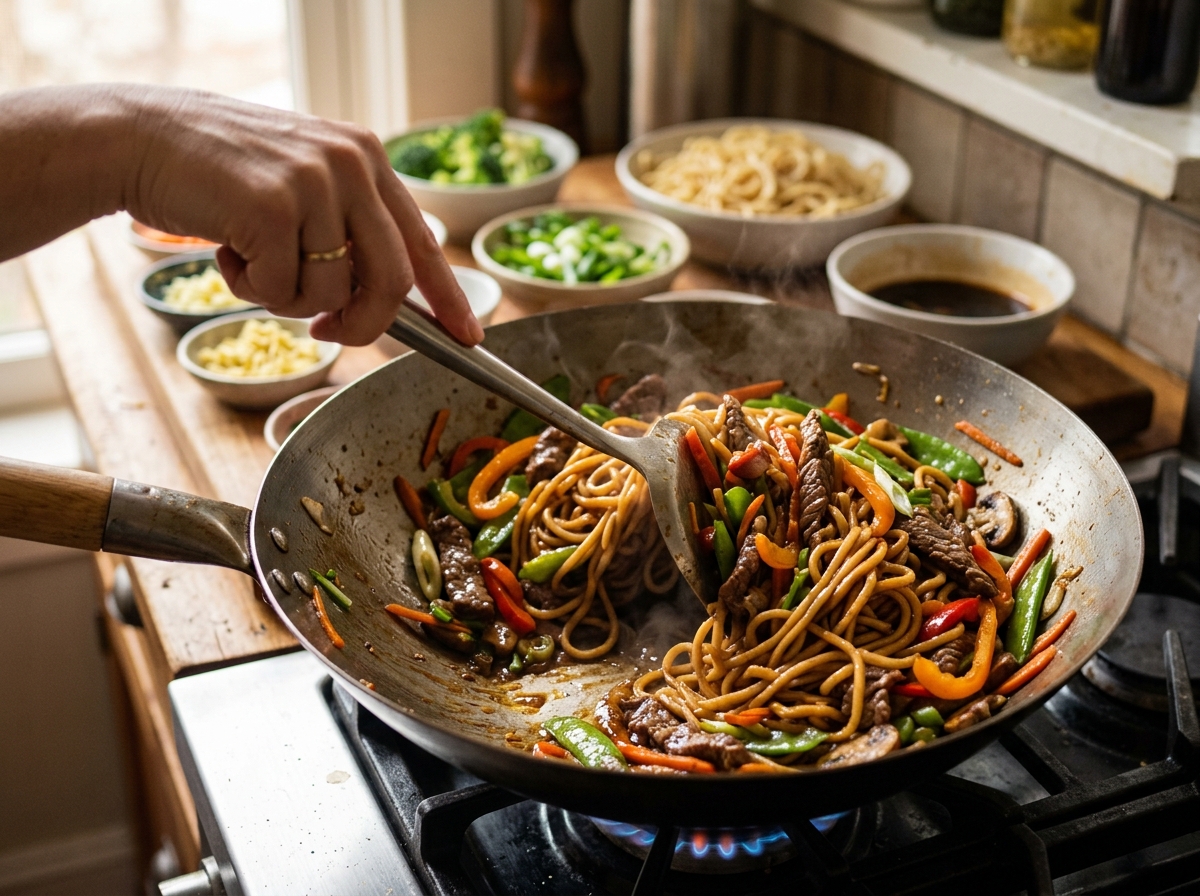
Don't forget the importance of proper noodle preparation. Whether using fresh or dried noodles, they should be just barely tender before hitting the wok – they'll finish cooking as they absorb the sauce and mingle with the other ingredients. Overcooked noodles will break apart and become mushy, while undercooked ones won't properly absorb the flavors.
Serving & Pairing Suggestions
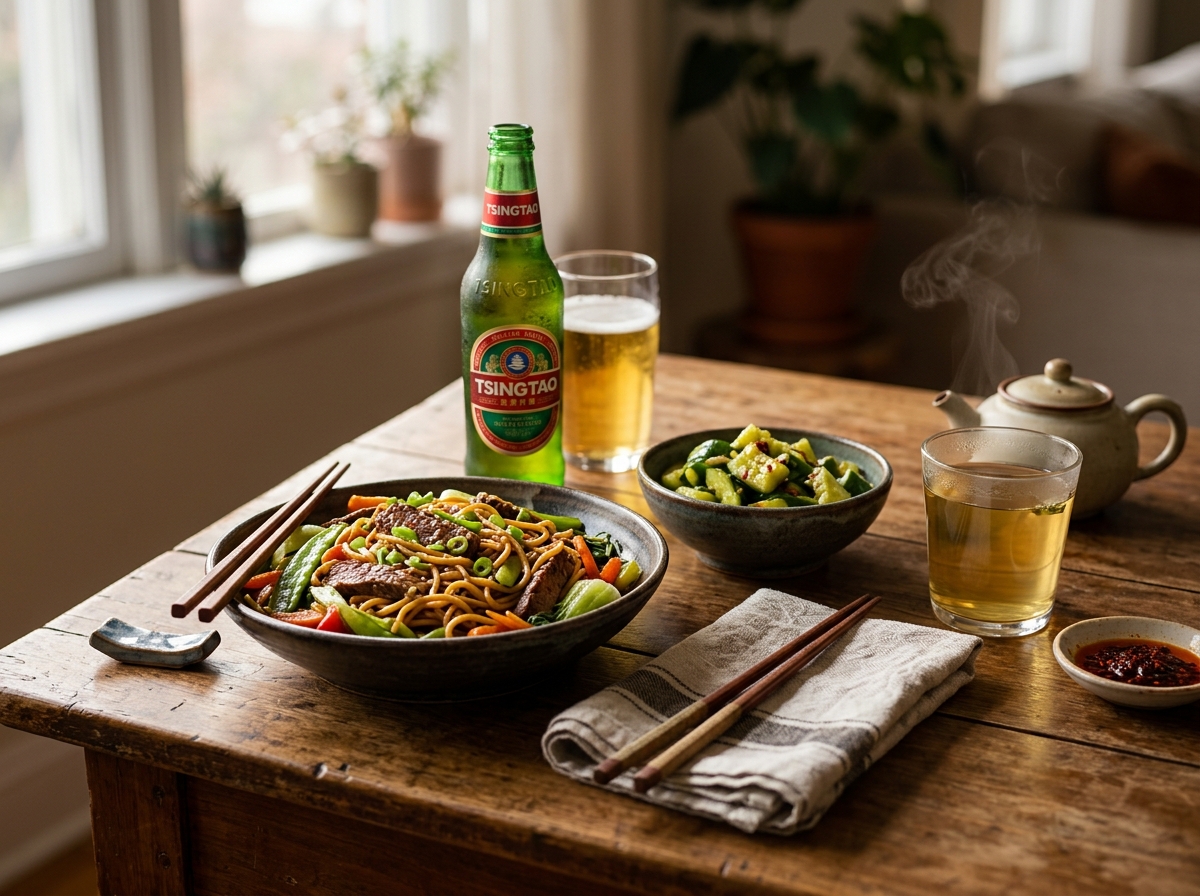
Beef lo mein shines as a complete meal on its own, but it also plays beautifully with other Chinese dishes in a family-style spread. Consider pairing it with lighter dishes like steamed fish or salt and pepper shrimp to balance the rich, savory flavors of the noodles. A simple cucumber salad dressed with rice vinegar provides a refreshing counterpoint to the warm, hearty noodles.
For beverages, jasmine tea is traditional and helps cleanse the palate between bites, while a crisp lager or light white wine like Riesling can complement the dish's complex flavors without overwhelming them. Don't forget to have some homemade chili oil or your favorite hot sauce on hand – many diners love adding a touch of heat to their lo mein.
Make It Your Own
The beauty of lo mein lies in its adaptability to your personal preferences and what's in your refrigerator. While this recipe calls for a specific mix of vegetables, feel free to substitute based on seasonality and taste. Broccoli florets, snap peas, or bok choy all work wonderfully, while mushroom lovers might experiment with shiitake or king oyster mushrooms for deeper umami flavors.
For those following specific dietary needs, this recipe adapts beautifully. Swap the beef for chicken, pork, or even firm tofu for different protein options. The sauce can be adjusted for sodium content by using low-sodium soy sauce, and gluten-free tamari works perfectly as a substitute for traditional soy sauce when paired with gluten-free noodles.
Conclusion
Creating restaurant-quality beef lo mein in your home kitchen is more than just following a recipe – it's about understanding the harmony between high heat, proper timing, and quality ingredients. With these techniques in your culinary arsenal, you'll never need to wonder whether takeout will live up to your expectations again. View the full recipe and experience the magic of Cook Mode to guide you through each step with precision and confidence.
Sources & further reading
- Technique Thursday: Velveting In Chinese Cooking — MICHELIN Guide
- Velveting — Wikipedia
- How to Velvet Beef for Stir-fry — The Woks of Life
- Lo mein — Wikipedia
Original Recipe Source
This article is inspired by a recipe from Thewoksoflife.
Visit the original source for their version of this recipe and more great content.
Related Topics
Enjoyed this article? Share it with fellow food lovers!
Ready to Cook This Recipe?
Experience our immersive Cook Mode with step-by-step visual guidance, voice narration, and built-in timers.