

Middle Eastern Vegetarian Recipes: Plant-Based Treasures
Middle Eastern cuisine offers a treasure trove of naturally vegetarian dishes that have nourished families for generations. From creamy hummus to aromatic stuffed vegetables, these plant-based recipes prove that meat isn't necessary for deeply satisfying meals.
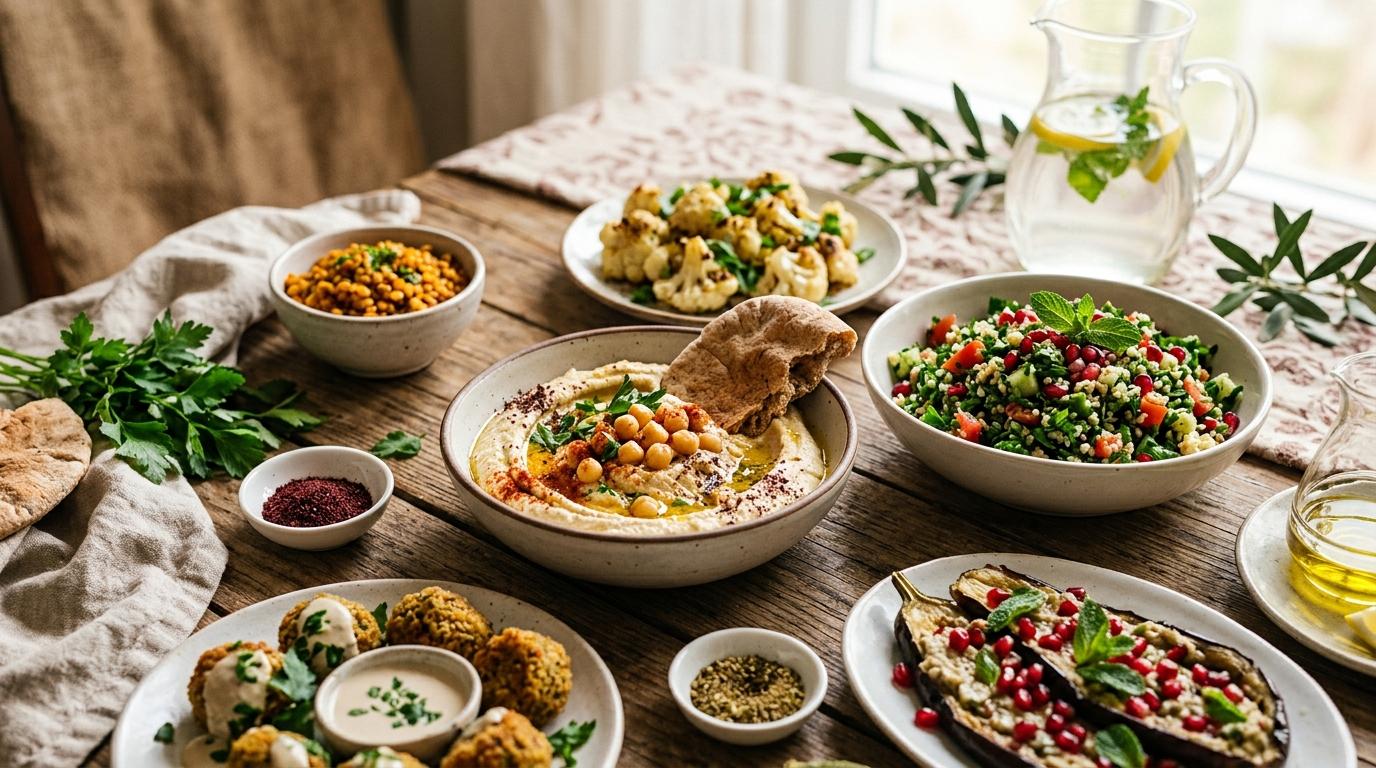
Long before plant-based eating became a trend, Middle Eastern kitchens were already masters of vegetarian cooking. The region's abundant vegetables, legumes, grains, and aromatic spices created a natural foundation for meatless meals that satisfied both body and soul. These Middle Eastern recipes prove that some of the world's most beloved vegetarian dishes didn't start as substitutions—they were the main event all along.
What makes Middle Eastern vegetarian cuisine so compelling isn't just its flavor, but its approach. Rather than building meals around meat and adding vegetables as sides, these recipes treat plants as the stars. A perfectly seasoned lentil stew, a platter of smoky baba ganoush, or a bowl of fragrant rice pilaf can anchor an entire feast.
The beauty lies in the balance. Creamy tahini offsets bright lemon. Warm spices like cumin and coriander complement cooling herbs like mint and parsley. Textures play together—the smoothness of hummus against the crunch of fresh vegetables, the chewiness of bulgur wheat in tabbouleh.
The Foundation: Key Ingredients for Middle Eastern Vegetarian Cooking
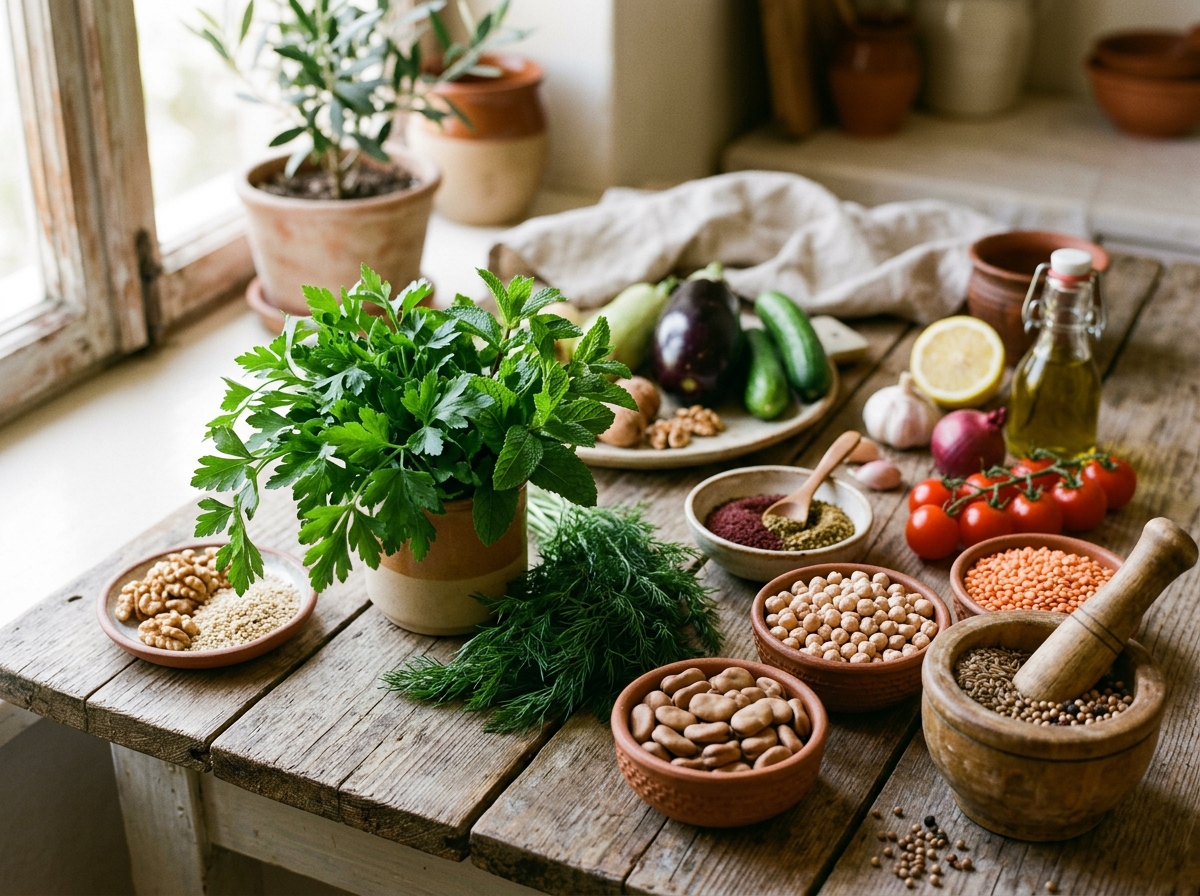
Middle Eastern vegetarian cooking relies on a pantry of staples that transform simple ingredients into complex, satisfying dishes. These aren't exotic specialty items—they're the building blocks that have sustained communities for centuries.
Legumes form the protein backbone. Chickpeas, lentils, fava beans, and black-eyed peas show up in countless preparations. Dried legumes offer deeper flavor than canned, but both work. Red lentils cook quickly and break down into creamy textures, while green lentils hold their shape beautifully in salads.
Tahini is liquid gold. This sesame seed paste brings richness and nutty depth to everything from hummus to salad dressings. Look for brands with just one ingredient: sesame seeds. The oil separation is normal—just stir it back in.
Bulgur wheat adds substance. This parboiled, cracked wheat cooks faster than rice and has a pleasant, nutty chew. Fine bulgur works for tabbouleh, while coarse bulgur suits pilafs and stuffings.
Fresh herbs aren't garnishes—they're vegetables. Parsley, mint, cilantro, and dill appear in generous quantities. A proper tabbouleh is more herb than grain. Buy herbs with strong stems and store them like flowers in water.
Pomegranate products add brightness. Pomegranate molasses provides sweet-tart complexity to marinades and stews. Fresh pomegranate seeds offer pops of juice and color. Both keep well—molasses in the pantry, seeds in the freezer.
Classic Mezze: The Art of Small Plates
Mezze culture celebrates the beauty of eating together, and vegetarian options dominate these spreads. These aren't appetizers in the Western sense—they're complete meals built from multiple small dishes that complement and contrast with each other.
Hummus deserves respect. Real hummus starts with dried chickpeas soaked overnight and cooked until they practically fall apart. The skins slip off easily when the chickpeas are ready. Blend the warm chickpeas with ice water for the silkiest texture. The tahini should be room temperature, not cold from the fridge.
Good hummus has layers of flavor. Lemon juice brightens, garlic bites, cumin warms, and a drizzle of good olive oil on top isn't optional. Some cooks add a pinch of baking soda while cooking the chickpeas—it helps break them down further.
Baba ganoush transforms humble eggplant. Char the eggplants directly over a gas flame or under a broiler until the skin blackens and the flesh collapses. This smokiness can't be replicated any other way. Scoop out the flesh while it's still warm, and don't worry about getting every bit of charred skin—a few specks add character.
The key to silky baba ganoush is restraint with the tahini. Too much overwhelms the eggplant's delicate flavor. Start with less than you think you need, then adjust. A squeeze of lemon juice and a sprinkle of pomegranate seeds finish it beautifully.
Muhammara brings heat and sweetness. This red pepper and walnut dip from Syria balances fire from Aleppo pepper with the richness of ground walnuts. Roasted red peppers work, but charring your own fresh ones adds depth. The breadcrumbs aren't filler—they provide body and help the dip hold together.
Pomegranate molasses is crucial here. Its concentrated sweet-tart flavor ties the ingredients together. If you can't find it, reduce pomegranate juice with a squeeze of lemon until syrupy.
Substantial Salads That Satisfy
Middle Eastern salads aren't side dishes—they're meals. Built on grains, legumes, or vegetables, these salads provide protein, fiber, and enough flavor complexity to stand alone.
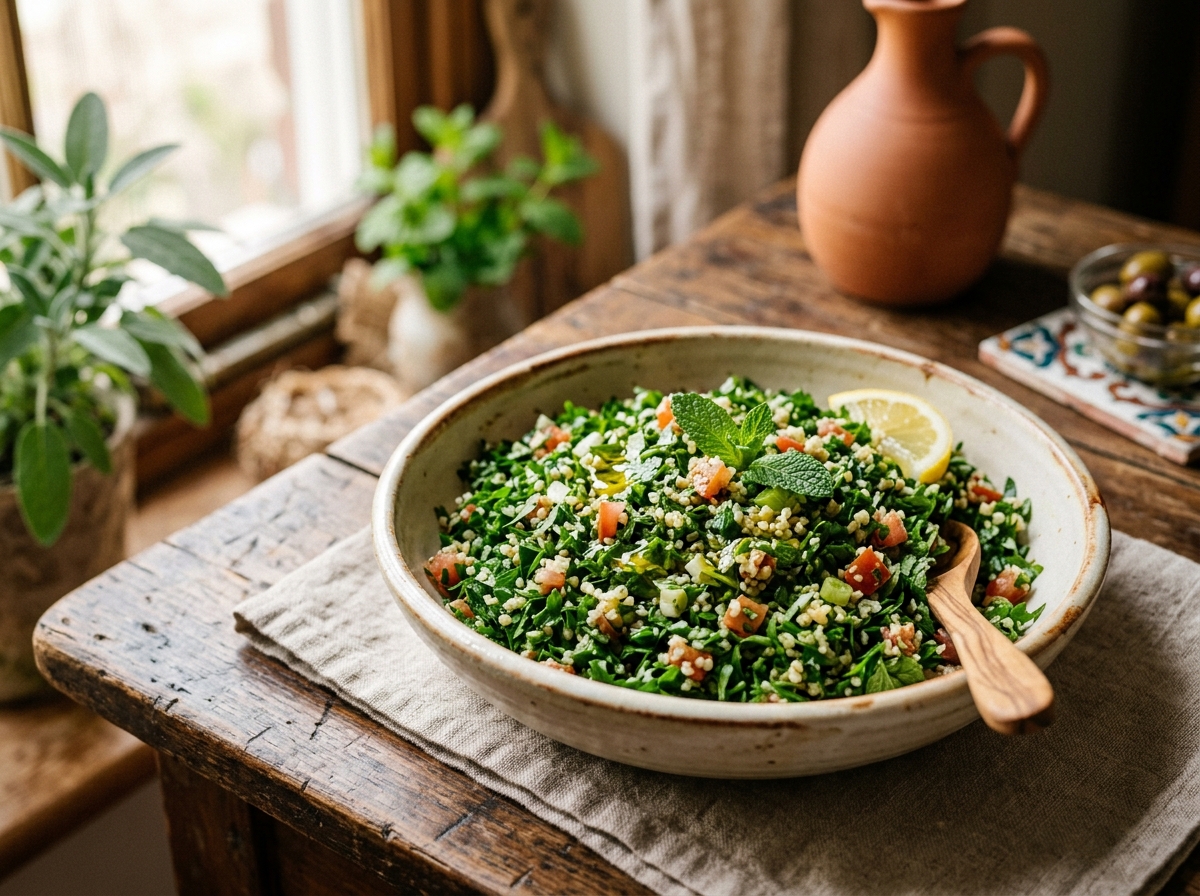
Tabbouleh is a parsley salad with bulgur, not the other way around. The ratio should be roughly three parts chopped parsley to one part soaked bulgur. Fine bulgur (#1) works best—it softens in the lemon juice and tomato juices without cooking. Chop the parsley by hand with a sharp knife; food processors turn it to mush.
The tomatoes matter here. Use the ripest, most flavorful ones you can find, and remove the seeds and excess juice. Too much liquid makes the salad soggy. Dice everything small and uniform—this isn't a rustic chop.
Fattoush celebrates leftovers. This Lebanese salad transforms day-old pita bread into crispy chips that soak up the bright sumac dressing. Toast the pita until golden and crunchy, then break into bite-sized pieces. The vegetables should be crisp and fresh—cucumbers, tomatoes, radishes, and whatever looks good.
Sumac is the secret weapon. This tart, lemony spice adds brightness without extra liquid. Look for the deep red powder in Middle Eastern markets. The dressing is simple: olive oil, lemon juice, sumac, and salt. Toss everything together just before serving so the bread stays crispy.
Lentil salads showcase the legume's versatility. Green lentils hold their shape better than red ones for salads. Cook them in salted water until just tender—they should have a slight bite. Drain well and dress while warm so they absorb the flavors.
A classic preparation combines warm lentils with diced onions, chopped herbs, and a simple lemon vinaigrette. Crumbled feta or chopped hard-boiled eggs make it more substantial. The salad improves as it sits, making it perfect for meal prep.
Hearty Main Dishes
Middle Eastern vegetarian mains prove that plant-based doesn't mean light or unsatisfying. These dishes center vegetables and grains in ways that feel complete and nourishing.
Stuffed vegetables showcase seasonal abundance. Zucchini, eggplant, tomatoes, and peppers all work beautifully. The stuffing typically combines rice, herbs, and sometimes ground meat, but vegetarian versions using bulgur, pine nuts, and plenty of fresh herbs are equally traditional.
For stuffed zucchini, hollow them out carefully with a thin spoon or special coring tool. Save the flesh for the stuffing. The filling should be moist but not wet—too much liquid makes the vegetables soggy during cooking. Layer the stuffed vegetables in a heavy pot with a little broth and olive oil, then simmer gently until tender.
Mujaddara proves that simple can be sublime. This Lebanese dish of lentils, rice, and caramelized onions sounds humble but tastes extraordinary. The secret is taking time with the onions—they should be deeply golden and sweet, which takes at least 30 minutes of patient stirring.
Cook the lentils and rice separately, then combine them with the onions and their flavorful oil. The texture should be creamy but not mushy. Serve with tangy yogurt and a simple salad. It's comfort food that happens to be completely plant-based.
Vegetarian kibbeh challenges expectations. Traditional kibbeh uses ground lamb, but versions made with bulgur, chickpeas, and walnuts are equally satisfying. The key is achieving the right texture—the mixture should hold together when shaped but not be dense or heavy.
Soak fine bulgur until tender, then combine with sautéed onions, chopped herbs, and your protein of choice. Form into footballs and bake until golden, or pan-fry for a crispier exterior. Serve with yogurt sauce and fresh vegetables.
Rice and Grain Dishes
Middle Eastern rice dishes transform a simple grain into something special through technique and seasoning. These aren't mere sides—they're satisfying centerpieces.
Jeweled rice (polo) celebrates abundance. This Persian dish studdles saffron rice with dried fruits, nuts, and herbs. The name comes from the colorful ingredients scattered throughout like precious stones. Barberries add tartness, pistachios provide crunch, and fresh herbs brighten everything.
The rice should be parboiled first, then steamed to achieve separate, fluffy grains. A touch of saffron bloomed in warm water gives the characteristic golden color and floral aroma. Layer the rice with the additions, then steam until heated through.
Freekeh offers ancient nutrition. This roasted green wheat has a nutty, smoky flavor and chewy texture. It's higher in protein and fiber than regular wheat and cooks in about 20 minutes. Treat it like rice—sauté with onions, add broth, and simmer until tender.
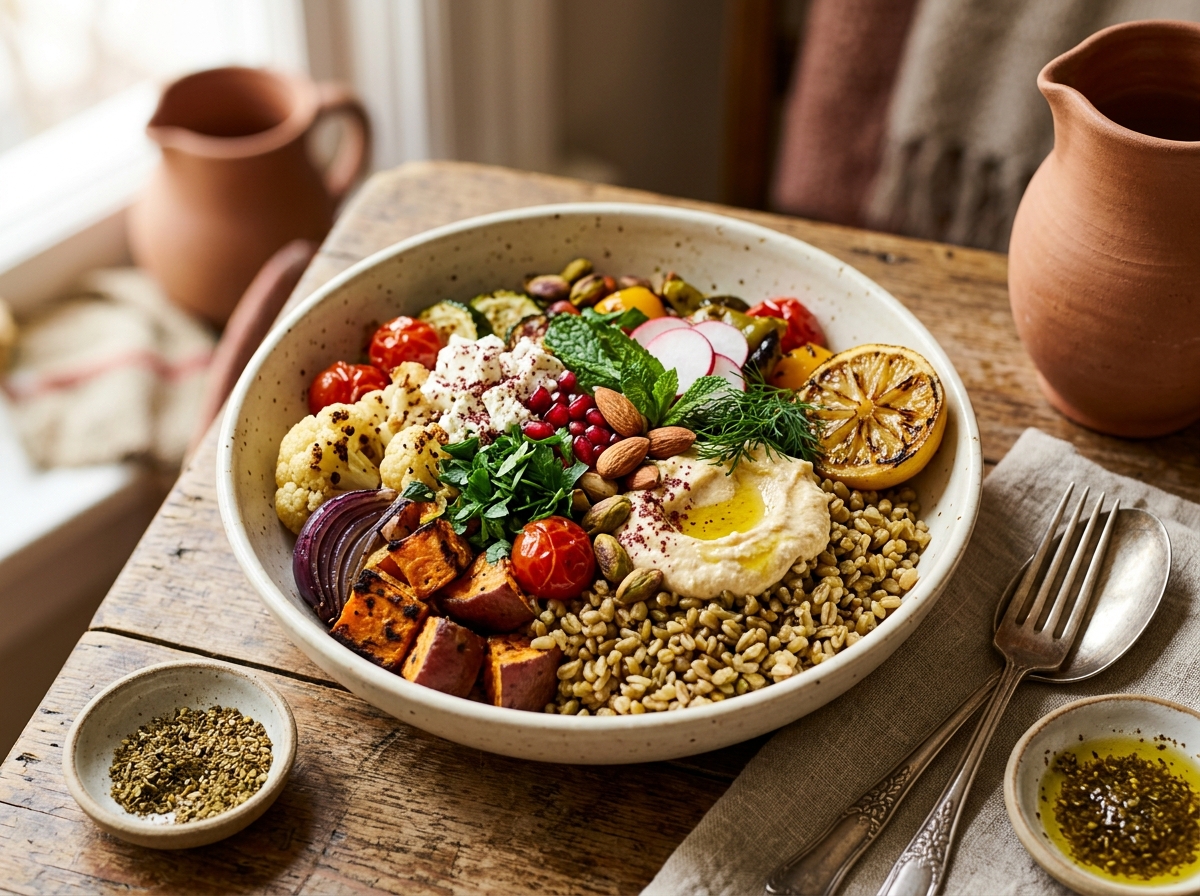
Freekeh pairs beautifully with roasted vegetables, fresh herbs, and a squeeze of lemon. It makes an excellent base for grain bowls or a hearty side dish for grilled vegetables.
Swaps and Adaptations for Modern Kitchens
Traditional Middle Eastern vegetarian recipes adapt beautifully to modern dietary needs and kitchen realities. Here's how to make them work for you.
For gluten-free options: Replace bulgur with quinoa in tabbouleh, though the texture will be different. Use rice instead of bulgur in stuffings. Most mezze dishes are naturally gluten-free, but check labels on tahini and spices for processing warnings.
For vegan versions: Most traditional recipes are already plant-based, but watch for yogurt garnishes and occasional additions like eggs in stuffings. Coconut yogurt works as a substitute, though the flavor is different. Aquafaba (chickpea liquid) can replace eggs as a binder.
For time-saving shortcuts: Pre-soaked or canned legumes work fine for most dishes. Good tahini from a jar beats homemade for everyday cooking. Frozen herbs work in cooked dishes but not fresh preparations like tabbouleh.
For ingredient substitutions: If you can't find sumac, use extra lemon zest for brightness. Pomegranate molasses can be replaced with reduced balsamic vinegar, though the flavor differs. Pine nuts are expensive—chopped almonds or pistachios work in most dishes.
Building a Middle Eastern Vegetarian Meal
The beauty of Middle Eastern dining lies in variety and balance. A proper meal includes contrasts in temperature, texture, and flavor. Start with two or three mezze dishes, add a substantial salad or grain dish, and finish with fresh fruit or a simple sweet.
Temperature variations matter. Serve some dishes warm, others at room temperature, and always include something cool and refreshing. Textures should play against each other—creamy dips with crunchy vegetables, tender grains with toasted nuts.
Don't forget the bread. Fresh pita, lavash, or flatbread isn't just an accompaniment—it's an eating utensil. Warm it briefly before serving, and provide small bowls of good olive oil for dipping.
Conclusion
Middle Eastern vegetarian cuisine offers a masterclass in plant-based eating that doesn't feel like a compromise. These recipes celebrate vegetables, grains, and legumes as the stars they've always been, creating meals that satisfy both hunger and soul. The techniques are approachable, the ingredients increasingly available, and the flavors reward both weeknight dinners and special occasions.
Whether you're exploring these Middle Eastern recipes for health reasons, environmental concerns, or simple curiosity, you'll discover that some of the world's most satisfying food happens to be naturally plant-based. The traditions run deep, the flavors run complex, and the possibilities are endless.
Sources & further reading
- How To Make Middle Eastern Stuffed Vegetables — Tablet Magazine
- Iraqi Dolma (Middle Eastern Stuffed Vegetables) — Hungry Paprikas
- Middle Eastern Stuffed Zucchini — The Mediterranean Dish
- Mahshi Batinjan (Palestinian Stuffed Eggplant) — Palestine In A Dish
Related Topics
Enjoyed this article? Share it with fellow food lovers!
Import a recipe, start cooking
Paste any recipe URL and we'll turn it into a Cook Mode experience with step-by-step visuals, voice narration, and built-in timers.