

Middle Eastern Desserts: Sweet Traditions from the Levant
Middle Eastern desserts blend honey, nuts, and fragrant spices into treats that have delighted palates for centuries. From flaky baklava to delicate ma'amoul cookies, these sweets tell stories of ancient trade routes and family traditions.
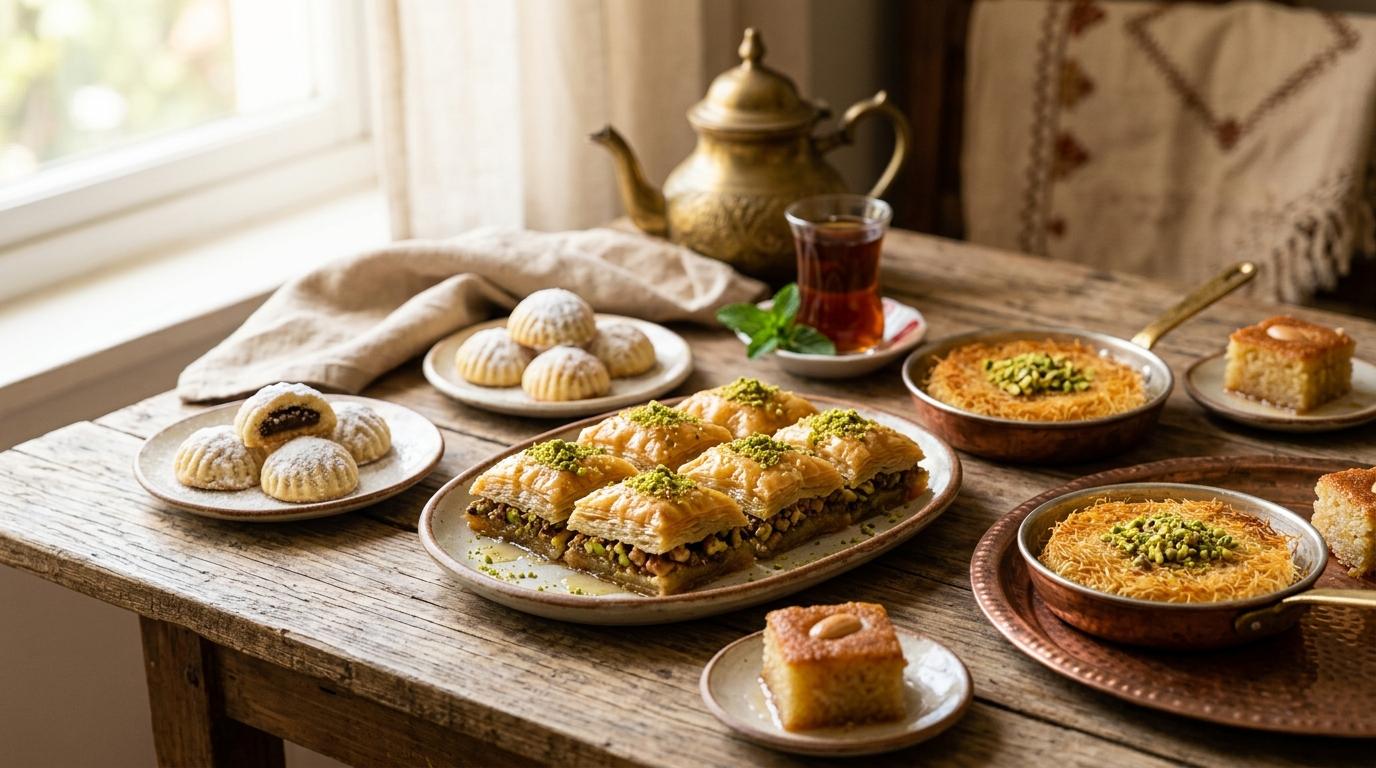
The sweet finale to any great Middle Eastern meal deserves as much attention as the savory dishes that come before it. While middle eastern recipes span continents and centuries, the region's desserts occupy a special place—they're where technique meets poetry, where simple ingredients transform into something transcendent.
Middle Eastern desserts aren't just sweet endings. They're celebrations wrapped in phyllo, love letters written in rose water, and family histories preserved in cookie molds passed down through generations. These treats reflect the region's position at the crossroads of trade routes, where pistachios from Iran met honey from the Levant, where Ottoman pastry techniques blended with Arab hospitality.
The beauty of these desserts lies in their restraint. You won't find chocolate ganache or buttercream here. Instead, you'll discover the subtle perfume of orange blossom water, the satisfying crunch of toasted nuts, and the gentle sweetness of date paste. These are desserts that complement rather than overwhelm, that invite conversation rather than demand silence.
The Foundation: Understanding Key Ingredients
Before diving into specific recipes, let's talk about what makes Middle Eastern desserts distinct. The ingredient list might seem short, but each component carries significant weight.
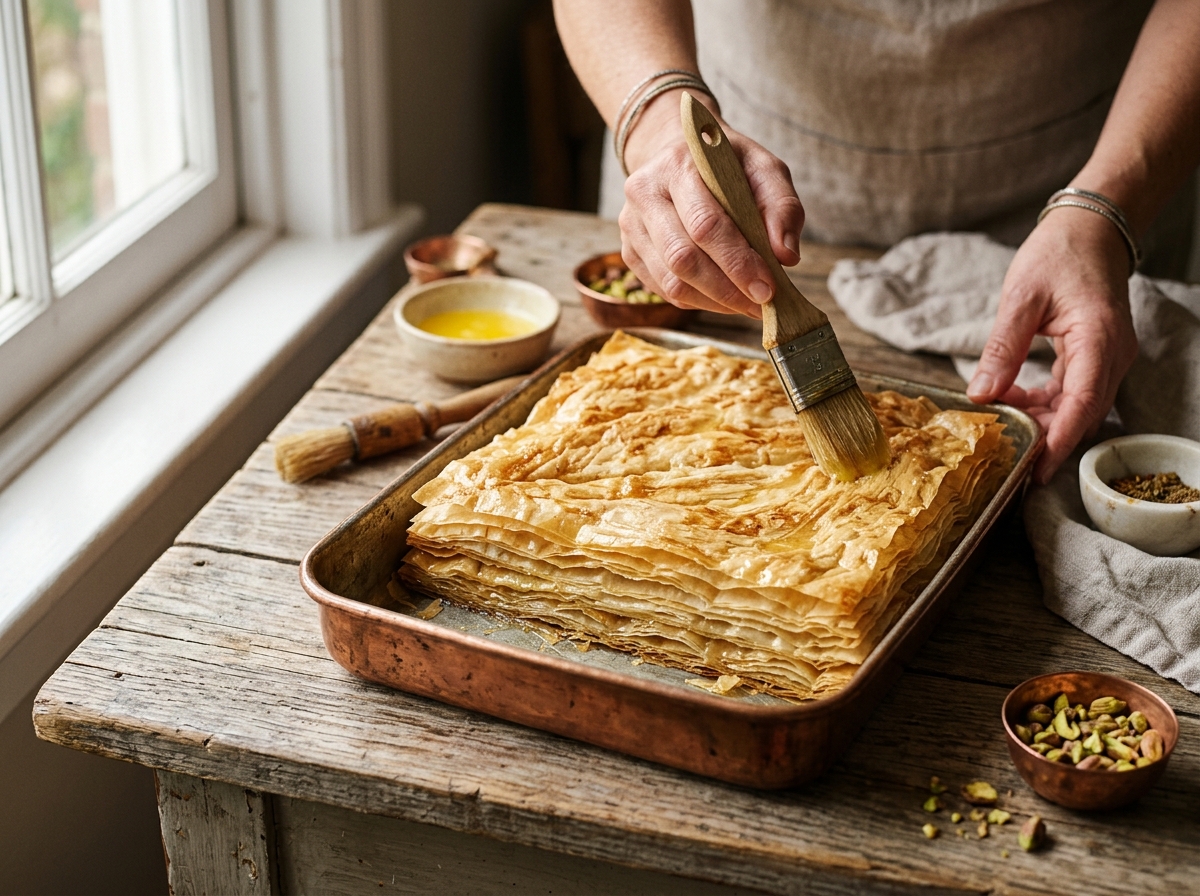
Phyllo pastry forms the backbone of many desserts. This paper-thin dough requires patience—keep it covered with damp towels while working, and brush each sheet generously with melted butter or ghee. The goal is achieving maximum crispness without tearing.
Nuts aren't garnishes here; they're protagonists. Pistachios from Iran and Turkey offer a distinctive flavor that's both sweet and slightly savory. Walnuts provide earthiness, while almonds add delicate richness. Always buy whole nuts and chop them yourself—pre-chopped nuts have already begun losing their oils.
Flower waters might seem exotic, but they're as fundamental as vanilla in Western baking. Rose water and orange blossom water each bring different qualities—rose water is more floral and romantic, orange blossom is citrusy and bright. Start with less than you think you need; these flavors should whisper, not shout.
Natural sweeteners like honey, date syrup, and simple syrups infused with lemon create complexity that granulated sugar simply can't match. The key is balance—sweetness that enhances rather than masks other flavors.
Mastering Baklava: The Crown Jewel
Baklava represents everything beautiful about Middle Eastern pastry work. It's a dessert that requires attention but rewards it generously. The secret isn't just in the technique—it's in understanding the rhythm.
Start with room-temperature phyllo. Cold sheets crack; warm sheets stick together. Brush each layer with clarified butter, paying attention to the edges where the pastry tends to dry out first. Layer your nuts between every third or fourth sheet, depending on how nutty you want the final product.
The cutting happens before baking, not after. Use a sharp knife to score diamond patterns, cutting all the way through to the bottom. This allows the syrup to penetrate every layer and prevents the top sheets from sliding around.
For the syrup, combine equal parts sugar and water with a strip of lemon peel and a cinnamon stick. Simmer until it coats a spoon lightly—you want it thick enough to stay put but thin enough to soak in. Add rose water or orange blossom water after removing from heat.
Here's the crucial part: hot baklava meets cool syrup, or cool baklava meets hot syrup. Never both hot. This temperature contrast is what creates those distinct, crispy layers rather than a soggy mess.
Ma'amoul: Cookies That Tell Stories
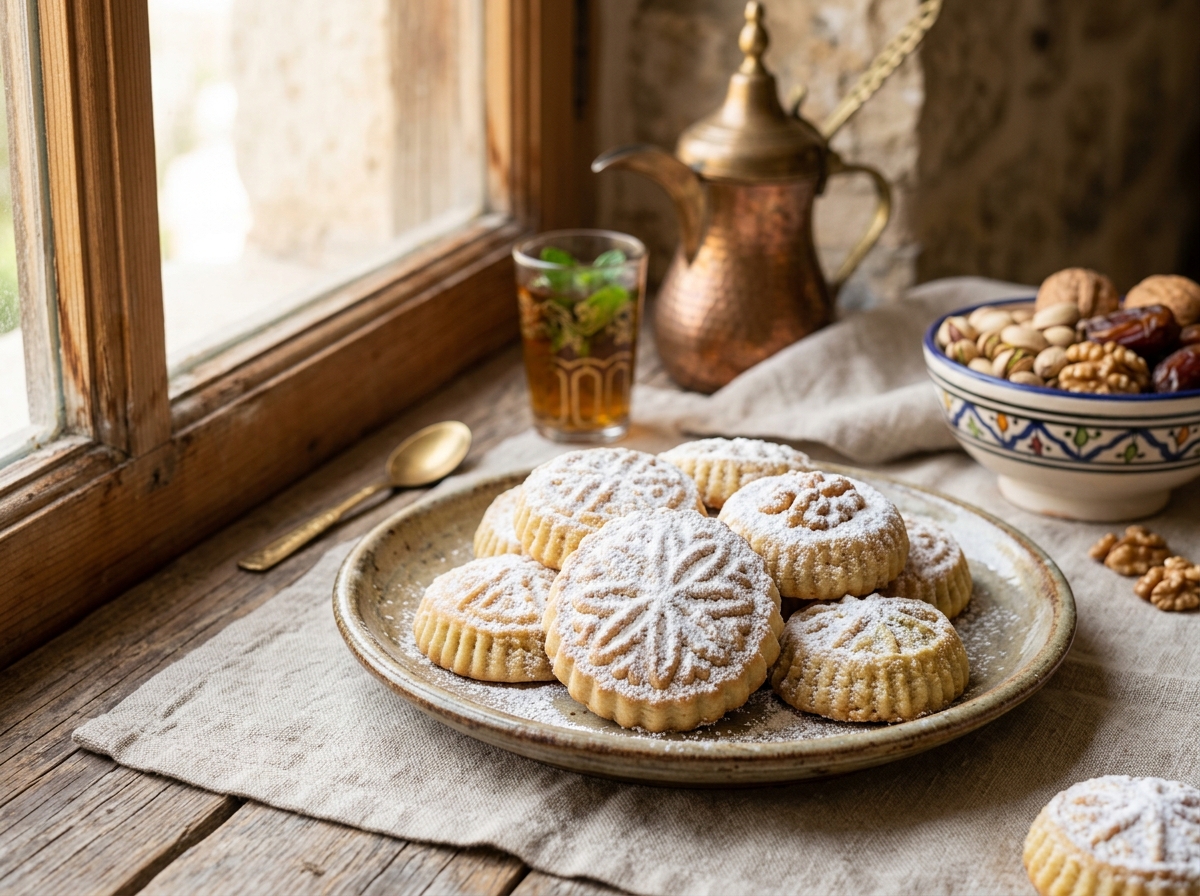
Ma'amoul cookies embody the intersection of technique and tradition. These dome-shaped treats, filled with dates, nuts, or figs, require special wooden molds called ma'amoul molds, though you can approximate the texture with a fork.
The dough is where ma'amoul gets interesting. It's not sweet—the sweetness comes entirely from the filling. The dough combines semolina flour with all-purpose flour, creating a texture that's both tender and substantial. Mahlab, ground from cherry pits, adds a subtle almond-like flavor that's distinctly Middle Eastern.
Working the butter into the flour mixture requires patience. You want the texture of coarse breadcrumbs before adding any liquid. Rose water and a touch of milk bring the dough together, but don't overwork it—tough ma'amoul is sad ma'amoul.
Date filling should be smooth and pliable. Soften pitted dates with a splash of water, then process until paste-like. A pinch of cinnamon and orange zest brightens the natural sweetness. For nut fillings, combine chopped walnuts or pistachios with sugar and a binding splash of rose water.
Knafeh: The Cheese Dessert That Converts Skeptics
Knafeh might sound unusual to Western palates—a dessert made with cheese—but one bite explains its enduring popularity across the Levant. The contrast between crispy shredded phyllo, creamy cheese, and fragrant syrup creates something entirely its own.
Traditional knafeh uses a specific type of cheese called nabulsi, but ricotta mixed with a touch of mozzarella creates a similar texture. The cheese should be mild and creamy, providing richness without competing with the delicate orange blossom syrup.
Kataifi pastry—shredded phyllo that looks like angel hair—forms the base and top. Toss it with melted butter until every strand glistens. Press half into your baking dish, add the cheese mixture, then top with the remaining pastry.
The baking technique requires attention. You want the top golden and crispy while keeping the cheese layer creamy. Cover with foil if the top browns too quickly, and don't be afraid to rotate the pan for even coloring.
Serve knafeh immediately while the contrast between hot crispy pastry and cool syrup is most pronounced. The traditional accompaniment is strong Turkish coffee, which cuts through the richness beautifully.
Muhallabia: Elegance in Simplicity
Sometimes the most impressive desserts are the simplest. Muhallabia, a silky milk pudding scented with rose water, proves that restraint can be more powerful than excess.
The base is just milk, sugar, and cornstarch, but technique makes the difference. Heat the milk gently—scorching ruins the delicate flavor. Dissolve the cornstarch in cold milk before adding to prevent lumps. Stir constantly with a whisk, and don't stop until the mixture coats the back of a spoon.
Rose water goes in after cooking, along with a drop of red food coloring if you want the traditional blush pink. Strain the mixture to ensure absolute smoothness, then portion into individual cups.
The garnish matters here. Chopped pistachios provide color and crunch, while a drizzle of honey adds complexity. Some versions include a layer of crushed cookies at the bottom for textural contrast.
Working with Flower Waters: A Gentle Hand
Rose water and orange blossom water separate amateur attempts from authentic results. These aren't flavor bombs—they're whispers that should enhance, not dominate.
Start with half what any recipe suggests, then taste and adjust. Different brands have varying intensities, and your palate might prefer subtlety over boldness. Add flower waters after cooking when possible; heat can make them bitter.
Quality matters enormously. Look for products from Middle Eastern markets rather than generic grocery store versions. The difference in depth and authenticity is immediately apparent.
Timing and Storage: Keeping Sweets at Their Peak
Middle Eastern desserts often improve with time, but each has its optimal moment. Baklava reaches peak texture 4-6 hours after adding syrup—long enough for absorption but short enough to maintain crispness. Ma'amoul cookies actually improve after a day or two as the flavors meld.
Store phyllo-based desserts covered but not airtight—you want to prevent drying without creating condensation. Muhallabia needs refrigeration and benefits from plastic wrap pressed directly onto the surface to prevent skin formation.
Many of these desserts freeze beautifully. Wrap ma'amoul individually and freeze for up to three months. Unbaked baklava freezes even better than baked—assemble completely, freeze solid, then wrap. Bake straight from frozen, adding 10-15 minutes to the cooking time.
The Social Side of Sweet
Understanding Middle Eastern desserts means understanding their social context. These aren't individual indulgences grabbed on the go—they're communal experiences meant for sharing.
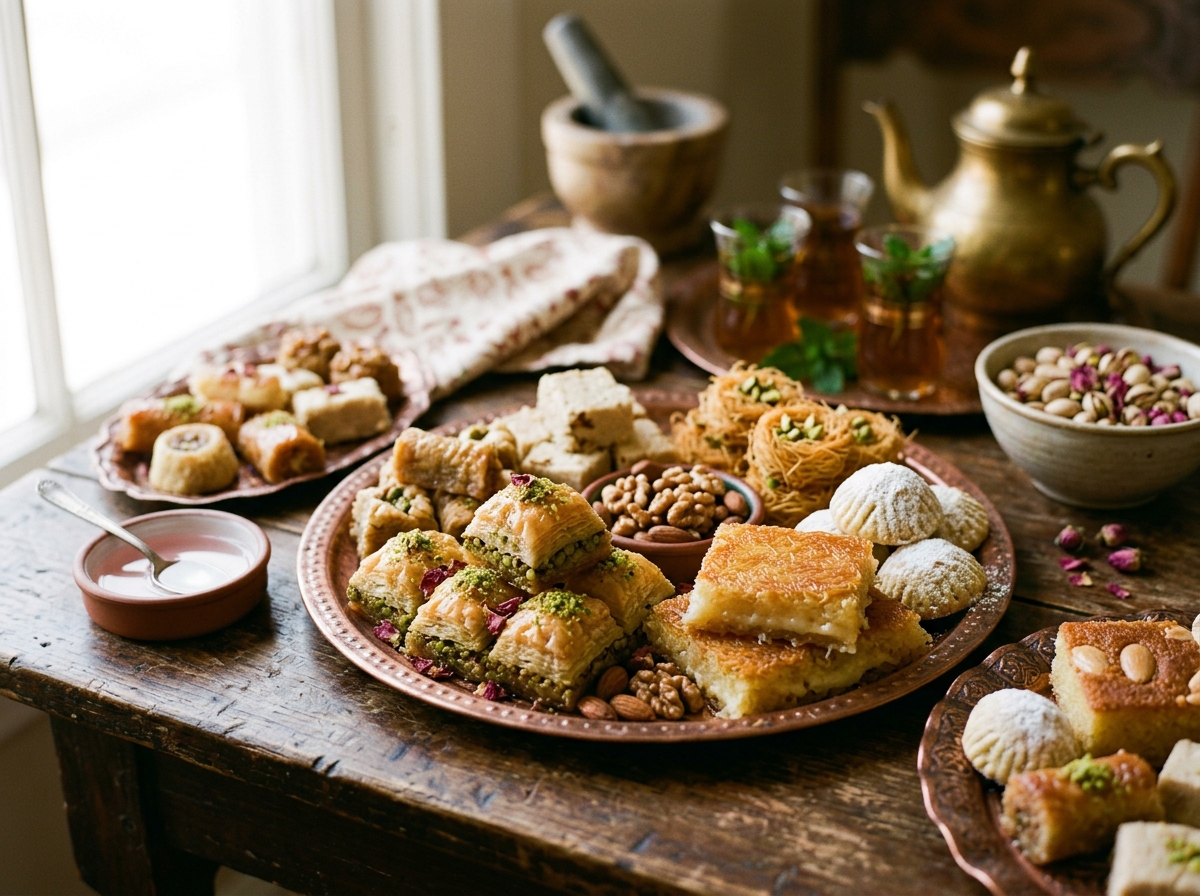
Traditional presentation involves small portions of multiple varieties. A proper Middle Eastern dessert spread might include three or four different sweets, each offering different textures and flavors. The goal is variety and conversation, not overwhelming sweetness.
Tea culture plays a huge role here. Strong black tea, often flavored with cardamom or mint, provides the perfect counterpoint to honey-sweetened pastries. The ritual of preparing and serving tea is as important as the desserts themselves.
Modern Adaptations and Creative Touches
While respecting tradition, don't be afraid to make these desserts your own. Substitute walnuts for pistachios in baklava if that's what you have. Add cardamom to your ma'amoul dough for warmth. Experiment with different nut combinations.
Some modern touches that honor the originals: individual baklava cups made in muffin tins for easy serving, ma'amoul ice cream sandwiches that play with temperature contrast, or muhallabia panna cotta that adds gelatin for a firmer set.
The key is understanding why the original works before making changes. These desserts have survived centuries because they achieve perfect balance—mess with that balance thoughtfully, and you'll create something new while honoring something old.
Conclusion: Sweet Connections
Middle Eastern desserts offer more than satisfaction—they offer connection. Connection to history, to family traditions, to a region where hospitality means ending every meal with something sweet and beautiful.
These recipes require patience, but they reward it with flavors that transport you. They ask you to slow down, to pay attention to technique, to understand that the best desserts aren't always the most complicated ones.
Whether you're exploring middle eastern recipes for the first time or deepening your knowledge of a beloved cuisine, these desserts represent the perfect starting point. They're approachable enough for beginners but sophisticated enough to impress guests who think they've tasted everything.
Start with baklava if you want drama, ma'amoul if you prefer subtlety, or muhallabia if you believe in the power of simplicity. Whatever you choose, you're not just making dessert—you're participating in a tradition that spans centuries and connects kitchens across the world.
Sources & further reading
- Ma'amoul — Wikipedia
- The History of Ma'amoul, a Middle Eastern Cookie That Is a 'Love Letter' to Our Ancestors — Smithsonian Magazine
- Artisanal knowledge and cultural practices of Pakhlava/Baklava - UNESCO Intangible Cultural Heritage — UNESCO
- Capital of Baklava — AramcoWorld
Related Topics
Enjoyed this article? Share it with fellow food lovers!
Import a recipe, start cooking
Paste any recipe URL and we'll turn it into a Cook Mode experience with step-by-step visuals, voice narration, and built-in timers.