

Indian Festival Recipes: Traditional Holiday Dishes That Celebrate
Indian festivals come alive through food — from Diwali's golden ladoos to Holi's colorful treats. These traditional recipes connect us to centuries of celebration and bring the authentic flavors of India's most cherished holidays to your kitchen.
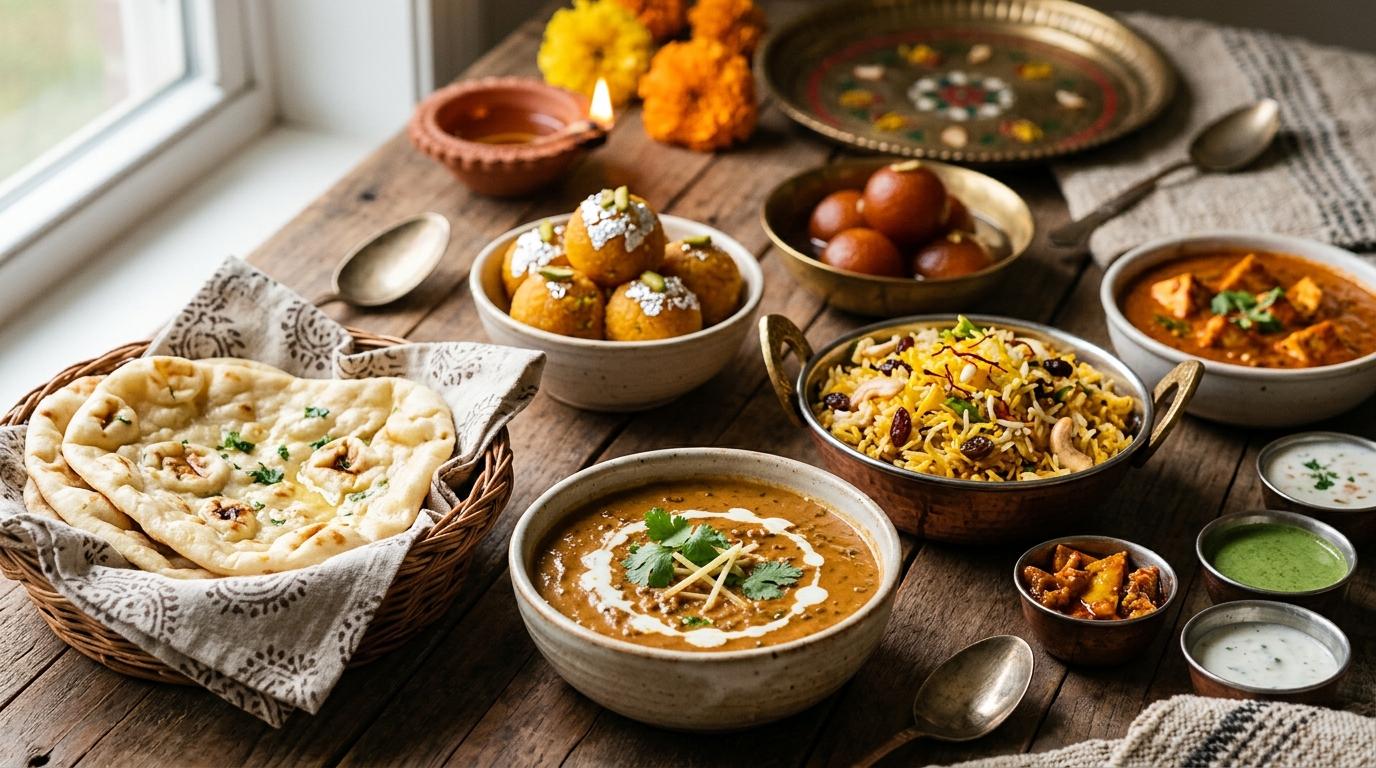
Indian festivals pulse with color, sound, and most memorably, incredible food. Each celebration brings its own culinary traditions — recipes passed down through generations that turn simple ingredients into expressions of joy, devotion, and community. Whether you're exploring Indian recipes for the first time or deepening your understanding of festival cooking, these dishes connect us to the heart of India's rich cultural tapestry.
Festival food in India isn't just about feeding people; it's about creating sacred moments, honoring deities, and strengthening bonds between families and communities. The kitchen becomes a temple, the cook becomes a devotee, and every dish carries meaning beyond its flavors.
The Sacred Science of Festival Cooking
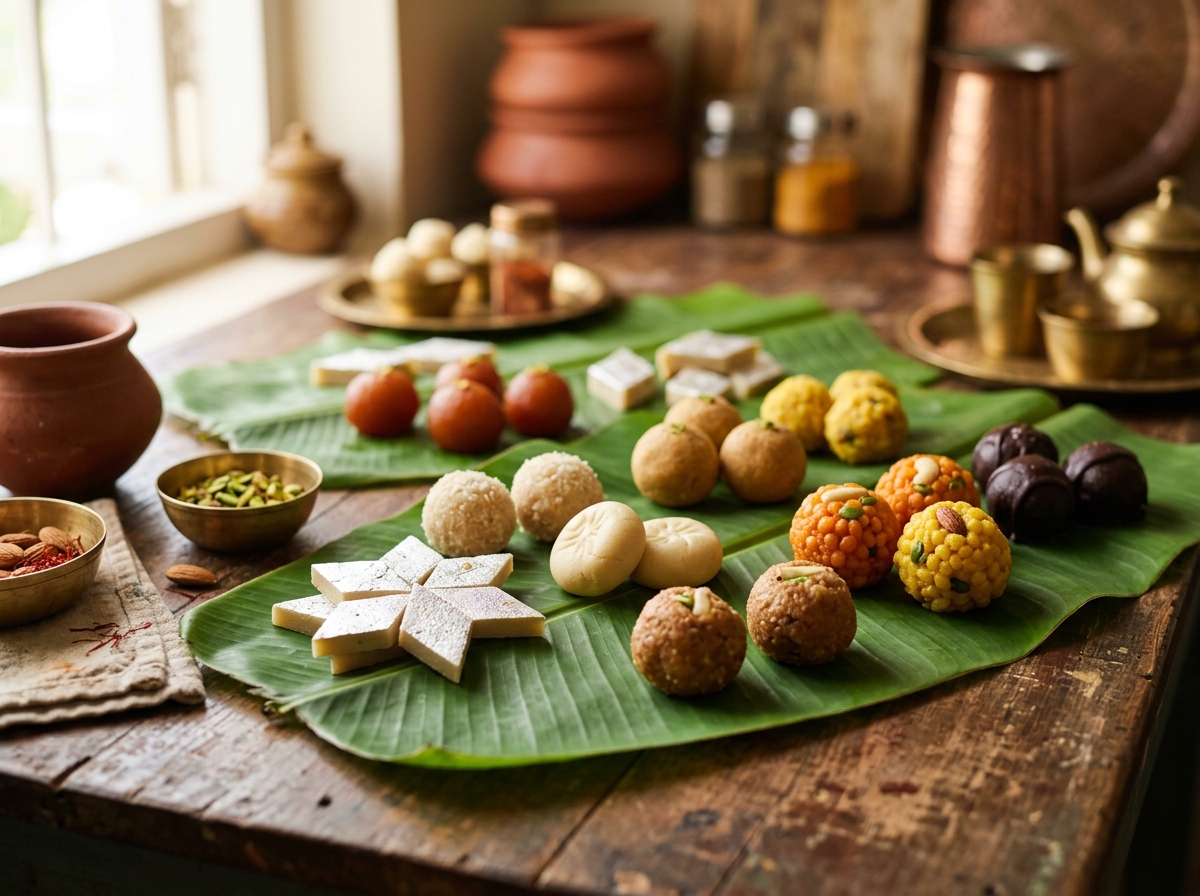
Indian festival recipes follow ancient principles that balance taste, nutrition, and spiritual significance. Many dishes use ingredients considered auspicious — ghee for purity, jaggery for sweetness in life, nuts for prosperity. The timing matters too. Certain sweets are prepared only during specific festivals, making them precious and anticipated all year long.
The techniques often involve slow, meditative processes. Stirring halwa for forty-five minutes isn't just cooking — it's a form of prayer. The repetitive motions, the gradual transformation of ingredients, the patience required — all contribute to the dish's deeper meaning.
Diwali: The Festival of Lights and Sweets
Diwali transforms every Indian kitchen into a sweet-making factory. Families prepare dozens of varieties, each with its own significance and technique.
Besan Ladoo (Chickpea Flour Balls)
These golden spheres are Diwali's crown jewel. The key lies in roasting the besan slowly until it releases a nutty aroma and loses its raw taste. Watch for the color change from pale yellow to deep gold — that's your signal.
Mix the roasted flour with powdered sugar while it's still warm. Add melted ghee gradually until the mixture holds together when pressed. Roll into firm balls while the mixture is pliable. Each ladoo should feel dense and rich, not crumbly.
Kaju Katli (Cashew Diamonds)
This silver-leafed delicacy requires precision. Grind cashews to a fine powder — any grittiness will show in the final texture. Make a sugar syrup that reaches soft-ball stage, then work quickly to combine it with the cashew powder.
The mixture transforms from loose to cohesive to perfectly moldable within minutes. Roll between parchment papers, cut into diamond shapes, and apply the delicate silver leaf. Each piece should melt on the tongue like sweet snow.
Holi: Colors and Cooling Treats
Holi's exuberant color throwing demands foods that cool and refresh. The festival falls during spring's heat, so traditional recipes focus on ingredients that balance the body.
Gujiya (Sweet Crescents)
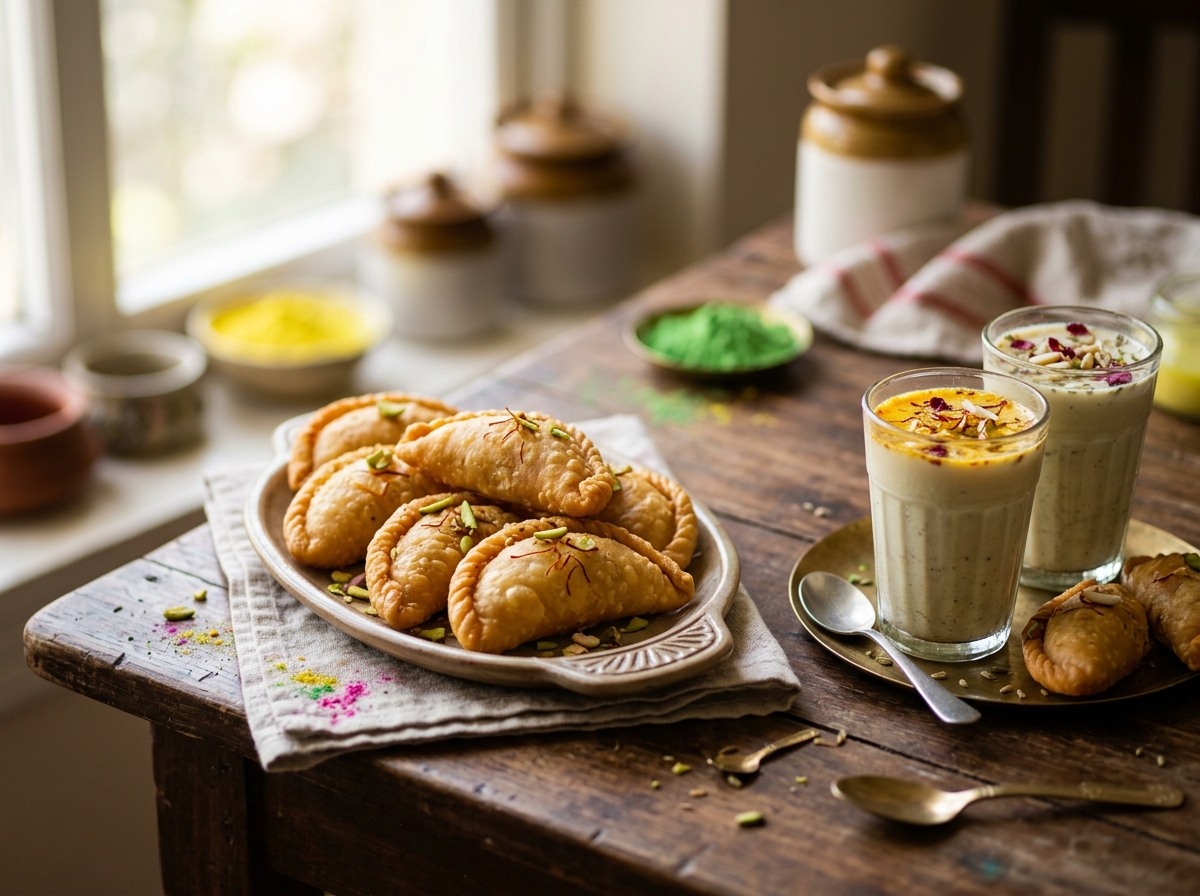
These crescent-shaped pastries hide a treasure of khoya, nuts, and coconut inside a crispy shell. The dough needs enough oil to stay tender but not so much that it becomes greasy. Rest it for thirty minutes to develop the right texture.
The filling should be dry enough to hold its shape but moist enough to taste luxurious. Fry the sealed crescents in medium-hot oil until they turn pale gold. They'll continue cooking from residual heat, so don't overdo it.
Thandai (Spiced Milk Drink)
This cooling drink combines almonds, fennel, cardamom, and rose petals in chilled milk. Soak the nuts and spices overnight, then grind to a smooth paste. Strain the mixture to remove any grittiness — the drink should flow like silk.
Eid: Celebration After Sacrifice
Eid ul-Fitr marks the end of Ramadan's fasting period, so the foods tend to be rich and celebratory. The long-awaited sweetness after a month of dawn-to-sunset fasting makes every bite precious.
Sheer Khurma (Vermicelli Pudding)
This creamy dessert combines thin vermicelli with milk, dates, and nuts. Toast the vermicelli until golden before adding milk — this prevents mushiness and adds depth. The dates dissolve into the milk, providing natural sweetness and body.
Simmer patiently until the vermicelli becomes tender and the milk reduces to a pudding consistency. Garnish with pistachios and almonds for color and crunch.
Biryani for the Feast
Eid biryani isn't just rice and meat — it's an architectural achievement. Layer par-cooked basmati rice with spiced meat, then seal the pot with dough to trap steam. The slow cooking method, called dum, creates distinct layers that merge into harmony.
Saffron soaked in warm milk creates golden streaks through white rice. Caramelized onions add sweetness and color. Each grain of rice should be separate, each piece of meat fork-tender.
Regional Festival Specialties
India's vast geography means different regions celebrate similar festivals with unique foods.
Bengali Durga Puja: Fish and Sweets
West Bengal's biggest festival demands fish curries and milk-based sweets. Hilsa fish curry, with its distinctively sharp bones and rich flavor, appears on every feast table. Rasgulla, those spongy cheese balls in syrup, originated here and remain the festival's signature sweet.
South Indian Onam: The Vegetarian Feast
Kerala's harvest festival centers around the Onam sadya — a vegetarian feast served on banana leaves. Each dish has its place and purpose, from the tangy sambar to the sweet payasam. The meal follows a specific order, building flavors from mild to intense.
Gujarati Navratri: Dancing and Fasting Food
This nine-night festival combines dancing with fasting, so the food needs to provide energy while following dietary restrictions. Sabudana khichdi made from tapioca pearls, kuttu flour rotis from buckwheat, and sendha namak (rock salt) replace regular ingredients.
Key Ingredients for Festival Success
Festival cooking relies on premium ingredients that might gather dust the rest of the year. Ghee forms the foundation — use the best you can find or make your own. The difference in flavor is unmistakable.
Nuts should be fresh and flavorful. Taste your almonds and pistachios before using them. Stale nuts will sabotage even perfect technique. Store them in the freezer to maintain freshness.
Whole spices outperform ground versions for festival cooking. Toast cardamom pods, cinnamon sticks, and cloves before grinding. The aromatics released during toasting create the complex flavor layers that make festival food special.
Silver leaf (varak) adds visual drama to sweets. Handle it gently with a soft brush — it tears at the slightest provocation but transforms simple sweets into jewel-like creations.
Timing Your Festival Preparation
Festival cooking requires strategy. Start with items that improve with time — many Indian sweets actually taste better after a day or two as flavors meld and mature.
Make dry sweets like ladoos and barfi three days ahead. Their textures firm up and flavors concentrate. Prepare syrups and basic components like khoya in advance. Fresh items like fried foods should happen on the day of serving.
Keep detailed notes about what worked and what didn't. Festival recipes often come with family variations that aren't written down anywhere. Your notes become the bridge between generations.
The Modern Festival Kitchen
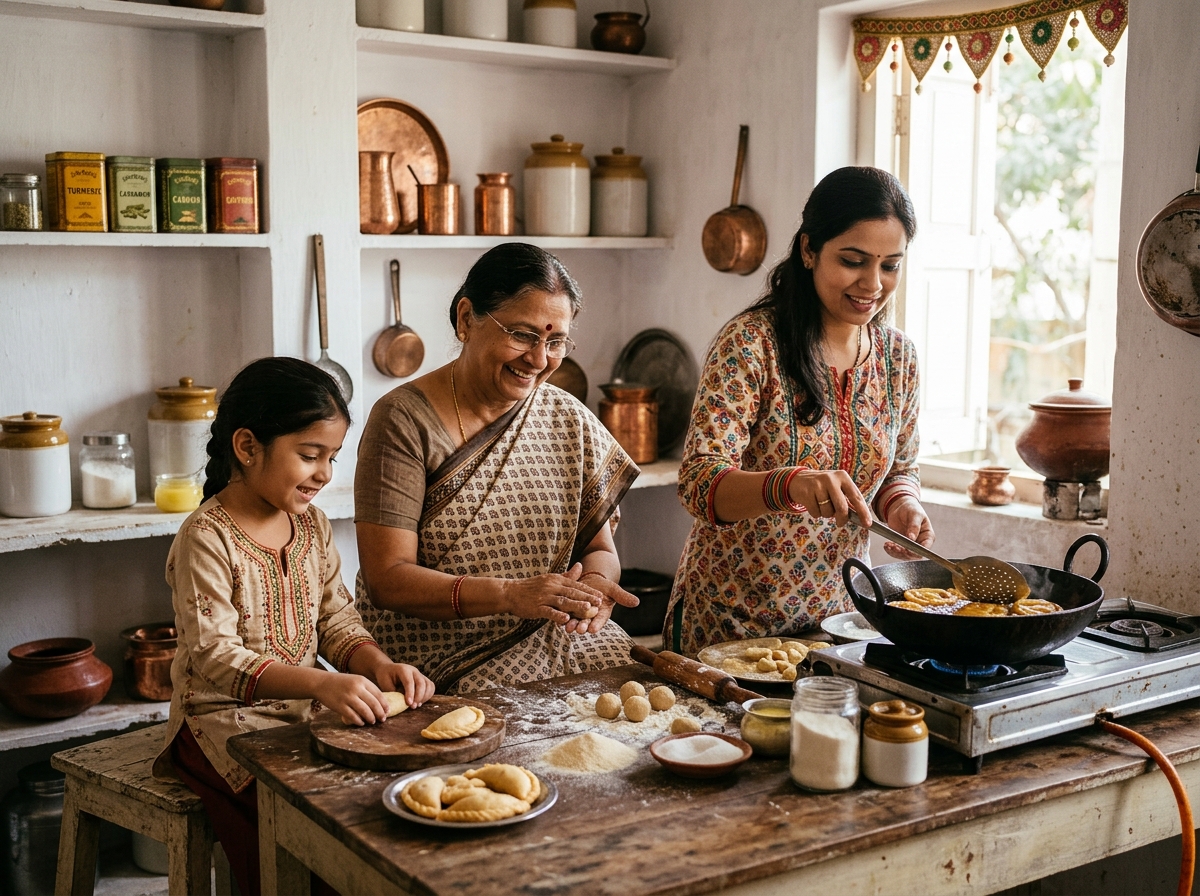
Traditional techniques don't require traditional tools exclusively. A food processor makes quick work of grinding nuts for sweets. An instant-read thermometer takes the guesswork out of sugar syrups. A heavy-bottomed pan prevents the scorching that ruins hours of work.
But some things can't be rushed or modernized. The slow stirring of halwa, the patient waiting for milk to reduce, the careful temperature control for perfect texture — these require presence and attention that no gadget can provide.
Sharing the Sacred
Festival foods aren't meant to be hoarded. The tradition of sharing sweets with neighbors, friends, and even strangers reflects the communal spirit of Indian celebrations. Pack extras in beautiful boxes. The act of giving multiplies the joy.
When friends ask for recipes, share them generously. Food traditions survive through sharing, not secrecy. Each cook who learns these recipes becomes a keeper of culture.
Indian festival recipes connect us to something larger than individual appetite. They link us to ancestors who stirred the same pots, celebrated the same seasons, and found meaning in the transformation of simple ingredients into something sacred. Whether you're diving deeper into Indian recipes or preparing for your first festival celebration, these dishes remind us that the most important ingredient is always the intention we bring to the kitchen.
Sources & further reading
- All About Indian Laddus: The Sweet Way to Celebrate Diwali — Food52
- 14 Traditional Foods And Drinks You Must Try For Holi, The Festival Of Colors — Tasting Table
- 12 Indian Recipes for Ringing in Holi, the Hindu Festival of Colors — Food Network
- History of Diwali and Celebration Through Food — Sur La Table (Lid & Ladle)
Related Topics
Enjoyed this article? Share it with fellow food lovers!
Import a recipe, start cooking
Paste any recipe URL and we'll turn it into a Cook Mode experience with step-by-step visuals, voice narration, and built-in timers.