

Indian Dessert Recipes: Sweet Treats from Gulab Jamun to Kulfi
Indian desserts offer a universe of flavors beyond the familiar—from milk-based sweets like kheer and rasmalai to syrup-soaked treats like jalebi. These recipes bring authentic sweetness to your table.
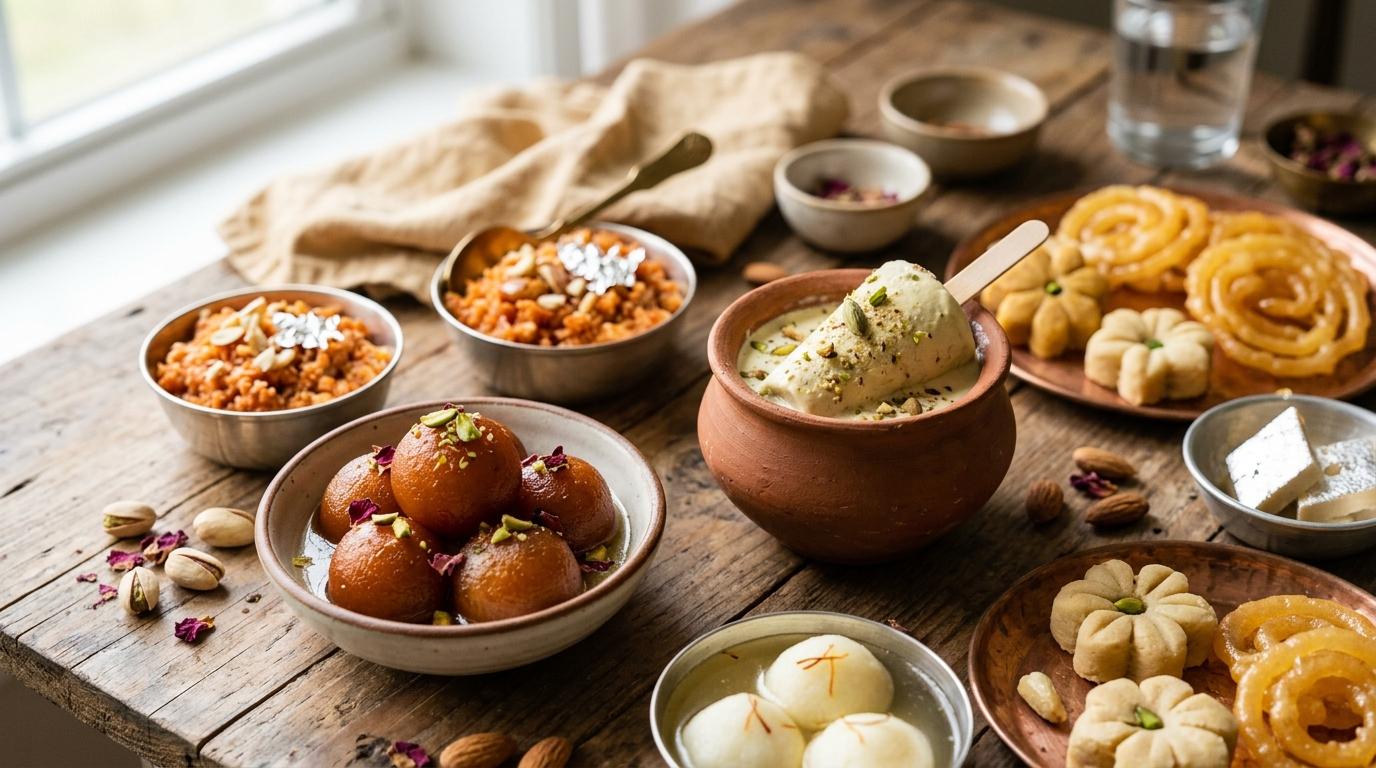
Indian desserts deserve more than the single gulab jamun option on most restaurant menus. The subcontinent's sweet traditions span centuries and regions, creating a vast collection of milk-based puddings, syrup-soaked pastries, and celebration treats that complete any exploration of Indian recipes. These aren't just after-dinner thoughts—they're integral to festivals, celebrations, and the daily rhythm of Indian kitchens.
What sets Indian sweets apart is their reliance on a few key ingredients transformed through technique. Milk gets reduced to creamy kheer or pressed into fresh paneer for rasmalai. Sugar transforms into delicate syrups that perfume everything from jalebi spirals to gulab jamun spheres. Cardamom, saffron, and rose water add aromatic depth that makes these desserts distinctly Indian.
The beauty lies in their approachability. While some sweets require specialized equipment or lengthy preparations, many Indian desserts come together with pantry staples and basic cooking skills. You're building flavor through patience—reducing milk, making syrups, allowing spices to bloom—rather than complex techniques.
Essential Ingredients for Indian Desserts
Indian sweet-making revolves around a core pantry that creates endless variations. Full-fat milk forms the foundation—you'll reduce it for kheer, curdle it for paneer, and freeze it for kulfi. The fat content matters here; skim milk won't give you the richness these desserts depend on.
Sugar appears in multiple forms. Granulated white sugar makes basic syrups, but jaggery (gur) adds molasses-like depth to traditional preparations. Palm sugar brings subtle caramel notes, while superfine sugar dissolves more readily in milk-based sweets.
Cardamom pods are non-negotiable. Green cardamom provides floral warmth, while the larger black cardamom adds smoky depth to richer desserts. Always buy whole pods and grind fresh—pre-ground cardamom loses its essential oils quickly.
Saffron threads, though expensive, transform ordinary milk into golden, aromatic luxury. A small pinch soaked in warm milk releases both color and flavor that no substitute can match. Rose water and kewra (screw pine) water add floral notes, but use sparingly—a heavy hand turns desserts perfumy rather than fragrant.
Nuts play dual roles as texture and garnish. Blanched almonds and pistachios get sliced thin for garnish or ground into pastes for richness. Cashews blend into smooth creams that thicken puddings naturally.
Milk-Based Indian Desserts
Kheer (Rice Pudding)
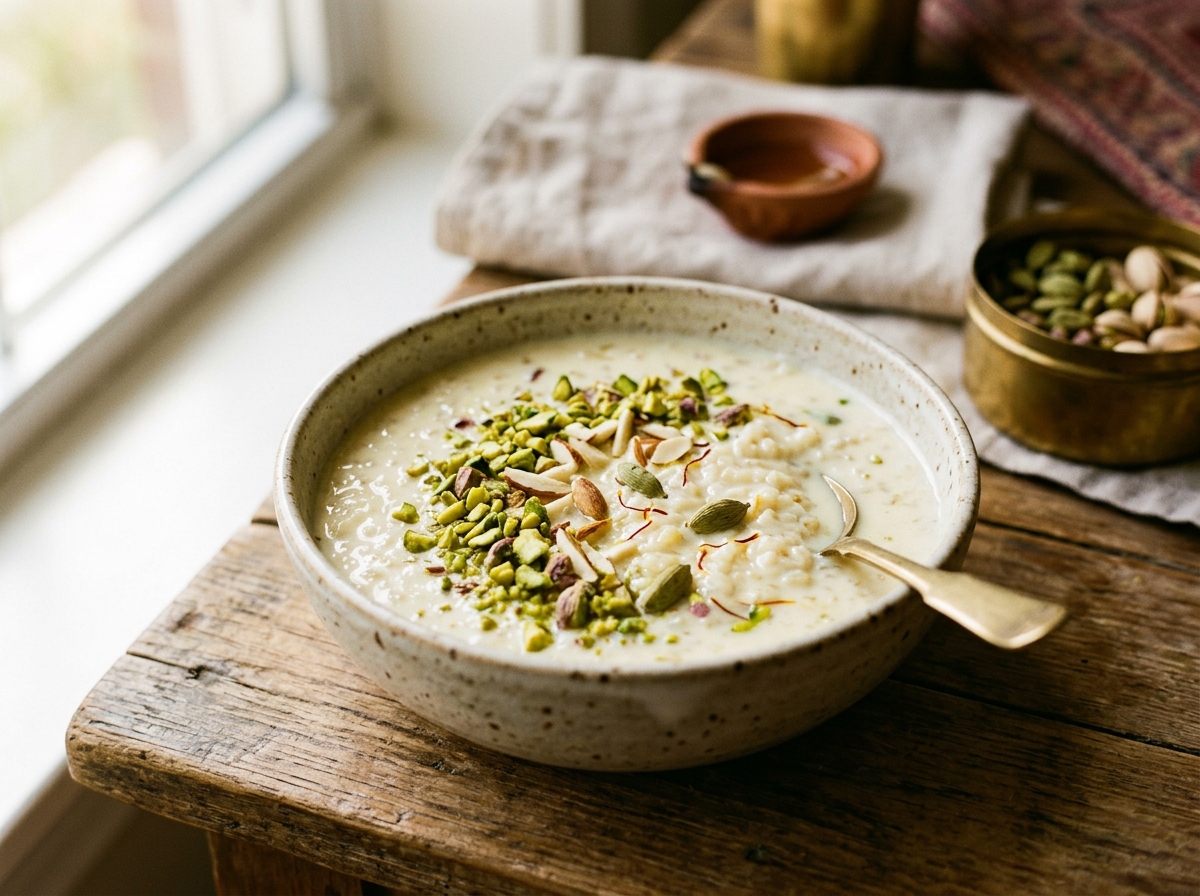
Kheer represents Indian comfort food at its finest. This rice pudding cooks low and slow, transforming simple ingredients into silk. The key lies in patience—rushing the milk reduction produces grainy results instead of the desired creaminess.
Start with basmati rice, rinsed until the water runs clear. A tablespoon of rice per cup of milk provides the right balance. Bring whole milk to a gentle simmer, add the rice, and settle in for a meditative hour of stirring. The rice gradually breaks down, releasing starch that thickens the milk naturally.
Sugar goes in during the final fifteen minutes—early addition can cause the milk to curdle. Crushed cardamom pods infuse their warmth throughout the cooking process. Finish with a pinch of saffron soaked in warm milk, plus sliced almonds and pistachios for crunch.
Variations abound across regions. Bengali payesh uses aromatic gobindobhog rice. South Indian payasam might include coconut milk or jaggery instead of sugar. The technique remains constant—slow cooking, frequent stirring, patience with the process.
Rasmalai
Rasmalai challenges home cooks with its two-part construction: delicate paneer dumplings floating in cardamom-scented milk. The dumplings require fresh paneer, made by curdling milk with lemon juice or vinegar, then kneading until smooth and pliable.
The kneading step separates success from failure. Properly kneaded paneer feels smooth and slightly elastic—underkneaded dough produces crumbly dumplings that fall apart during cooking. Shape into small discs and poach gently in sugar syrup until they double in size.
The milk base follows kheer principles but requires less reduction. Whole milk simmers with sugar, cardamom, and saffron until slightly thickened. The cooked paneer dumplings get squeezed gently to remove excess syrup, then settle into this aromatic milk bath.
Serve rasmalai chilled, allowing the flavors to meld overnight. The dumplings absorb the milk's sweetness while maintaining their tender texture—a perfect balance of creamy and substantial.
Kulfi
India's answer to ice cream, kulfi achieves its dense texture through milk reduction rather than churning. This creates an intensely flavored frozen dessert that melts more slowly than conventional ice cream, perfect for hot climates.
Traditional kulfi starts with full-fat milk reduced by half through patient simmering. Stir frequently to prevent scorching—the bottom of the pan should never develop brown bits. Sugar dissolves during this reduction, along with cardamom and other aromatics.
Modern shortcuts include condensed milk or evaporated milk, which provide richness without the lengthy reduction process. The mixture still needs to cool completely before freezing. Traditional kulfi molds are cone-shaped, but any small containers work—ice pop molds, small cups, even shot glasses.
Pistachio kulfi remains the most popular variety, but mango, cardamom-rose, and malai (plain) versions each have devoted followings. The key lies in balancing sweetness with the concentrated milk flavors—kulfi should taste rich, not cloying.
Syrup-Based Indian Sweets
Gulab Jamun
These golden spheres swimming in rose-scented syrup represent Indian sweet-making at its most indulgent. The dough combines milk powder, flour, and ghee into a pliable mixture that fries into tender dumplings, then absorbs flavored syrup.
Milk powder quality matters significantly. Full-fat varieties produce richer results than skim alternatives. The dough should feel soft and slightly sticky—too dry and the gulab jamuns crack during frying; too wet and they fall apart.
Oil temperature control determines success. Too hot and the outside burns before the inside cooks; too cool and they absorb excess oil. Maintain steady medium heat and fry in small batches, turning frequently for even browning.
The sugar syrup needs one-string consistency—when a drop falls from a spoon, it forms a single thread rather than breaking immediately. Rose water and cardamom perfume the syrup, while a few saffron threads add color and fragrance.
Hot gulab jamuns go directly into warm syrup, where they soak up sweetness and flavor. They're ready when they've expanded slightly and feel spongy to gentle pressure. Serve warm or at room temperature—refrigeration firms them unpleasantly.
Jalebi
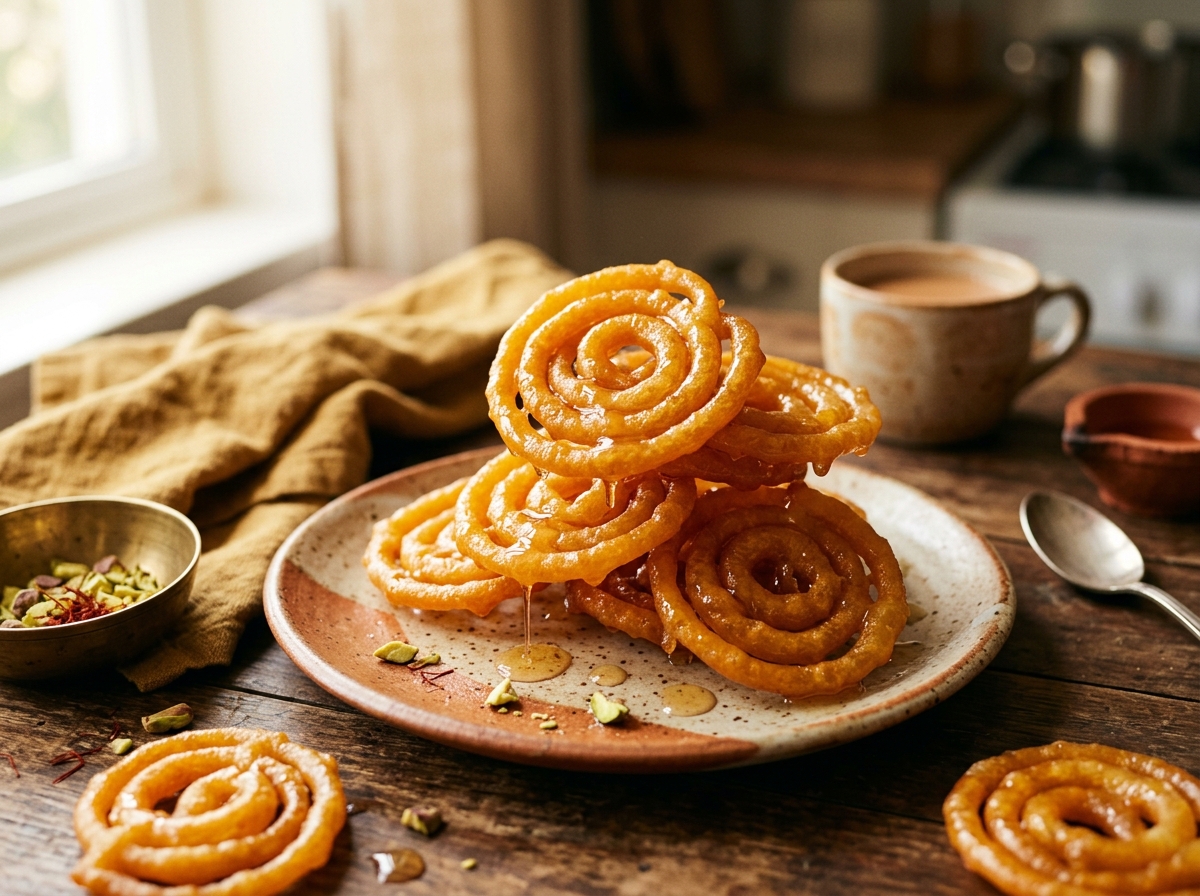
Jalebi's pretzel-like spirals require a fermented batter that creates the characteristic tangy-sweet flavor profile. The batter combines flour, yogurt, and a pinch of baking soda, then rests overnight to develop complex flavors through natural fermentation.
Consistency is crucial—the batter should flow smoothly through a piping bag or squeeze bottle but hold its spiral shape in hot oil. Too thick and the jalebis become dense; too thin and they won't hold together during frying.
Piping jalebi takes practice. Start from the center and work outward in overlapping circles, creating the traditional pretzel shape. Work quickly—the batter sets rapidly in hot oil, so each spiral needs to connect properly before moving to the next.
The sugar syrup should be slightly thicker than for gulab jamun—two-string consistency ensures proper coating without making the jalebis soggy. Saffron provides the characteristic orange color, while a touch of lemon juice prevents crystallization.
Fresh jalebi eaten warm offers the ideal experience—crispy exterior giving way to syrup-soaked interior, with the slight tang from fermentation balancing the sweetness perfectly.
Regional Variations and Festival Specialties
Indian dessert traditions vary dramatically across regions, each area contributing signature sweets tied to local ingredients and celebrations. Bengali sweets like sandesh showcase the region's dairy expertise, transforming fresh paneer into delicate confections flavored with rose or pistachio.
South Indian desserts often incorporate coconut and jaggery. Payasam varieties replace milk with coconut milk, while mysore pak combines gram flour, ghee, and sugar into rich, fudge-like squares. Tamil Nadu's adhirasam features rice flour and jaggery shaped into rings and deep-fried until golden.
Western India contributes modak, Maharashtra's steamed dumplings filled with coconut and jaggery, essential for Ganesh Chaturthi celebrations. Gujarat's shrikhand transforms hung yogurt into a creamy dessert perfumed with cardamom and saffron.
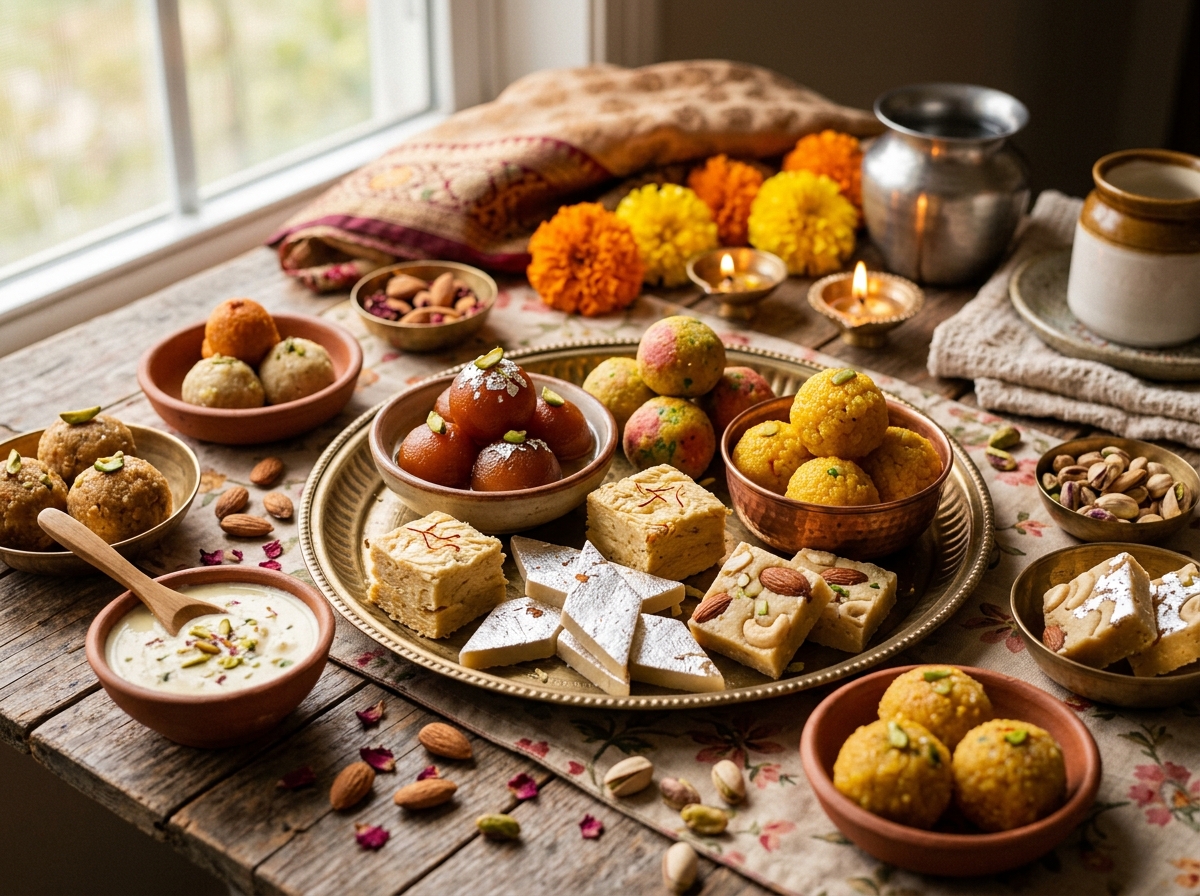
Festival sweets carry deep cultural significance. Diwali brings boxes of mixed sweets—barfi, laddu, and kaju katli arranged in colorful assortments. Holi celebrates with gujiya, pastry pockets filled with khoya and nuts. Each festival has its traditional sweets, prepared weeks in advance and shared with neighbors and friends.
Understanding these regional differences helps home cooks appreciate the diversity within Indian sweet-making traditions. A Bengali celebrating Durga Puja might prepare different sweets than a Maharashtrian observing Gudi Padwa, yet both draw from the same fundamental techniques of milk reduction, syrup-making, and spice balancing.
Tips for Success with Indian Desserts
Temperature control makes or breaks most Indian desserts. Milk-based sweets require gentle, consistent heat to prevent curdling or scorching. A heavy-bottomed pan distributes heat evenly, while frequent stirring prevents hot spots that create graininess.
Timing your sugar additions prevents common disasters. Adding sugar too early to milk-based desserts can cause curdling, while adding it too late might not allow proper dissolution. Generally, sugar goes in during the final third of cooking time for milk-based sweets.
Syrup consistency determines texture in fried sweets. One-string consistency (104°C/220°F) works for most applications, while two-string consistency (106°C/223°F) creates thicker coatings. A candy thermometer eliminates guesswork, but the traditional string test works reliably once you understand the technique.
Fresh spices make noticeable differences in final flavors. Cardamom pods should crack open easily and release fragrant seeds. Saffron threads should be deep red-orange, not yellow or brown. Rose water varies significantly in strength between brands—start with small amounts and adjust to taste.
Storage varies by dessert type. Milk-based sweets like kheer and kulfi improve with overnight chilling, allowing flavors to meld. Syrup-soaked sweets like gulab jamun stay fresh for several days at room temperature, while fried items like jalebi are best consumed within hours of preparation.
Building Your Indian Dessert Repertoire
Start with forgiving recipes that teach fundamental techniques. Kheer builds confidence with milk reduction and spice balancing, while requiring minimal specialized equipment. Success with kheer translates directly to other milk-based desserts like basundi or rabdi.
Master basic sugar syrup before attempting gulab jamun or jalebi. Understanding string consistency and flavor timing helps with numerous sweets beyond these classics. Practice with small batches—sugar work can go wrong quickly, and small mistakes are less costly.
Invest in quality ingredients gradually. Start with good cardamom and real saffron—these make immediate improvements to any dessert. Milk powder, ghee, and rose water can be upgraded as your interest develops and your palate becomes more discerning.
Connect your dessert-making to the broader context of Indian recipes in your kitchen. Understanding spice combinations, ingredient sources, and cultural significance deepens appreciation for these sweets beyond simple recipe following. Each dessert carries stories of celebration, tradition, and regional pride that make them more than just sweet endings to meals.
Indian desserts reward patience and practice with flavors that transport you directly to the subcontinent's sweetshops and festival celebrations. Whether you start with a simple kheer or challenge yourself with complex rasmalai, you're participating in traditions that span generations and connect millions of people through shared sweetness.
Sources & further reading
- Kulfi — Wikipedia
- Kulfi Is Traditional Indian Ice Cream You Should Try Immediately — The Daily Meal
- Kulfi: History & Origins Of The Indian Ice Cream — Homegrown India
- The History of the Coolest, Most Delicious South Asian Dessert: Kulfi — India.com
Related Topics
Enjoyed this article? Share it with fellow food lovers!
Import a recipe, start cooking
Paste any recipe URL and we'll turn it into a Cook Mode experience with step-by-step visuals, voice narration, and built-in timers.