

French Sauces: Master the Mother Sauces and Beyond
French sauces transform simple ingredients into culinary magic. Master the five mother sauces and their variations to elevate every dish from weeknight dinners to special occasions.
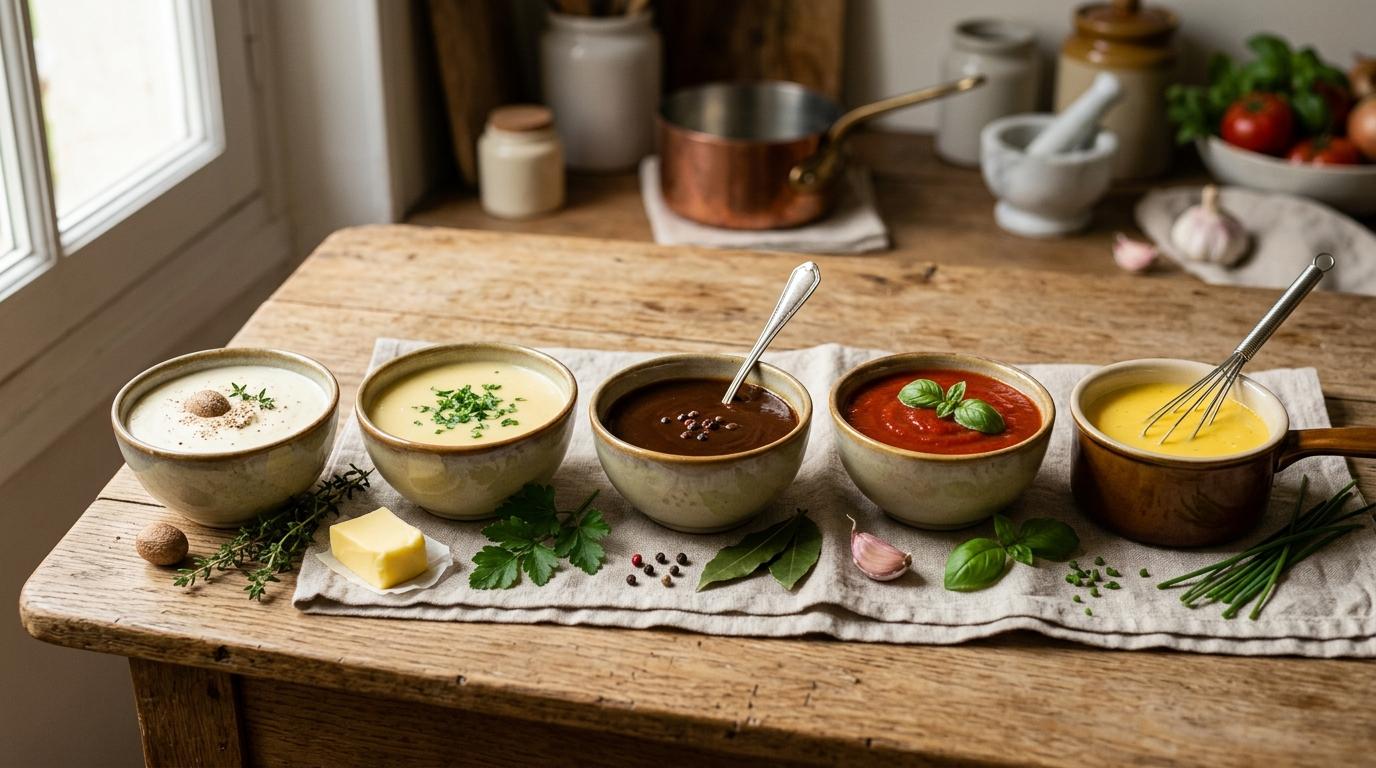
French sauces are the backbone of classical cooking, transforming simple proteins and vegetables into restaurant-worthy dishes. Whether you're exploring our collection of french recipes or looking to elevate your weeknight cooking, mastering these foundational sauces opens up endless possibilities in the kitchen.
The French approach to sauce-making isn't about complexity—it's about understanding how fat, flour, and liquid work together to create silky, flavorful foundations. Once you grasp these fundamentals, you'll find yourself improvising sauces with confidence, turning pan drippings into glossy reductions and leftover wine into elegant finishing touches.
The Five Mother Sauces: Your Foundation
Auguste Escoffier codified the five mother sauces in the early 1900s, and they remain the cornerstone of French cooking today. Each one represents a different technique for building flavor and texture.
Béchamel starts with a white roux (butter and flour cooked until fragrant but not browned) and milk. This creamy base becomes everything from cheese sauce to the top layer of lasagna.
Velouté uses the same roux technique but substitutes light stock—chicken, fish, or vegetable—for milk. Think of it as béchamel's more savory cousin.
Espagnole begins with a brown roux, where the flour cooks long enough to develop a nutty color and deeper flavor. Combined with brown stock, it creates the foundation for rich, dark sauces.
Hollandaise breaks from the roux family entirely. This emulsion of egg yolks, butter, and lemon juice requires gentle heat and constant whisking but rewards you with liquid gold.
Tomato sauce might seem obvious, but the French version focuses on proper technique—slowly building layers of flavor with aromatics, herbs, and time.
Mastering Béchamel: The Gateway Sauce
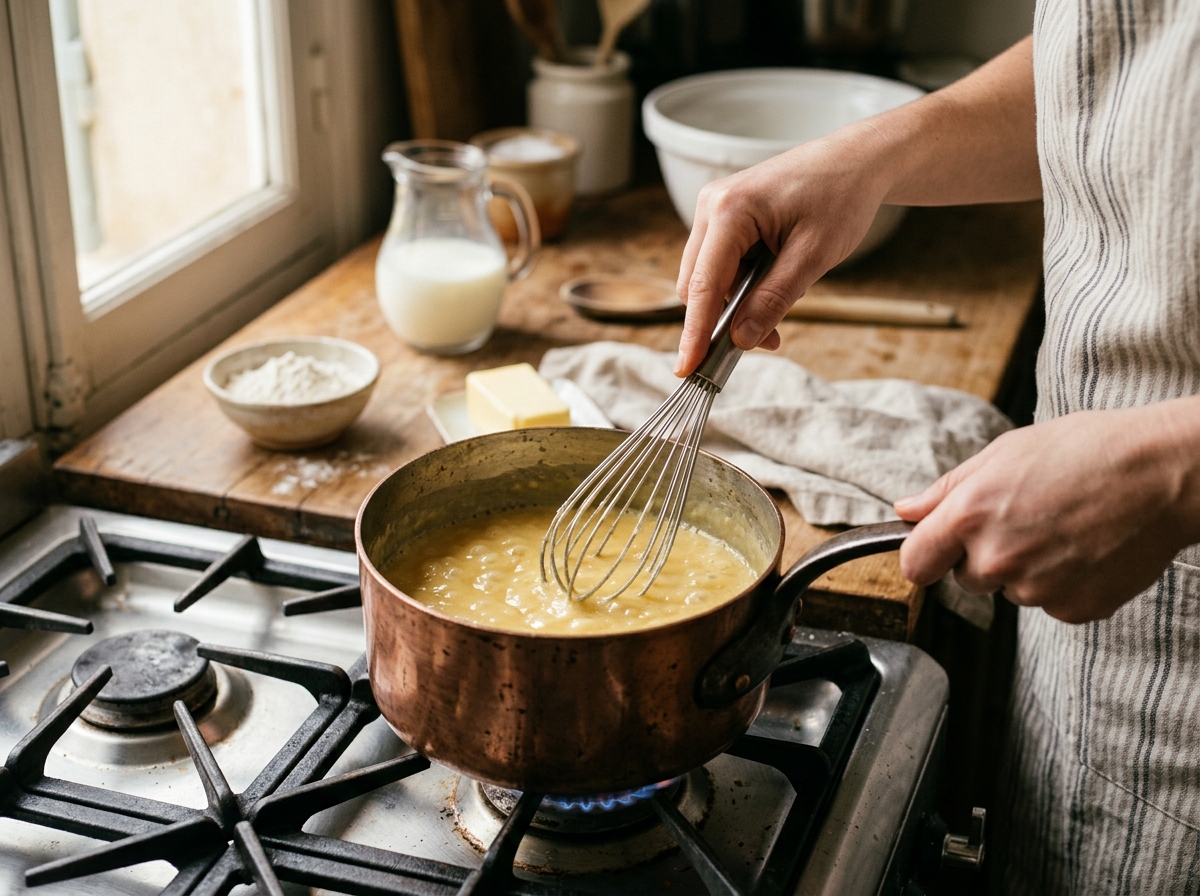
Béchamel is where most home cooks should start. It's forgiving, versatile, and teaches you the fundamental roux technique that applies to countless other sauces.
Start with equal parts butter and flour—about 2 tablespoons each for every cup of milk. Melt the butter over medium heat, then whisk in the flour. Cook this paste for 2-3 minutes, stirring constantly. You want to cook out the raw flour taste without browning.
The milk addition is where things get tricky. Add it gradually—a splash at first, whisking until smooth before adding more. Cold or room-temperature milk works better than hot, which can cause lumps. Once all the milk is incorporated, simmer gently until the sauce coats the back of a spoon, about 5-10 minutes.
Season with salt, white pepper, and a pinch of nutmeg. The nutmeg isn't traditional in every version, but it adds a subtle warmth that makes the sauce sing.
Béchamel Variations
Add grated cheese for Mornay sauce—perfect for gratins and croque monsieur. Gruyère and Parmesan work beautifully, but avoid pre-shredded cheese, which doesn't melt as smoothly.
For mustard sauce, whisk in Dijon at the end. Start with a tablespoon per cup of sauce and adjust to taste. This transforms simple roasted chicken or steamed vegetables.
Herb-infused béchamel involves steeping fresh thyme, bay leaves, or parsley stems in the warm milk before making the sauce. Strain out the herbs before serving.
Velouté: The Versatile Stock-Based Sauce
Velouté follows the same roux method as béchamel but uses stock instead of milk. The quality of your stock makes or breaks this sauce—homemade is ideal, but a good store-bought version works in a pinch.
Chicken velouté pairs beautifully with poultry and light meats. Fish velouté, made with fish stock or even clam juice, elevates any seafood dish. Vegetable velouté works as a lighter alternative that still provides richness without dairy.
The key difference from béchamel is timing. Stock-based sauces need longer simmering to concentrate flavors—15-20 minutes isn't unusual. Taste as you go and reduce until the flavors feel balanced and concentrated.
For extra richness, finish velouté with cream, a knob of butter, or both. This creates what the French call a "sauce suprême"—essentially velouté's more luxurious cousin.
Hollandaise: The Emulsion Challenge
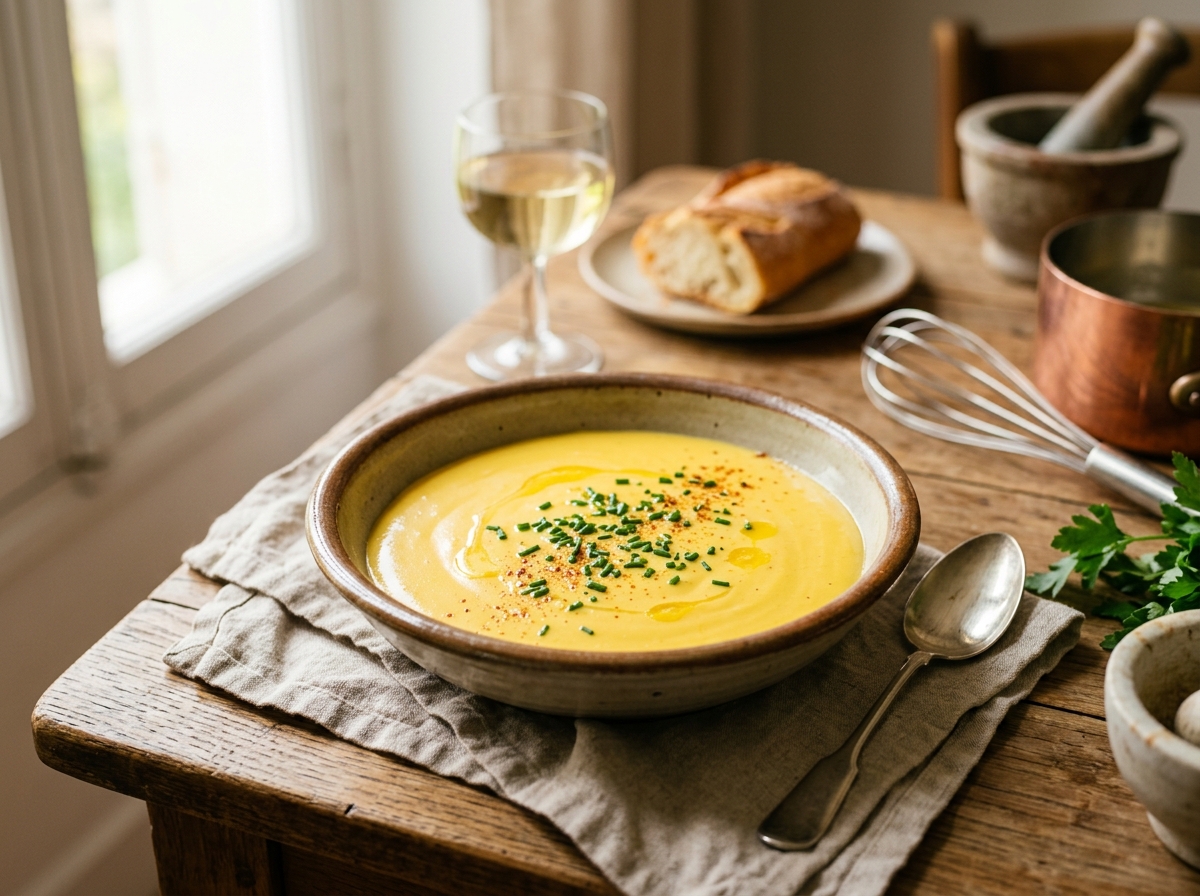
Hollandaise intimidates home cooks, but understanding the science makes it manageable. You're creating an emulsion—suspending fat (butter) in water (from egg yolks and lemon juice) with the help of lecithin in the egg yolks.
Use a double boiler or a heavy-bottomed saucepan over very low heat. Whisk egg yolks with a splash of lemon juice and a pinch of salt until pale. Slowly drizzle in melted butter while whisking constantly. The sauce should thicken to coat the whisk.
Temperature control is everything. Too hot, and the eggs scramble. Too cool, and the emulsion won't form. The sauce should feel warm, not hot, when you taste it.
Hollandaise Troubleshooting
Broken hollandaise happens to everyone. If your sauce separates, remove it from heat immediately. In a clean bowl, whisk together a fresh egg yolk and a teaspoon of warm water. Slowly whisk the broken sauce into this mixture—it usually comes back together.
For thin hollandaise, return to gentle heat and whisk vigorously. For thick hollandaise, thin with a teaspoon of warm water or lemon juice.
Make hollandaise variations by changing the acid. Use white wine vinegar for béarnaise (add tarragon and shallots), or lime juice for a citrusy twist with fish dishes.
Building Flavor with Pan Sauces
Beyond the mother sauces, French cooking excels at quick pan sauces that capture the essence of whatever you've just cooked. These aren't formal sauces with names—they're spontaneous creations that make use of fond (the browned bits stuck to your pan).
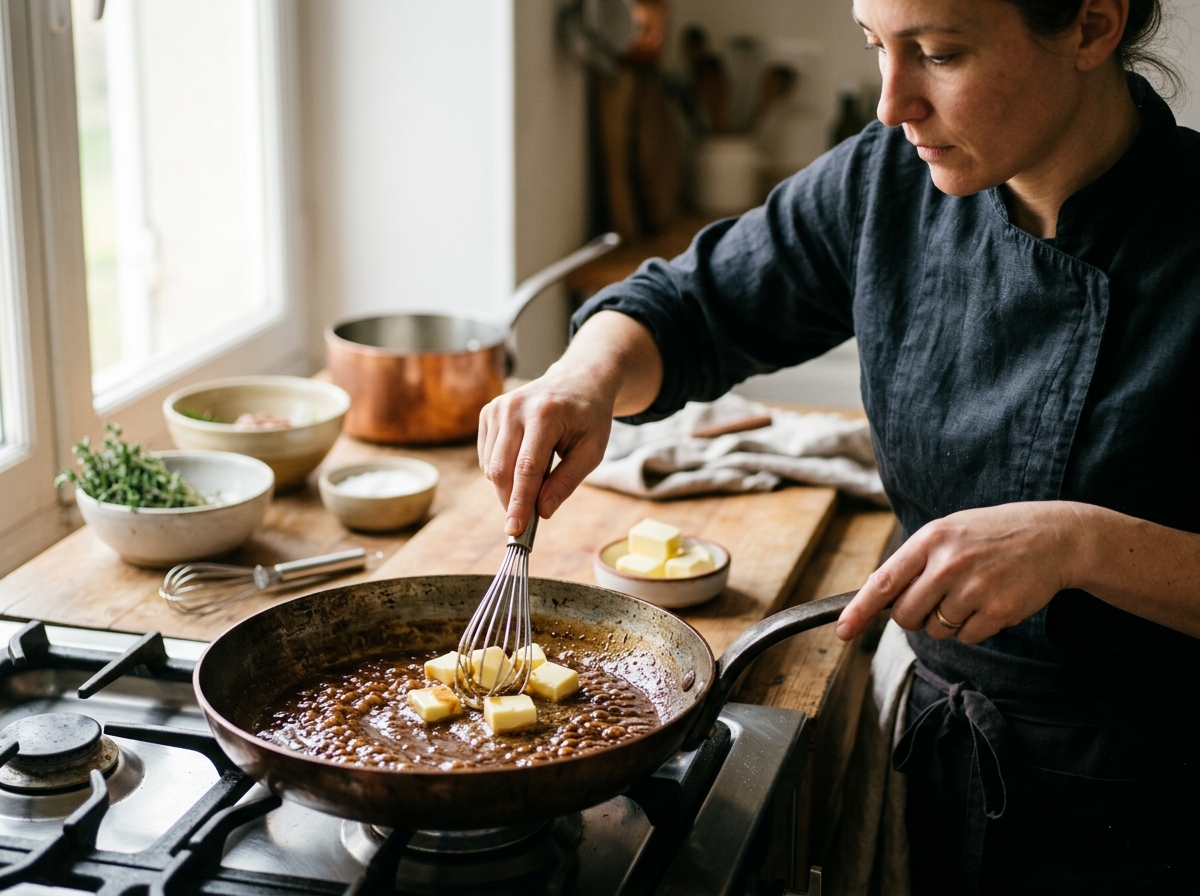
After cooking meat or fish, remove it from the pan but leave behind any browned bits. Add aromatics—shallots, garlic, herbs—and cook briefly. Deglaze with wine, stock, or even water, scraping up those flavorful bits. Reduce the liquid by half, then finish with butter, cream, or fresh herbs.
This technique works with any cooking fat and any deglazing liquid. Brandy and cream for a classic cognac sauce. White wine and butter for a simple beurre blanc. Red wine and stock for a rustic reduction.
Key Ingredients for French Sauce Success
Quality ingredients make the difference between good and exceptional sauces. European-style butter, with its higher fat content and lower water content, creates silkier emulsions and richer flavors.
Fresh herbs matter more in sauces than anywhere else. Dried herbs work in long-simmered dishes, but sauces benefit from the bright, complex flavors of fresh thyme, tarragon, chives, and parsley.
Good vinegar and wine are essential. You don't need to cook with expensive wine, but avoid anything you wouldn't drink. The same goes for vinegar—cheap versions can be harsh and one-dimensional.
Stock forms the backbone of many French sauces. Homemade is ideal, but high-quality store-bought stocks work. Avoid bouillon cubes or bases, which are too salty and artificial-tasting for delicate sauce work.
Essential Techniques for Sauce Success
Straining transforms good sauces into great ones. A fine-mesh sieve removes lumps and creates silky textures. For ultra-smooth sauces, pass them through cheesecloth or a chinois.
Mounting with butter (monter au beurre) adds gloss and richness to finished sauces. Remove the pan from heat and whisk in cold butter pieces one at a time. This technique works with everything from simple pan sauces to complex reductions.
Seasoning happens in layers. Salt and acid (lemon juice, vinegar, wine) balance richness. Taste constantly and adjust gradually—it's easier to add than to subtract.
Common Mistakes and How to Avoid Them
Rushing the roux leads to lumpy sauces and raw flour taste. Take time to cook the flour properly, and add liquids gradually while whisking constantly.
Overheating delicate sauces breaks emulsions and curdles dairy-based preparations. When in doubt, use lower heat and more patience.
Under-seasoning leaves sauces flat and one-dimensional. French sauces should taste vibrant and balanced, not like thickened stock or milk.
Ignoring texture means missing the mark. Sauces should complement, not compete with, the dishes they accompany. A heavy cream sauce overwhelms delicate fish, while a light herb sauce disappears next to robust beef.
Making French Sauces Work for You
These classical techniques adapt beautifully to modern cooking. Make béchamel in larger batches and refrigerate for up to three days. Reheat gently with a splash of milk or cream.
Freeze basic tomato sauce in ice cube trays for quick flavor additions to soups, stews, and braises. Herb oils and compound butters keep the spirit of French sauce-making alive with minimal effort.
Even simple pan sauces elevate weeknight cooking. Keep good wine, stock, and butter on hand, and you're always minutes away from restaurant-quality flavors.
French sauces represent more than recipes—they're techniques that teach you to taste, adjust, and improvise. Once you understand how these foundational sauces work, you'll find yourself creating variations that suit your ingredients and preferences. Whether you're diving deeper into our french recipes or simply want to make Tuesday's chicken breast taste like something special, these sauce techniques will transform your cooking from good to extraordinary.
Sources & further reading
- The Mother Sauces and Their Offspring — Institute of Culinary Education
- What are the mother sauces in French cuisine? — Le Cordon Bleu
- How to Make the 5 Mother Sauces — Auguste Escoffier School of Culinary Arts
- The 5 Mother Sauces of Classical Cuisine — EHL Hospitality Insights (École hôtelière de Lausanne)
Related Topics
Enjoyed this article? Share it with fellow food lovers!
Import a recipe, start cooking
Paste any recipe URL and we'll turn it into a Cook Mode experience with step-by-step visuals, voice narration, and built-in timers.