

French Beef Recipes: Master the Art of Braising Like a Pro
French beef recipes showcase the transformative power of slow braising, turning tough cuts into tender, flavor-packed masterpieces. Master these time-honored techniques for restaurant-quality results at home.
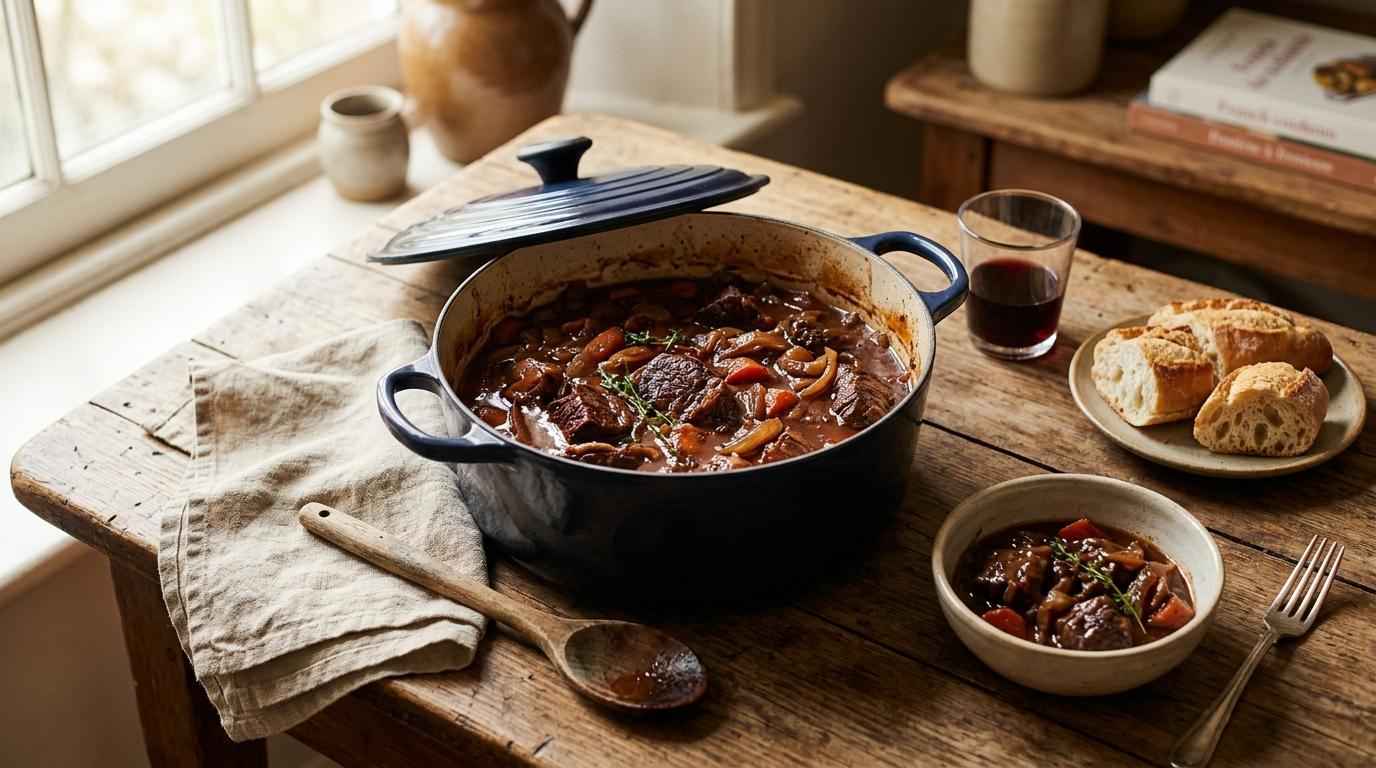
French beef cookery represents patience rewarded. Where other cuisines might rely on expensive cuts and quick heat, French recipes transform humble, tough pieces of beef into silk through the alchemy of slow braising. It's a technique that turns collagen into gelatin, harsh wine into velvet sauce, and your kitchen into something that smells like a bistro in Lyon.
The French didn't invent braising, but they perfected it. From the wine-dark depths of boeuf bourguignon to the clear, aromatic broth of pot-au-feu, these recipes showcase beef at its most soul-satisfying. You're not just cooking meat—you're orchestrating a transformation that takes hours but rewards you with flavors that build and deepen with every bite.
Let's explore the techniques that make French beef recipes legendary, and learn why the best cuts for braising are often the ones other cuisines overlook.
Understanding French Braising Philosophy
French braising operates on a simple principle: time and gentle heat dissolve tough fibers while concentrating flavors. Unlike American pot roasts that often swim in liquid, French braises use just enough liquid to create steam and prevent burning. The beef cooks partially in its own juices, partially in carefully chosen aromatics.
Temperature control matters more than timing. Your braising liquid should barely bubble—what the French call "frémir," a gentle trembling rather than a rolling boil. Too much heat makes the meat stringy, regardless of how long you cook it.
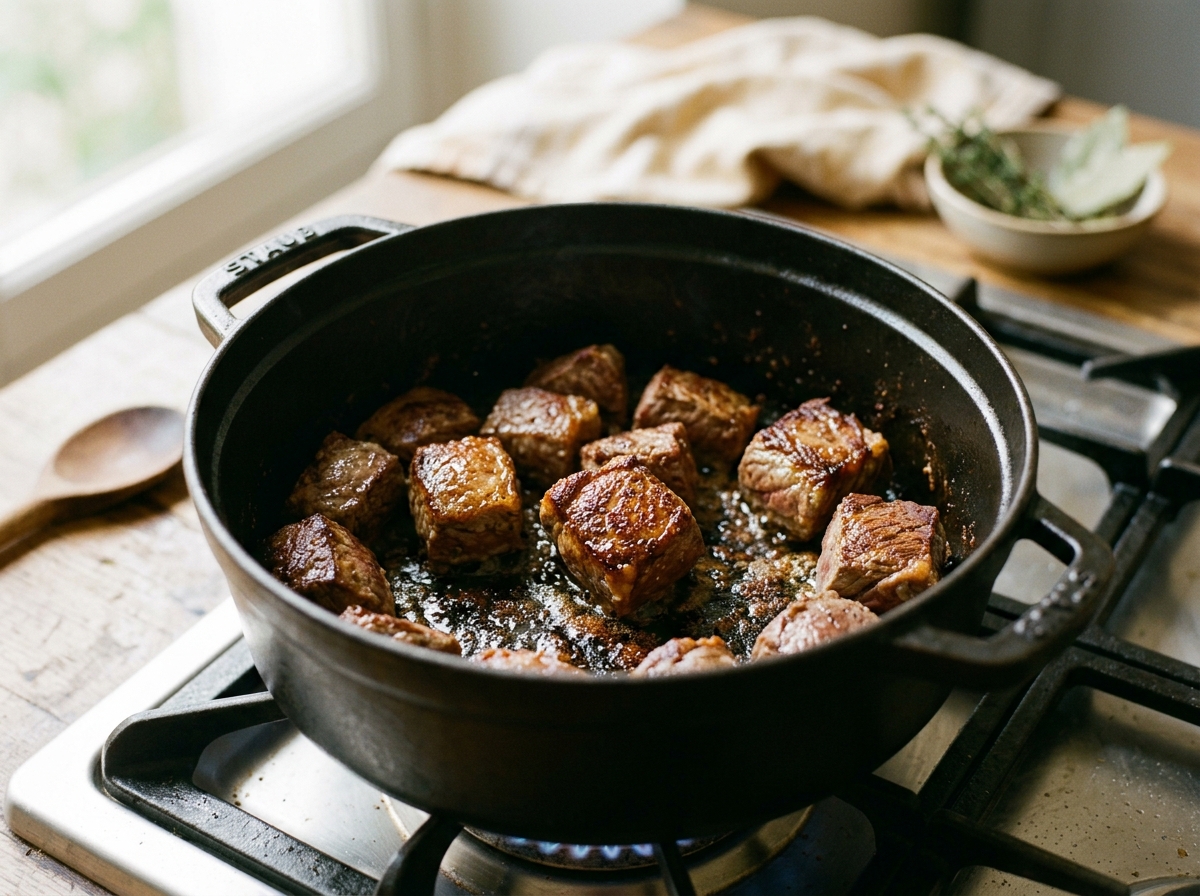
The foundation starts with a proper sear. Pat your beef completely dry, season generously with coarse salt, and brown it in batches. Don't crowd the pan. You want deep caramelization on all surfaces—this creates the flavor compounds that will infuse your entire dish.
Essential Cuts for French Beef Braising
Chuck roast reigns supreme for most French beef recipes. Its marbled fat and connective tissue break down into richness during long cooking. Cut it into generous 2-inch pieces—smaller chunks fall apart before they develop proper texture.
Short ribs bring even more richness, with their layers of fat and collagen creating an almost luxurious mouthfeel. Choose English-cut ribs for even cooking, and don't trim the fat too aggressively. That fat renders slowly, basting the meat from within.
Beef cheeks, when you can find them, represent braising perfection. They're almost entirely collagen, which means they transform into something impossibly tender. Your butcher might need advance notice, but it's worth the wait.
Bottom round and eye round work well for dishes like pot-au-feu, where you want the meat to hold together in slices. These leaner cuts need careful attention to prevent drying out, but they reward patience with clean beef flavor.
Key Ingredients and Aromatics
French beef braising builds layers through carefully chosen ingredients. Yellow onions form the base—slice them thick so they hold their shape through hours of cooking. Carrots add natural sweetness, but add them halfway through to prevent mushiness.
Celery, often overlooked, provides crucial aromatics. Use the leafy tops too—they contribute a bitter note that balances rich beef fat. Leeks, when available, offer a more refined onion flavor perfect for elegant braises.
Tomato paste deepens color and adds umami. Cook it directly in your braising pot until it darkens and smells fruity—usually 2-3 minutes. This concentrates its flavor and eliminates any tinny notes.
Wine serves multiple purposes in French beef recipes. It deglazes your browning fond, provides acidity to balance richness, and contributes complex flavors as its alcohol cooks off. Use wine you'd actually drink—cooking doesn't improve bad wine.
Herbs follow the classic French pattern: thyme, bay leaves, and parsley stems tied in a bouquet garni. Fresh thyme releases its oils slowly, bay leaves add depth without overwhelming, and parsley stems contribute bright notes often missing from long-cooked dishes.
Mastering Boeuf Bourguignon
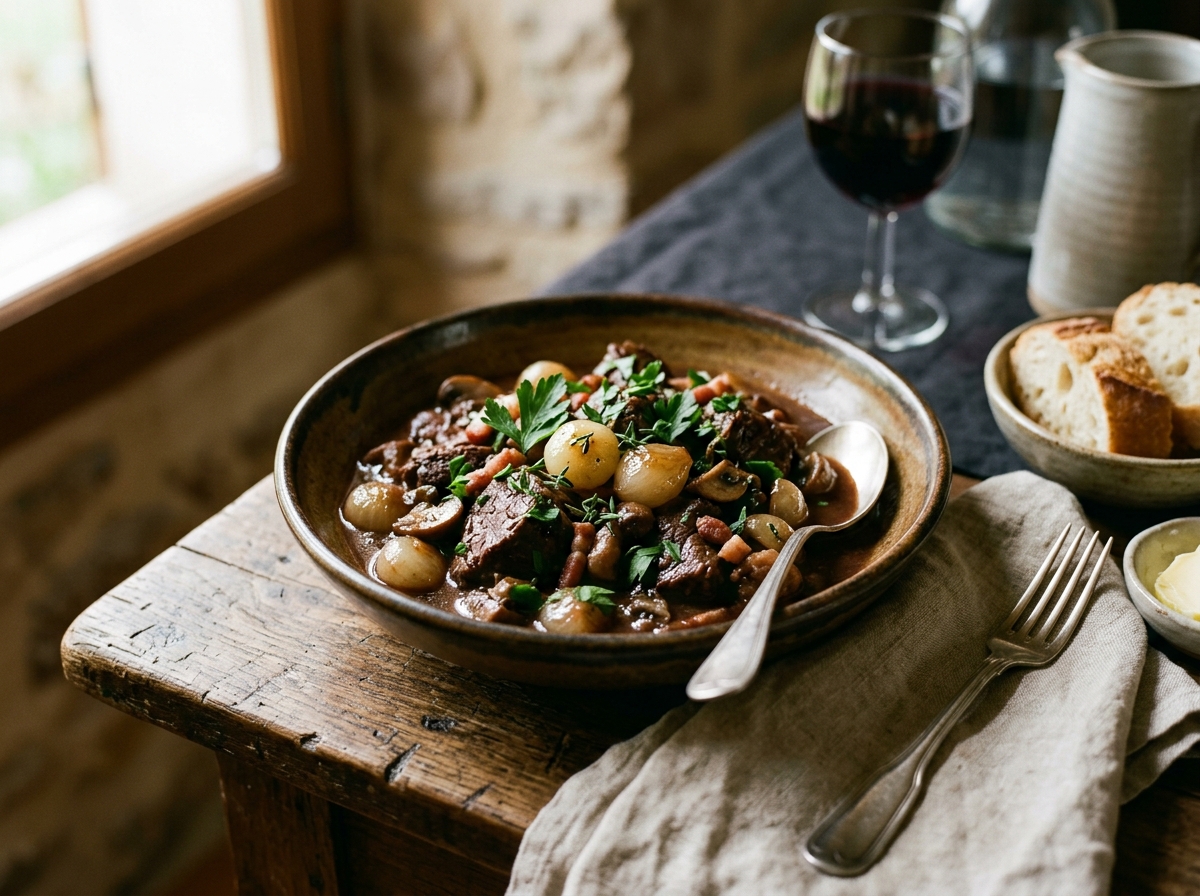
Boeuf bourguignon represents French braising at its most sophisticated. The dish originated in Burgundy, where local wine was plentiful and beef was tough. Legend credits Julius Caesar's invasion for spreading the technique, though the modern version emerged much later.
Start with thick-cut bacon or salt pork, rendering the fat slowly until the pieces crisp. Remove them but leave the fat—this becomes your browning medium. The rendered pork fat adds richness that plain oil can't match.
Brown your beef in batches, building deep color on each piece. Deglazing with red wine dissolves the fond and starts your braising liquid. A full bottle isn't excessive—you want enough liquid to come halfway up your meat.
Pearl onions and mushrooms join the party, but they need different treatment. Blanch the onions first to loosen their skins, then brown them alongside your beef. Sauté mushrooms separately and add them during the last hour—they contribute earthiness without becoming spongy.
Traditional bourguignon finishes with beurre manié—butter kneaded with flour—to thicken the sauce slightly. Work it in off the heat, whisking constantly to prevent lumps.
Pot-au-Feu: The French Sunday Dinner
If bourguignon is French braising's showoff dish, pot-au-feu is its comfortable Sunday clothes. This national dish combines multiple cuts of beef with vegetables in a clear, aromatic broth that's both rustic and refined.
Pot-au-feu uses both quick-cooking and slow-cooking cuts. Start with tougher pieces like chuck or short plate, adding quicker-cooking cuts like sirloin tip during the final hour. This gives you varied textures in the finished dish.
The broth stays clear through gentle heat and careful skimming. Start with cold water, bring it slowly to a bare simmer, and skim frequently during the first hour. A traditional bouquet garni of thyme, bay leaves, and parsley keeps the flavors clean.
Vegetables join in stages based on their cooking times. Leeks and turnips need the full cooking time, while carrots and potatoes join later. Cabbage wedges go in during the final 30 minutes—any longer and they overwhelm the delicate beef flavor.
Traditional service involves presenting the broth as a first course, followed by the meats and vegetables with coarse salt, mustard, and cornichons. It's rustic elegance at its finest.
Modern French Braising Techniques
Contemporary French chefs have refined traditional braising with precision techniques. Sous vide braising, while not traditional, allows perfect temperature control for consistent results. Seal seasoned beef with aromatics and cook at 140°F for 24-48 hours.
Pressure cooking shortcuts traditional timing while maintaining proper texture. Brown your beef traditionally, then transfer to a pressure cooker with reduced liquid. Cook for 45-60 minutes at high pressure, depending on your cut.
Many modern French kitchens finish braises in low ovens rather than stovetops. After the initial browning and deglazing, transfer everything to a heavy Dutch oven and braise at 325°F. The surrounding heat provides gentler, more even cooking.
Restaurant techniques include mounting finished sauces with cold butter for glossy richness, and passing them through fine sieves for elegant presentation. These touches transform rustic braises into refined dinner party centerpieces.
Troubleshooting Common Problems
Tough meat after long cooking usually means too-high heat. Reduce your temperature and extend the cooking time. If your meat seems done but remains chewy, it needs more time—collagen takes patience to break down properly.
Greasy braises result from too much fat or insufficient browning. Skim surface fat regularly during cooking, and always brown your meat properly before adding liquid. Refrigerate overnight and remove congealed fat if necessary.
Bland flavors often come from underseasoning at the start. Salt your meat well before browning, and taste your braising liquid before covering the pot. Remember that flavors concentrate as liquid reduces.
Mushy vegetables happen when they're added too early. Root vegetables can handle long cooking, but delicate ones like zucchini or fresh herbs should join during the final stages.
Serving and Storing Your French Braised Beef
French beef braises improve with time. Make them a day ahead when possible—the flavors meld and deepen overnight. Reheat gently, adding liquid if necessary to prevent sticking.
Traditional accompaniments vary by region. Burgundy serves bourguignon over buttered egg noodles or alongside crusty bread. Provence might add white beans or serve over polenta. Paris bistros often offer simple boiled potatoes.
Wine pairings follow the cooking wine principle—drink what you braised with. A good Burgundy enhances bourguignon, while Côtes du Rhône complements more rustic preparations. For pot-au-feu, try a lighter Beaujolais or even a crisp white wine.
Leftover braised beef transforms beautifully into other dishes. Shred it for rich ragùs, fold it into omelets, or use it as filling for savory tarts. The concentrated cooking liquid makes excellent base for other sauces.
Regional Variations Worth Exploring
Different French regions have developed their own braising traditions. Provence adds olives, tomatoes, and herbs de Provence for Mediterranean brightness. The Loire Valley incorporates local wines and often finishes dishes with fresh herbs.
Normandy's beef braises feature apple cider and Calvados, creating dishes with subtle fruit notes. The technique remains the same—only the liquid changes, proving how adaptable French braising principles really are.
Alsace combines French technique with German influences, often adding juniper berries, caraway, or sauerkraut to their beef dishes. These variations show how French cooking absorbs and refines influences from neighboring cuisines.
Each region's approach reflects local ingredients and preferences, but all rely on the fundamental French understanding of how time, heat, and patience transform tough beef into something transcendent.
Mastering French recipes like these braised beef dishes connects you to centuries of culinary wisdom. These aren't just recipes—they're lessons in patience, technique, and the profound satisfaction that comes from cooking slowly and well. Your kitchen, and your dinner table, will never be the same.
Sources & further reading
- Classic French Beef Bourguignon - Pardon Your French — Pardon Your French
- Beef Bourguignon Recipe (Just Like Julia Child's) — The Kitchn
- Classic French Beef Bourguignon – Easy & Authentic — La Cuisine de Géraldine
Related Topics
Enjoyed this article? Share it with fellow food lovers!
Import a recipe, start cooking
Paste any recipe URL and we'll turn it into a Cook Mode experience with step-by-step visuals, voice narration, and built-in timers.