

French Appetizers: Classic Small Plates Made Simple
French appetizers transform any meal into an elegant affair. These classic small plates showcase the refined techniques and bold flavors that make French cuisine legendary.
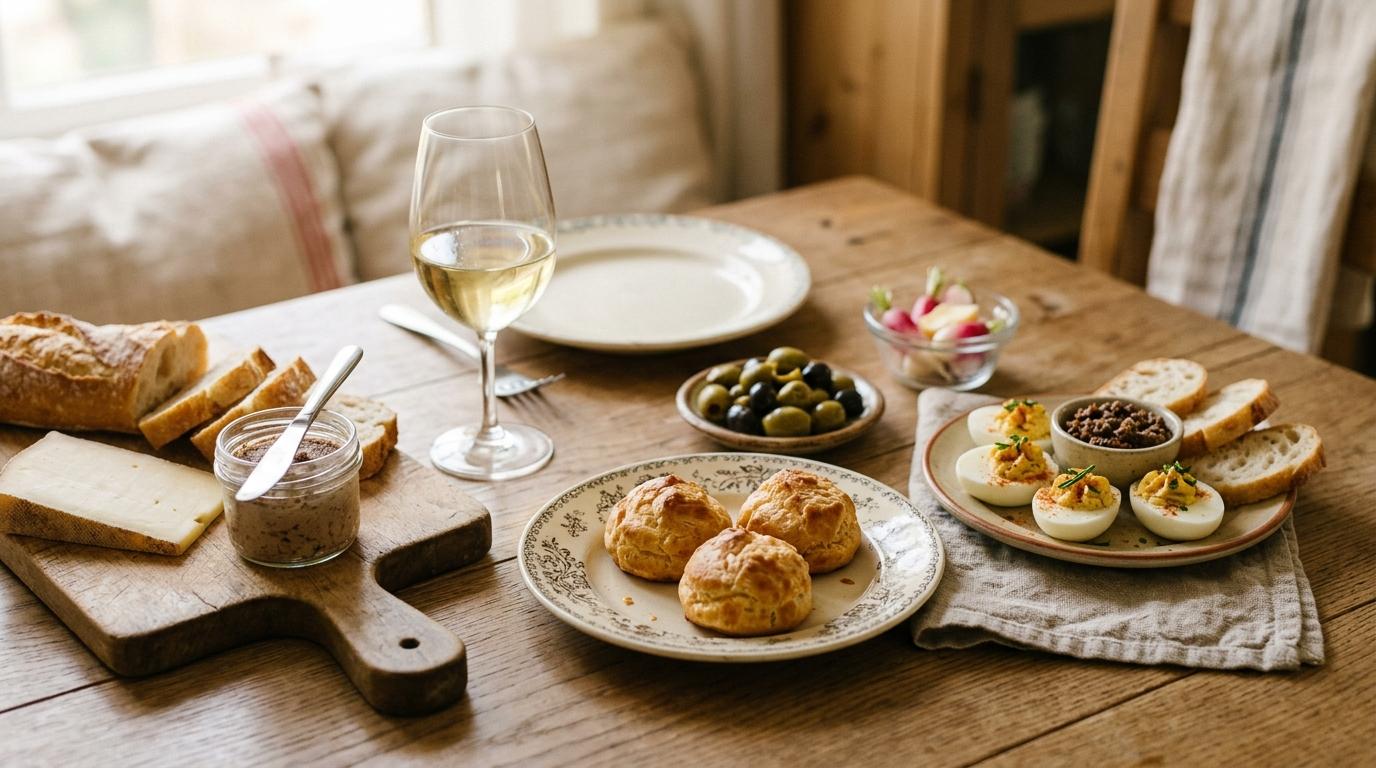
French appetizers are where the magic begins. These small plates set the stage for what's to come, whispering promises of butter, herbs, and the kind of careful technique that makes French recipes so captivating. Unlike heavy American starters, French appetizers dance between rich and light, savory and bright, always leaving you wanting more.
The French call them hors d'oeuvres, literally "outside the work" — meaning outside the main course. But these small plates do serious work. They wake up your palate, create conversation, and show off skills that separate confident cooks from timid ones.
Let's dive into the classics that belong in every cook's repertoire.
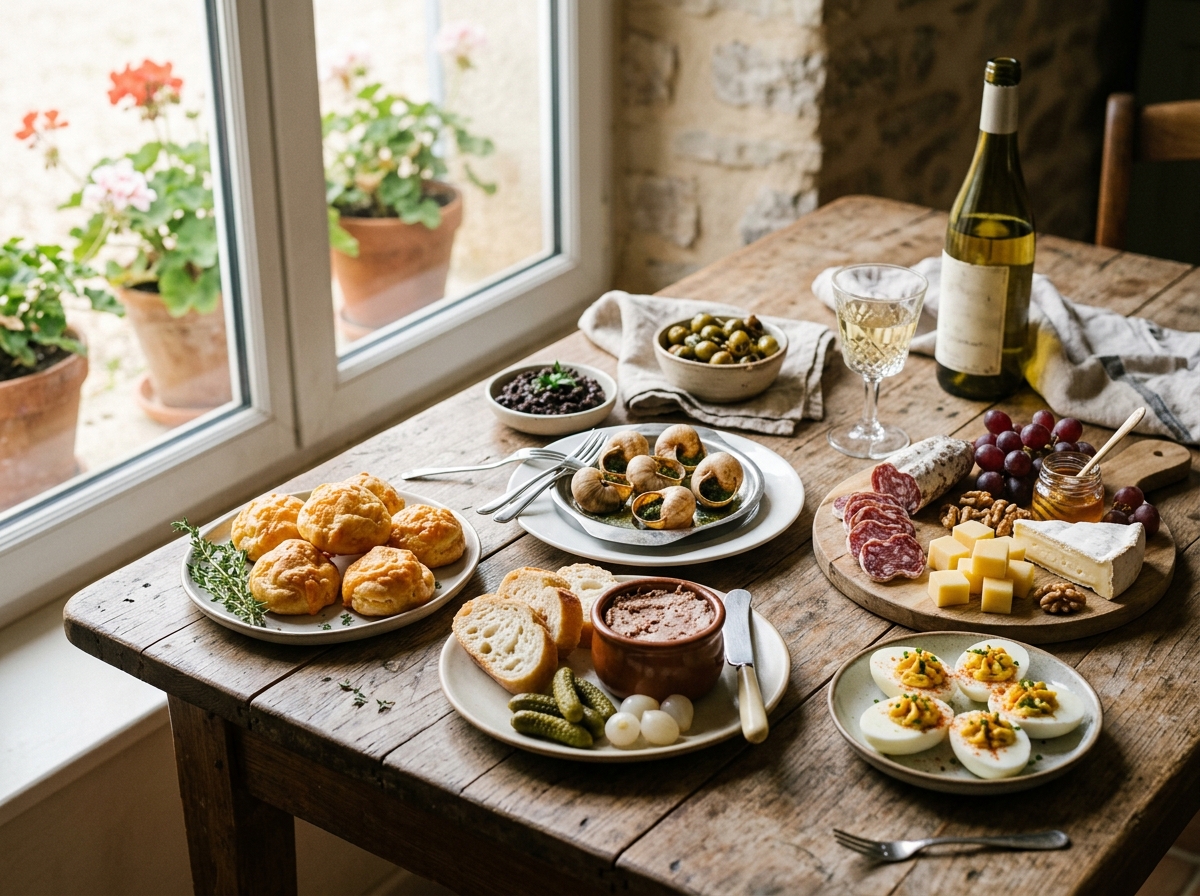
Essential French Appetizer Categories
French appetizers fall into several distinct camps, each with its own personality and purpose.
Pâtés and Terrines
These are the workhorses of French appetizers. Pâté, smooth and spreadable, showcases pure flavor concentration. Terrine, coarser and more rustic, tells stories of countryside cooking.
The key to great pâté lies in fat balance and seasoning. Duck liver pâté needs enough butter to stay silky, but not so much that it loses its meaty intensity. Season boldly — pâté served cold needs more salt and pepper than you think.
For terrine, embrace imperfection. The best versions have visible chunks of meat, herbs scattered throughout like confetti, and edges that crack slightly when sliced. This isn't about precision; it's about flavor.
Cheese-Based Starters
French cheese appetizers go far beyond a basic cheese plate. Think gougères — those airy cheese puffs that seem impossible until you make them. Or cheese soufflé, served in individual ramekins while still puffed and golden.
The secret to gougères is cooking the pâte à choux completely before adding eggs. The dough should pull away from the pan sides and leave a film on the bottom. Add cheese gradually, tasting as you go. Gruyère is classic, but mixing in a sharp cheddar creates complexity.
Seafood Specialties
French coastal regions contribute some of the most elegant seafood appetizers. Escargot, often feared by home cooks, is actually straightforward. The magic happens in the herb butter — parsley, garlic, shallots, and enough butter to make everything glossy.
Moules marinière works beautifully as an appetizer when served in smaller portions. The key is building layers of flavor: white wine reduction, aromatics, and mussels that steam just until they open.
Key Ingredients for French Appetizers
Success starts with the right ingredients. French appetizers rely on quality over complexity.
Butter: Use European-style butter with higher fat content. It behaves differently than American butter — richer, more stable, better for sauces.
Herbs: Fresh parsley, chives, tarragon, and thyme are non-negotiables. Dried herbs work in long-cooked terrines but never in finished dishes.
Wine: Dry white wine for cooking, but also for flavor. A splash in pâté, a reduction for sauce — wine adds acidity that balances richness.
Shallots: More refined than onions, sweeter than garlic. They're the backbone of French flavor building.
Good bread: Baguette slices, toasted brioche, or crusty country bread. The vessel matters as much as what goes on top.
Quality cheese: Invest in real Gruyère, aged Comté, or creamy Roquefort. Processed cheese has no place in French appetizers.
Mastering Classic Techniques
French appetizers teach fundamental techniques that improve all your cooking.
The Perfect Herb Butter
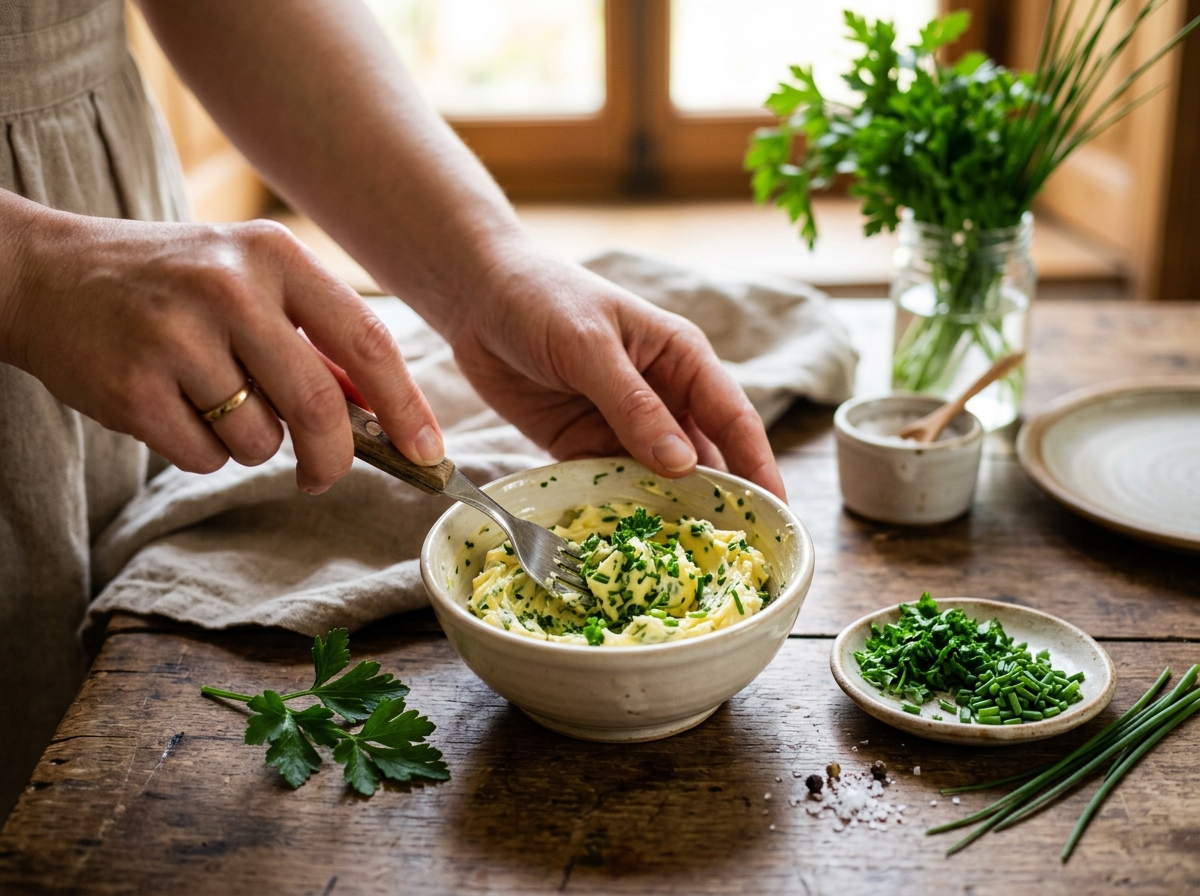
Herb butter appears in countless French appetizers. Room temperature butter mixed with minced herbs, lemon zest, and seasoning. The trick is balancing moisture — too much lemon juice makes it separate, too little makes it flat.
Mix herbs into softened butter with a fork, not a mixer. You want ribbons of green throughout, not a uniform paste. Season with salt, white pepper, and just enough lemon juice to brighten without breaking the emulsion.
Building Flavor Layers
French cooking is about layers. Start with aromatics — shallots sweated in butter until translucent. Add wine, let it reduce by half. Build from there with herbs, stock, or cream.
Never rush this process. Each layer needs time to develop before adding the next. This patience separates restaurant-quality food from home cooking disasters.
Five Must-Know French Appetizers
Classic Chicken Liver Pâté
Start with fresh chicken livers, cleaned of any green spots or connective tissue. Sauté with shallots and thyme, deglaze with brandy, then purée with butter and cream. The mixture should be smooth but not pasty.
Pass the mixture through a fine-mesh sieve for ultimate smoothness. Season aggressively — remember, this gets served cold, which dulls flavors.
Gougères (Cheese Puffs)
These impressive-looking puffs start with pâte à choux — a cooked paste of water, butter, and flour. The dough should be smooth and pull away from pan sides. Beat in eggs one at a time until the mixture flows like thick ribbon.
Fold in grated cheese and pipe into small mounds. Bake in a hot oven (425°F) until golden and crisp. Never open the oven door during baking — they'll collapse.
Escargot Bourguignonne
If fresh snails intimidate you, canned escargot work perfectly. The star is the herb butter — parsley, garlic, shallots, butter, and a splash of white wine.
Fill escargot shells or small ramekins with butter, nestle in the snails, top with more butter. Bake until bubbling and serve with crusty bread for sopping.
French Onion Soup Gratinée (Individual Portions)
Serve this classic soup in small portions as an elegant appetizer. The secret is deeply caramelized onions — cook them low and slow until jammy and dark brown.
Build the soup with good beef stock, dry sherry, and fresh thyme. Top with Gruyère and broil until bubbly and golden.
Salade de Chèvre Chaud
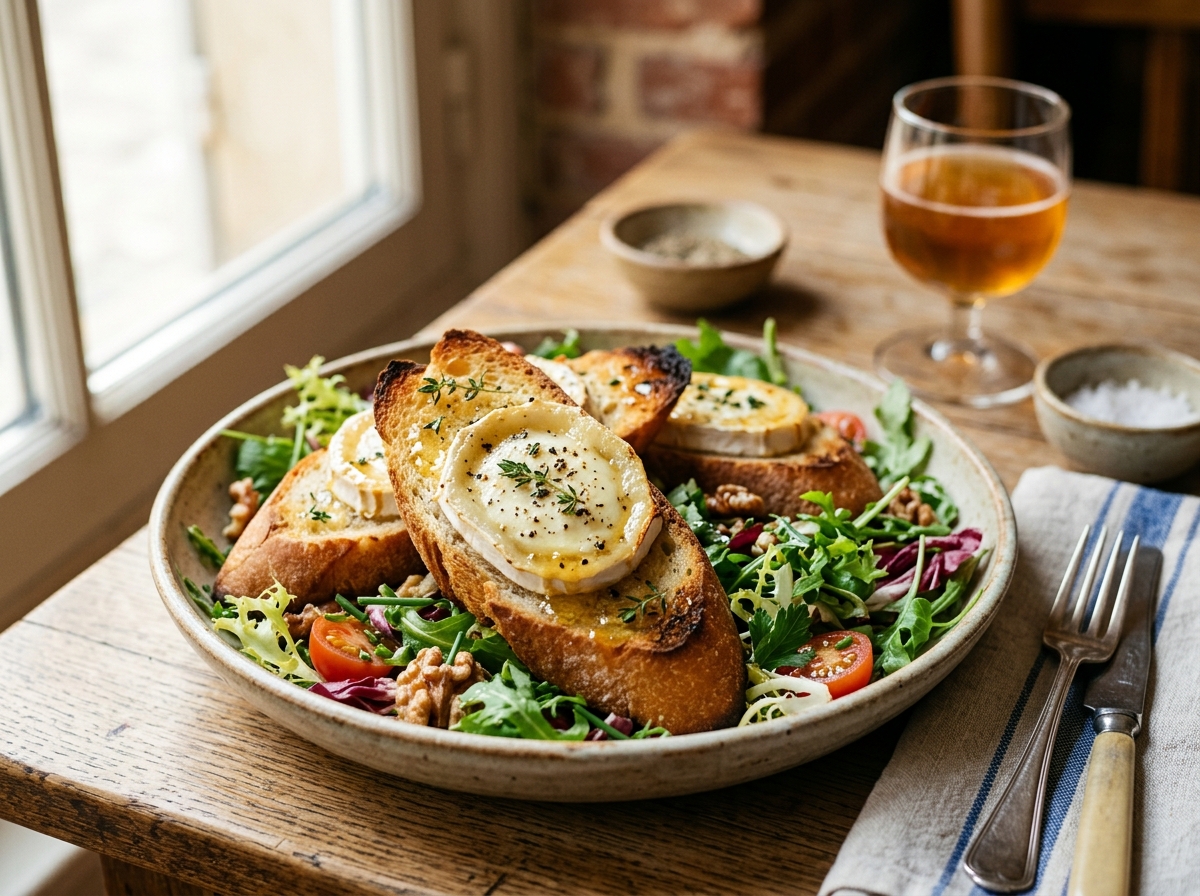
Warm goat cheese salad bridges the gap between appetizer and light meal. Toast baguette rounds, top with herbed goat cheese, and warm in the oven until the cheese softens.
Serve over dressed greens with walnuts and dried fruit. The contrast between warm cheese and cool greens makes this irresistible.
Presentation and Service
French appetizers demand thoughtful presentation. This isn't about fussy garnishes — it's about respect for the food and your guests.
Serve pâté at room temperature with cornichons, good mustard, and toasted bread. The accompaniments should complement, not compete.
Cheese-based appetizers work best served immediately while still warm. Have everything else ready before you pull gougères from the oven.
For plated appetizers, warm the plates slightly. Cold plates kill the experience of warm food faster than anything else.
Wine Pairing Essentials
French appetizers pair naturally with French wines, but the principles apply broadly.
Rich pâtés need acidic wines to cut through fat — Sancerre, Chablis, or even Champagne. The bubbles and acidity cleanse the palate between bites.
Cheese-based appetizers love wines with some body — Côtes du Rhône blanc or a light Burgundian Chardonnay. The wine should match the richness without overwhelming delicate flavors.
Seafood appetizers pair beautifully with crisp whites — Muscadet, Albariño, or dry Riesling. The minerality echoes the ocean without competing with delicate seafood flavors.
Make-Ahead Strategies
Smart French cooks know which appetizers improve with time and which must be served immediately.
Pâtés and terrines actually benefit from overnight chilling. The flavors meld and the texture firms up perfectly. Make these a day ahead without worry.
Herb butter can be made days in advance and stored in the refrigerator. Let it come to room temperature before using, or it won't spread properly.
Gougères can be frozen after baking, then reheated in a hot oven for a few minutes. They'll crisp right back up.
Prep work for most appetizers — chopping herbs, cleaning seafood, preparing garnishes — can happen hours ahead. French cooking rewards organization.
Common Mistakes to Avoid
Even experienced cooks stumble with French appetizers. Here's what to watch for:
Under-seasoning is the biggest mistake. Cold foods need more salt and acid than you think. Taste, adjust, taste again.
Serving temperatures matter enormously. Cheese should be room temperature, pâté slightly cool but not cold, hot foods genuinely hot.
Don't oversauce or over-garnish. French appetizers succeed through restraint, not abundance.
Timing kills more appetizers than technique. Plan backwards from service time, considering what needs to be warm, what needs to rest, what can wait.
Conclusion
French appetizers teach patience, technique, and the art of building flavors layer by layer. They're not quick fixes or shortcuts — they're invitations to slow down and pay attention to what you're creating.
Master these classics and you'll understand why French recipes have captivated cooks for centuries. The techniques transfer to every aspect of cooking, and the confidence you'll gain shows up in everything you make.
Start with one or two favorites. Perfect them. Then expand your repertoire gradually. Soon you'll be creating the kind of memorable meals that bring people back to your table again and again.
Sources & further reading
- Our Favorite French Appetizers and Hors d'Oeuvres for Bastille Day and Beyond — SAVEUR
- Hors d'oeuvre | History, Definition, Appetizer, & Examples — Encyclopaedia Britannica
- Hors d'oeuvre — Wikipedia
- Recipes ideas | Le Cordon Bleu Paris — Le Cordon Bleu Paris
Related Topics
Enjoyed this article? Share it with fellow food lovers!
Import a recipe, start cooking
Paste any recipe URL and we'll turn it into a Cook Mode experience with step-by-step visuals, voice narration, and built-in timers.