

Essential Thai Ingredients: Your Complete Guide to Thai Cooking
Transform your home cooking with authentic Thai ingredients. From fish sauce to fresh herbs, discover the essential pantry staples that bring bold, balanced flavors to every Thai dish.
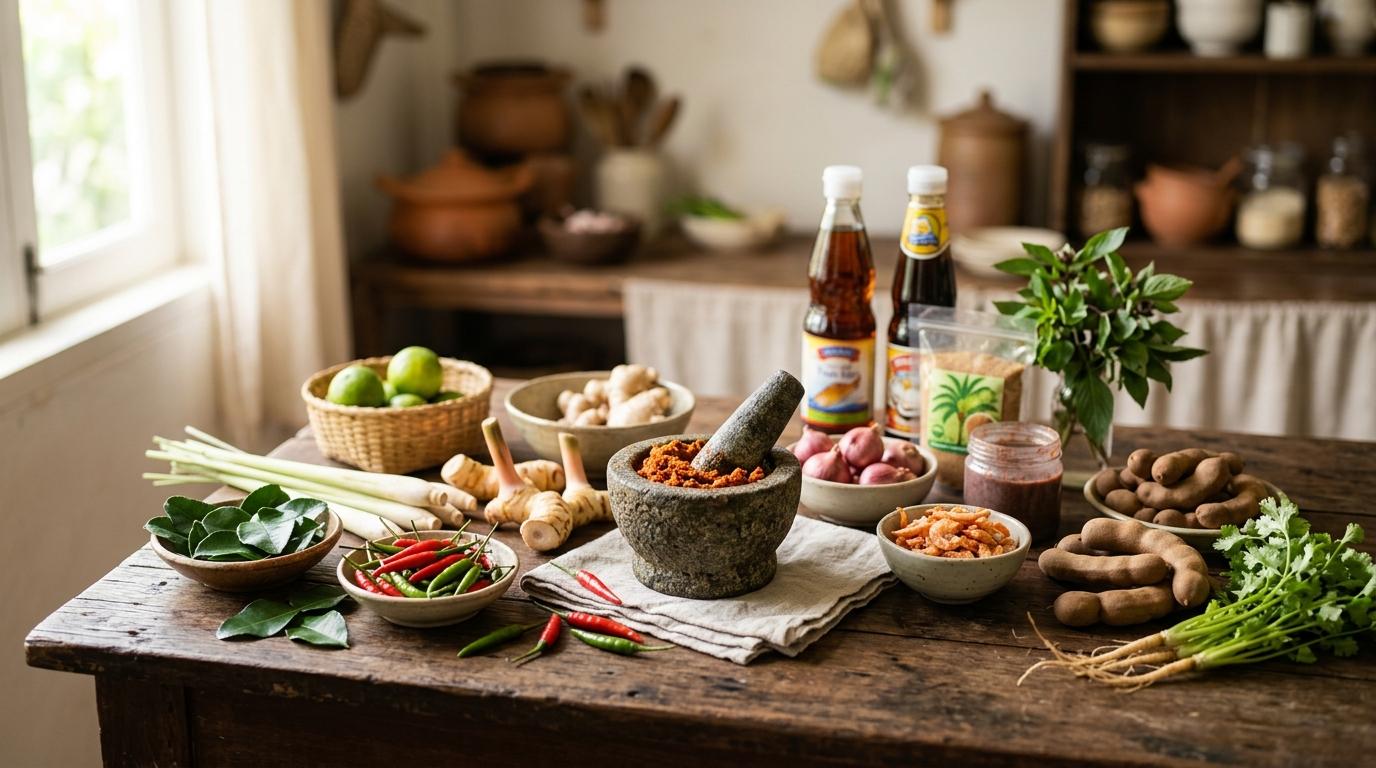
Thai cooking delivers some of the world's most vibrant flavors—sweet, sour, salty, spicy, and umami dancing together in perfect harmony. But behind every memorable pad thai or fragrant curry lies a pantry stocked with the right ingredients. If you're ready to dive deeper into thai recipes, understanding these essential components will transform your home cooking from good to extraordinary.
The secret isn't just having the ingredients—it's knowing how each one contributes to that distinctive Thai flavor profile. Some add depth, others brightness. Some bring heat, others cooling relief. Together, they create the complex layers that make Thai food so compelling.
The Foundation: Sauces and Pastes
Fish sauce (nam pla) serves as Thailand's liquid gold. This amber-colored condiment, made from fermented anchovies, provides the umami backbone for nearly every Thai dish. Don't let the pungent smell fool you—when cooked, it mellows into a rich, savory depth that's impossible to replicate.
Look for brands like Red Boat or Three Crabs. The first ingredient should be anchovies, not salt. A good fish sauce tastes salty but not harsh, with subtle sweetness underneath. Store it at room temperature where it keeps for years.
Oyster sauce brings glossy sweetness to stir-fries and adds body to marinades. The best versions contain real oyster extract—check the ingredient list. Maekrua and Lee Kum Kee produce reliable options that won't overwhelm delicate vegetables.
Thai curry pastes are concentrated flavor bombs that would take hours to replicate from scratch. Red curry paste (nam prik gaeng phed) delivers medium heat with floral notes. Green curry paste (nam prik gaeng keow wan) packs serious fire with fresh herb brightness. Yellow curry paste (nam prik gaeng karee) offers mild warmth with turmeric's earthiness.
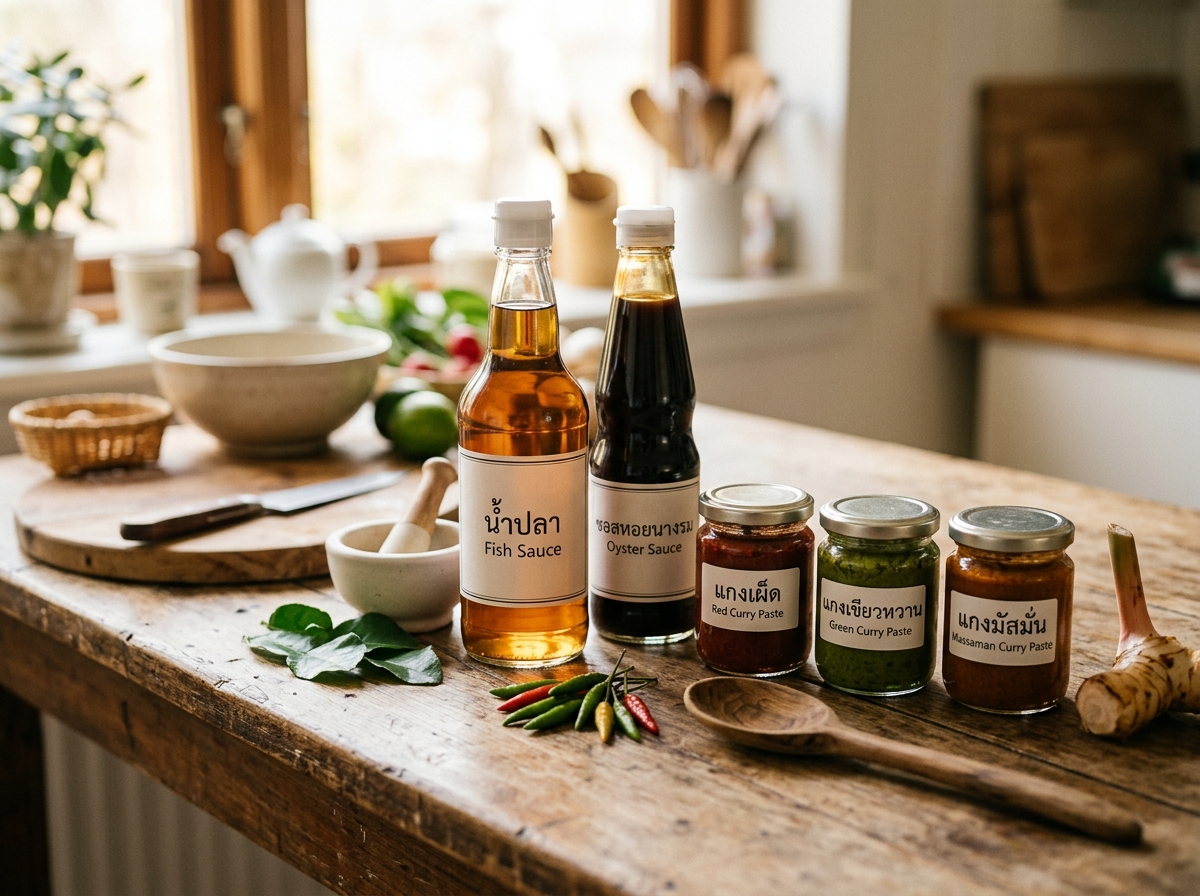
Mae Ploy makes excellent curry pastes widely available in Western supermarkets. Once opened, store them in the refrigerator where they keep for months. The oil separating on top is normal—just stir it back in.
Tamarind paste provides Thai food's signature sourness. This sticky, dark paste comes from tamarind pods and tastes like dates mixed with lime juice. Buy the seedless paste, not the concentrate—it has better flavor and easier prep.
Sweet Elements
Palm sugar (nam tan pip) adds complex sweetness that regular sugar can't match. Made from palm tree sap, it carries subtle caramel and molasses notes. The hard blocks keep forever at room temperature—just grate or chop what you need.
If you can't find palm sugar, brown sugar works in a pinch, though you'll miss some depth. Coconut sugar makes a closer substitute with similar mineral undertones.
Coconut milk and cream form the base for most Thai curries and many desserts. Full-fat canned coconut milk from brands like Chaokoh or Aroy-D delivers the richness you need. Shake the can before opening—the cream naturally separates and rises to the top.
Light coconut milk works for soups, but curries need the full-fat version to achieve proper texture and flavor. Avoid coconut milk in cartons—it's too thin and often contains stabilizers that affect cooking performance.
Heat Sources
Thai bird's eye chilies (prik kee noo) pack intense heat in tiny packages. These thumbnail-sized peppers clock in around 100,000 Scoville units—respect them. They're hotter than jalapeños but less fiery than habaneros.
Fresh bird's eye chilies add clean, sharp heat. Dried ones contribute deeper, more complex spice. If you can't find them, serrano peppers make a decent substitute, though you'll need more to match the heat level.
Dried chilies come in several varieties. Large, mild prik chee fah add color and gentle warmth to curry pastes. Smaller prik haeng deliver serious heat. Soak dried chilies in warm water before grinding to rehydrate them and reduce bitterness.
Aromatic Foundations
Lemongrass (ta-krai) brings citrusy fragrance without actual lemon flavor. Use the tender bottom portion of the stalks, bruising them with a knife handle to release oils. The woody tops make excellent aromatics for stocks and broths.
Fresh lemongrass keeps in the refrigerator for weeks. Frozen stalks work fine for soups but lose texture for salads. Dried lemongrass lacks the bright oils that make this ingredient special.
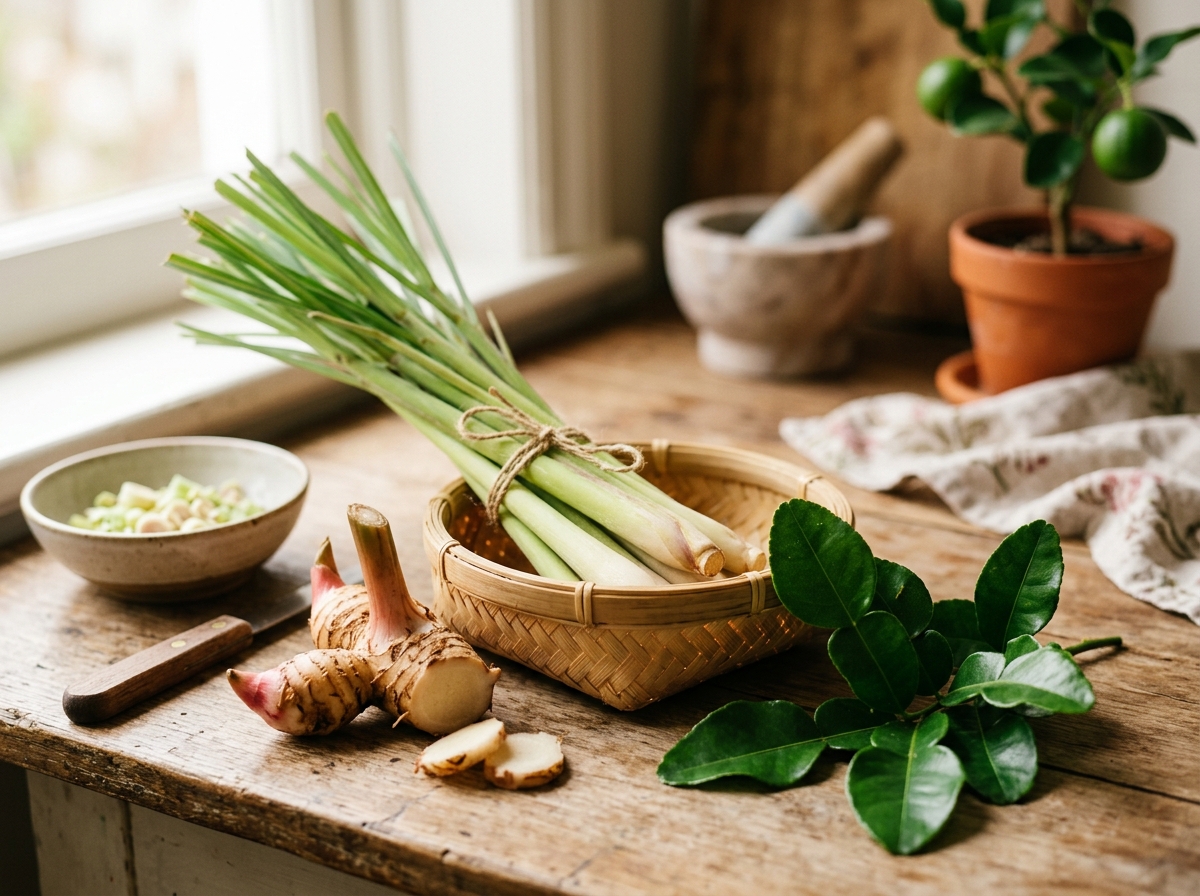
Galangal (kha) looks like ginger but tastes completely different. This knobby root delivers pine-like aromatics with peppery heat. It's tougher than ginger, so slice it thin or pound it well in curry pastes.
Young galangal has pale, tender skin. Older roots develop thick, woody skin that needs peeling. Frozen galangal works adequately for cooking, though fresh provides better flavor.
Makrut lime leaves (bai makrut) add distinctive citrus perfume to curries and soups. These hourglass-shaped leaves release incredible fragrance when torn or shredded. Remove the tough central stems before slicing.
Fresh leaves deliver the best flavor, but frozen ones work well too. Dried makrut lime leaves lose most of their essential oils—avoid them if possible. Store fresh leaves in the freezer where they keep for months.
Fresh Herbs
Thai basil (horapa) differs significantly from Italian basil. It carries anise and clove notes with a stronger, more peppery bite. The leaves stay firmer when cooked and won't wilt instantly like sweet basil.
Holy basil (gaprao) is another variety entirely—more peppery and complex than Thai basil. It's traditional in pad gaprao but harder to find. Thai basil makes an acceptable substitute in most recipes.
Cilantro (pak chee) appears in Thai cooking from roots to leaves. The roots get pounded into curry pastes and marinades. The stems add fresh green flavor to stir-fries. The leaves provide bright finishing touches.
Buy cilantro with roots still attached when possible—they pack incredible flavor. If you can't find rooted cilantro, substitute the bottom inch of stems for similar effect.
Mint (sa-ra-nae) shows up in larb, som tam, and various salads. Thai mint varieties tend to be more peppery and aromatic than Western spearmint. Regular mint works fine as a substitute, though you might want to use slightly less.
Key Ingredients Shopping List
Building your Thai pantry doesn't require buying everything at once. Start with these essentials that appear in most recipes:
- Fish sauce and oyster sauce
- One curry paste (red is most versatile)
- Coconut milk (full-fat canned)
- Palm sugar or brown sugar
- Tamarind paste
- Fresh bird's eye chilies
- Lemongrass stalks
- Makrut lime leaves (fresh or frozen)
- Thai basil and cilantro
Most Asian markets carry these ingredients, often at better prices than mainstream supermarkets. Online retailers like ImportFood.com ship quality Thai ingredients nationwide if you lack local sources.
Storage and Prep Tips
Proper storage keeps your Thai ingredients fresh and flavorful. Sauces and pastes generally keep at room temperature until opened, then need refrigeration. Most last months or years when properly stored.
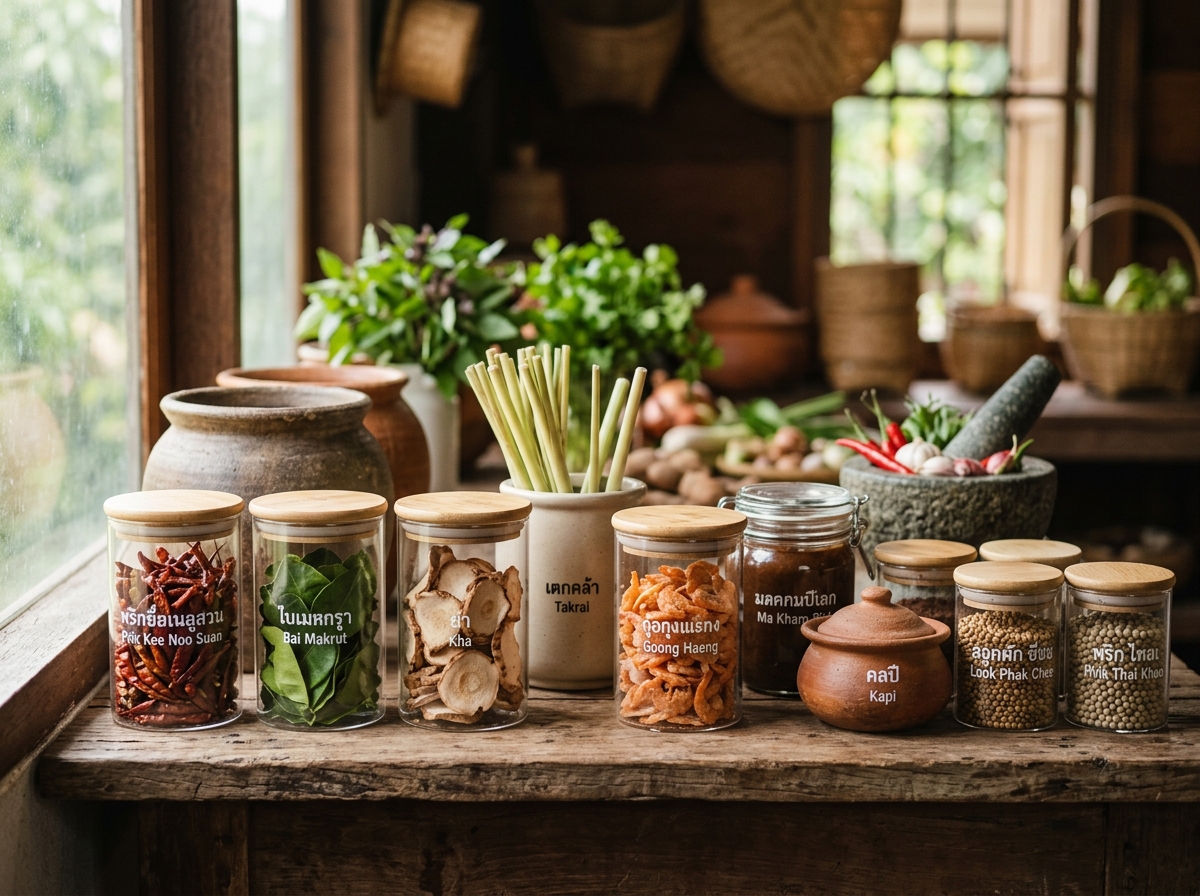
Fresh herbs and aromatics require more attention. Lemongrass and galangal keep refrigerated for weeks. Makrut lime leaves freeze beautifully—just grab what you need without thawing.
Prep ingredients in advance when possible. Pound curry pastes with aromatics and freeze in small portions. Clean and trim herbs after shopping. Having components ready makes weeknight Thai cooking much more manageable.
Many Thai ingredients freeze well. Galangal, lemongrass, chilies, and curry pastes all maintain quality frozen. This extends their usability and reduces waste from ingredients that spoil quickly.
Putting It All Together
Understanding these ingredients opens doors to authentic Thai flavors at home. You don't need every single item to cook delicious Thai food—start with the basics and expand gradually as you explore different dishes.
The magic happens when these ingredients work together. Fish sauce provides umami depth. Tamarind adds bright acidity. Palm sugar balances everything with complex sweetness. Fresh herbs and aromatics bring vivid fragrance that makes Thai food so appealing.
Once you understand how each ingredient contributes to the whole, you can start improvising and adapting. Maybe your pad thai needs more sourness—add tamarind. Perhaps your curry lacks depth—a splash more fish sauce might be the answer.
This foundation of authentic Thai ingredients will elevate every dish you make, whether you're following traditional recipes or creating your own interpretations. With these essentials in your pantry, you're ready to explore the full spectrum of thai recipes with confidence and authenticity.
Sources & further reading
- Essential Thai Ingredients and Sauces for Thai Cooking — Taste of Home
- Ultimate Guide to Essential Thai Ingredients — Hot Thai Kitchen (Pailin Chongchitnant)
- The Truth About Thai Cuisine — Institute of Culinary Education
- Thai Cooking Guide: 20 Traditional Thai Ingredients — MasterClass
Related Topics
Enjoyed this article? Share it with fellow food lovers!
Import a recipe, start cooking
Paste any recipe URL and we'll turn it into a Cook Mode experience with step-by-step visuals, voice narration, and built-in timers.