
Essential French Cooking Techniques for Beginners
These foundational French cooking techniques will elevate your home cooking from good to exceptional. Master the fundamentals that French chefs have relied on for centuries.
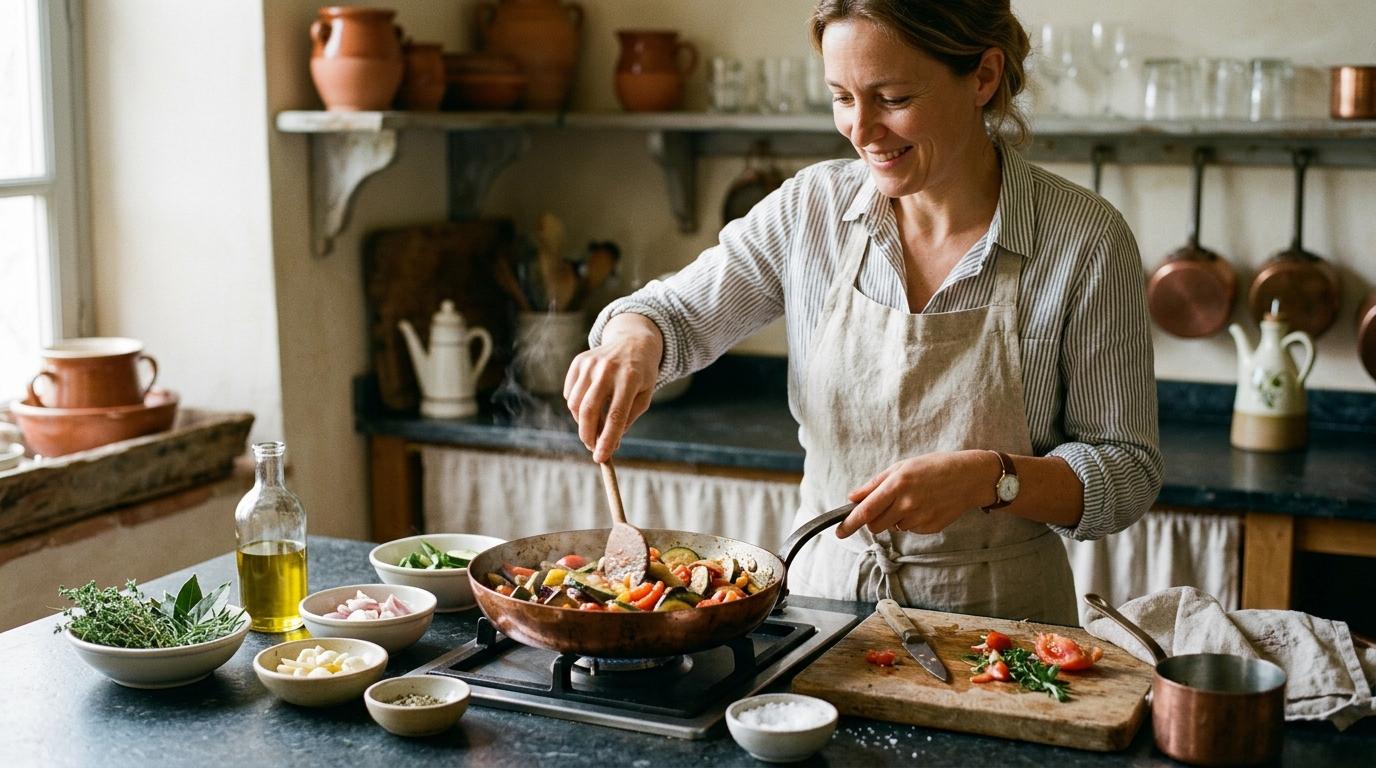
French cuisine isn't intimidating once you understand its building blocks. The techniques that make French recipes so compelling aren't mysterious—they're methodical approaches to coaxing the best from your ingredients. Whether you're browning butter for a simple fish dish or building a proper roux, these fundamentals will change how you cook everything.
French cooking techniques aren't about showing off. They're about efficiency, flavor development, and understanding what happens when heat meets food. Master these basics, and you'll find yourself reaching for them whether you're making scrambled eggs or tackling coq au vin.
The Foundation: Knife Skills That Matter
French cooking starts with the knife. Not because French chefs are obsessed with precision (though they are), but because consistent cuts cook evenly. When your onions are all the same size, they brown at the same rate. When your carrots match, they finish cooking together.
The julienne cut—those thin matchsticks—isn't fancy restaurant nonsense. It's practical. Vegetables cut this way cook quickly and evenly, perfect for stir-fries or as garnishes that actually add texture rather than just decoration.
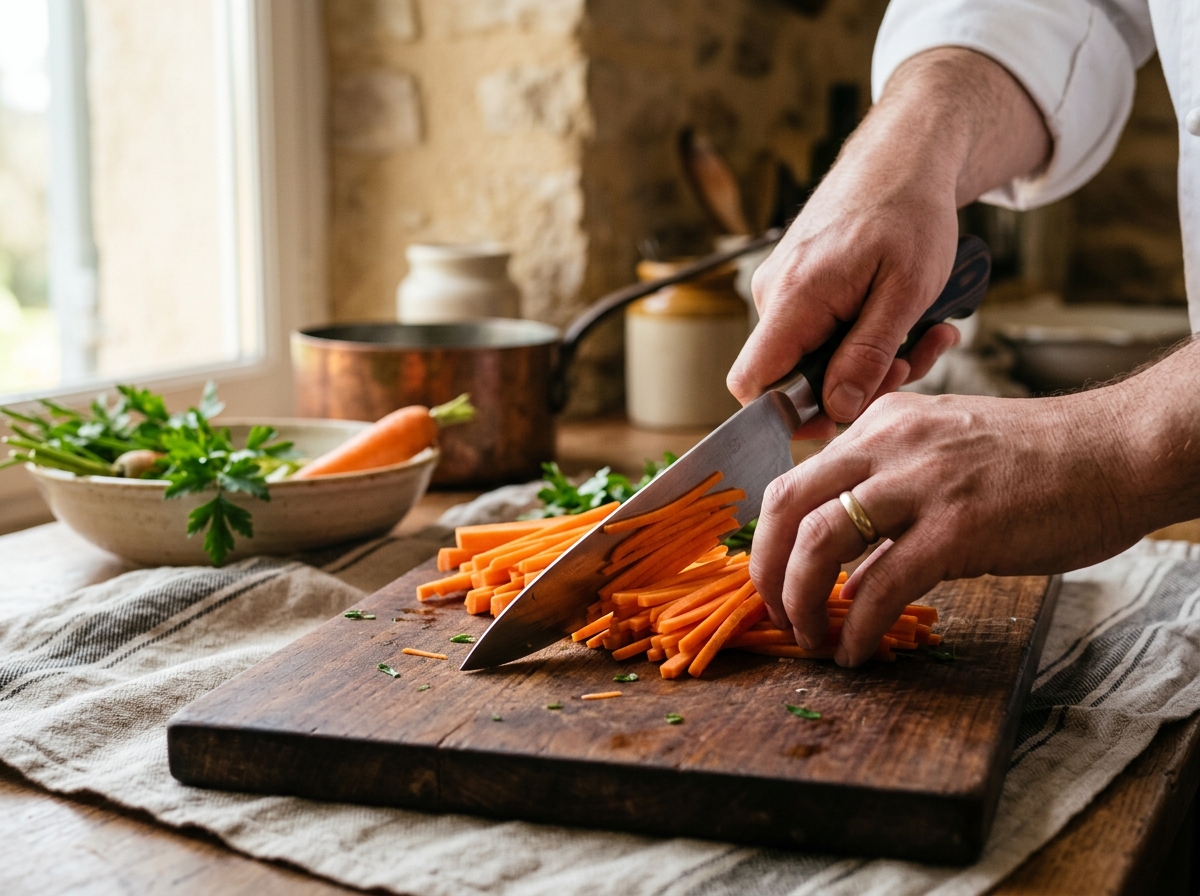
Start with the brunoise: tiny, uniform cubes about 1/8-inch square. This isn't about perfection—it's about understanding that smaller pieces cook faster and distribute flavor more evenly throughout a dish. Practice this cut with onions, carrots, and celery. These three together form the holy trinity of French cooking: mirepoix.
Your knife should feel like an extension of your hand, not a tool you're fighting. Keep it sharp—a dull knife is dangerous and makes clean cuts impossible. The rocking motion matters more than speed. Let the blade do the work.
Heat Control: The Heart of French Technique
French cooking is all about controlling heat. Not cranking it up and hoping for the best, but understanding what different levels of heat accomplish.
Sautéing literally means "to jump" in French. The food should move in the pan, not stick to it. Medium-high heat, enough fat to coat the bottom, and constant motion. When you sauté properly, you hear a gentle sizzle, not an angry spatter.
The pan needs to be hot before the food goes in. Test it by flicking a drop of water into the pan—it should dance and evaporate immediately. Add your fat (butter, oil, or both), let it shimmer, then add the food.
Confit sits at the opposite end of the heat spectrum. This slow cooking in fat might seem wasteful, but it's one of the most reliable ways to cook proteins gently. Duck legs confited in their own fat stay moist and develop deep flavor. Garlic confited in olive oil becomes sweet and spreadable.
You don't need to drown ingredients in fat for confit. Just enough to barely cover, then keep the temperature low—barely bubbling. The gentleness is the point.
Building Flavor: The French Sauce Foundation
French sauces aren't complicated—they're logical. Most start with the same building blocks: fat, flour, and liquid. Understanding these relationships unlocks hundreds of possibilities.
A roux is simply flour cooked in fat. Equal parts by weight, stirred constantly over medium heat until the raw flour taste disappears. White roux cooks just until the flour loses its raw edge—maybe two minutes. Blond roux goes a bit further, developing a nutty aroma. Brown roux gets darker and more complex but loses some thickening power.
The key to smooth sauces is temperature control. Add hot liquid to cool roux, or cool liquid to hot roux. Never hot to hot—that's how you get lumps that refuse to smooth out no matter how hard you whisk.
Beurre blanc teaches you about emulsification without eggs. Start with a reduction—shallots, white wine, and vinegar cooked down to almost nothing. Then whisk in cold butter, piece by piece, off the heat. The butter doesn't melt; it emulsifies into a silky, light sauce.
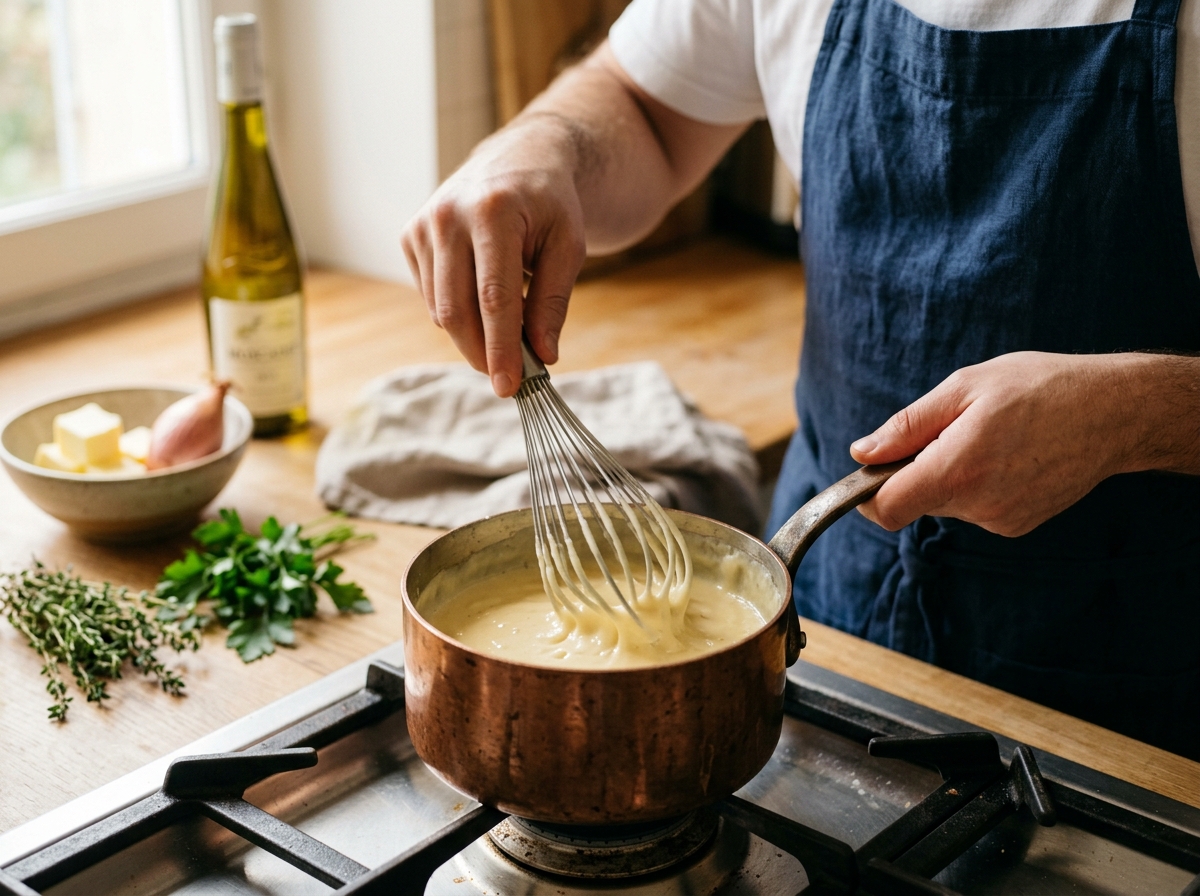
This technique works because butter is part water, part fat. The water helps create an emulsion while the fat provides richness. Keep it warm, not hot, or the emulsion breaks.
Key Ingredients That Define French Cooking
French cooking isn't about exotic ingredients—it's about understanding how common ingredients work together. The French larder is surprisingly straightforward.
Butter: Not just fat, but flavor. European-style butter has higher fat content and lower water content than American butter. It browns beautifully and creates better emulsions. Clarified butter has the milk solids removed, so it won't burn at higher temperatures.
Shallots: More complex than onions, milder than garlic. They dissolve almost completely when cooked slowly, making them perfect for sauce bases. One shallot minced fine can transform a pan sauce.
Wine and stock: These aren't ingredients you dump in for "flavor." They're building blocks. Good stock has body—it coats a spoon lightly when reduced. Wine adds acidity and depth, but the alcohol needs to cook off completely or it tastes harsh.
Fresh herbs: Thyme, parsley, chives, tarragon. Use them strategically. Hardy herbs like thyme can handle long cooking. Delicate ones like chives get added at the end. A small amount of fresh herbs brightens heavy dishes without overwhelming them.
Cream and crème fraîche: Heavy cream adds richness, but crème fraîche adds tang too. It won't curdle when you add it to hot pans, making it perfect for finishing sauces. You can make your own by adding a tablespoon of buttermilk to heavy cream and letting it sit at room temperature overnight.
Timing and Organization: The French Way
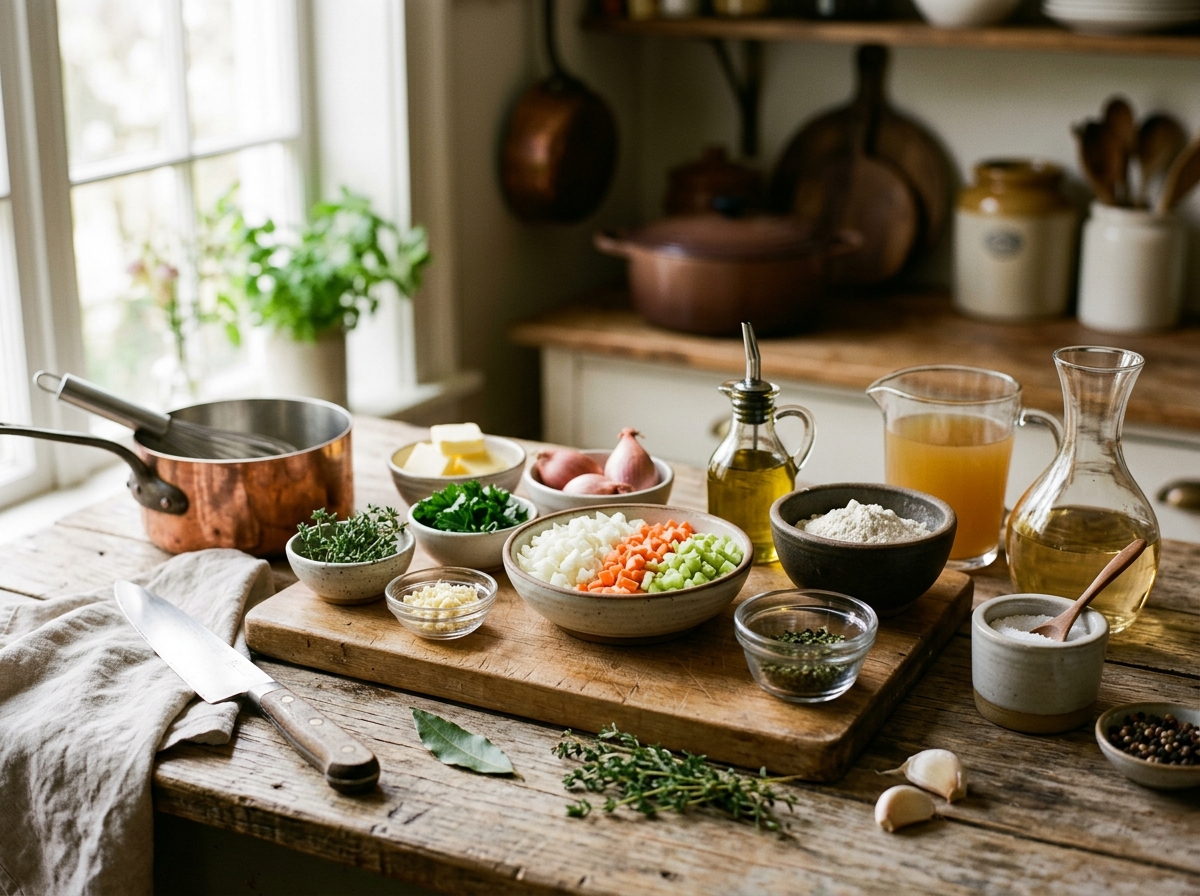
Mise en place—everything in its place—isn't just restaurant organization. It's how you cook confidently at home. French techniques often happen quickly once you start, so having everything measured, chopped, and ready matters.
Read the entire recipe first. Not just the ingredients list, but the method. Understand what's happening in each step and why. If a sauce needs to reduce by half, you need to know what "half" looks like before you start.
French cooking often layers flavors sequentially. You build the base, add the protein, create the sauce in the same pan. Each step uses the flavors left behind from the previous step. Don't wash the pan between steps unless the recipe specifically calls for it.
Temperature matters, but so does timing. A piece of fish might need four minutes per side, but those four minutes start when the fish hits the pan, not when you think about turning it. Trust your timer, but also trust your senses.
Putting It All Together: Practice Techniques
Start with simple applications that use multiple techniques. A basic fish with brown butter sauce teaches you about proper searing, butter browning, and sauce timing all in one dish.
Heat your pan until it's properly hot. Season your fish and add it to the shimmering oil. Don't move it—let it develop a crust. Meanwhile, in a separate small pan, melt butter over medium heat until it turns golden and smells nutty. Add a squeeze of lemon and some capers if you have them.
The fish sears while the butter browns. Both finish around the same time. You've just used three fundamental French techniques: proper searing, beurre noisette (brown butter), and timing coordination.
Try making a basic vinaigrette to understand emulsification without heat. Start with acid—vinegar or lemon juice—add a pinch of salt, then slowly whisk in oil. The mixture should thicken slightly and stay combined. This teaches you how emulsions work, knowledge you'll use in mayonnaise, hollandaise, and dozens of other applications.
Practice your knife skills with a simple mirepoix. Dice onions, carrots, and celery to the same size. Cook them slowly in butter until they're soft and translucent. This base appears in countless French dishes, and the repetition will improve your knife work naturally.
Beyond the Basics: Where French Techniques Lead
Once you understand these fundamentals, French cooking opens up. That roux you learned becomes the base for cheese sauce, which becomes the foundation for a proper gratin. The brown butter technique scales up to compound butters that can finish steaks or vegetables.
The beauty of French technique is how it builds on itself. Learn to make a proper omelette—controlling heat, understanding how eggs set, working quickly but gently—and you understand the principles behind scrambled eggs, custards, and soufflés.
French cooking isn't about memorizing recipes; it's about understanding principles. Why does this work? What happens if I change the heat, the timing, the proportions? Once you understand the why, you can adapt and improvise.
These techniques will show up in your everyday cooking whether you're making French food or not. That knife work helps with any cuisine. Understanding how heat affects proteins makes you better at grilling burgers. Sauce-making skills translate to gravies, pasta sauces, and stir-fry glazes.
Start with one technique and practice it until it feels natural. Then add another. French cooking is patient cooking—it rewards understanding over speed, technique over shortcuts. Master these fundamentals, and you'll find yourself reaching for them constantly, whether you're exploring more French recipes or simply trying to make Tuesday night dinner a little more delicious.
Sources & further reading
- Fundamentals of French Cooking: 9 Cooking Techniques — MasterClass
- Mastering the art of French cooking — École Ducasse
- French Cooking Techniques, Skills & Methods — Le Cordon Bleu London
- French Culinary Education: 7 French Cooking Techniques Chefs Need to Know — Auguste Escoffier School of Culinary Arts
Related Topics
Enjoyed this article? Share it with fellow food lovers!
Import a recipe, start cooking
Paste any recipe URL and we'll turn it into a Cook Mode experience with step-by-step visuals, voice narration, and built-in timers.