

Easy Thai Stir Fry Recipes for Busy Weeknights
Transform your weeknight dinners with lightning-fast Thai stir-fry recipes that deliver bold flavors in under 30 minutes. These techniques will have you cooking like a Bangkok street vendor from your home kitchen.
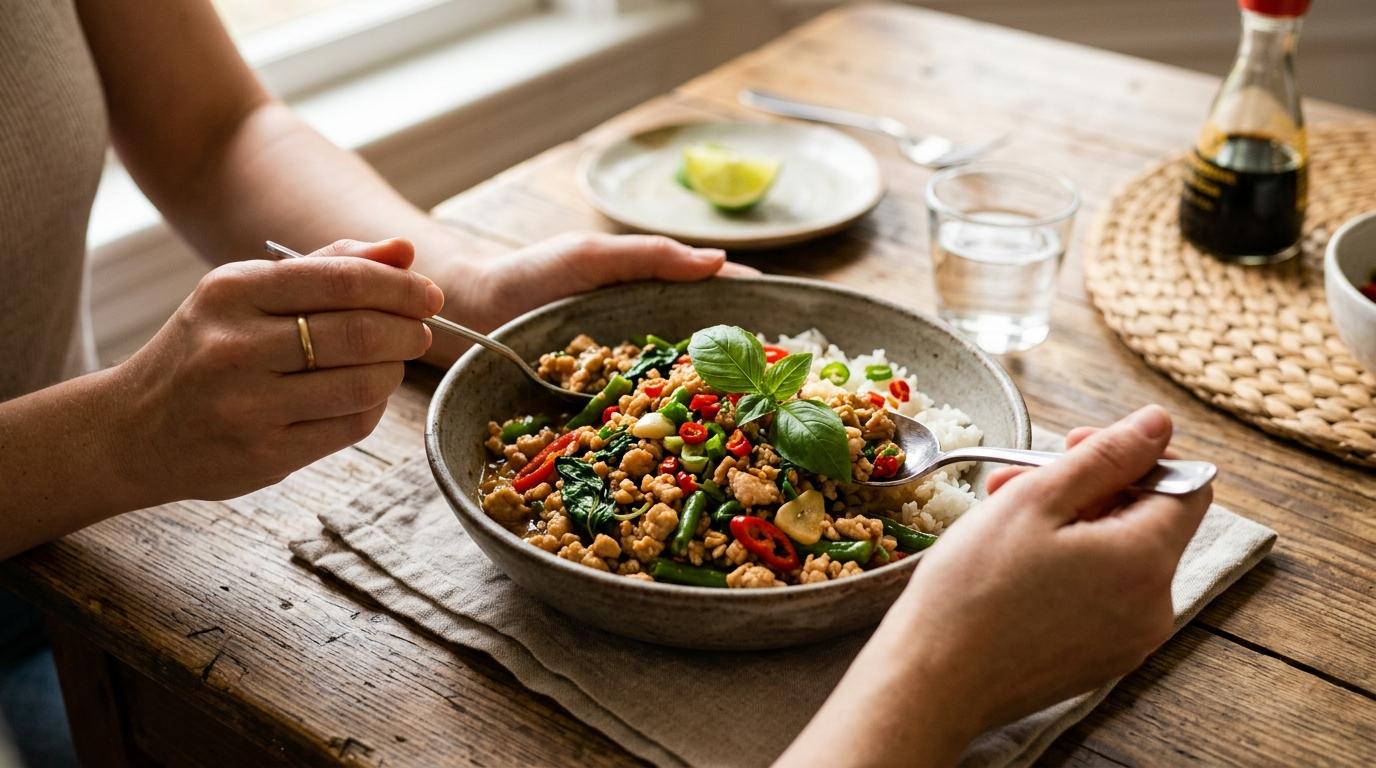
There's something magical about the sizzle of a hot wok meeting fresh ingredients — that moment when your kitchen transforms into a Bangkok street-food stall. Thai stir-fries deliver everything we crave on busy weeknights: bold flavors, vibrant colors, and the satisfaction of a meal that comes together faster than you can order takeout. Whether you're exploring the best Thai recipes or looking to expand your weeknight repertoire, mastering a few key stir-fry techniques will change how you approach dinner forever.
The beauty of Thai stir-frying lies in its speed and adaptability. Unlike slow-braised curries or complex noodle soups, stir-fries embrace the rush of weeknight cooking. You're working with screaming-hot oil, lightning-fast cooking times, and flavor combinations that pack maximum punch in minimum time.
The Foundation: Understanding Thai Stir-Fry Techniques
Thai stir-frying isn't just about tossing ingredients in a hot pan — it's a precise dance of timing, temperature, and technique. The key lies in understanding mise en place, the French term that Thai cooks have adopted for their own lightning-fast cooking style.
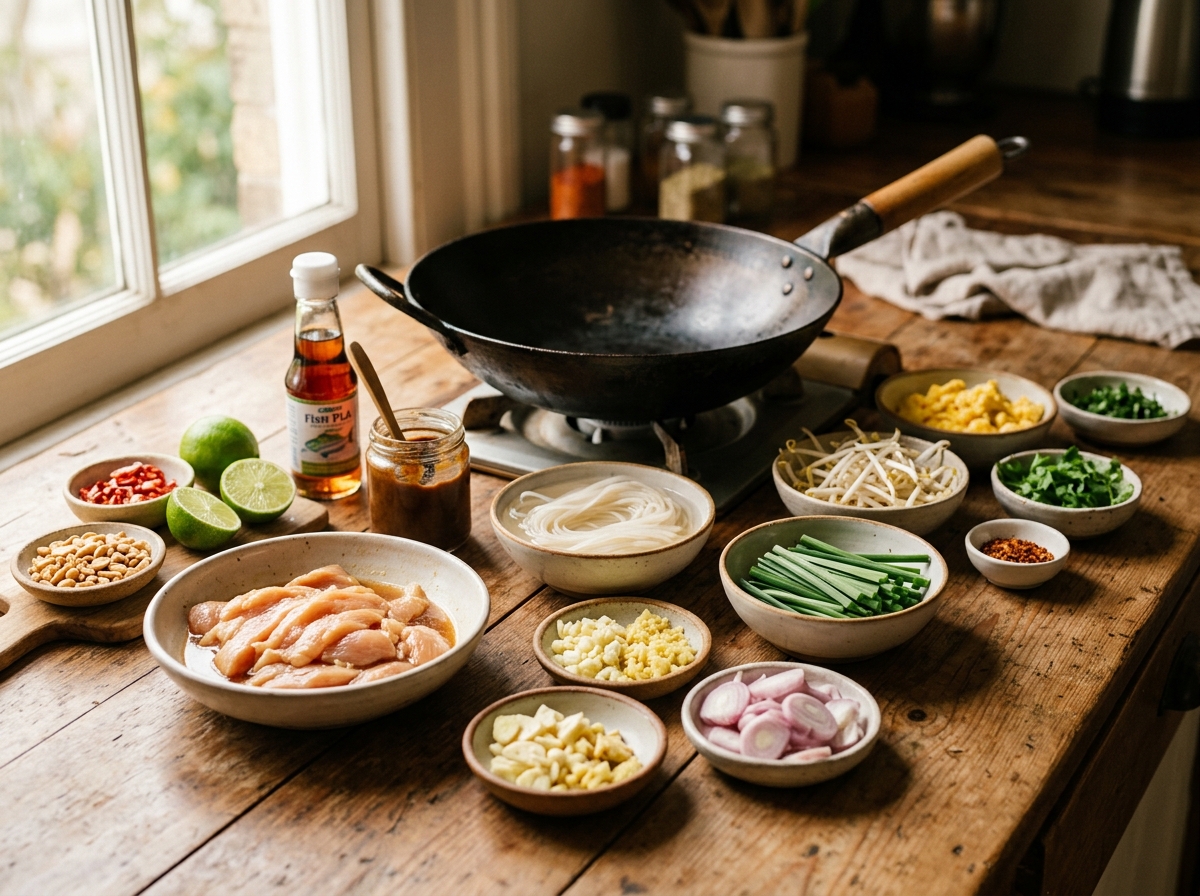
Before your wok touches the flame, everything must be ready. Proteins sliced thin, vegetables cut to uniform sizes, sauces mixed and waiting. Once that oil starts shimmering, there's no time for chopping or measuring. You're committing to a two-minute sprint that will determine whether your stir-fry sings or falls flat.
The wok itself matters, but don't let equipment intimidate you. A large, heavy-bottomed skillet heated until a drop of water dances and evaporates instantly will serve you well. The goal is to achieve wok hei — that slightly smoky, seared flavor that separates restaurant stir-fries from home cooking.
Essential Thai Stir-Fry Sauce Combinations
Thai stir-fry sauces follow a principle of balance — sweet, salty, sour, and spicy elements working in harmony. Unlike Chinese stir-fries that might rely heavily on soy sauce, Thai versions incorporate fish sauce, palm sugar, and fresh lime juice to create layers of complexity.
The foundation sauce for most Thai stir-fries combines fish sauce, oyster sauce, and a touch of sugar. This trinity provides umami depth, slight sweetness, and the funky salinity that makes Thai food so craveable. From this base, you can build specific flavor profiles.
For a classic pad see ew style sauce, add dark soy sauce for color and molasses-like richness. The sauce should coat a spoon lightly and taste slightly too intense on its own — it will mellow when it hits the hot ingredients and reduces.
Spicy stir-fries benefit from nam prik pao (Thai chili jam) or a quick paste made from garlic, chilies, and shallots pounded together. This isn't the time for subtle heat — Thai stir-fries embrace bold spice that cuts through rich proteins and vegetables.
Key Ingredients for Thai Stir-Fry Success
Building a Thai stir-fry pantry doesn't require a specialty store run, though a few key ingredients will elevate your cooking significantly. Fish sauce acts as the backbone — its pungent aroma transforms into pure umami when heated. Look for brands from Thailand or Vietnam, avoiding anything with added sugar or preservatives.
Oyster sauce provides sweetness and glossy body to stir-fry sauces. The best versions list oysters as the first ingredient and have a thick, molasses-like consistency. Chinese brands often work better than Thai ones for stir-frying, offering more concentrated flavor.
Palm sugar dissolves more smoothly than regular sugar and adds subtle caramel notes. Brown sugar works as a substitute, but use about half the amount — it's sweeter and more aggressive than palm sugar's mellow complexity.
Fresh aromatics make the difference between good and transcendent stir-fries. Garlic should be minced fine enough to disperse throughout the dish but not so fine it burns instantly. Shallots provide sweetness and depth that regular onions can't match. Thai chilies bring serious heat — remove seeds for warmth without fire, keep them for Bangkok-level spice.
Quick Thai Chicken Stir-Fry with Basil
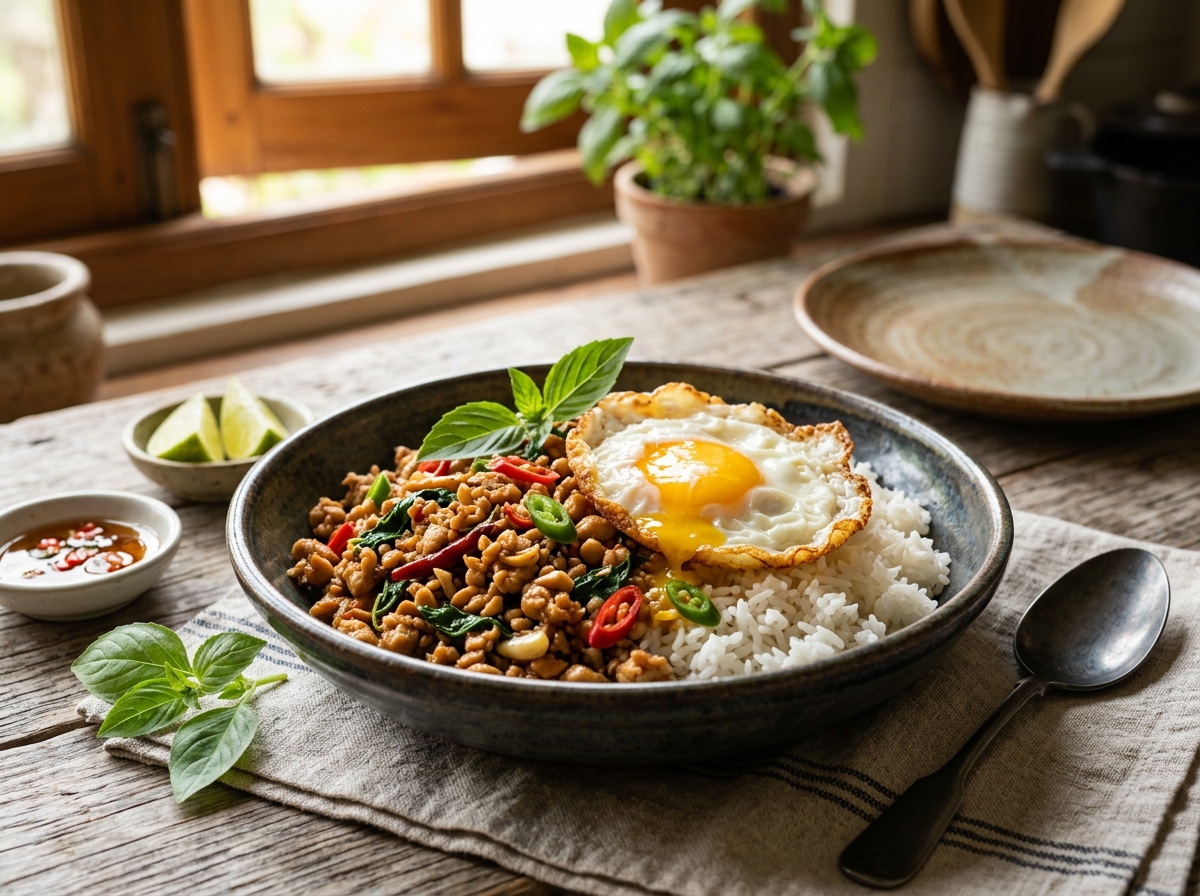
This version of pad kra pao captures the essence of Thailand's most beloved stir-fry in under fifteen minutes. The key lies in using ground chicken, which cooks faster than sliced meat and absorbs the sauce more completely.
Heat your wok until it's smoking, then add oil and immediately follow with minced garlic and chilies. They should sizzle aggressively — if not, your pan isn't hot enough. Add ground chicken, breaking it apart with your spoon as it cooks. Don't stir too frequently; let parts of the meat develop some caramelization.
Once the chicken is nearly cooked through, add your sauce mixture — fish sauce, oyster sauce, and a pinch of sugar. The liquid should bubble violently and reduce quickly. Finally, turn off the heat and add fresh Thai basil leaves, stirring just until they wilt.
Serve over jasmine rice with a fried egg on top. The runny yolk mixing with the spicy chicken creates the kind of comfort that makes weeknight cooking feel like a small victory.
Vegetable-Forward Thai Stir-Fries
Thai vegetable stir-fries celebrate seasonal produce with the same intensity as meat-based dishes. The key lies in understanding cooking times and adding vegetables in the right order.
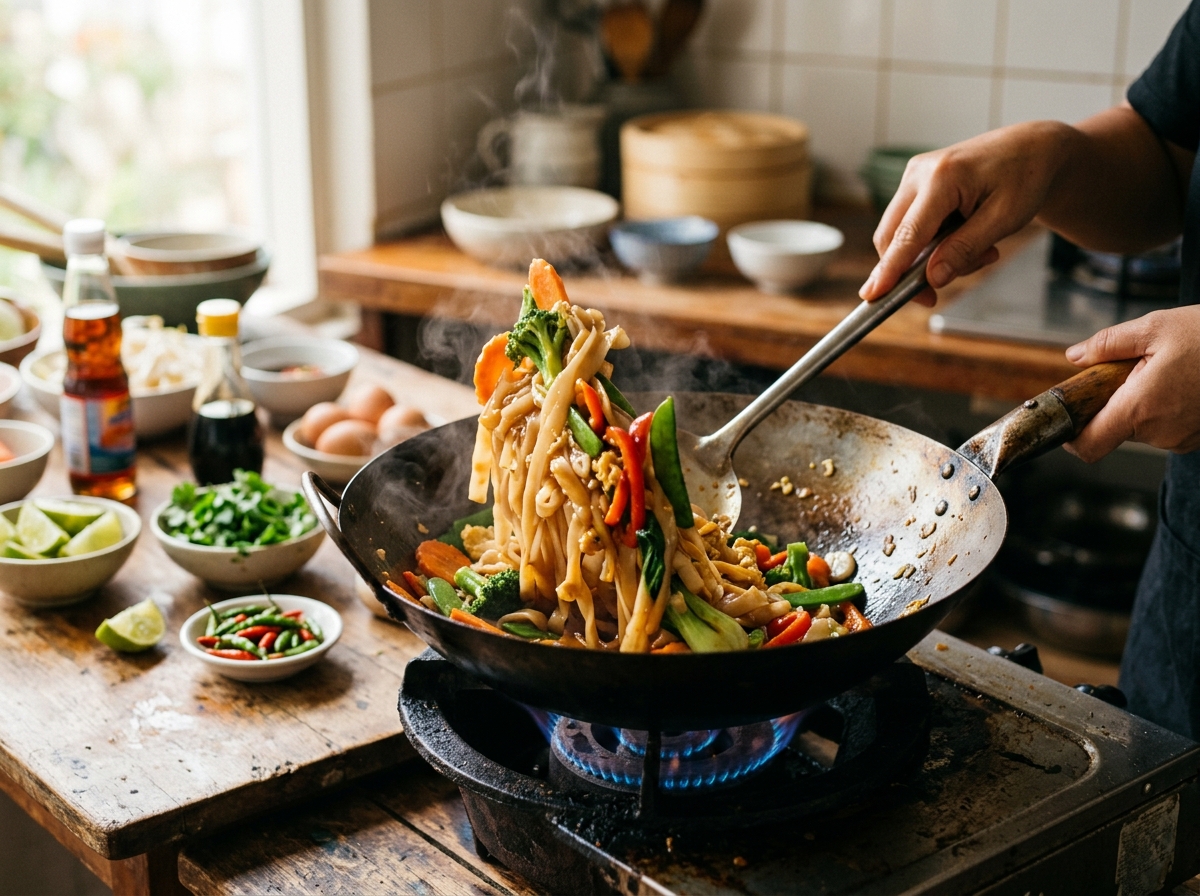
Dense vegetables like carrots, broccoli stems, and snap peas go in first, getting a head start on the heat. Medium-dense items like bell peppers and zucchini follow thirty seconds later. Delicate leaves — bok choy, spinach, Thai basil — wait until the final moments.
A classic pad pak ruam (mixed vegetable stir-fry) starts with garlic and chilies, adds the vegetables in stages, then finishes with a sauce of oyster sauce, soy sauce, and sugar. The vegetables should retain some crunch — overcooked vegetables turn to mush and lose their vibrant colors.
Bean sprouts deserve special mention. They cook in literally seconds and add crucial texture contrast. Add them at the very end, stirring just once or twice before serving. They should be heated through but still crisp.
Protein Swaps and Variations
Thai stir-fries adapt beautifully to whatever protein you have available. Thinly sliced beef works wonderfully but requires high heat and quick cooking to prevent toughness. Cut against the grain and marinate briefly in a mixture of soy sauce and cornstarch for velvet-smooth results.
Shrimp and squid cook so quickly they're almost foolproof. Add them last, cooking just until they turn opaque. Overcooked seafood becomes rubbery and loses its natural sweetness.
Tofu requires a different approach entirely. Press it well to remove excess water, then cube and pan-fry until golden before adding to your stir-fry. The crispy exterior prevents it from breaking apart when you add sauce and vegetables.
Leftover roasted meats work beautifully in Thai stir-fries. Add them at the end just to warm through, letting the sauce coat and revitalize yesterday's dinner.
Noodle Stir-Fry Essentials
Thai noodle stir-fries follow similar principles but require additional attention to texture and timing. Fresh rice noodles need only brief heating to prevent them from becoming gummy. Dried noodles should be slightly undercooked before adding to the wok — they'll finish cooking in the sauce.
The classic pad see ew technique applies to most noodle stir-fries: cook aromatics first, add protein, then noodles with sauce, finishing with vegetables that need only brief cooking. The noodles should be glossy and separate, not clumped together in a starchy mass.
Timing Your Weeknight Thai Stir-Fry
The beauty of Thai stir-fries lies in their speed, but that speed requires planning. Start your rice first — it takes longer than everything else combined. While it cooks, prep your ingredients and mix your sauces.
Heat your wok or skillet while you're finishing your prep. A properly heated pan is non-negotiable — ingredients should sizzle immediately upon contact. If they don't, wait. A few extra minutes of heating will save you from a sad, steamed stir-fry.
Cook aromatics first — garlic, ginger, chilies, shallots. They need just thirty seconds to release their flavors. Add proteins next, cooking until nearly done. Sauce goes in when the protein is about eighty percent cooked, followed by vegetables in order of cooking time.
Taste and adjust at the end. Thai food thrives on balance, and your final dish might need a squeeze of lime juice, pinch of sugar, or dash more fish sauce to reach perfection.
Storage and Meal Prep Tips
Thai stir-fries are best eaten immediately, but busy weeknights sometimes require advance planning. You can prep vegetables and mix sauces up to a day ahead, storing them separately in the refrigerator.
Cooked stir-fries store reasonably well for up to three days, though vegetables will lose some crunch. Reheat in a hot skillet rather than the microwave to revive some of the original texture and prevent sogginess.
Consider making double batches of sauce mixtures. They'll keep in the refrigerator for a week and make subsequent stir-fries even faster to prepare.
Beyond the Basics: Advanced Techniques
Once you've mastered basic Thai stir-fry techniques, experiment with more complex flavor combinations. Try adding coconut milk at the end for richness, or finishing dishes with crispy fried garlic and shallots for textural contrast.
Pounding your own curry pastes takes stir-fries to restaurant levels of complexity. Even a simple paste of garlic, chilies, and shallots, pounded with a mortar and pestle, adds depth that pre-made products can't match.
Consider garnishes that add both flavor and visual appeal. Crispy basil leaves, toasted peanuts, or fresh herbs scattered over the finished dish transform a simple stir-fry into something special enough for company.
Thai stir-fries prove that weeknight cooking doesn't require compromise. With proper technique and quality ingredients, you can create restaurant-worthy meals in the time it takes to order delivery. These recipes become second nature with practice, turning your kitchen into a hub of bold flavors and satisfying meals that bring the excitement of Thai cuisine to your everyday cooking routine.
Sources & further reading
- How to Stir Fry Anything in 5 Simple Steps — Hot Thai Kitchen (Pailin Chongchitnant)
- The "Original" Thai Holy Basil Stir Fry (pad kra pao) — Hot Thai Kitchen (Pailin Chongchitnant)
- Universal Stir Fry Sauce: Stir Fry Anything! — Hot Thai Kitchen (Pailin Chongchitnant)
- Why Thai Street Food in Bangkok is So Special to the World — Siam Paragon (Bangkok)
Related Topics
Enjoyed this article? Share it with fellow food lovers!
Import a recipe, start cooking
Paste any recipe URL and we'll turn it into a Cook Mode experience with step-by-step visuals, voice narration, and built-in timers.