

Easy French Chicken Recipes: Master Classic Techniques Simply
French chicken recipes transform humble poultry into restaurant-worthy dishes through time-tested techniques. These approachable recipes bring classic bistro flavors to your home kitchen without intimidating prep work.
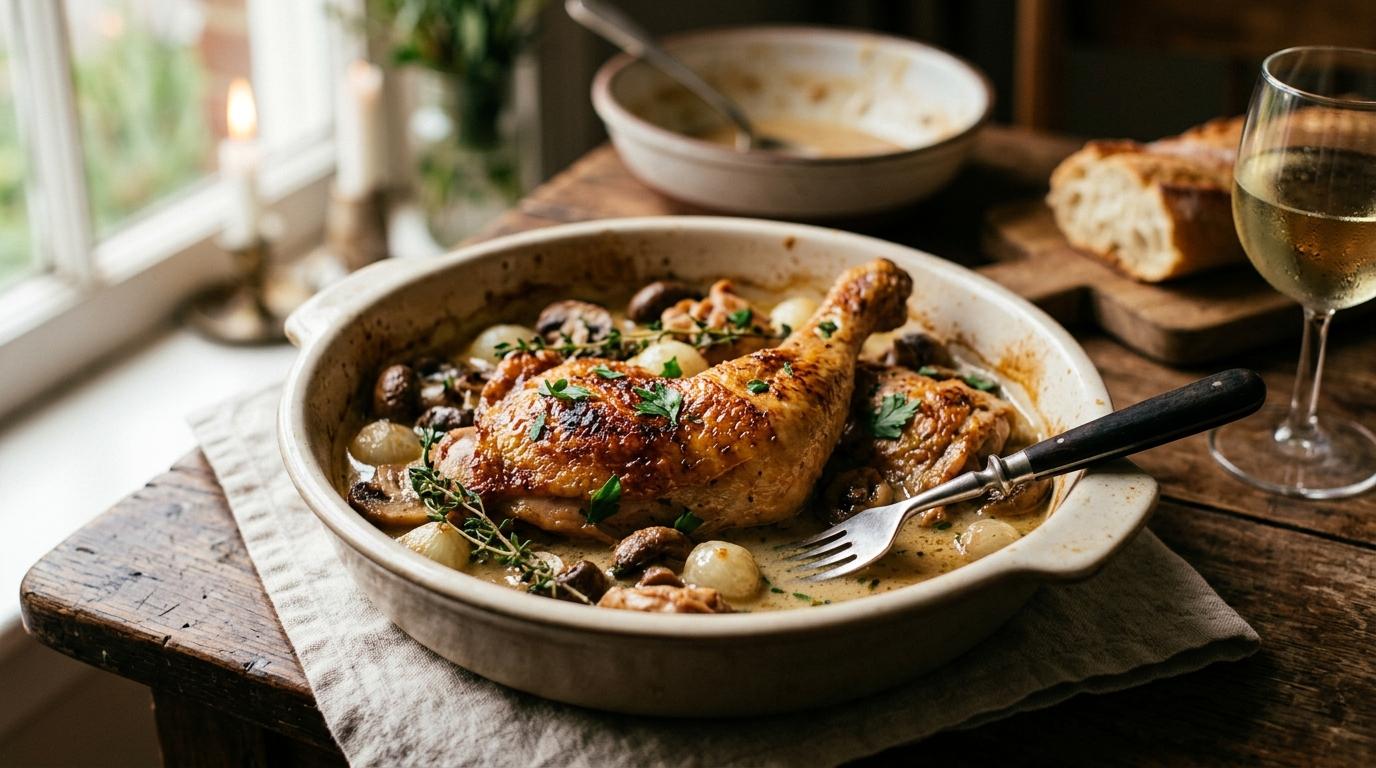
French chicken recipes represent the heart of bistro cooking—transforming everyday poultry into something memorable through technique rather than exotic ingredients. These dishes prove that French recipes don't need to intimidate; they just need respect for the process and patience with the simmer.
The magic lies in layering flavors through proper browning, building aromatics, and letting time work its alchemy. Whether you're braising thighs in wine or gently poaching breasts with herbs, French chicken cookery teaches you to coax maximum flavor from minimal fuss.
The Foundation: Understanding French Chicken Cookery
French chicken recipes revolve around a few core principles that separate them from other cuisines. First, the French rarely cook chicken breasts alone—they understand that thighs and drumsticks carry more flavor and forgive minor timing mistakes. Dark meat stays juicy during long, slow cooking methods that characterize French techniques.
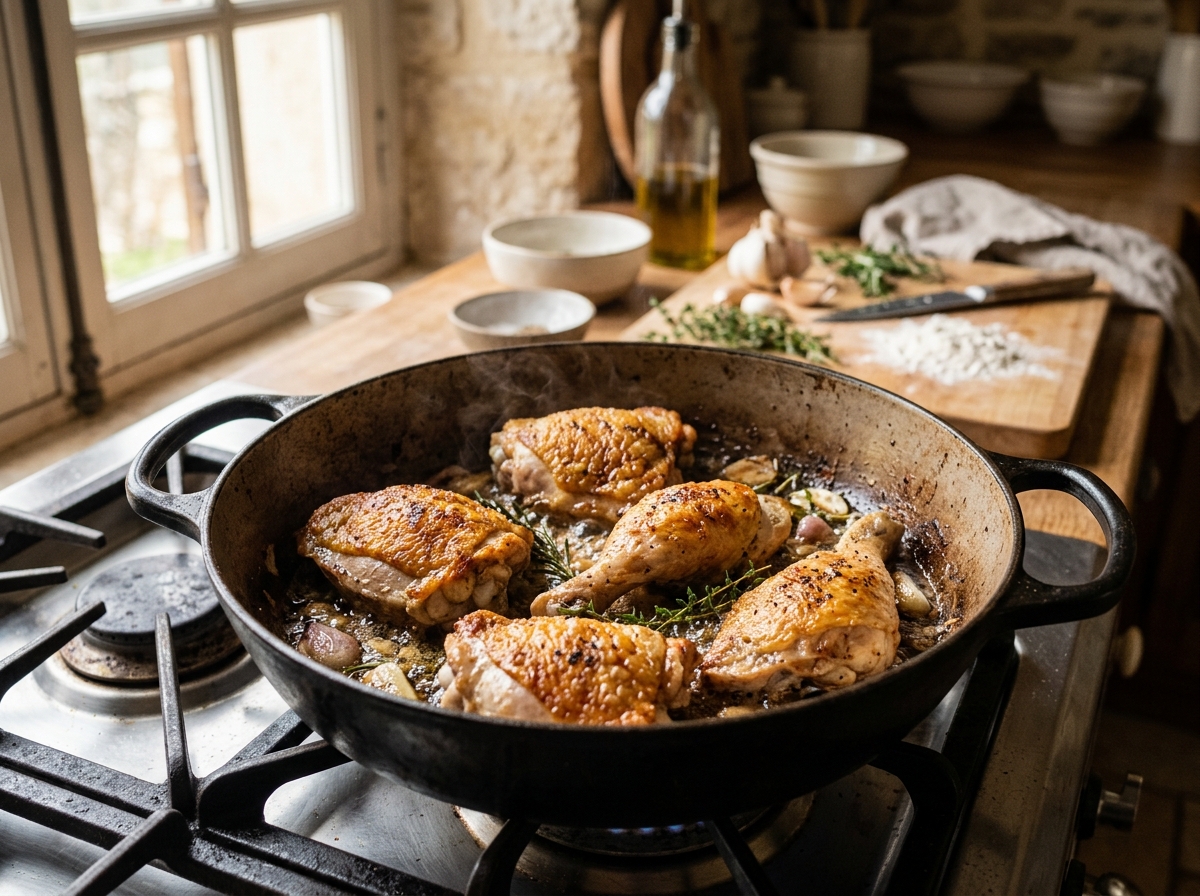
Second, browning isn't optional. That golden color you see on properly cooked French chicken comes from the Maillard reaction—proteins and sugars transforming under heat. This step builds the flavor foundation that separates amateur cooking from bistro-quality results.
Third, French cooks build layers. They start with aromatics like onions, carrots, and celery (the holy trinity known as mirepoix), add herbs at specific moments, and deglaze pans to capture every bit of flavor stuck to the bottom.
Essential Techniques for French Chicken Success
The sear-and-braise method dominates French chicken cookery. You brown the chicken pieces skin-side down until they release easily from the pan—rushing this step guarantees torn skin and missed flavor. The chicken should sound like it's gently frying, not violently spitting.
Deglazing comes next. After removing the chicken, you add liquid (wine, stock, or both) to the hot pan, scraping up those caramelized bits. This technique, called dissolving the fond, creates the base for your sauce. The liquid should bubble vigorously at first, then calm as the alcohol cooks off.
French braising happens at a gentle simmer, not a rolling boil. The surface should barely break with lazy bubbles. This low, steady heat keeps the chicken tender while the flavors marry and concentrate.
Coq au Vin: The Gateway French Chicken Recipe
Coq au vin might sound intimidating, but it's essentially chicken braised in wine with vegetables—a technique any home cook can master. Traditionally made with an old rooster (coq), this dish transforms tough meat through slow cooking in Burgundy wine.
Start with chicken thighs and drumsticks, skin-on. Pat them completely dry—moisture is the enemy of good browning. Season generously with salt and pepper, then brown them in batches in a heavy pot. Don't crowd the pan; overcrowding steams the chicken instead of browning it.
The aromatics for coq au vin include pearl onions, mushrooms, and lardons (small bacon pieces). Cook these after removing the chicken, building layers of flavor in the same pot. The mushrooms should release their moisture and start to caramelize before you add the wine.
Red wine—preferably something you'd drink—goes in next, along with chicken stock and a bouquet garni (thyme, bay leaves, and parsley tied together). The liquid should come about halfway up the chicken pieces. Cover and simmer gently for 45 minutes to an hour, until the chicken pulls easily from the bone.
Chicken Fricassee: Elegant Comfort Food
Fricassee represents the gentler side of French chicken cookery—a white stew where the chicken never browns. This technique preserves the pale color while creating an incredibly silky sauce enriched with cream and egg yolk.
Cut your chicken into serving pieces and season with salt and white pepper. In a heavy pot, melt butter over medium-low heat and add the chicken pieces. They should gently cook without coloring, turning occasionally. This takes patience—about 15 minutes of gentle cooking.
Add your mirepoix vegetables and cook until softened but not browned. Sprinkle flour over everything and cook for two minutes, stirring constantly. This creates a light roux that will thicken your sauce.
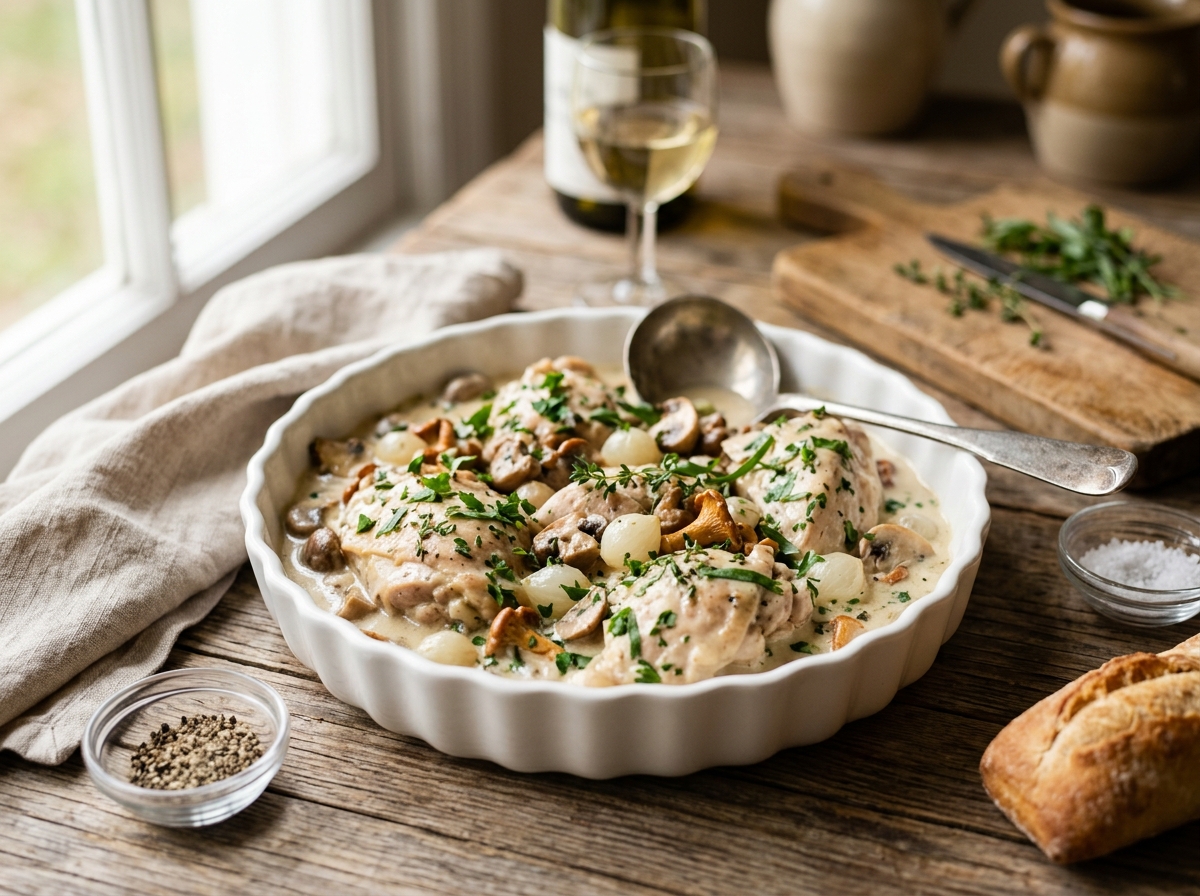
White wine and chicken stock go in gradually, whisking to prevent lumps. Add herbs—tarragon works beautifully here—and simmer gently until the chicken is tender. The final touch comes from a liaison: egg yolks whisked with heavy cream, then tempered into the hot sauce. This creates the velvety finish that makes fricassee special.
Poulet aux Herbes: Herb-Roasted Simplicity
Sometimes the best French chicken recipes are the simplest. Poulet aux herbes—chicken with herbs—relies on high-quality chicken, good butter, and a careful hand with seasoning. This dish showcases French technique without complicated steps.
Use a whole chicken, cut into pieces, or mix thighs and breasts. Create an herb paste with chopped parsley, thyme, rosemary, and garlic mixed into softened butter. Work this mixture under and over the skin, seasoning generously with salt and pepper.
Roast at moderate heat—375°F works well—starting skin-side up. The chicken should develop golden color while staying juicy inside. Baste occasionally with the pan juices, which will be flavored with the herb butter.
The beauty of this dish lies in its restraint. No heavy sauces mask the chicken's flavor; the herbs complement without overwhelming. Serve with roasted vegetables or a simple green salad dressed with the pan drippings.
Chicken Chasseur: Hunter's Style Comfort
Chasseur means "hunter" in French, and this rustic dish supposedly sustained hunters during long days afield. It combines chicken with mushrooms, tomatoes, and white wine in a sauce that's both hearty and refined.
The key to good chasseur lies in cooking the mushrooms properly. Use a mix of varieties—button, cremini, and shiitake work well together. Cook them in batches so they brown rather than steam, and don't salt them until they've released their moisture and started to caramelize.
After browning your chicken pieces, build the sauce in the same pan. Shallots provide a milder onion flavor that works well with the mushrooms and tomatoes. Use canned San Marzano tomatoes if fresh ones aren't perfect—better canned tomatoes than mediocre fresh ones.
The sauce should be chunky and robust, with the tomatoes breaking down slightly but still maintaining some texture. Fresh tarragon added at the end brightens the dish and connects it to its French heritage.
Key Ingredients for French Chicken Success
Quality chicken makes all the difference in French cooking. Look for air-chilled birds when possible—they develop better browning and have superior texture. Free-range chickens offer more flavor, though they require gentler cooking since they're leaner.
French butter, with its higher fat content and cultured flavor, elevates any chicken dish. If you can't find French butter, use high-quality European-style butter. The extra richness becomes apparent in the finished dish.
Wine matters, but it doesn't need to be expensive. Use something you'd drink—the cooking process concentrates flavors, so flaws in cheap wine become magnified. A decent Côtes du Rhône or Burgundy works well for red wine dishes, while a crisp Sancerre or Muscadet suits white wine preparations.
Fresh herbs transform these dishes from good to exceptional. Tarragon, in particular, tastes distinctly French and pairs beautifully with chicken. Thyme, rosemary, and parsley form the backbone of French herb combinations.
Good stock—preferably homemade chicken stock—adds depth that water or low-quality boxed stock can't match. If making stock isn't practical, choose a high-quality store-bought version with minimal additives.
Timing and Temperature: The Technical Side
French chicken cookery demands attention to temperature, both in cooking and serving. Chicken thighs should reach 165°F internal temperature, while breasts stay juicy at 155°F (carryover cooking brings them to safe temperatures).
Most French chicken dishes benefit from resting after cooking. This allows juices to redistribute and flavors to settle. Five to ten minutes under loose foil suffices for most preparations.
Braised dishes often improve after a day in the refrigerator. The flavors meld and deepen, making next-day leftovers sometimes superior to the original meal. Reheat gently to preserve texture.
Serving French Chicken: The Final Touches
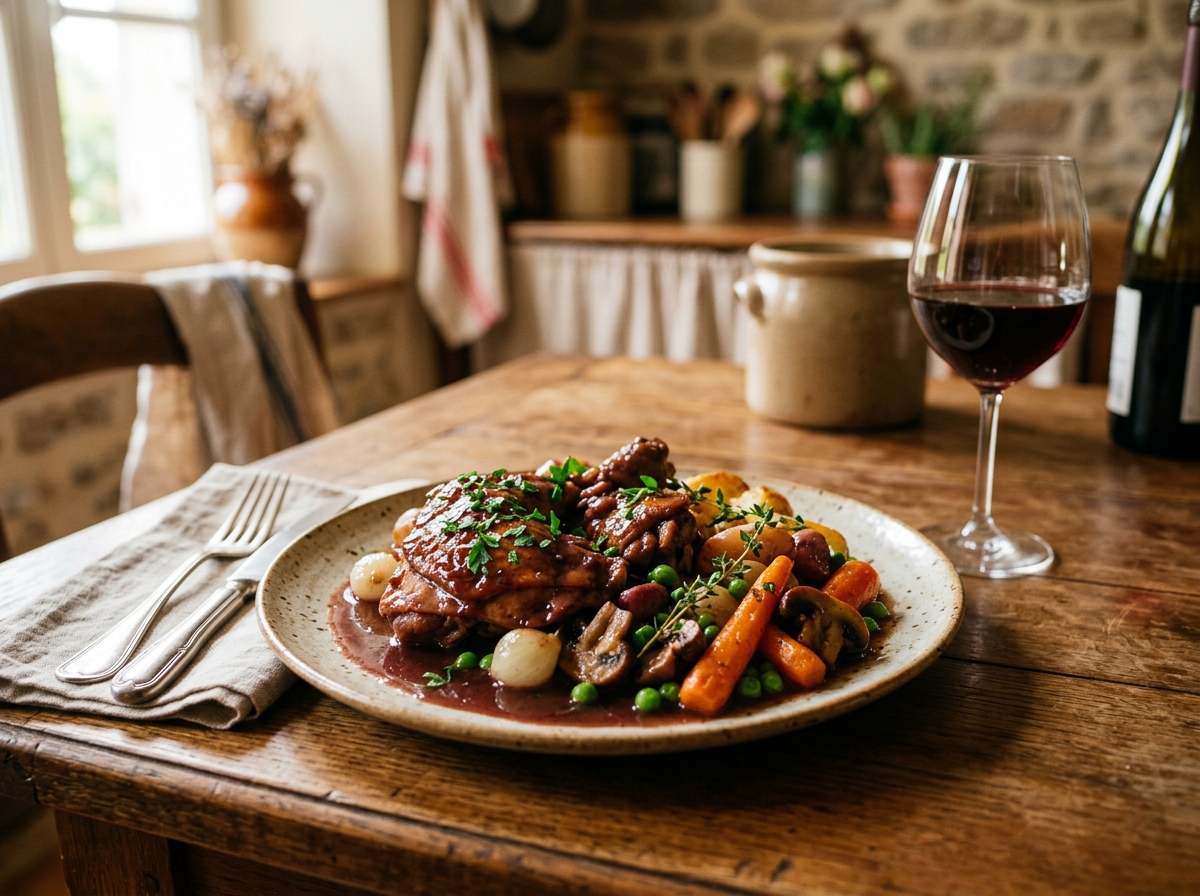
French chicken dishes deserve thoughtful presentation, but nothing fancy or overthought. Warm plates make a difference—cold plates cool the food too quickly and dull the flavors.
Garnish simply: a sprinkle of fresh herbs, a drizzle of good olive oil, or a spoonful of the cooking juices. French cooking lets the food speak for itself rather than hiding behind elaborate plating.
Wine pairings follow logical patterns. Red wine dishes pair with similar wines to those used in cooking. White wine preparations call for crisp whites that won't compete with delicate sauces. When in doubt, choose French wines—they've evolved alongside these dishes for centuries.
Making It Your Own
These French chicken recipes provide frameworks rather than rigid formulas. Substitute vegetables based on what's seasonal and available. Use different herbs when your garden offers alternatives. The techniques remain constant while the details adapt to your kitchen and taste.
Start with one recipe and master it before moving to the next. Understanding how browning builds flavor in coq au vin prepares you for chasseur. Learning the gentle technique of fricassee makes you better at any cream-based sauce.
French chicken cookery teaches patience, attention to detail, and respect for ingredients. These lessons extend beyond any single recipe into a broader understanding of how flavor develops through proper technique.
Whether you're exploring French recipes for the first time or deepening your existing knowledge, these chicken dishes offer accessible entry points into a rich culinary tradition. They prove that good French cooking doesn't require complicated ingredients or professional equipment—just understanding, practice, and respect for the process.
Sources & further reading
- 18 Best Chicken Dishes in France — TasteAtlas
- Recipe Review: Julia Child's Coq au Vin from Mastering the Art of Fine Cooking — The Kitchn
- Deglazing (cooking) — Wikipedia
- Julia Child's Coq Au Vin — GBH (WGBH)
Related Topics
Enjoyed this article? Share it with fellow food lovers!
Import a recipe, start cooking
Paste any recipe URL and we'll turn it into a Cook Mode experience with step-by-step visuals, voice narration, and built-in timers.