
Classic French Soups and Stews: 8 Essential Recipes
French soups and stews transform humble ingredients into sophisticated comfort food. From silky bisques to hearty cassoulet, these time-honored recipes showcase the soul of French cooking.
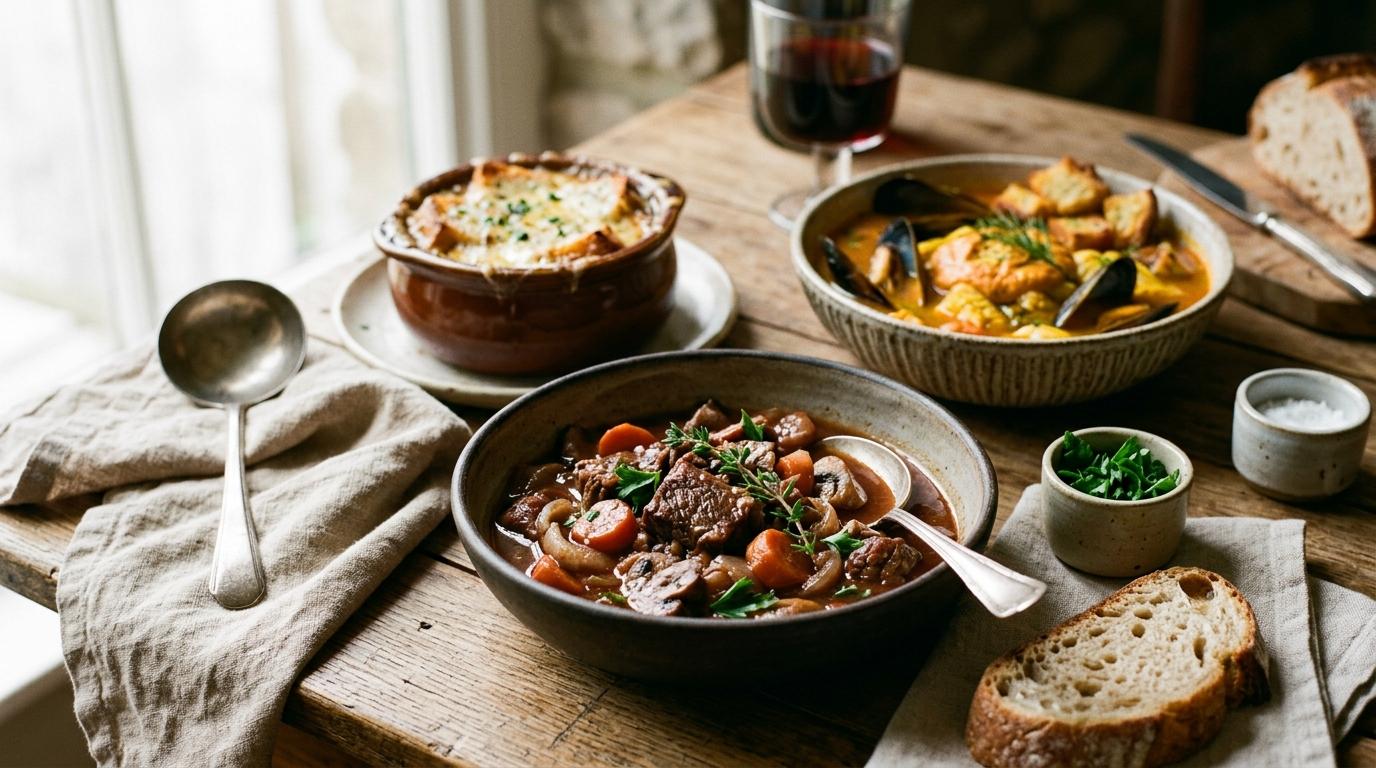
French soup recipes represent the heart of comfort cooking—where technique meets soul food. From the fish markets of Marseille to the bistros of Paris, these dishes transform simple ingredients into liquid poetry. Whether you're exploring our complete collection of French recipes or diving deep into this cornerstone of French cuisine, mastering these soups and stews opens the door to understanding French cooking philosophy.
French soups aren't just about filling bowls. They're about building flavor layer by layer, respecting ingredients, and understanding that great cooking often means knowing when to step back and let time do the work.
The Foundation: Understanding French Soup Techniques
French soup-making relies on three fundamental techniques that separate amateur efforts from restaurant-quality results. First, the sofrito—that slow, patient cooking of aromatics until they surrender their essence. Second, the art of building stocks that carry depth without overwhelming delicate flavors. Third, the finishing touches that transform good soup into memorable soup.
Most French soups begin with a mirepoix: diced onions, carrots, and celery cooked until fragrant. But here's where technique matters—you're not browning these vegetables to caramelize them. You want them translucent and sweet, their cellular walls broken down to release flavor compounds that will infuse the entire pot.
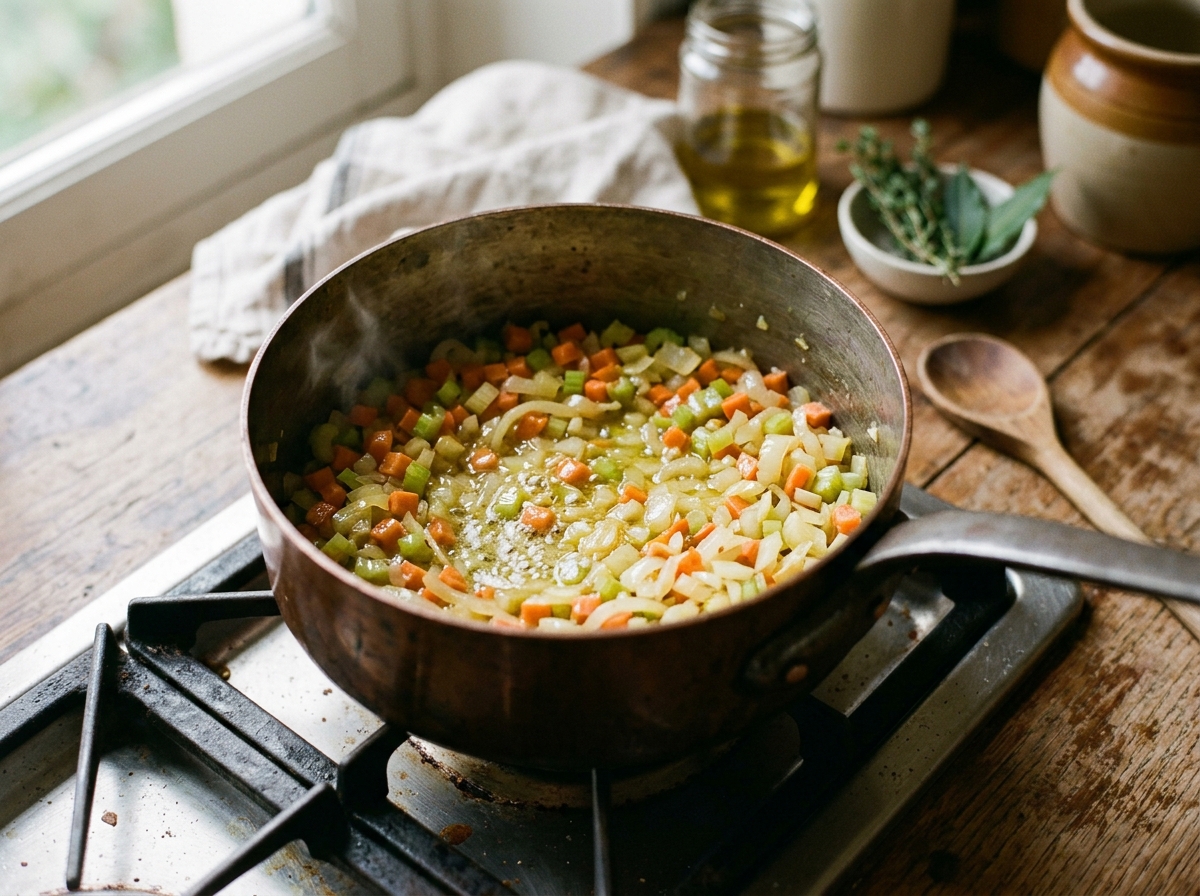
Temperature control separates novice from practiced cooks. Keep the heat moderate. Rush this step, and you'll taste the difference in the finished soup—harsh edges where there should be silk.
Classic French Onion Soup: The Bistro Standard
French onion soup demands patience more than skill. The secret lies in caramelizing onions properly—a process that takes at least 45 minutes and can't be rushed. Yellow onions work best; they have the sugar content needed for proper caramelization and won't turn bitter under long, slow cooking.
Start with six large onions, sliced thin. Cook them in butter over medium-low heat, stirring occasionally. The onions will release their moisture first, then gradually turn golden, then deep amber. This is where amateur cooks bail out—right before the magic happens. Keep cooking until they're mahogany brown and smell like candy.
The stock matters enormously. Beef stock provides the backbone, but many French chefs add a splash of white wine to brighten the final flavor. Dry sherry works too. The cheese—Gruyère, never anything pre-shredded—should melt into golden bubbles under the broiler.
Bouillabaisse: Provence in a Bowl
Bouillabaisse carries more mythology than most French dishes deserve, but the reality is simpler than the legend. This Provençal fish stew relies on technique over exotic ingredients. You need firm white fish, shellfish, and a few key aromatics. The magic happens in the stock-building and the final assembly.
The base starts with fennel, onions, tomatoes, and garlic cooked until soft. Saffron isn't optional—it provides both flavor and the characteristic golden color. But here's the crucial part: you build the stock with fish bones and shells, simmering them just long enough to extract flavor without extracting bitterness.
Add the fish in order of cooking time—dense, firm fish first, delicate shellfish last. Each piece should cook just until opaque. Overcook anything, and you've ruined the texture that makes bouillabaisse special.
Key Ingredients for French Soup Success
Quality ingredients make the difference between good soup and great soup. For aromatics, look for firm onions with papery skins—they should feel heavy for their size. Fresh herbs matter more in French soups than dried; thyme, bay leaves, and parsley form the holy trinity of French soup seasoning.
Stock quality can make or break any soup. Homemade stock wins every time, but if you're buying, choose low-sodium versions so you control the salt level. Many French soups finish with cream or butter—use European-style butter with higher fat content for richer flavor.
Wine deserves attention too. Don't cook with anything you wouldn't drink. That doesn't mean expensive bottles, but it does mean avoiding "cooking wines" with added salt and preservatives.
Cassoulet: The Ultimate French Stew
Cassoulet represents French stew-making at its most serious. This white bean stew from southwest France traditionally includes duck confit, sausage, and sometimes lamb, all slow-cooked until the flavors meld into something greater than the sum of its parts.
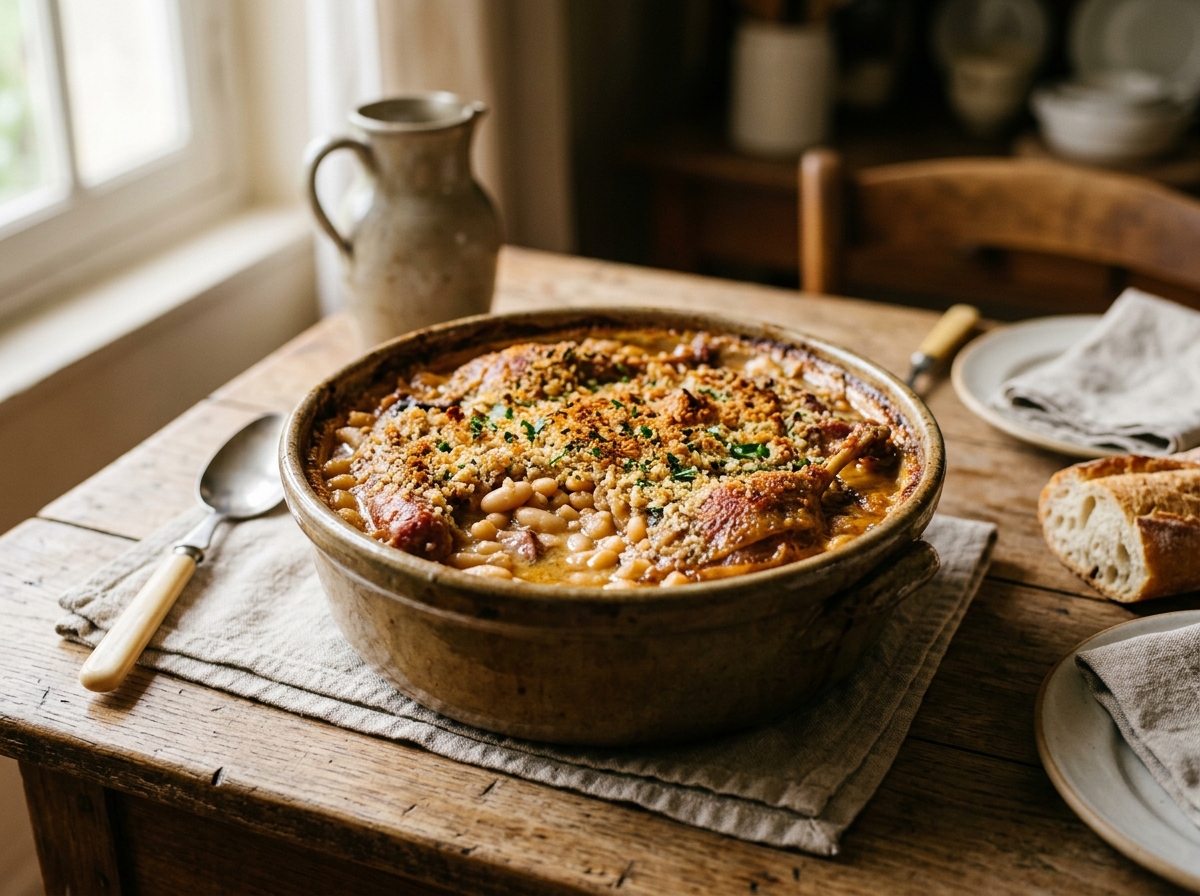
The beans—white navy or cannellini—need overnight soaking, then gentle cooking until tender but not mushy. The meat gets rendered to release fat, which becomes part of the cooking medium. Everything goes into a heavy pot or cassole (the dish's namesake) and cooks low and slow.
The controversial part: the crust. Traditional cassoulet develops a golden crust during cooking, which gets broken and stirred back into the stew multiple times. Some purists insist on specific numbers of crust-breakings. We say cook it until it tastes right—usually two to three hours.
Cream-Based French Soups: Bisques and Potages
French cream soups require different techniques than broth-based soups. Bisques, traditionally made with shellfish, rely on extracting maximum flavor from shells and aromatics before straining everything smooth. Lobster bisque remains the gold standard, but crab and shrimp versions shine too.
The technique: sauté lobster shells with aromatics, add brandy and white wine, then stock. Simmer until the liquid tastes intensely of shellfish—usually 30-45 minutes. Strain everything, pressing the solids to extract every drop of flavor. Finish with cream and a touch of cayenne.
Vegetable potages follow similar principles but focus on coaxing maximum flavor from vegetables. Leek and potato soup showcases this technique beautifully. Cook leeks until silky, add potatoes and stock, simmer until tender, then purée smooth. The finishing touch—a knob of butter stirred in just before serving—adds richness and gloss.
Coq au Vin: Wine-Braised Perfection
Coq au vin straddles the line between soup and stew, landing firmly in comfort food territory. This Burgundian classic transforms tough old roosters (or today's chicken) through wine-braising into fork-tender perfection.
The wine matters here more than in most recipes. Burgundy remains traditional, but any good red wine works. The chicken gets browned first to develop flavor, then braised in wine with mushrooms, pearl onions, and bacon. Low, slow cooking breaks down connective tissues while the wine reduces into a glossy, wine-dark sauce.
Don't skip the bacon—it provides both fat for browning and smoky flavor that anchors the entire dish. Pearl onions can be fiddly to peel, but they hold their shape better than regular onions during long braising.
Pro Tips for Perfect French Soups
Season in layers, not just at the end. Salt draws moisture from vegetables and intensifies flavors during cooking. Taste frequently and adjust as you go.
Temperature control prevents most soup disasters. Simmering means gentle bubbles, not violent boiling. Boiling breaks emulsions and makes proteins tough.
Finish with acid—a splash of vinegar or lemon juice brightens flavors and balances richness. Add it just before serving to maintain brightness.
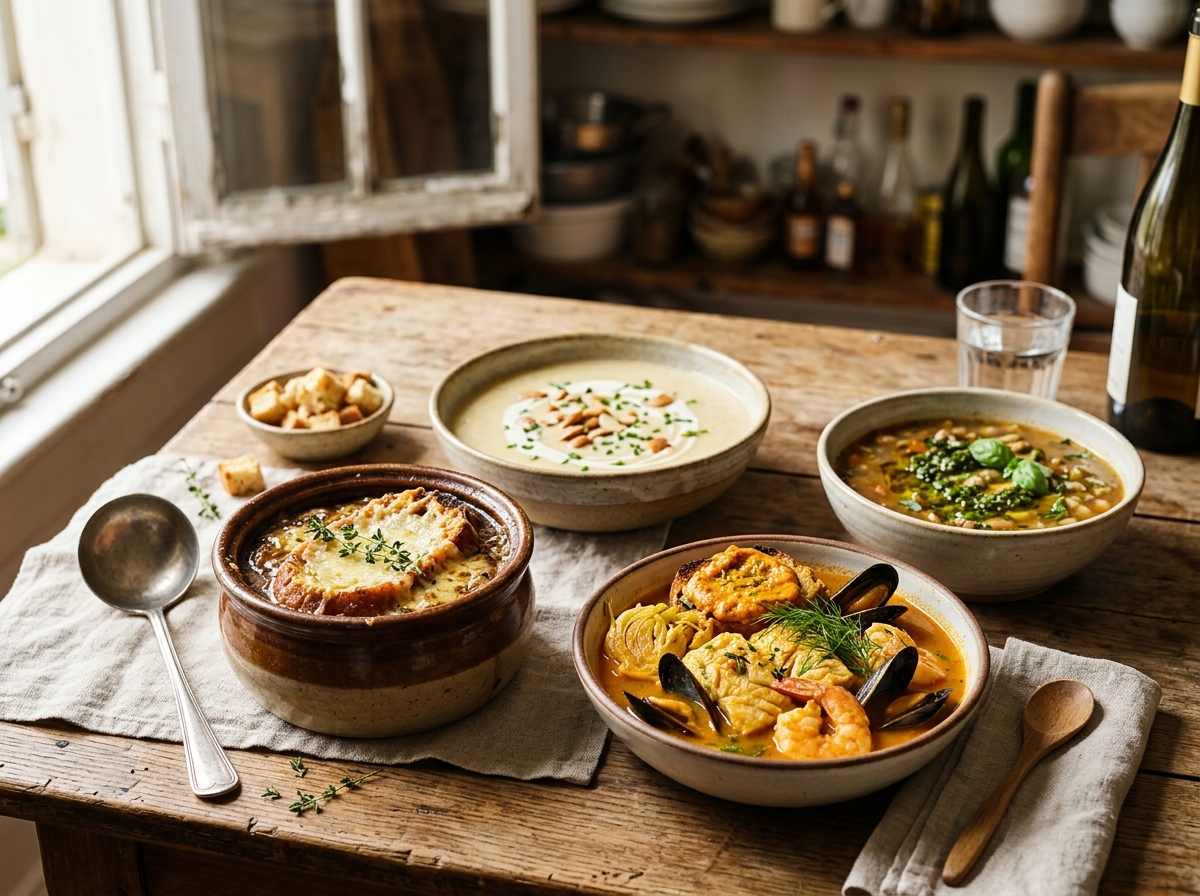
Rest matters for stews. Cassoulet, coq au vin, and other braised dishes taste better the next day after flavors have had time to meld. Make them ahead when possible.
Serving French Soups Like the French Do
Presentation matters in French cooking, even for humble soups. Warm your bowls—cold bowls cool soup too quickly. Garnish thoughtfully: a drizzle of good olive oil, fresh herbs, or a dollop of crème fraîche can elevate simple soups.
Bread accompanies most French soups, but choose wisely. Crusty baguette slices work for brothy soups. Buttered toast points complement creamy soups. For French onion soup, the bread becomes part of the dish itself.
Wine pairing follows simple rules: light soups want light wines, rich soups can handle bigger wines. But don't overthink it—French bistros serve whatever wine tastes good with whatever soup they're making.
Beyond the Classics: Modern French Soup Techniques
Contemporary French cooking has evolved these classic techniques in interesting directions. Molecular gastronomy has given us foam garnishes and temperature play. But the fundamentals remain the same: build flavor slowly, respect ingredients, and finish with care.
Immersion blenders have revolutionized soup-making, allowing for partial pureeing that creates texture without losing chunky elements. Food processors can emulsify ingredients that traditionally required laborious straining.
But technology can't replace understanding. The best French soups still rely on the cook's judgment—knowing when onions are properly caramelized, when vegetables are sufficiently softened, when seasoning hits the right balance.
Mastering the Art of French Soup-Making
French soup recipes teach us that great cooking isn't about complicated techniques or exotic ingredients. It's about understanding how flavors develop, respecting the cooking process, and knowing when to trust time to do the work.
These soups and stews represent centuries of refinement—home cooks and professional chefs working together to perfect techniques that transform simple ingredients into extraordinary meals. Whether you're exploring the full range of French recipes or focusing specifically on soups, these classics provide the foundation for understanding French culinary philosophy.
Start with one recipe that appeals to you. Master the technique. Then apply those same principles to other soups. Before long, you'll be cooking not just French soup recipes, but thinking like a French cook—building flavors, trusting the process, and creating meals that nourish both body and soul.
Sources & further reading
- History of French Cassoulet — D'Artagnan
- How to Make Bouillabaisse: Classic French Bouillabaisse Recipe — MasterClass
- Cassoulet. French Food for the Soul - Explore France — France.fr (Official French Government Tourism Board)
- Soups — Authentic French Recipes with Video Tutorials — French Cooking Academy
Related Topics
Enjoyed this article? Share it with fellow food lovers!
Import a recipe, start cooking
Paste any recipe URL and we'll turn it into a Cook Mode experience with step-by-step visuals, voice narration, and built-in timers.