

Authentic Middle Eastern Bread Recipes: Traditional Flatbreads
From fluffy pita to crispy lavash, Middle Eastern breads are the foundation of countless meals. Learn the traditional techniques that create these beloved flatbreads in your own kitchen.
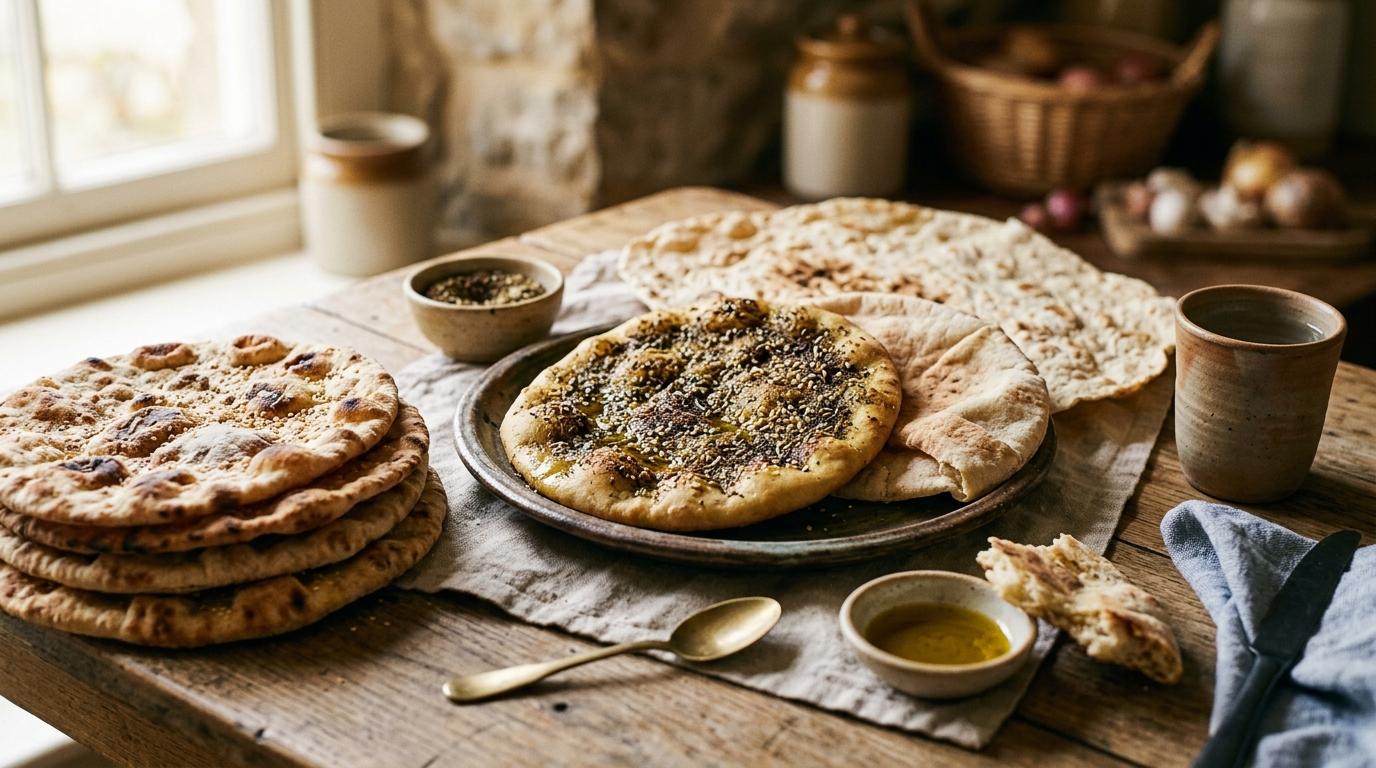
Middle Eastern bread isn't just sustenance—it's the edible foundation that holds entire meals together. Whether you're scooping up hummus with warm pita or wrapping grilled meats in tender lavash, these flatbreads connect us to centuries of culinary tradition. If you're exploring the rich world of middle eastern recipes, mastering these fundamental breads opens doors to authentic flavors and techniques that transform your cooking.
The beauty of Middle Eastern bread lies in its simplicity. Most recipes require just flour, water, yeast, salt, and sometimes olive oil. Yet within this minimalist framework, each region has developed distinct techniques that create dramatically different textures and flavors. The key isn't exotic ingredients—it's understanding how heat, timing, and handling create the characteristic pockets, crispy edges, and tender crumbs that define these breads.
The Foundation: Understanding Middle Eastern Bread Types
Middle Eastern bread encompasses dozens of regional variations, but most fall into recognizable categories. Pita bread, perhaps the most familiar, puffs into hollow pockets thanks to high-heat baking and proper dough hydration. Lavash, thin and flexible, relies on quick cooking and careful rolling to achieve its characteristic texture.
Naan-e barbari, Iran's beloved breakfast bread, gets its distinctive ridged surface from finger impressions and a special wash. Sangak, traditionally baked on hot pebbles, develops an irregular, rustic crust that's impossible to replicate with conventional methods but achievable with pizza stones.
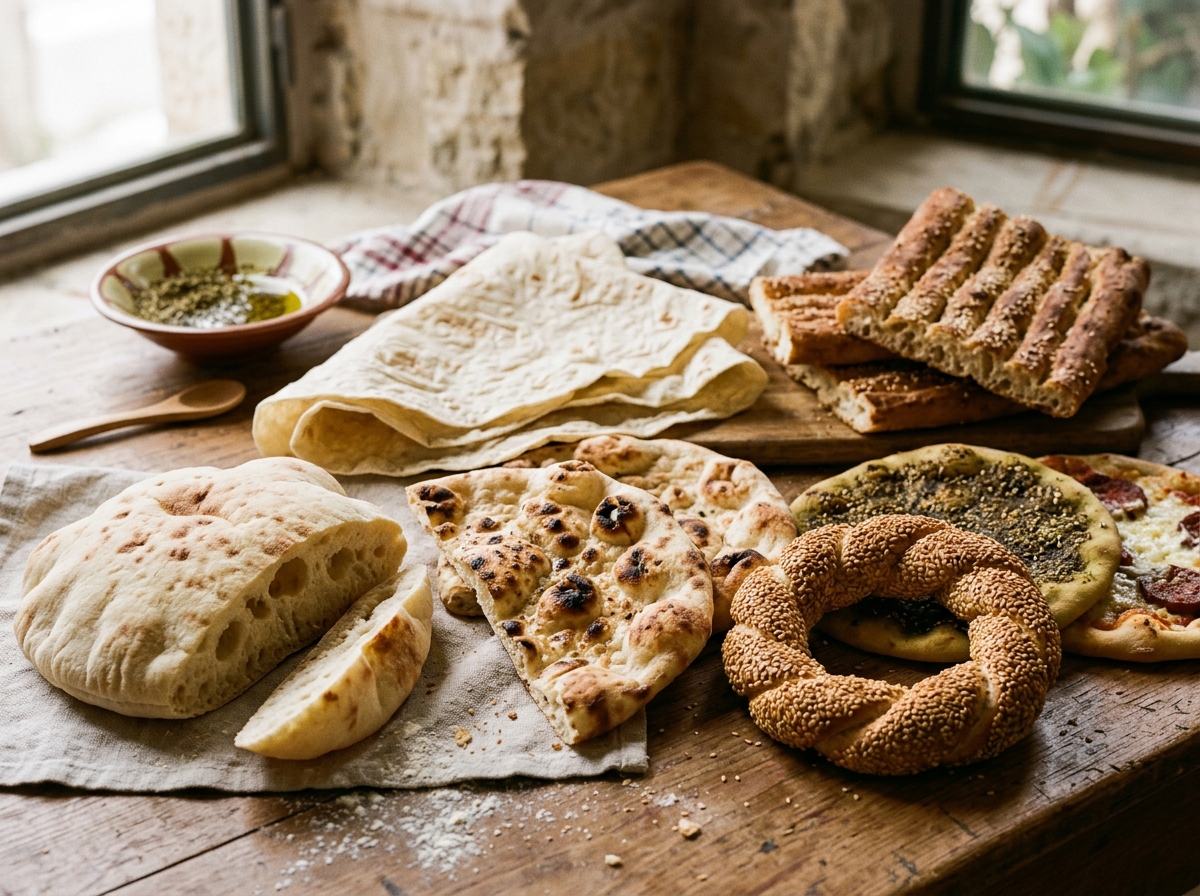
Each bread serves specific culinary purposes. Pita's pocket makes it perfect for stuffing with falafel or kebabs. Lavash's flexibility turns it into an edible wrapper for everything from cheese to grilled vegetables. Understanding these relationships helps you choose the right bread for your meal and appreciate why certain techniques developed in specific regions.
Essential Techniques for Perfect Pita
Pita bread's magic happens in the oven, where steam creates the characteristic pocket. The dough needs enough gluten development to trap steam but not so much that it becomes tough. Start with bread flour for structure, but don't overwork the dough.
The key to pockets lies in temperature and timing. Your oven needs to be screaming hot—500°F minimum, preferably with a pizza stone preheated for at least 30 minutes. The sudden blast of heat turns moisture in the dough to steam faster than the gluten can set, creating that perfect hollow interior.
Roll your pita rounds evenly but not too thin. Quarter-inch thickness works best—thick enough to create substantial pockets, thin enough to cook through quickly. Any tears in the dough will prevent proper puffing, so handle gently and patch any cracks with wet fingers.
Watch for the telltale balloon effect in the oven. Properly made pita will puff dramatically within the first minute of baking. If your bread stays flat, check your yeast activity, oven temperature, and dough handling technique. Even imperfect pita makes excellent flatbread for dipping and scooping.
Mastering Lavash: The Art of Thin Bread
Lavash requires a completely different approach from pita. Where pita needs steam and pockets, lavash demands thinness and flexibility. The dough should be slightly wetter than pita dough, creating a more pliable texture that rolls paper-thin without tearing.
Rolling technique makes all the difference. Work from the center outward, rotating the dough frequently to maintain even thickness. Professional bakers stretch lavash by hand, but a rolling pin works fine for home cooks. The key is patience—rush the rolling and you'll get thick spots that cook unevenly.
Lavash bakes quickly at high heat, often in less than two minutes. Watch for light browning and slight bubbling, but don't let it get too crispy in the oven. The bread continues cooking from residual heat even after removal, and you want it flexible enough to fold without cracking.
Fresh lavash has a soft, pliable texture perfect for wrapping. If it gets too dry, a quick sprinkle of water and brief warming in a low oven restores flexibility. Many families make large batches and store them wrapped in cloth, refreshing as needed throughout the week.
Key Ingredients and Their Roles
Flour choice dramatically affects your final bread. Bread flour's higher protein content creates stronger gluten networks, essential for pita's structure and lavash's stretchability. All-purpose flour works in a pinch but produces less dramatic results.
Yeast type matters less than freshness. Active dry yeast, instant yeast, and even wild sourdough starters all work well in Middle Eastern breads. The key is ensuring your yeast is alive and active—proof it in warm water with a pinch of sugar if you're uncertain.
Water temperature affects fermentation speed and gluten development. Lukewarm water (around 100°F) activates yeast without killing it. Too hot and you'll damage the yeast; too cold and fermentation crawls along slowly.
Salt does more than add flavor—it strengthens gluten structure and controls fermentation speed. Don't skip it or dramatically reduce quantities, as the bread's texture will suffer. Olive oil, when used, adds flavor and tenderness but isn't essential for most traditional recipes.
Traditional Baking Methods vs. Modern Adaptations
Traditional Middle Eastern bread ovens operate at temperatures most home ovens can't reach. Tandoors and similar clay ovens hit 800°F or higher, creating the intense heat that produces perfect texture in seconds rather than minutes.
Modern home bakers can approximate these conditions with pizza stones, cast iron pans, or even inverted sheet pans preheated in the hottest possible oven. The thermal mass helps maintain temperature when you open the oven door, crucial for consistent results.
Some bakers use the broiler for extra heat, though this requires careful attention to prevent burning. Others place dough directly on oven racks for maximum heat exposure, though this works best with sturdier breads like thick pita rounds.
Gas grills offer another option, especially for lavash and other thin breads. The direct heat and ability to reach higher temperatures than most ovens can produce excellent results, though technique requires some adjustment.
Troubleshooting Common Problems
Flat pita usually indicates insufficient oven heat, old yeast, or dough that's too dry. Check your oven temperature with a separate thermometer—many home ovens run cooler than their dials indicate. Ensure your yeast foams vigorously when proofed, and don't be afraid to add slightly more water to your dough.
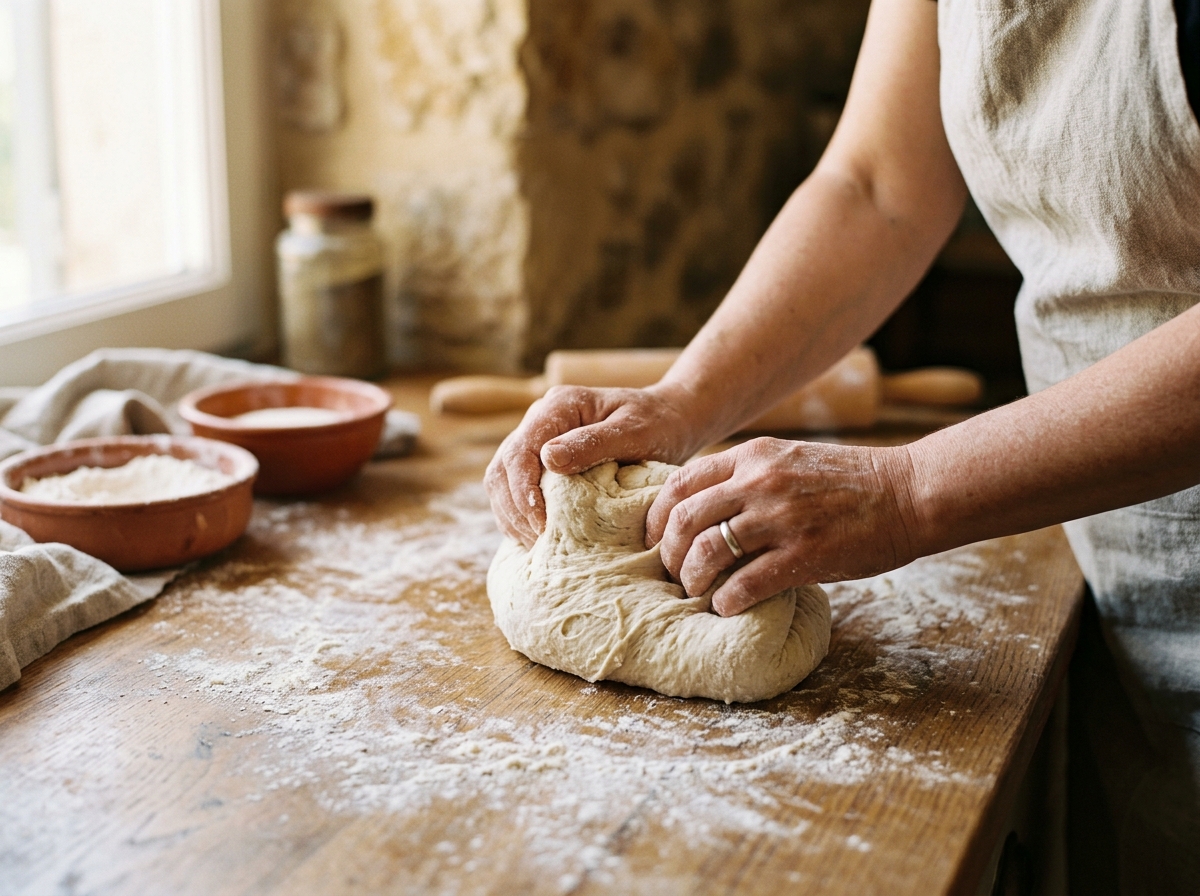
Tough, chewy bread often results from over-kneading or using too much flour during rolling. Middle Eastern breads should have tender crumbs, not the dense chew of European-style breads. Knead just until the dough comes together smoothly, then let time and fermentation develop the gluten.
Uneven cooking suggests temperature hot spots in your oven or uneven dough thickness. Rotate your breads halfway through baking if your oven has known hot spots, and pay extra attention to consistent rolling or shaping.
Dry, crumbly bread often indicates too much flour or insufficient hydration. Middle Eastern breads should feel slightly tacky when first mixed—they'll firm up during kneading and rising. Don't add flour unless the dough is genuinely unworkable.
Storage and Serving Traditions
Fresh Middle Eastern bread should be stored in cloth or paper bags, not plastic, which traps moisture and creates soggy textures. Properly stored bread stays fresh for 2-3 days at room temperature, though it's best consumed within 24 hours of baking.
Many families wrap cooled bread in clean kitchen towels, maintaining just enough moisture to keep the bread flexible without encouraging mold. This traditional method works better than modern plastic storage for maintaining proper texture.
Reheating techniques vary by bread type. Pita responds well to light toasting or brief warming in a low oven. Lavash benefits from a quick sprinkle of water before gentle reheating. Never microwave Middle Eastern breads—the results turn rubbery and unpalatable.
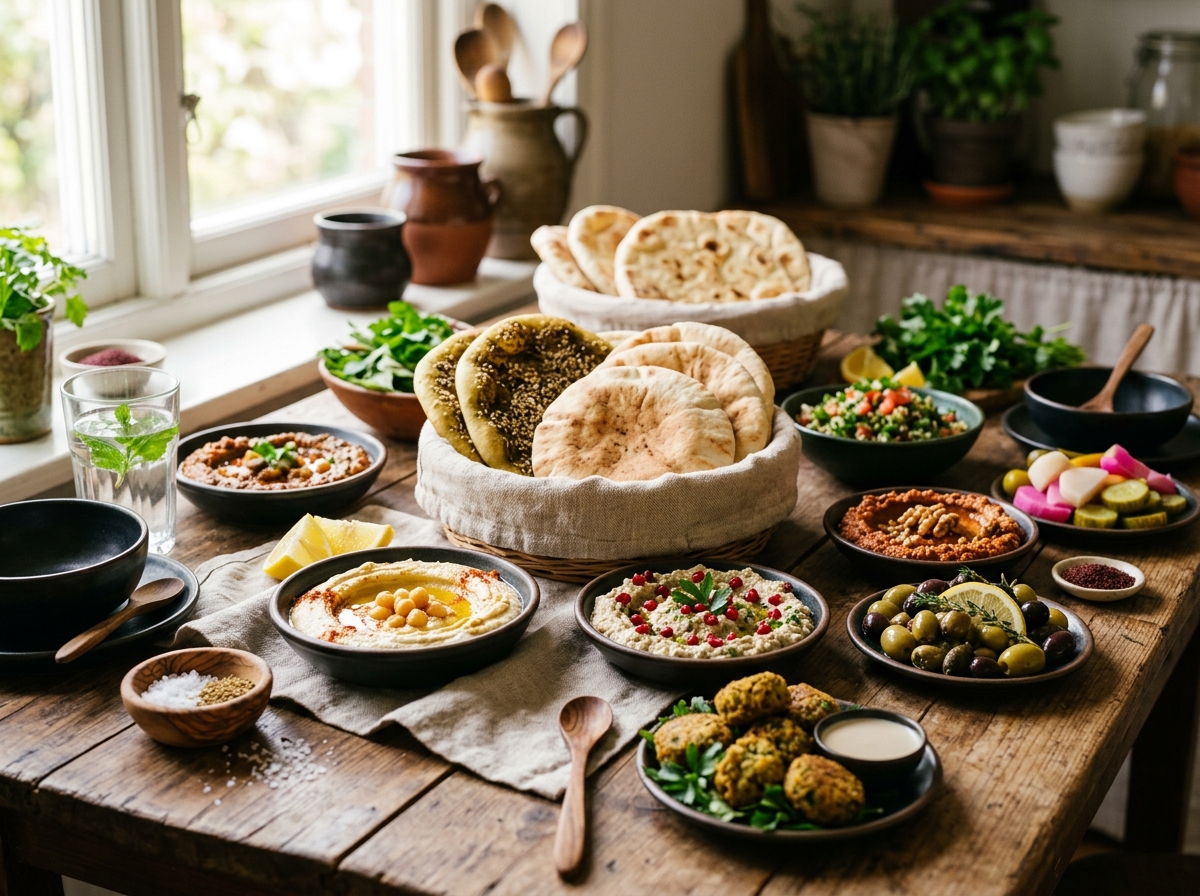
Traditional serving emphasizes bread's role as an utensil. Torn pieces scoop up dips, wrap around grilled meats, or soak up flavorful sauces. This interactive eating style explains why texture and flexibility matter so much in these breads.
Regional Variations Worth Exploring
Lebanese mountain bread (khubz) incorporates whole wheat flour for a nutty flavor and denser texture. Syrian bread often includes nigella seeds or sesame for added complexity. These variations show how basic techniques adapt to local tastes and available ingredients.
Iranian breads like sangak and taftoon each have distinct characteristics tied to specific baking methods. Sangak's pebble-baked surface creates unique texture, while taftoon's long, oval shape suits its role in Persian meals.
Turkish pide and Armenian lavash represent related but distinct traditions, each optimized for their culinary contexts. Understanding these relationships helps you appreciate how geography, climate, and culture shape bread-making traditions.
Modern fusion approaches respectfully incorporate Middle Eastern bread techniques into contemporary cooking. Whole grain versions, herb-infused doughs, and creative toppings expand possibilities while honoring traditional methods.
Building Your Middle Eastern Bread Repertoire
Start with basic pita—it's forgiving and immediately useful in your kitchen. Once you master the fundamental technique of high-heat baking and proper dough consistency, other breads become variations on familiar themes.
Practice your rolling technique with lavash, focusing on even thickness and gentle handling. The skills transfer to other thin breads and even pasta-making. Don't worry about perfect circles—rustic shapes often have more character.
Experiment with fermentation times to develop flavor. Longer, cooler rises create more complex tastes, while quick rises produce milder breads. Both have their place in Middle Eastern cooking, depending on the intended use.
Keep detailed notes on what works in your kitchen. Every oven behaves differently, and flour brands vary in protein content and absorption. Building your personal reference guide speeds up the learning process and ensures consistent results.
Middle Eastern bread connects us to ancient traditions while serving modern kitchens beautifully. Whether you're completing your exploration of middle eastern recipes or just beginning your journey into this rich culinary world, mastering these fundamental breads provides the foundation for countless memorable meals. The techniques may be traditional, but the satisfaction of pulling warm, fragrant bread from your own oven never gets old.
Sources & further reading
- Lavash, the preparation, meaning and appearance of traditional bread as an expression of culture in Armenia — UNESCO Intangible Cultural Heritage
- Lavash, the Preparation, Meaning and Appearance of Traditional Armenian Bread as an Expression of Culture — UNESCO Multimedia Archives
- Lavash Bread Lands on UNESCO's World Cultural Heritage List — Kayhan Life
Related Topics
Enjoyed this article? Share it with fellow food lovers!
Import a recipe, start cooking
Paste any recipe URL and we'll turn it into a Cook Mode experience with step-by-step visuals, voice narration, and built-in timers.