

Authentic Mexican Tacos Guide: Master Traditional Techniques
Real Mexican tacos are simple, bold, and built on centuries of tradition. Master the fundamentals of corn tortillas, slow-cooked meats, and bright salsas that make tacos a true art form.
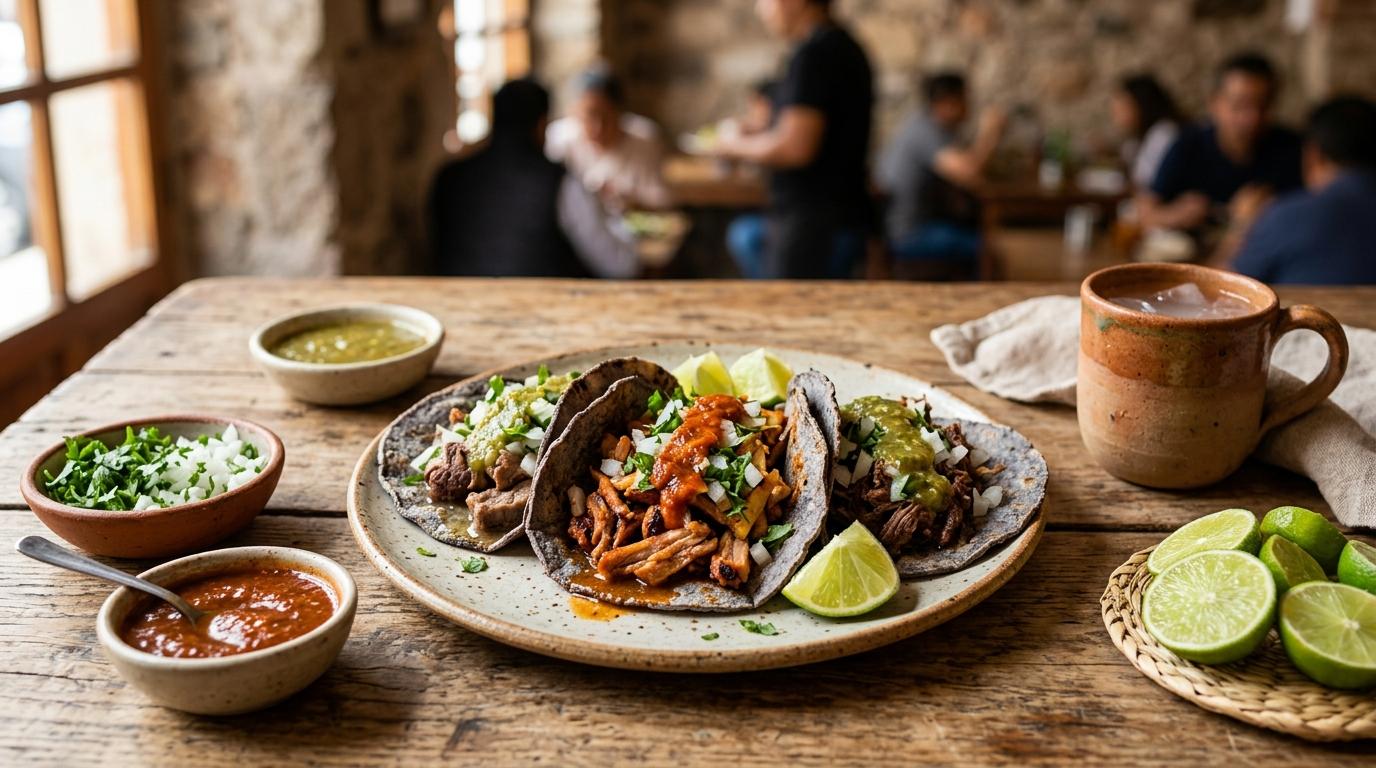
Walk into any taquería in Mexico City, and you'll witness something beautiful: the rhythmic slap of masa against palms, the sizzle of meat on a plancha, the careful assembly of simple ingredients into something transcendent. Authentic Mexican tacos aren't complicated—they're refined. Every element serves a purpose, from the tender corn tortilla that cradles the filling to the bright splash of salsa verde that cuts through rich carnitas.
This isn't about hard or soft shells, ground beef, or shredded cheese. We're talking about the real deal—tacos that honor the traditions passed down through generations of Mexican cooks. If you're ready to explore the full spectrum of mexican recipes, authentic tacos are your gateway to understanding how simplicity and technique create extraordinary flavor.
Understanding Authentic Mexican Tacos
Real Mexican tacos follow a deceptively simple formula: fresh corn tortilla, well-seasoned protein, onions, cilantro, and salsa. That's it. No lettuce, no tomatoes, no sour cream mountains. The magic happens in the quality of each component and how they work together.
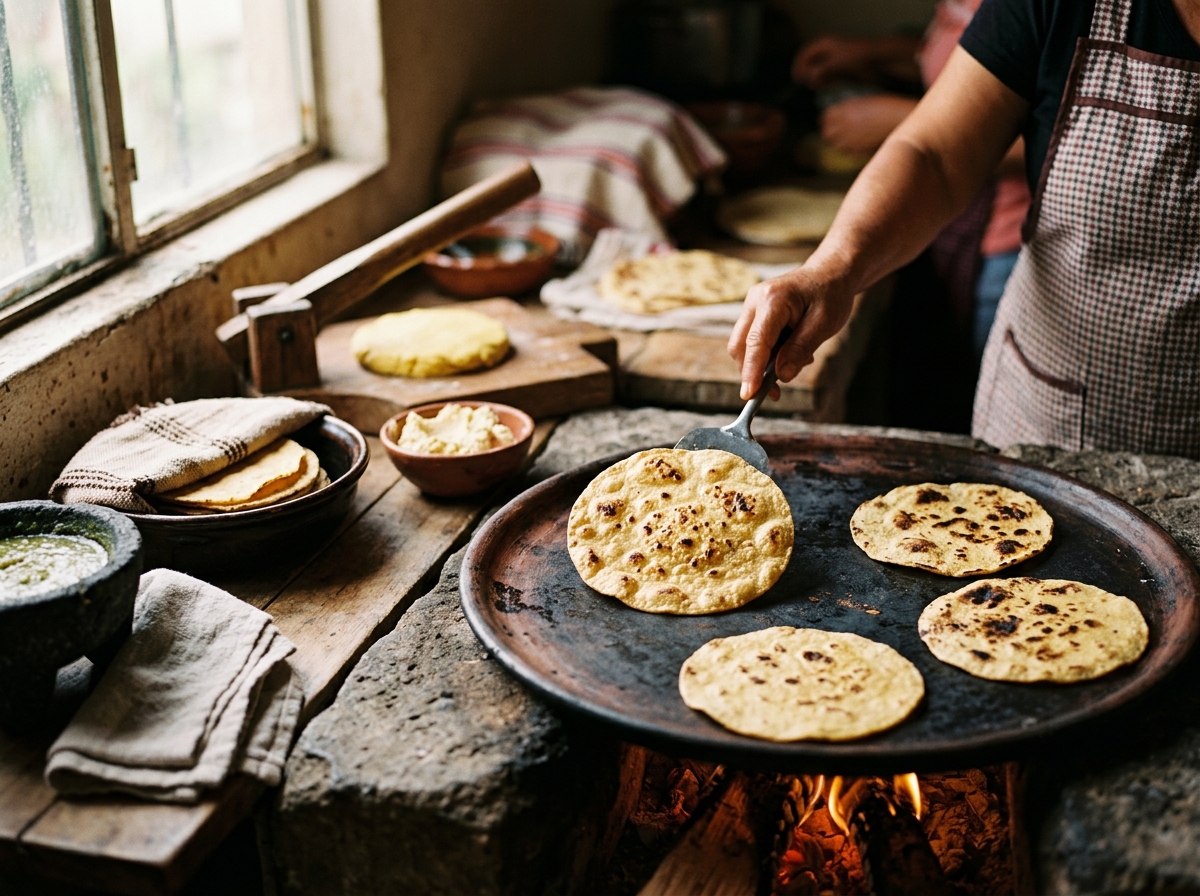
The tortilla isn't just a vessel—it's the foundation. Fresh masa, pressed thin and cooked on a comal until it puffs with steam, creates a tortilla that's both sturdy and tender. It should taste like corn, not cardboard.
The protein is where regional pride shines. Carnitas from Michoacán, slow-cooked in lard until they shred at a touch. Al pastor from Puebla, marinated pork spinning on a trompo with pineapple crowning the top. Carne asada from northern Mexico, where beef is king and the grill runs hot.
The Foundation: Corn Tortillas
Everything starts with masa harina—dried corn that's been treated with lime (cal) in a process called nixtamalization. This ancient technique doesn't just make the corn easier to grind; it unlocks nutrients and creates that distinctive flavor we associate with corn tortillas.
You can buy fresh masa from Mexican markets, or work with masa harina like Maseca. Mix it with warm water and a pinch of salt until the dough feels like soft Play-Doh—not sticky, not cracking. Let it rest for 30 minutes while the flour hydrates completely.
Press each ball between plastic sheets in a tortilla press, or use a heavy skillet if that's what you have. The tortilla should be thin enough to see your hand through but thick enough not to tear. Cook on a dry comal or cast-iron skillet over medium-high heat until it puffs slightly and develops golden spots, about 30 seconds per side.
Fresh tortillas have a shelf life measured in hours, not days. They should be soft and pliable, with a clean corn flavor that doesn't compete with your fillings.
Key Ingredients for Authentic Flavors
The beauty of authentic Mexican tacos lies in their restraint. Each ingredient is chosen for a specific purpose, creating balance without overwhelming the palate.
White onions provide sharp bite and clean crunch. Dice them finely—you want flavor, not chunks that fall out with every bite. Some taco shops char theirs lightly on the plancha for extra sweetness.
Cilantro adds brightness and herbal notes that cut through rich meats. Use only the leaves and tender stems, chopped roughly. If you're in the unfortunate genetic camp that tastes soap, substitute with finely chopped parsley or skip the herb entirely.
Lime is non-negotiable. Fresh lime juice adds acidity that brightens every other flavor. Cut limes into quarters—wedges are for tourists.
Chiles appear in countless forms. Jalapeños provide heat with vegetal bite. Serranos bring more fire and floral notes. Dried chiles like guajillo and ancho add deep, complex heat to marinades and salsas.
Mexican crema or thick sour cream cools spicy fillings, though it's used sparingly in traditional preparations. Think drizzle, not dollop.
Traditional Taco Fillings
Carnitas: The Gold Standard
Carnitas means "little meats," and it's perhaps Mexico's most beloved taco filling. Pork shoulder or butt, cut into large chunks and slow-cooked in lard with orange, cinnamon, and bay leaves until it falls apart. The final step—crisping the edges on a hot plancha—creates the perfect contrast of textures.
Start with three pounds of pork shoulder, cut into fist-sized pieces. Season with salt, then submerge in melted lard (or a mix of lard and neutral oil) in a heavy Dutch oven. Add orange quarters, a cinnamon stick, and a few bay leaves. Cook at 225°F for 3-4 hours until the meat shreds easily with a fork.
Remove the meat and shred it coarsely. For service, crisp portions on a hot skillet until the edges are golden and slightly crispy while the interior stays moist.
Al Pastor: The Lebanese-Mexican Fusion
Al pastor tells the story of Lebanese immigrants who brought shawarma techniques to Mexico in the early 20th century. The result is pork marinated in dried chiles, achiote, and pineapple, traditionally cooked on a vertical spit called a trompo.
For home cooking, slice pork shoulder thin and marinate in a paste of guajillo chiles, achiote, orange juice, white vinegar, and garlic. Let it cure overnight, then sear in batches on a hot skillet until caramelized. Finish with diced pineapple and a splash of the marinade.
Carne Asada: Simplicity Perfected
Northern Mexico's contribution to taco culture is beautifully straightforward: well-marbled beef, seasoned simply and grilled hot and fast. Skirt steak or flank steak work best—cuts with enough fat to stay juicy and enough grain to provide texture.
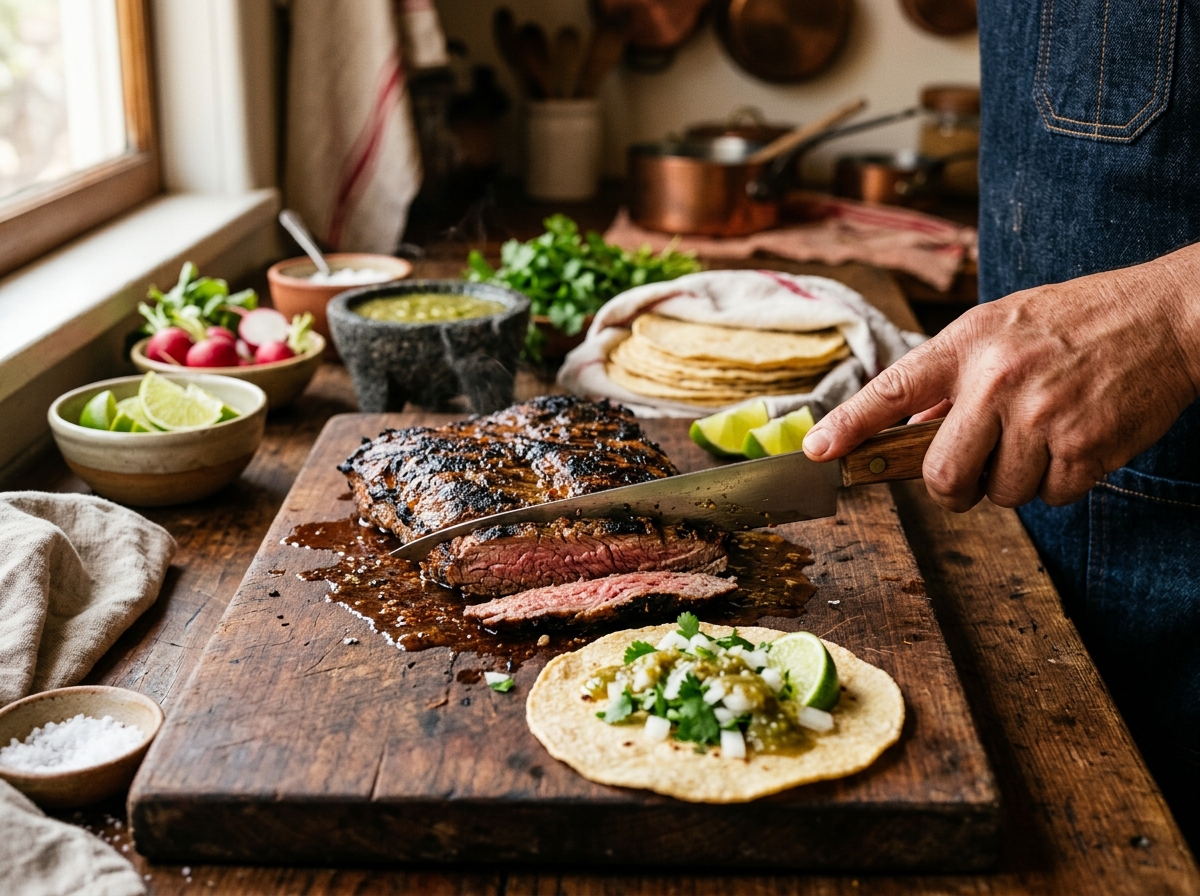
Season generously with salt, pepper, and a squeeze of lime. Let the meat come to room temperature, then sear over high heat for 2-3 minutes per side. Rest briefly, then slice against the grain into strips.
Essential Salsas and Toppings
No taco is complete without salsa, and authentic Mexican salsas are studies in balance—heat, acidity, and depth working in harmony.
Salsa Verde starts with tomatillos, those papery-husked green fruits that taste like summer and electricity. Char them on a comal with jalapeños and white onion until blackened in spots, then blend with cilantro and salt. The result should be bright green and aggressively tart.
Salsa Roja uses tomatoes as the base, often paired with dried chiles like chipotle or guajillo for smokiness. Char fresh tomatoes until their skins blister, then blend with rehydrated chiles, garlic, and onion.
Pico de Gallo translates to "rooster's beak," probably referring to the way people used to eat it—pinched between thumb and forefinger. It's simply diced tomatoes, onions, jalapeños, and cilantro with lime juice and salt. The key is dice size: everything should be uniform and small enough that you get a bit of each ingredient in every bite.
Some taquerías offer salsa macha, a chile-oil condiment that adds heat and richness, or curtido, pickled vegetables that provide acidic crunch.
Assembly and Serving Techniques
Watch a taquero at work and you'll see decades of muscle memory in action. There's a precise order to assembly that ensures every bite is balanced.
Start with a warm tortilla—this is crucial. Cold tortillas crack and don't hold fillings well. Place 2-3 ounces of filling slightly off-center, leaving room for the tortilla to fold naturally.
Add onions and cilantro next, distributing them evenly so each bite gets some. The herbs and aromatics should complement, not dominate.
Salsa comes last, and restraint is key. A tablespoon or two is plenty—you want to enhance the meat's flavor, not drown it. Squeeze lime over everything just before serving.
Serve immediately. Tacos are meant to be eaten hot, standing up, in rapid succession. This isn't knife-and-fork food.
Regional Variations Worth Exploring
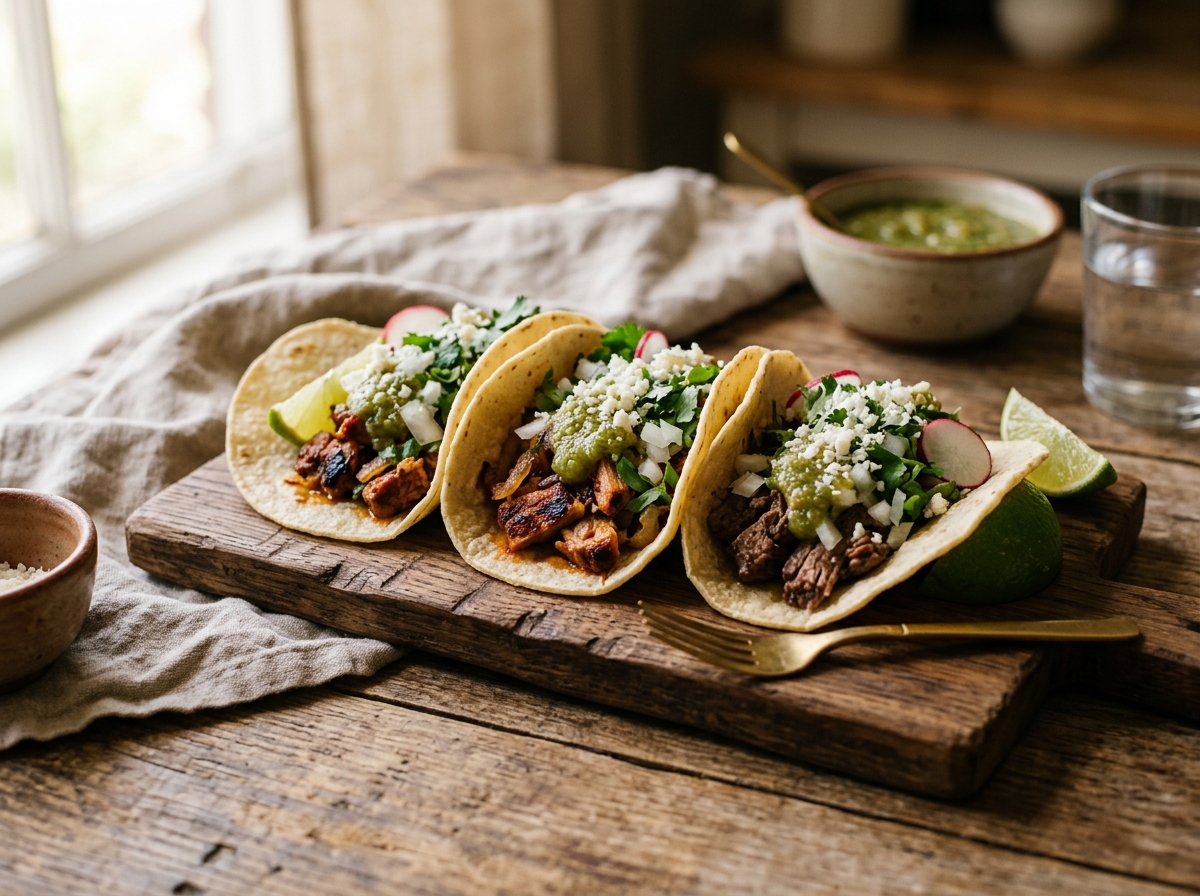
Mexico's taco traditions vary dramatically by region, each reflecting local ingredients and cultural influences.
In Yucatán, cochinita pibil takes center stage—pork marinated in achiote and sour orange, then wrapped in banana leaves and slow-cooked until it falls apart. The meat emerges brick-red and fragrant, typically served with pickled red onions.
Baja California gave us fish tacos, where white fish is battered and fried, then topped with cabbage slaw and crema. The contrast of hot, crispy fish with cool, crunchy vegetables creates perfect balance.
Mexico City street vendors excel at tacos de canasta (basket tacos), where soft tacos are filled with simple preparations like refried beans or potatoes, then steamed in a cloth-lined basket until they meld into something entirely new.
Even vegetable tacos have deep traditions. Rajas con crema combines charred poblano strips with Mexican crema and onions. Flor de calabaza showcases delicate squash blossoms, often paired with cheese and epazote.
Pro Tips for Home Success
Temperature control separates good tacos from great ones. Your comal or skillet should be hot enough that water droplets dance and evaporate quickly, but not so hot that tortillas burn before they cook through.
Batch your preparation. Make salsas a day ahead—they improve as flavors meld. Prep vegetables and warm tortillas just before serving. Cook proteins to order when possible, or keep them warm in low ovens.
Invest in proper tools if you're serious about tacos. A comal distributes heat more evenly than a skillet. A molcajete creates better-textured salsas than a food processor, though a blender works in a pinch.
Don't skimp on salt. Mexican cuisine uses it liberally, and properly seasoned components need less salsa and lime to taste balanced.
Finally, embrace the mess. Authentic tacos are finger food at its most primal. Juice will run down your wrists, cilantro will stick to your fingers, and that's exactly how it should be.
Making It Your Own
Once you master the fundamentals, authentic Mexican tacos become a canvas for creativity within tradition. Maybe you prefer your carnitas with a touch of Mexican oregano, or your carne asada gets a whisper of chipotle powder.
The key is understanding what makes tacos work—the interplay of textures, the balance of fat and acid, the way fresh herbs brighten rich proteins. Master those principles, and you can adapt to your tastes while respecting the dish's roots.
Start with one filling and perfect it before moving to others. Learn to make tortillas that don't crack and salsas that sing with bright acidity. Once these become second nature, you'll understand why authentic Mexican tacos have remained virtually unchanged for generations—because perfection doesn't need improvement.
Whether you're exploring carnitas for the first time or adding al pastor to your repertoire, these techniques will serve you well across the full spectrum of mexican recipes. Master the fundamentals, respect the traditions, and prepare for tacos that will ruin you for the fast-food version forever.
Sources & further reading
- Salsas — Mexico in My Kitchen (Mely Martinez)
- Regional Cuisines of Mexico Series: Antojitos — The Culinary Institute of America (CIA ProChef)
Related Topics
Enjoyed this article? Share it with fellow food lovers!
Import a recipe, start cooking
Paste any recipe URL and we'll turn it into a Cook Mode experience with step-by-step visuals, voice narration, and built-in timers.